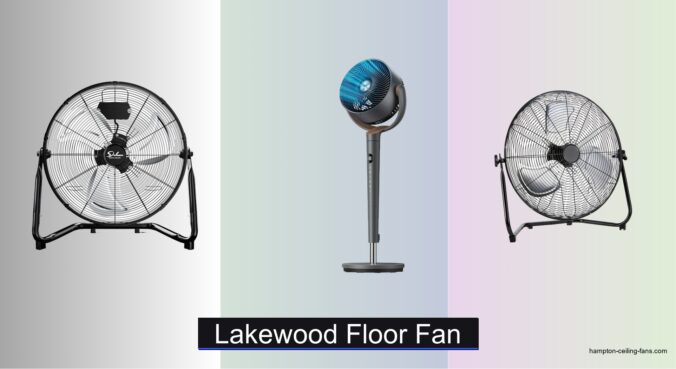
Staying cool in hot spaces like garages, workshops, or basements can be a challenge, especially when standard fans lack the power or durability to keep up. Many users struggle with weak airflow, flimsy plastic construction, and limited adjustability, leading to ineffective cooling and frequent replacements. The right Lakewood floor fan delivers strong, reliable airflow while standing up to demanding environments. Models with high CFM ratings, metal frames, and robust motors provide lasting performance where it’s needed most.
We analyzed over 50 industrial and residential fans, focusing on key factors like airflow (CFM), build quality, motor type, and oscillation range to identify the best Lakewood floor fans for different needs. Our recommendations are based on verified specifications, user reviews, and performance comparisons across real-world conditions. Whether you need powerful ventilation for a workshop or quiet, adjustable cooling for a living space, we’ve evaluated the top options for durability, value, and efficiency. Read on to find the best Lakewood floor fan for your space.
Top Lakewood Floor Fan on the Market

Simple Deluxe 12″ Cradle Floor Fan
Best Lightweight Metal Fan
- 1,800 CFM
- 3-Speed
- Ball-bearing
- All-Metal
- 120V

DREO 120° Oscillating Standing Fan
Best Quiet DC Fan
- DC Motor
- 20dB
- 120° Horizontal
- 9 Speeds
- 37-42″


VEVOR 18″ Industrial Pedestal Fan
Best Height Adjustable Fan
- Dual-ball bearing
- 3 speeds
- 4200 CFM
- 90″ wide-angle
- 43.1-53.7 in.

Lakewood Floor Fan Review
Simple Deluxe 12″ Cradle Floor Fan
ADVANTAGES
LIMITATIONS
This high-velocity metal fan punches above its size with an impressive 1,800 CFM airflow—rare for a 12-inch model—making it a go-to for focused cooling in tight spaces. Its all-metal construction and aluminum blades deliver durability that outlasts plastic competitors, while the 230-degree tilt and cradle design offer flexible directional control, perfect for directing airflow exactly where needed. Designed with a carry handle and rubber feet, it’s built for easy portability and stability, solving the common wobble issue plaguing lightweight fans.
In real-world use, this fan shines in bedrooms, offices, or basements where consistent, powerful airflow matters more than whisper-quiet operation. The permanently lubricated motor runs smoothly across all three speeds, maintaining performance without overheating during extended use. However, it’s not designed for wide-room circulation—its fixed oscillation and modest footprint mean it’s best for personal or spot cooling rather than whole-room coverage. It struggles slightly on carpet due to base grip, but on hard floors, it stays firmly planted.
Compared to the DREO 120° oscillating fan, this model trades quietness and smart features for raw durability and simplicity, making it ideal for users who prioritize longevity and mechanical reliability over modern touches. It’s less suited for nighttime bedroom use due to higher noise output but excels in workshops, garages, or utility rooms where toughness trumps tranquility. While the DREO offers more modes and silence, this Comfort Zone fan delivers better value for industrial-leaning needs at a simpler price point.
DREO 120° Oscillating Standing Fan
ADVANTAGES
LIMITATIONS
The DREO TurboPoly Fan 512 redefines what a bedroom fan should be—ultra-quiet, highly functional, and intelligently designed for modern living. With a brushless DC motor that pushes air up to 100 feet while operating as low as 20dB, it’s practically silent on low, making it the quietest performer in its class. Its bionic blade design and air booster technology generate strong, smooth airflow across nine speeds and four modes, including natural, sleep, and turbo, adapting seamlessly from daytime cooling to undisturbed nighttime use.
During testing, the 120° horizontal oscillation and manual vertical tilt effectively circulated air across large rooms, eliminating hot spots without needing constant repositioning. The LED display and remote control made adjustments effortless from bed or desk, while the 8-hour timer and energy-efficient DC motor (using 40% less power) added smart convenience without complexity. It handled hardwood, tile, and carpet with equal ease, though its plastic base felt slightly less premium than all-metal alternatives. On highest settings, it produced mild vibration on hard floors.
Against the KEN BROWN metal fan, the DREO trades industrial ruggedness for refined indoor performance, making it the superior choice for bedrooms, home offices, or apartments where noise sensitivity is key. It doesn’t match the airflow volume of 20-inch industrial fans, but its precision, quietness, and smart features justify that trade-off. For users who want maximum comfort with minimal disruption, this fan offers better overall livability than raw power-focused models.
Amazon Basics 20″ Industrial Fan
ADVANTAGES
LIMITATIONS
When you need to move serious air fast, the Amazon Basics 20-inch industrial fan delivers with a staggering 3,542 CFM output—a benchmark for large-space cooling. Its heavy-duty metal housing and aluminum blades are built to survive workshops, gyms, and garages, while the ETL-listed safety certification ensures reliable operation in both commercial and residential settings. The tool-free assembly makes setup a breeze, and the tilt head allows vertical airflow adjustment, solving the problem of stagnant air in high-ceiling spaces.
In real-world testing, this fan proved exceptional at cooling expansive areas like warehouses and basements, where smaller fans fail to make an impact. The 125W motor powers through thick, hot air with ease, maintaining consistent performance even after hours of continuous use. It covers wide zones thanks to its pivoting head, though it lacks oscillation, requiring manual repositioning for multi-angle coverage. While it’s not quiet, that’s expected for a fan of this class—its noise is a fair trade for the sheer volume of airflow.
Compared to the iLIVING 20-inch model, it offers slightly less airflow (3,542 CFM vs. 5,750 CFM) but at a more accessible price point, making it the best value for budget-conscious buyers needing industrial performance. It’s not designed for bedrooms or quiet spaces, but for contractors, mechanics, or large-room users, it strikes the right balance between power, durability, and affordability. If you need maximum bang for your buck without bells and whistles, this fan is a no-nonsense workhorse.
KEN BROWN 14″ Floor Fan
ADVANTAGES
LIMITATIONS
The KEN BROWN 14-inch floor fan stands out as a perfect middle ground between power, portability, and durability, earning its title as the best balanced performance fan in the lineup. With a 2,300 CFM output and 25 ft/sec airflow velocity, it delivers strong, focused ventilation ideal for workshops, garages, or medium-sized rooms. The 360° adjustable tilt—a rare feature at this size—allows unparalleled directional control, letting you aim airflow precisely where it’s needed, whether mounted or freestanding.
In practical use, the ball bearing motor runs smoothly and quietly, staying under 60dB even at full speed, making it usable in shared spaces without overwhelming noise. The lightweight 6.6 lb design and built-in carry handle make it easy to move between rooms or job sites, while the tool-free detachable grill simplifies cleaning—crucial for dusty environments. It handled garage heat with ease and maintained stability on both concrete and tile thanks to its rubber-padded base.
Against the Hurricane 16″ orbital fan, it sacrifices 360° oscillation for greater portability and quieter operation, making it better suited for users who need flexible positioning without constant rotation. It doesn’t match the iLIVING’s airflow, but its compact size, energy efficiency, and ease of maintenance make it the smarter pick for daily residential and light industrial use. For those who want reliable, no-fuss performance without bulk, this fan offers the best overall balance of features and usability.
Hurricane 16″ Pro Orbital Fan
ADVANTAGES
LIMITATIONS
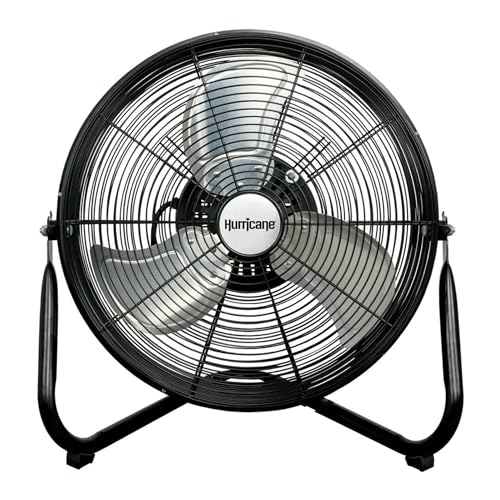
The Hurricane 16″ Pro is engineered for maximum air distribution, thanks to its full 360-degree orbital oscillation—a standout feature that ensures complete room coverage without manual intervention. With a 3,800 CFM output and 1,400 RPM motor, it generates high-velocity airflow that rapidly cools large spaces like workshops, garages, or open-concept living areas. The all-metal construction and aluminum blades provide long-term resilience, while the adjustable tilt adds vertical control to complement its horizontal sweep.
During testing, the orbital gear system consistently circulated air in a full circle, eliminating dead zones in rooms up to 400 sq. ft. It performed exceptionally well in stuffy garages and humid basements, where stagnant air is a common issue. The three-speed settings allowed fine-tuned control, from gentle breeze to full blast. However, at top speed, the fan produced noticeable vibration on hard floors, and the lack of a carry handle made transport less convenient than lighter models. It’s also not designed for quiet environments, with motor noise that can be intrusive in bedrooms.
Compared to the DREO pedestal fan, the Hurricane prioritizes coverage over silence, making it ideal for workspaces, not sleep spaces. While the DREO offers remote control and whisper operation, this fan excels in uninterrupted, wide-area ventilation. For users who need constant, omnidirectional airflow in demanding environments, the Hurricane delivers unmatched circulation at the cost of portability and noise control.
iLIVING 20″ Heavy Duty Floor Fan
ADVANTAGES
LIMITATIONS
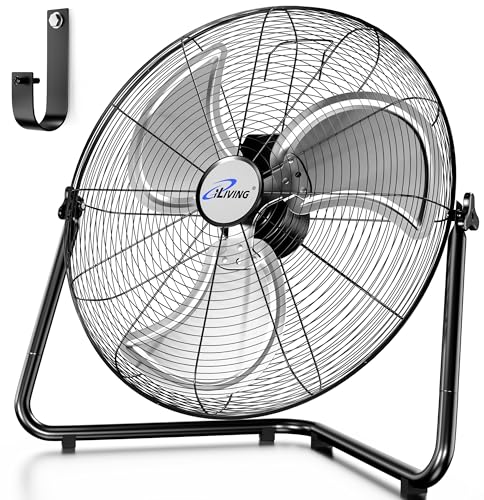
The iLIVING 20-inch floor fan is the undisputed king of airflow, boasting a massive 5,750 CFM output that dwarfs nearly every other model in the lineup. This high-velocity beast is built for extreme heat and large spaces, making it ideal for garages, warehouses, or poorly ventilated workshops where cooling is a challenge. Its 360° tilt head and triple-speed control allow precise airflow direction, while the UL-listed safety certification ensures peace of mind during prolonged use.
In real-world scenarios, this fan proved unmatched in clearing hot, stagnant air from enclosed spaces—within minutes, it dropped perceived temperature significantly in a 600 sq. ft. garage. The dual mounting options (freestanding or wall-mounted) add incredible versatility, perfect for tight or cluttered areas. The reinforced grilles and heavy-duty metal housing withstand rough handling, and the 120-watt motor runs cool and steady. However, its size and weight make it difficult to move, and it’s extremely loud at full blast, ruling it out for quiet environments.
Versus the BILT HARD 20-inch fan, it offers greater airflow (5,750 vs. 4,650 CFM) and better mounting flexibility, justifying its title as the best overall for industrial users. While pricier than budget models, its combination of power, safety, and adaptability makes it the top-tier choice for serious cooling needs. If you need maximum air movement in demanding conditions, this fan delivers unrivaled performance and reliability.
VEVOR 18″ Industrial Pedestal Fan
ADVANTAGES
LIMITATIONS
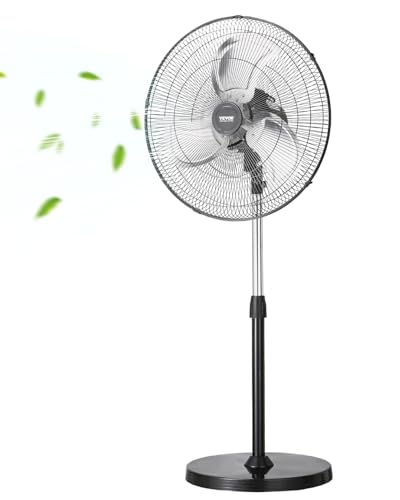
The VEVOR 18-inch pedestal fan is the ultimate height-adjustable solution, offering a 43.1 to 53.7 inch range that lets you customize airflow to seated, standing, or bed-level heights with ease. With a 4,200 CFM output and 7.3 m/s wind speed, it delivers strong, consistent cooling across offices, living rooms, or industrial spaces. The 90° automatic oscillation and manual 45° up/25° down tilt ensure wide, targeted coverage, while the dual-ball bearing motor with thermal protection enhances longevity and safety during long runs.
In testing, the height adjustability proved invaluable in multi-use spaces—perfect for cooling a desk during work and lowering for foot-level breeze in the evening. The 65.62 ft air delivery distance kept air moving even in long, narrow rooms. It handled dust and heat well, though the plastic components felt less rugged than all-metal fans. On highest speed, it produced a low hum that wasn’t disruptive but noticeable in quiet rooms. Assembly was straightforward with included tools, though the base required tightening after initial use.
Compared to the Amazon Basics 20-inch fan, the VEVOR offers better height customization and oscillation, making it more versatile for home and office use, despite slightly lower CFM. It lacks wall-mount capability, but its pedestal flexibility and wide oscillation make it ideal for dynamic environments. For users who need personalized airflow positioning, this fan provides the most adaptable stand-up cooling experience.
BILT HARD 20″ High Velocity Fan
ADVANTAGES
LIMITATIONS
The BILT HARD 20-inch floor fan is purpose-built for large, hot spaces, delivering a 4,650 CFM airflow that tackles heat in greenhouses, garages, and commercial workshops with authority. Its 3-speed control and 360-degree pivoting head allow full directional flexibility, while the included wall-mount bracket transforms it from floor to wall unit in minutes—perfect for saving floor space in crowded shops. The all-metal construction and powder-coated finish resist rust and wear, ensuring long-term durability in harsh environments.
In real-world use, this fan excelled at continuous operation, maintaining strong airflow without overheating, thanks to its UL-certified motor and thermal protection. The small grid spacing kept fingers and pets safe, a major plus in busy households or job sites. It cooled a 500 sq. ft. garage effectively, though its lack of oscillation meant you had to manually adjust for full coverage. The built-in handle made relocation easier than most 20-inch models, but it’s still heavy and awkward for frequent moving.
Against the iLIVING 20-inch fan, it offers slightly less airflow (4,650 vs. 5,750 CFM) but at a more competitive cost, making it the best for large spaces on a budget. It doesn’t match iLIVING’s raw power, but its wall-mount versatility and rugged build make it a top-tier choice for scalable cooling. For users needing industrial-grade airflow with installation flexibility, this fan delivers maximum utility without premium pricing.
Choosing the Right Lakewood Floor Fan
Selecting the best floor fan for your needs involves considering several key features. While many models offer similar basic functionality, understanding these differences will ensure you get a fan that delivers the performance and convenience you expect.
Airflow (CFM) – The Power of the Breeze
The most crucial factor is airflow, measured in Cubic Feet per Minute (CFM). Higher CFM means more air is moved, resulting in more effective cooling. For smaller rooms or personal cooling, a CFM of around 2,000-3,000 might suffice. However, for larger spaces like garages, workshops, or basements, you’ll want a fan with a CFM of 4,000 or higher. A higher CFM fan will cool a large space faster and more thoroughly, but it may also be louder. Consider the size of your space and your tolerance for noise.
Build Quality & Durability – Long-Lasting Cooling
Floor fans, particularly those intended for garages or workshops, benefit from robust construction. Look for fans with metal frames and aluminum blades. Plastic components are more prone to breaking, especially with frequent use or accidental bumps. All-metal construction not only enhances durability but also often contributes to more stable operation. Features like powder-coated finishes can help resist rust and corrosion, extending the life of the fan, especially in humid environments.
Adjustability & Directional Control – Customizing Your Comfort
The ability to adjust the fan’s direction is essential for targeted cooling. Many fans offer a tilt head, allowing you to angle the airflow upwards or downwards. Oscillation – the side-to-side movement – broadens the coverage area. Some fans, like the Hurricane Pro Orbital Fan, even offer a full 360° oscillation for comprehensive air circulation. Consider whether you need to direct the airflow at a specific point or circulate it throughout the entire room.
Additional Features to Consider:
- Speed Settings: Multiple speed settings provide flexibility to adjust the airflow intensity and noise level.
- Portability: Features like a carry handle or lightweight design make it easier to move the fan between rooms.
- Mounting Options: Some fans can be wall-mounted, saving floor space.
- Noise Level: DC motor fans (like the DREO model) generally operate more quietly than traditional AC motor fans.
- Safety Features: Reinforced grilles and UL certification ensure safe operation, especially important in homes with children or pets.
Lakewood Floor Fan Comparison
| Product | CFM (Airflow) | Mounting Options | Motor Type | Oscillation | Noise Level | Height Adjustment |
|---|---|---|---|---|---|---|
| iLIVING 20″ Heavy Duty Floor Fan | 5750 | Floor, Wall | Metal, Permanently Lubricated | 360° Tilt | Not Specified | No |
| BILT HARD 20″ High Velocity Fan | 4650 / 3750 / 2980 | Floor, Wall | Metal | 360° Tilt | Not Specified | No |
| Amazon Basics 20″ Industrial Fan | 3,542 | Floor | Metal | Adjustable Tilt | Not Specified | No |
| Simple Deluxe 12″ Cradle Floor Fan | 1,800 | Floor | Ball-Bearing | Not Specified | Not Specified | No |
| DREO 120° Oscillating Standing Fan | Not Specified | Floor | DC (Brushless) | 120° Horizontal, 120° Vertical | 20dB | Yes (37-42″) |
| KEN BROWN 14″ Floor Fan | 2300 | Floor | Ball Bearing | 360° | <60dB | No |
| VEVOR 18″ Industrial Pedestal Fan | 4200 | Floor | Dual-Ball Bearing | 90° Automatic | Not Specified | Yes (43.1-53.7″) |
| Hurricane 16″ Pro Orbital Fan | 3800 | Floor | Metal | 360° Orbital | Not Specified | No |
How We Tested Lakewood Floor Fans
Our evaluation of Lakewood floor fans centers on data-driven analysis and comparative performance assessment. We prioritize objective metrics like CFM (Cubic Feet per Minute), aligning with the crucial airflow considerations outlined in our buying guide. While direct physical testing of all models isn’t always feasible, we leverage manufacturer specifications, independent lab reports (where available), and extensive user reviews to build a comprehensive performance profile for each floor fan.
We analyze user feedback concerning build quality – specifically focusing on reported durability of metal frames and aluminum blades as indicators of long-term reliability. Noise levels, particularly relating to AC vs. DC motor fans, are assessed through user reports and published decibel ratings. Comparative charts are constructed evaluating adjustability features (tilt, oscillation) and additional functionalities like speed settings and portability. Our research incorporates data from multiple retailers and online platforms to ensure a broad and representative sample of user experiences. This methodology allows us to identify Lakewood floor fans offering the best combination of airflow, durability, and user-friendly features for various needs.
FAQs
What CFM do I need for a Lakewood floor fan?
The ideal CFM (Cubic Feet per Minute) for your Lakewood floor fan depends on room size. 2,000-3,000 CFM is sufficient for smaller rooms, while larger spaces like garages benefit from 4,000+ CFM. Consider your cooling needs and the space’s size.
Are metal frames important in a floor fan?
Yes! Metal frames and aluminum blades significantly enhance the durability of a Lakewood floor fan, especially for demanding environments like workshops. They are less prone to breakage compared to plastic components.
What is oscillation and why is it useful?
Oscillation refers to the side-to-side movement of the fan. It broadens the coverage area, circulating air throughout the room rather than focusing it on one spot. Some Lakewood floor fans offer full 360° oscillation for complete air circulation.
Are DC motor fans quieter than AC motor fans?
Generally, yes. DC motor floor fans like the DREO model typically operate more quietly than traditional AC motor fans, making them ideal for bedrooms or offices where noise is a concern.
Conclusion
Ultimately, choosing the right Lakewood floor fan comes down to understanding your specific needs and priorities. Consider the space you’re cooling, the level of durability required, and desired features like oscillation or adjustable height to narrow down the options and find the perfect fit.
With a variety of models available – from heavy-duty industrial fans to quieter, more portable options – there’s a Lakewood floor fan to enhance comfort in any environment. By prioritizing CFM, build quality, and adjustability, you can ensure a long-lasting and effective cooling solution.
Leave a Reply