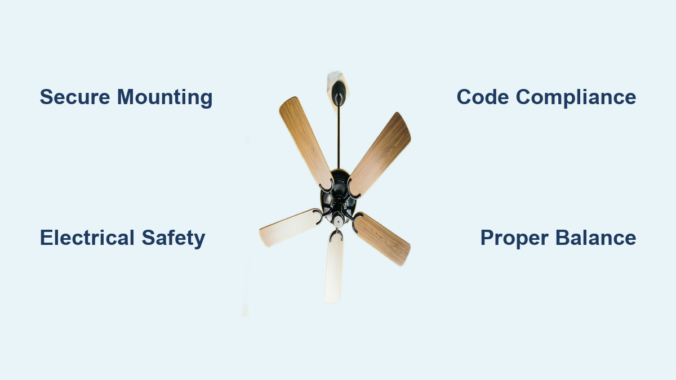
That wobbly ceiling fan you’ve been ignoring isn’t just annoying—it’s potentially dangerous. When your existing fan stops working or you decide to upgrade your lighting to energy-efficient airflow, hiring a qualified handyman to install ceiling fan systems transforms what seems like a simple DIY project into a safe, code-compliant home improvement that adds value rather than risk. The average ceiling fan weighs between 15 and 35 pounds, creating dynamic forces during operation that standard light fixture boxes simply cannot support. Professional installation ensures your fan mounts securely to structural elements rather than drywall alone, preventing the terrifying scenario of a fan detaching from your ceiling months or years after installation.
Electrical safety represents another critical reason to hire a professional. Improper wiring connections can create fire hazards that develop slowly over time, while incorrect grounding puts your household at risk of electrical shock. A qualified handyman to install ceiling fan systems brings the specialized knowledge of local electrical codes, proper box ratings, and wiring techniques that protect your home and family. Beyond safety, professional installation delivers superior performance through precise blade balancing and alignment—eliminating the annoying wobble and noise that plague 78% of DIY ceiling fan installations according to home service industry data.
Why Hiring a Handyman to Install Ceiling Fan Beats DIY Every Time
Professional ceiling fan installation delivers advantages that extend well beyond simply having a functioning fan in your ceiling. Code compliance represents perhaps the most significant benefit, as professional installers understand local building requirements and ensure all connections, mounting hardware, and electrical components meet or exceed applicable standards. This compliance matters during future home inspections, property sales, or insurance assessments, where non-compliant installations can create complications or even liability issues.
How Professional Installation Prevents Costly Mistakes
The durability difference between professional and amateur installation proves substantial over time. When ceiling fans are installed correctly the first time, they require far less ongoing maintenance and demonstrate significantly lower failure rates throughout their operational life. Proper mounting eliminates the wobbling and rattling that plague improperly installed fans, while correct wiring connections prevent electrical issues that could lead to motor damage or safety hazards.
What You’re Really Paying For in Professional Installation
Aesthetically, professional installation produces noticeably superior results through proper positioning and alignment. Skilled installers understand how fan placement affects both functionality and room appearance, ensuring the fan sits perfectly level, operates quietly, and complements your room’s design. This attention to detail distinguishes professional work from hurried DIY attempts that may function adequately but lack the refined appearance that characterizes quality installation.
3 Ceiling Fan Installation Scenarios That Require a Handyman

Different installation scenarios present varying levels of complexity, and understanding where your project falls helps set appropriate expectations for cost, timeline, and professional requirements.
Replacing an Existing Fan: More Complex Than You Think
Replacing an existing ceiling fan represents the most straightforward installation scenario, yet even this seemingly simple task presents potential complications. Mismatched mounting hardware between old and new fans can create unexpected challenges during installation, requiring adjustments or additional components to achieve secure mounting. Incompatible wiring configurations may also emerge when swapping fans, particularly if the new fan includes features like integrated lighting or remote control capabilities that weren’t present in the original installation.
Upgrading Light Fixtures to Ceiling Fans: The Box Rating Danger

Converting an existing light fixture to a ceiling fan involves significantly more complexity than direct fan replacement. Standard light fixtures typically lack the electrical box reinforcement necessary to support the weight and operational stress of ceiling fans. Light fixture boxes are designed for static loads that rarely exceed a few pounds, while ceiling fans involve both static weight and dynamic forces from blade rotation and motor operation. Professional upgrade services include electrical box assessment and replacement when necessary, ensuring safe, reliable fan operation.
New Installations Without Existing Wiring: When Electricians Become Essential
Installing a ceiling fan in a location without existing fan infrastructure represents the most complex installation scenario. This type of project typically requires running new electrical cable through walls or ceilings, potentially cutting into drywall for cable routing, and installing appropriate mounting infrastructure. Building codes generally require that electrical work involving new circuit installation be performed by licensed professionals, making this scenario one where professional installation isn’t just convenient but practically essential for safety and compliance.
How Much Does a Handyman Charge to Install Ceiling Fan? (2023 Pricing Guide)
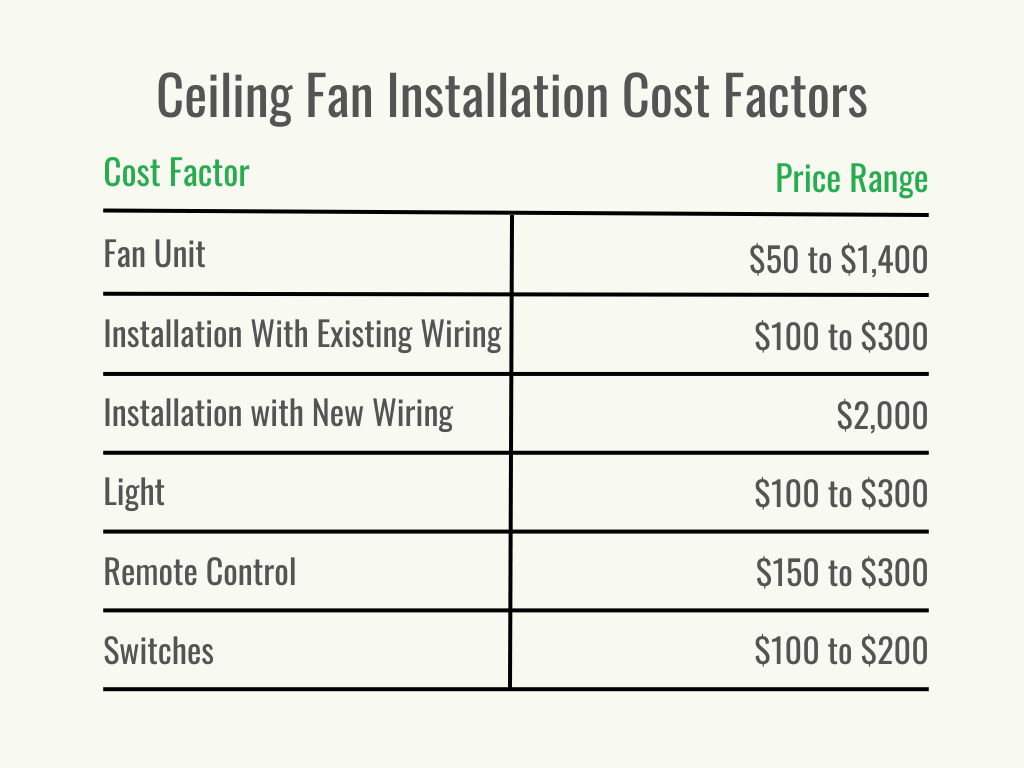
Professional ceiling fan installation costs vary substantially based on project complexity, geographic location, and service provider expertise. Average installation costs hover around $250, with typical ranges extending from $85 for simple replacement scenarios to $605 or more for complex installations involving new wiring or challenging mounting conditions.
Cost Breakdown by Installation Complexity
Simple fan replacement in locations with existing fan-rated electrical boxes represents the most economical installation scenario. These projects typically require one to two hours of labor and minimal materials, with pricing at the lower end of the typical range. The efficiency achievable in straightforward replacement scenarios makes professional installation surprisingly affordable for homeowners who might otherwise attempt DIY installation to save costs.
When Costs Skyrocket: Special Considerations
Fan type and features significantly impact installation costs. Standard ceiling fans typically fall within the most cost-effective range, with installation costs between $50 and $300 depending on complexity. Complex fans featuring rotational designs, dual motors, or premium materials command higher installation fees, typically ranging from $200 to $1,500, due to increased installation complexity and time requirements.
5 Must-Ask Questions Before Hiring a Handyman to Install Ceiling Fan
Selecting the appropriate service provider requires careful evaluation of qualifications, experience, and customer feedback. Licensed handyman services have been providing ceiling fan installation and repair services for decades, developing expertise that enables efficient, quality installations across diverse scenarios.
Essential Questions to Screen Potential Installers
When evaluating potential installers, prioritize those who demonstrate comprehensive understanding of electrical systems, familiarity with various fan types and mounting configurations, and commitment to code-compliant installation practices. Experience matters significantly, as installers who have encountered diverse scenarios develop problem-solving capabilities that prove valuable when unexpected challenges arise during installation.
Red Flags That Signal Unqualified Installers
Red flags warranting caution include significantly below-market pricing that may indicate inexperienced installers or corner-cutting practices, inability or unwillingness to provide proof of licensing and insurance, and absence of verifiable customer references. Professional service providers typically maintain proper licensing as required by their service jurisdictions, carry liability insurance protecting both themselves and homeowners, and can provide references demonstrating their track record.
4 Ceiling Fan Installation Situations Where DIY Becomes Dangerous
Certain scenarios demand professional installation regardless of homeowner electrical experience or confidence. Installing fans in locations without existing wiring requires electrical work that should only be performed by licensed professionals familiar with local codes and permit requirements.
When High Ceilings Require Professional Equipment
High ceiling installations, sloped ceiling mounting, and situations involving structural uncertainties all favor professional installation. These scenarios present safety risks from elevated work heights and potential complexity that professionals are better equipped to handle. The cost of professional installation in these scenarios represents a worthwhile investment in safety, quality, and peace of mind that outweighs the risks and potential expenses of amateur installation attempts.
Electrical Safety Steps You Should Never Skip
Electrical work inherently carries safety risks that must be respected regardless of installation approach. Power must be disconnected at the circuit breaker before beginning any electrical work, and voltage testers should verify power absence before touching wires. These basic safety practices prevent electrical shock and should be non-negotiable elements of any installation approach.
What to Do the Night Before Your Handyman Installs Ceiling Fan
Professional installation begins with thorough preparation that ensures efficient service delivery and optimal results. Before your scheduled installation, clear the work area of furniture and décor that might impede access to the ceiling fan location.
Essential Pre-Installation Checklist
Verify that someone over 18 will be present to provide access and approve the completed work. This person should have authority to make decisions if unexpected issues arise during installation, such as discovering inadequate electrical infrastructure requiring box replacement or encountering wiring complications that weren’t apparent from initial assessment. Having the fan and all its components on-site, preferably in unopened packaging, ensures installers have immediate access to everything needed for installation.
3 Simple Maintenance Tasks to Extend Your Ceiling Fan’s Life
Properly installed ceiling fans require minimal ongoing maintenance, though periodic attention extends operational life and maintains performance quality. Blade cleaning removes dust accumulation that can affect balance and appearance, with monthly dusting during regular cleaning routines typically sufficient for most households.
When to Call for Professional Service
Periodic checking of mounting hardware ensures continued secure attachment, as vibration from operation can gradually loosen fasteners over time, though professional installation minimizes this issue through proper techniques. Even well-installed fans may eventually require repair or component replacement. Common issues include motor wear, bearing failure, switch mechanism degradation, and balance problems from accumulated dust or minor component shifts.
Final Checklist: Is a Handyman to Install Ceiling Fan Worth It for You?
Choosing a qualified handyman to install ceiling fan systems represents a smart investment in your home’s safety, functionality, and aesthetic appeal. Professional installation ensures code compliance, maximizes durability, and delivers superior aesthetic results compared to DIY attempts.
When selecting installation providers, prioritize experience, proper licensing, insurance coverage, and positive customer feedback. Request detailed quotes that outline all costs before work begins, and don’t hesitate to ask questions about the installation process, expected timeline, and warranty coverage. For straightforward replacement scenarios where existing electrical infrastructure meets requirements, experienced DIYers with electrical background knowledge may successfully handle installation. However, when installations involve new wiring, electrical box upgrades, high ceilings, or sloped mounting surfaces, professional installation becomes the clearly appropriate choice. The safety risks and potential complications of amateur electrical work simply aren’t worth the cost savings when professional services are readily available at reasonable rates.
Leave a Reply