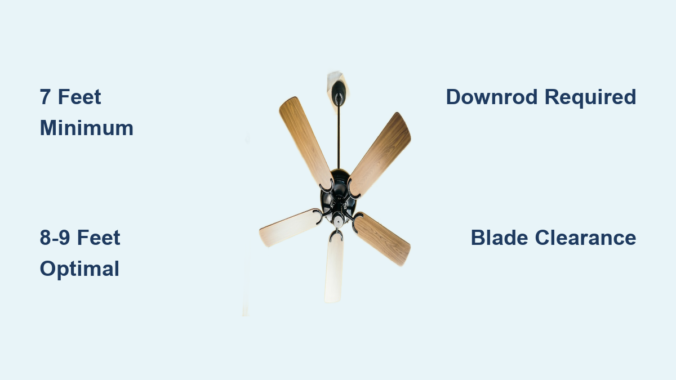
Choosing the right hanging height for your ceiling fan isn’t just about aesthetics—it’s a critical safety and performance consideration that affects how well your fan circulates air throughout the room. A fan hung too low creates dangerous clearance hazards, while one mounted too high fails to deliver effective airflow where you need it most. The good news is that clear industry standards exist to guide your installation. Understanding these guidelines ensures your ceiling fan operates safely while maximizing its cooling efficiency. In this guide, we’ll break down exactly how low your ceiling fan should hang based on your specific room dimensions, ceiling type, and intended use—so you can avoid costly mistakes and enjoy optimal air circulation.
Minimum Safety Clearance Requirements
The absolute lowest your ceiling fan should hang is 7 feet (2.13 meters) from the floor to the bottom of the fan. This measurement isn’t arbitrary—it’s the standard building code requirement across most residential jurisdictions designed to prevent contact injuries. Installing a fan below this height violates safety standards and creates significant risks, particularly for children and pets who may come into direct contact with spinning blades.
While 7 feet meets the legal minimum, treat this as just the baseline for safety. This clearance assumes normal walking patterns but doesn’t account for people reaching upward, jumping, or standing on furniture. For households with taller individuals or active children, aiming for greater clearance is strongly recommended. Many professional installers suggest targeting 8 feet or more whenever possible, which brings us to the optimal heights for everyday comfort and performance.
Why the 7-Foot Minimum Isn’t Always Ideal
The 7-foot clearance standard exists primarily for safety, not performance. When fans hang this low, they create uncomfortable drafts at standing height and can actually reduce overall airflow efficiency. The blades operate too close to the people in the room, creating that “wind tunnel” effect that feels more like a direct blast than comfortable circulation. Additionally, low-hanging fans restrict movement through the space, forcing people to duck or alter their paths unnecessarily. For these reasons, most residential installations benefit significantly from higher mounting positions that balance safety with optimal air movement.
Optimal Hanging Heights for Different Rooms
For standard residential spaces, the recommended hanging height ranges from 8 to 9 feet from the floor to the bottom of the fan. This range provides the ideal balance between safety clearance and effective air circulation patterns.
Living Rooms and Bedrooms: 8-9 Feet for Comfortable Circulation
In living rooms and bedrooms where people spend time seated or lying down, the 8-9 foot height range delivers the most comfortable air movement. At this height, the fan can effectively draw warmer air from above and circulate it throughout the room without creating disruptive drafts at seating level. The blades operate in the optimal zone to create the gentle downward breeze that provides cooling relief without disturbing papers, books, or sleep patterns.
Kitchens and Bathrooms: 8-9 Feet with Obstruction Considerations
Kitchens require special attention due to cabinets, lighting fixtures, and ventilation equipment competing for ceiling space. Aim for 8-9 feet of clearance while ensuring the fan doesn’t interfere with cabinet doors, stove vents, or existing lighting. In bathrooms, this height range also helps the fan clear steam and moisture more effectively while maintaining safe clearance from shower areas and fixtures.
Dining Rooms: 8 Feet for Targeted Cooling
Dining rooms often benefit from slightly lower mounting, around 8 feet, since furniture placement typically keeps the dining table in a fixed position. This height allows the fan to cool diners effectively without creating strong drafts that might disturb table settings or papers. The consistent seating arrangement makes it easier to position the fan for maximum comfort during meals while maintaining adequate clearance for people standing up from chairs.
Handling High Ceilings with Downrods
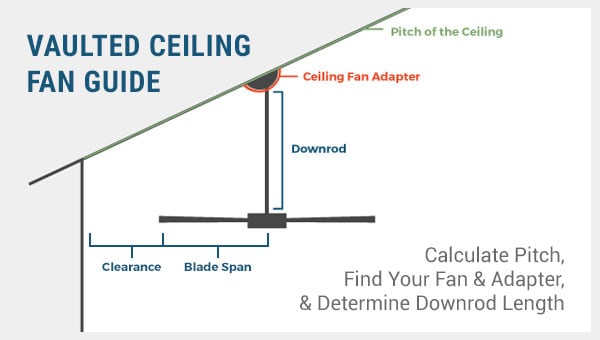
Rooms with ceilings higher than standard 8-9 feet require downrod extensions to bring the fan down to the optimal operating height. Without proper downrod length, the fan hangs too close to the ceiling, severely limiting its ability to circulate air throughout the room.
Vaulted and Cathedral Ceilings: 8-10 Feet Target Height
For vaulted or cathedral ceilings, the fan should hang 8 to 10 feet from the floor regardless of the actual ceiling height. This typically requires a downrod extension—sometimes several feet long—to achieve proper positioning. The general calculation is simple: subtract your target hanging height (8-10 feet) from your ceiling height to determine the appropriate downrod length. For example, a 12-foot ceiling requires a 4-foot (48-inch) downrod to achieve the recommended 8-foot hanging height.
Sloped Ceilings: Special Mounting Requirements
Sloped ceilings require special angled mounting hardware that allows the fan to hang straight down regardless of the roof pitch. Building codes typically mandate a minimum blade clearance of 8 inches from the angled ceiling surface, measured at the point where the blade is closest to the slope. This clearance ensures safe operation without the blades contacting the ceiling during normal use or if the fan develops slight wobble over time.
Essential Clearance Measurements Beyond Floor Distance
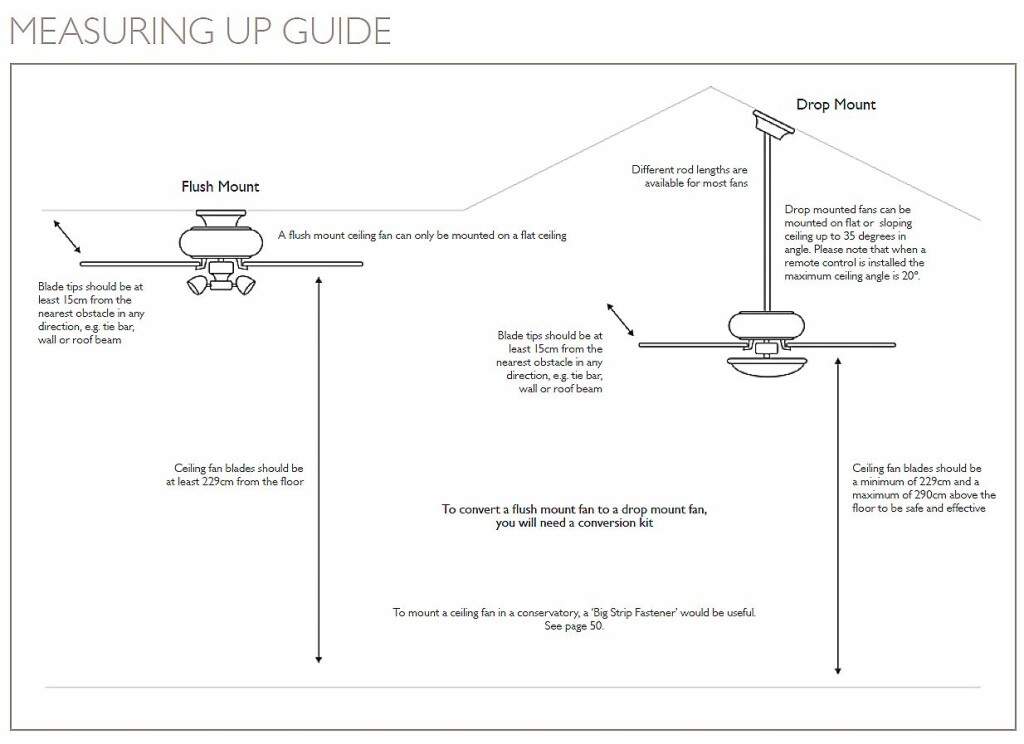
While floor clearance gets the most attention, several other critical measurements determine whether your ceiling fan installation will function properly.
Blade-to-Wall Clearance: 18-24 Inches Minimum
Your fan needs at least 18 to 24 inches of clearance between the blade tips and any wall. This space allows air to circulate freely around the fan, entering from one side and exiting the other to create proper airflow patterns. Insufficient wall clearance causes the fan to recirculate the same air repeatedly, reducing cooling effectiveness and creating uneven temperatures throughout the room. In corner installations, prioritize clearance on both walls, as tight corners are particularly problematic for airflow.
Blade-to-Obstruction Clearance: 24 Inches Minimum
Maintain a minimum of 24 inches between any fan blade and fixed objects such as cabinets, shelving, or tall furniture. This measurement ensures the fan can operate without contacting items that might interfere with its rotation or create safety hazards. Remember to consider the full swing of the blades—not just their static position—as some fans have blades that dip slightly during operation, and all fans can develop wobbles over time that slightly increase the effective diameter.
Low-Ceiling Solutions for Problematic Spaces
Standard downrod-mounted fans require at least 8 feet of ceiling height to achieve proper clearance. For rooms with lower ceilings, hugger-style or flush-mount fans provide cooling benefits without dangerous clearance issues.
Flush-Mount “Hugger” Fans for 7.5-8 Foot Ceilings
Hugger fans mount directly to the ceiling with no downrod, holding the fan motor and blades only a few inches below the ceiling surface. These fans work well in rooms with ceilings as low as 7 feet 6 inches up to 8 feet. While they sacrifice some airflow efficiency compared to downrod-mounted fans, they eliminate clearance problems entirely by removing the hanging element.
Problematic Low-Ceiling Situations
Rooms with ceilings below 7 feet 6 inches present significant challenges for traditional ceiling fans. In these situations, consider whether a ceiling fan is truly necessary or whether alternative cooling solutions might better serve your needs. Some municipalities prohibit ceiling fans in rooms with less than 7 feet of clearance due to safety concerns, so checking local building codes before installation is essential.
Installation Mistakes to Avoid
Even experienced DIYers make height-related errors when installing ceiling fans. Being aware of these common pitfalls helps you avoid them in your own installation.
Selecting the Wrong Downrod Length
The most frequent error is purchasing a fan without calculating the required downrod length first. Always determine your needed downrod length before buying—most home improvement stores carry standard lengths from 6 to 72 inches, with 12, 24, 36, and 48 inches being the most common options. Keep your receipt in case you need to exchange for a different length after installation.
Ignoring Blade Span in Clearance Calculations
Many homeowners focus only on the fan’s overall diameter while forgetting that the blade sweep matters just as much. A 52-inch fan requires more clearance than a 42-inch fan, and the actual path the blades travel affects your clearance calculations. Measure the expected blade path before finalizing your installation height to avoid dangerous or inefficient positioning.
Failing to Account for Room Usage Patterns
Assuming all rooms in your home require the same hanging height ignores how each space functions differently. A bedroom where people sit on beds requires different clearance than a living room where people stand and move around frequently. Adjust your target height based on the room’s primary use and the typical heights of people using the space.
Maintaining Proper Clearance Over Time
Ceiling fans typically require minimal maintenance, but periodically checking clearance ensures continued safe operation as your home and family change.
Children grow taller, furniture gets rearranged, and what seemed like adequate clearance years ago might become insufficient today. Make it a habit to visually inspect your fan’s clearance annually, particularly if you’ve added new furniture or household members have had growth spurts. If you notice any wobble developing, address the underlying issue promptly and reassess clearance after repairs, as wobbling effectively increases the fan’s operating diameter.
Key Takeaway: The minimum safe height for any ceiling fan is 7 feet from floor to fan bottom, though 8 to 9 feet provides optimal performance for most residential applications. High ceilings require downrod extensions to achieve proper positioning, with 8 to 10 feet being the target hanging range. Always maintain at least 18 to 24 inches of blade-to-wall clearance and 24 inches from any obstructions. For low ceilings, hugger-style fans provide a safe alternative to standard downrod models. Taking accurate measurements before installation prevents clearance issues and ensures years of safe, efficient operation.
Leave a Reply