That familiar tug on your ceiling fan’s light pull cord no longer brings illumination to the room. Instead of a satisfying click followed by light, you get silence and darkness. A broken pull cord is one of the most common ceiling fan issues homeowners face, but the good news is that fixing a ceiling fan light pull cord is almost always a straightforward DIY repair that requires minimal tools and takes less than 30 minutes. Whether your chain has snapped completely, the switch mechanism has failed, or the cord simply won’t pull anymore, this guide will walk you through every possible scenario with clear, step-by-step instructions you can follow safely.
Most ceiling fan light pull cord problems stem from simple mechanical failures rather than complex electrical issues. The beauty of these mechanisms is their simplicity—they’re designed to be user-serviceable without specialized knowledge. By the end of this guide, you’ll know exactly how to diagnose your specific problem, gather the right tools, and complete the repair with confidence. You’ll also learn maintenance tips to prevent future failures, saving you from repeating this process every few years.
Identify Your Specific Pull Cord Failure Type

Before grabbing tools or ordering parts, determine exactly what’s wrong with your pull cord system. Most failures fall into one of four distinct categories, each requiring a different repair approach. Grab a flashlight and examine your ceiling fan closely to diagnose the issue correctly.
Chain has completely broken or detached from the switch is the most obvious failure. If you see only a short stub of chain hanging from the fan or no chain at all, this is your problem. The broken end might be visible inside the chain slot or completely missing. This typically happens when excessive force is applied to the chain over time, causing the metal or plastic attachment point to fatigue and snap.
Chain moves but light doesn’t respond indicates an internal switch failure. When you pull the chain and feel the normal resistance and clicking action, but the light remains off (or on), the electrical contacts inside the switch mechanism have likely worn out or become corroded. This is common in older fans where the switch has been used thousands of times.
Chain is jammed and won’t pull at all suggests a mechanical obstruction. The chain might move slightly but catch, or it might not move even when pulled firmly. This often occurs when the internal cam mechanism becomes misaligned, when debris accumulates in the switch housing, or when the plastic components inside the switch crack and bind the mechanism.
Intermittent operation where light works sometimes but not others signals a failing switch that’s on its last legs. The light might turn on after three or four pulls, or it might work only when the chain is pulled in a specific direction. This progressive failure means the internal contacts are making unreliable connections and will likely fail completely soon.
Gather Your Repair Toolkit Before Starting
Having the right tools ready before you begin prevents frustration and wasted trips up and down your ladder. Most ceiling fan light pull cord repairs require only basic household tools you probably already own.
Essential tools for the job include: a non-contact voltage tester (absolutely critical for safety), a small Phillips head screwdriver, needle-nose pliers with a fine tip, a flashlight or headlamp for visibility, and a sturdy step ladder that positions you comfortably at fan height. For switch replacements, you might also need a small flathead screwdriver and wire connectors.
Replacement parts you may need: a new pull chain assembly (available at hardware stores for $2-$5), a complete replacement pull switch (typically $5-$15 depending on type), and possibly electrical tape for securing connections. Most standard ceiling fans use universal replacement switches that are readily available online or at home improvement stores.
Safety gear that’s non-negotiable: safety glasses to protect your eyes from falling debris while working overhead, and work gloves to prevent cuts from sharp metal edges inside the fan housing. Never skip these safety precautions when working with electrical components.
Pro tip: Before purchasing any replacement parts, take a clear photo of your existing switch mechanism with your smartphone. This will help you match the exact configuration when selecting replacements, as pull switches come in various terminal arrangements and mounting styles.
Power Down Properly Before Any Work Begins
Skipping proper electrical safety procedures is how DIY repairs turn into emergencies. Never assume the wall switch alone cuts power to your ceiling fan—most fans maintain constant power to the pull switch mechanism regardless of wall switch position.
Locate the correct circuit breaker by turning on the fan light, then systematically turning off breakers until the light goes out. Once identified, label the breaker “CEILING FAN – DO NOT TURN ON” to prevent accidental re-energization while you work.
Verify power is completely off using your non-contact voltage tester. With the breaker off, hold the tester near the fan canopy and along the pull chain path. A properly functioning tester will not indicate any voltage. Then, test again at the pull switch location itself to be absolutely certain.
Double-check with a physical test by attempting to operate both the wall switch and pull chain. No movement or sound should occur. If you detect any voltage at any point, stop immediately and recheck your breaker identification—this is not the time to take shortcuts.
Remember: Electricity doesn’t forgive mistakes. Taking five extra minutes to verify power is off properly is infinitely better than experiencing a dangerous shock.
Access the Pull Switch Mechanism Safely
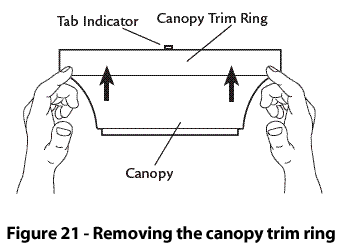
With power confirmed off, it’s time to reach the pull switch mechanism inside your ceiling fan housing. This requires accessing the wiring compartment while keeping the fan securely mounted.
Remove the fan canopy carefully by locating the mounting screws that secure it to the ceiling bracket. These are typically found on the underside of the canopy, often hidden beneath small decorative caps you’ll need to gently pry off. Support the canopy with one hand while loosening screws with the other to prevent it from dropping.
Lower the canopy just enough to expose the wiring compartment and switch mechanism—usually 2-3 inches is sufficient. You don’t need to disconnect any wiring to access the pull switch, which is typically mounted on the side of the housing with wires connected to its terminals.
Locate the pull switch assembly, which will have the pull chain (or chain stub) attached and two or three wires connected to it. Take a clear photo of the wire connections before disconnecting anything—this visual reference ensures correct reconnection later.
Working overhead can be awkward, so position your ladder securely and take your time. Rushing this step increases the risk of dropping screws or damaging components.
Repair a Broken Chain Without Replacing the Switch
If only the chain has broken but the switch mechanism still clicks when operated, you can often fix the problem in minutes without replacing the entire switch.
Reattach a detached chain by examining the switch mechanism to find the attachment point—usually a small metal ball at the end of a spring-loaded plunger. Using needle-nose pliers, grip the ball and pull it out slightly, then hook your existing chain (or a new replacement chain) onto the ball. Release the pliers to let the ball retract, securing the chain connection.
Install a new chain if your existing chain is too short or damaged. Cut the new chain to your desired length (typically 8-12 inches of usable chain below the fan housing), then attach it using the method above. Most replacement chains come with small metal loops that connect to the switch mechanism.
Test chain movement after installation by pulling it several times. The chain should extend and retract smoothly without catching. If movement is restricted, you may have installed the chain incorrectly or there may be debris in the switch mechanism that needs cleaning.
Adjust chain length if necessary by adding or removing links. The ideal length allows comfortable access without excessive slack that could catch on fan blades when in motion.
Replace a Faulty Pull Switch Mechanism Completely
When the chain moves freely but the light doesn’t respond, or the mechanism feels “mushy” without distinct clicks, you’ll need to replace the entire switch unit—a simple 15-minute job.
Disconnect the wires from the faulty switch by squeezing the release tabs on push-on connectors or loosening screw terminals. Note which wire connects to which terminal—typically black is power input and red or another black is light output.
Remove the faulty switch by unscrewing the mounting screw that holds it in place. Most switches are secured with a single small screw through a mounting flange. Carefully extract the switch from the fan housing.
Install the new switch by positioning it in the same orientation as the old one. Secure it with the mounting screw, connect the wires to the same terminals as before, then thread the new pull chain through the chain hole in the fan shell.
Test the new switch by pulling the chain several times—you should feel a distinct click with each pull. If the switch doesn’t operate correctly, double-check your wire connections before reassembling the fan.
Prevent Future Pull Cord Failures With Simple Maintenance
After completing your repair, implement these simple maintenance practices to extend the life of your pull cord mechanism and prevent repeat failures.
Pull the chain gently with a smooth motion rather than yanking or jerking it. The mechanism is designed for light, steady pressure—excessive force is the leading cause of chain failures.
Lubricate the mechanism annually with a tiny drop of silicone spray at the chain entry point if you notice resistance. Avoid heavy oils that attract dust and eventually cause more binding.
Inspect the chain and switch during your regular ceiling fan cleaning. Look for signs of wear, fraying, or corrosion, and address minor issues before they become major problems.
Address problems early rather than waiting for complete failure. If you notice the chain becoming harder to pull or requiring multiple pulls to operate, service the switch immediately.
A properly functioning ceiling fan light pull cord should provide years of reliable service with minimal maintenance. By following these straightforward repair procedures, you’ve saved yourself the expense of calling an electrician or replacing the entire fan. Remember to always prioritize electrical safety, verify power is off before starting work, and don’t hesitate to call a professional if you encounter complex wiring issues beyond basic switch replacement. With your newly repaired pull cord, you can enjoy convenient, reliable lighting control for years to come—simply give that chain a gentle pull and let the light shine.
Leave a Reply