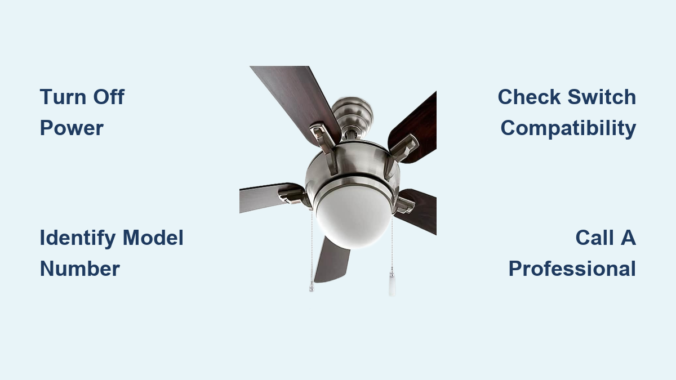
A broken ceiling fan pull chain is a common household issue that leaves many homeowners frustrated. One moment you’re adjusting your fan’s speed, and the next you’re left with a dangling piece of chain or nothing at all. While this seems like a simple problem, the reality is that proper repair information can be surprisingly difficult to find in reliable sources. Without verified repair instructions or manufacturer specifications, attempting a DIY fix can potentially create more problems than it solves.
This guide addresses what you need to know when reliable repair information is scarce. We’ll focus on safe assessment practices, understanding your limitations, and knowing when to seek professional help – all critical considerations when official repair documentation is unavailable for your specific fan model.
Why Proper Information Matters for Pull Chain Repairs
Ceiling fan repairs require specific knowledge that varies significantly between models and manufacturers. Unlike standardized electrical components, pull chain switches come in numerous configurations with different wiring setups, attachment mechanisms, and replacement part specifications.
When reliable repair information is unavailable, attempting a fix based on generic advice can lead to several problems. You might install an incompatible switch that doesn’t match your fan’s electrical requirements, connect wires incorrectly causing short circuits, or damage internal components while trying to access the switch housing. In some cases, improper repairs can void any remaining manufacturer warranties or create electrical hazards that compromise home safety.
The absence of model-specific documentation means you cannot verify critical details like amperage ratings, wire gauge requirements, or proper grounding procedures for your particular fan. These aren’t minor details – they’re essential safety considerations that determine whether your repair will function properly and safely long-term.
How to Assess Your Situation Safely Without Complete Information

When you discover your pull chain has broken off, your first steps should focus on assessment rather than immediate repair. Start by turning off power at the circuit breaker – never rely solely on wall switches when working with electrical components. This basic safety measure remains critical regardless of whether you have complete repair information.
Carefully examine what remains of the pull chain mechanism. Is the chain completely detached, or is a portion still connected to the internal switch? Can you see the switch assembly through the housing? Document what you see with clear photographs from multiple angles, as these will be valuable when consulting professionals or searching for compatible parts.
Without manufacturer documentation, determining whether you need just a new chain or an entire switch replacement becomes challenging. Most pull chain switches have specific electrical ratings that must match your fan’s requirements. Using an incompatible replacement could lead to premature failure or safety issues. The safest approach is to remove the broken switch (if accessible) and take it to a professional for identification rather than guessing based on appearance alone.
Essential Safety Considerations When Information Is Limited
Working with electrical components without proper documentation significantly increases risks. The most critical safety practice is verifying power is completely off before beginning any work. Use a non-contact voltage tester to confirm no current is flowing to the fan – this simple $10 tool provides essential protection.
When documentation is unavailable, avoid assumptions about wiring configurations. Ceiling fans typically connect to both a light circuit and fan motor circuit, and incorrect wiring can damage components or create shock hazards. If you cannot positively identify wire functions (hot, neutral, ground), do not proceed with any electrical connections.
Working at height adds another layer of risk. Many ceiling fans are installed in rooms with high ceilings, requiring ladders or platforms. Without clear repair instructions, you may spend more time working overhead, increasing fall risks. Always have someone spot you when working at height, and never overreach while on a ladder.
Remember that electricity demands respect – a momentary lapse in safety protocol can have serious consequences. When proper repair information is unavailable, erring on the side of caution isn’t just recommended, it’s essential for personal and household safety.
Finding Reliable Repair Information When Standard Sources Fail

When initial searches yield no usable information about your specific fan model, several alternative approaches can help identify proper repair procedures. Start by locating your fan’s model number, typically found on a sticker attached to the motor housing, blade irons, or mounting bracket. This information is crucial for finding model-specific documentation.
Contact the manufacturer directly through their customer service department. Many companies will provide repair manuals or connect you with authorized service centers that have access to technical documentation. Be prepared to provide photos of your broken components and the fan’s model information.
Visit specialized lighting and ceiling fan retailers that carry replacement parts. Knowledgeable staff at these stores often have access to cross-reference catalogs showing compatible replacement switches for various fan models. They may also have repair guides not available to the general public.
Check if your fan is covered under an extended warranty or home warranty plan. These services often include repair coverage and will send qualified technicians with the proper knowledge and tools to address the issue correctly.
When Professional Help Is Necessary
Certain situations absolutely require professional assistance, especially when reliable repair information is unavailable. If you cannot identify the make and model of your fan, professional help becomes strongly advisable. Different manufacturers use proprietary switch designs that require specific replacement parts.
Issues that extend beyond the pull chain itself warrant professional attention. If your fan makes unusual noises, wobbles excessively, or shows signs of overheating, these indicate problems that likely require more than a simple switch replacement. Attempting repairs without proper knowledge could exacerbate these underlying issues.
If your initial assessment reveals damaged wiring, corrosion, or signs of electrical arcing, stop immediately and contact a licensed electrician. These conditions indicate potentially serious electrical problems that shouldn’t be addressed without proper training and equipment.
Fans installed in hard-to-reach locations or those requiring specialized mounting hardware also benefit from professional repair. The increased risk of falls or damage to the fan unit makes professional assistance cost-effective when considering potential injury or replacement costs.
Key Takeaways for Safe Decision-Making

When facing a broken ceiling fan pull chain with limited repair information, prioritize safety over speed of repair. Never work on electrical components without verifying power is completely off at the circuit breaker. Take time to properly identify your fan model before attempting any repairs – this single step prevents many common mistakes.
Understand that not all repairs are appropriate for DIY when documentation is unavailable. The cost of professional service typically ranges from $75-$150, which may seem high but pales in comparison to potential costs from electrical damage, fire hazards, or injury from working at height.
If you decide to proceed with a repair despite limited information, document every step with photographs before disconnecting anything. This creates a visual reference for reassembly that can prevent wiring mistakes. Only purchase replacement parts after positively identifying your existing components – generic replacements often lead to compatibility issues.
Most importantly, recognize that sometimes the wisest repair decision is knowing when not to repair. When reliable information is unavailable and safety concerns exist, professional assistance provides peace of mind that your ceiling fan will operate safely and reliably for years to come.
Final Note: This article acknowledges the limitations of providing specific repair instructions without verified manufacturer documentation. Always prioritize electrical safety and consult qualified professionals when in doubt about any home repair involving electrical components. Your safety is worth far more than the cost of professional service.
Leave a Reply