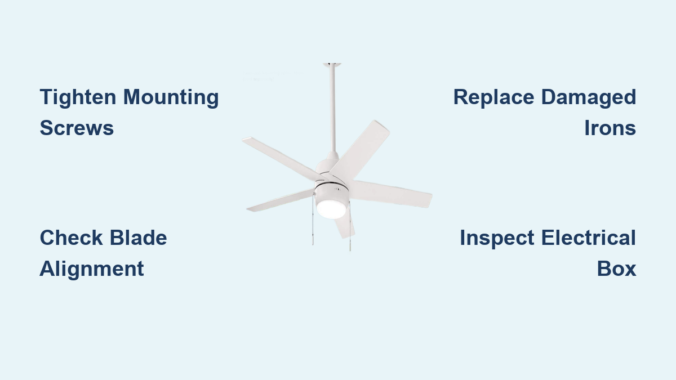
Nothing disrupts the clean look of your living space quite like noticing your Hampton Bay ceiling fan blades sagging as you glance upward. This common issue affects countless homeowners who rely on these popular Home Depot fixtures for comfort and style. When your Hampton Bay ceiling fan blades sagging becomes visible, it creates an unbalanced appearance that not only looks unsightly but often leads to annoying wobbling, excessive noise, and reduced airflow efficiency. The constant vibration from an unbalanced fan can actually worsen the problem over time, potentially damaging your ceiling mount or electrical connections if left unaddressed.
The good news is that Hampton Bay ceiling fan blades sagging typically stems from preventable or easily fixable issues rather than a fundamental flaw in your fan. Most cases involve simple mechanical problems that you can resolve with basic tools and a methodical approach—saving you the expense and hassle of fan replacement. Whether your blades have gradually sagged over time or suddenly dropped after a recent installation, this guide provides the precise steps to diagnose and correct the problem, restoring both function and aesthetics to your ceiling fan.
Diagnose Your Hampton Bay Fan Blade Sagging Problem First
Before grabbing your toolkit, properly identifying why your Hampton Bay ceiling fan blades sagging will prevent wasted effort on temporary fixes that fail to address the root cause. Many homeowners make the mistake of immediately tightening visible screws without understanding which components have actually failed, leading to recurring issues that require repeated attention.
Conduct a Thorough Visual Inspection
With the fan completely powered off and stationary, position yourself directly beneath it and use a smartphone level app or traditional bubble level along each blade’s length. Document which blades sag significantly (more than 1/8 inch difference from others) and note whether the entire assembly hangs unevenly or just specific blades. Carefully examine each blade’s connection point to the blade iron (the metal arm that attaches to the motor housing), looking for stripped screw holes, visible cracks in plastic components, or rust on metal parts. Pay special attention to the upper mounting bracket where the fan attaches to your ceiling—this is often the true culprit behind what appears to be blade-specific sagging.
Identify the Most Common Hampton Bay Blade Sagging Causes
Hampton Bay ceiling fan blades sagging typically stems from one of four issues: loose mounting hardware at the ceiling junction box (the most frequent cause), loosened blade-to-iron screws allowing individual blades to droop, fatigued or broken blade irons that no longer maintain proper tension, or occasionally warped blades due to moisture exposure or manufacturing defects. The constant vibration from normal operation gradually works screws loose over time, especially in homes with higher ceilings where fan movement creates more torque. In newer installations, improper initial assembly—such as insufficiently tightened mounting screws or incorrectly aligned blade brackets—often manifests as sagging within the first few months of use.
Secure the Critical Mounting Hardware Connections

When your Hampton Bay ceiling fan blades sagging affects the entire assembly rather than just one or two blades, the problem almost always originates at the ceiling mounting point. Addressing this foundational issue before working on individual blades prevents wasted effort and ensures lasting results.
Tighten the Canopy-to-Bracket Connection Properly
After turning off power at the circuit breaker, remove the decorative canopy cover by unscrewing its retaining screws. With the canopy lowered, check that all mounting screws connecting the fan’s mounting bracket to your ceiling electrical box are fully tightened. Many Hampton Bay installations use a ball-and-socket mounting system that can shift position if the set screws loosen. Ensure the bracket sits flush against the ceiling with no visible gaps, and verify that the downrod (if present) is securely locked into position. When reinstalling the canopy, hand-tighten screws gradually in a star pattern to avoid distorting the cover while ensuring even pressure.
Verify Motor Housing Attachment Security
While the canopy is removed, inspect the screws that secure the motor housing to the mounting bracket. These critical connections often loosen due to motor vibration, causing the entire fan assembly to tilt. Using a Phillips screwdriver, tighten each motor housing screw incrementally—turn each one a quarter-turn at a time while alternating between opposite screws to maintain even pressure. Avoid overtightening, which can strip the threads in the motor housing. After securing these connections, manually rotate the fan blades to check for smooth movement and confirm the motor housing remains centered within the mounting bracket.
Correct Individual Blade Alignment and Balance
When Hampton Bay ceiling fan blades sagging affects only specific blades while others remain level, the solution requires precise blade-by-blade adjustment and balancing to eliminate wobble and restore even air distribution.
Adjust Blade Pitch Using Alignment Markers
Most Hampton Bay models feature small alignment markers (often painted lines or molded ridges) on the blade irons that indicate proper pitch angle. With the fan powered off, loosen the screws connecting each sagging blade to its iron just enough to allow adjustment. Rotate the blade until its alignment marker matches the position of properly aligned blades, then retighten the screws. For optimal results, use a blade pitch gauge (available at hardware stores for under $5) to ensure each blade maintains the manufacturer’s recommended 12-14 degree angle. This precise adjustment creates consistent airflow that prevents vibration-induced loosening.
Replace Damaged Blades or Blade Irons Immediately
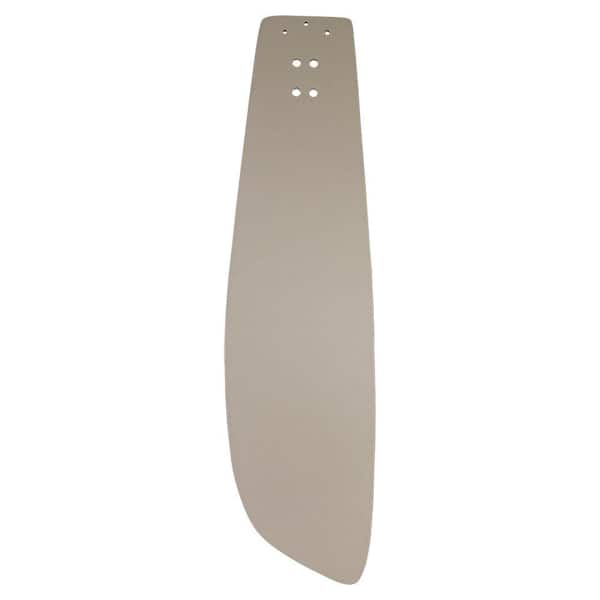
If inspection reveals cracked blade irons (the metal arms connecting blades to the motor) or warped blades, replacement is necessary—no amount of tightening will permanently fix Hampton Bay ceiling fan blades sagging caused by damaged components. Hampton Bay, being a Home Depot exclusive brand, makes replacement parts available through their website using your fan’s model number (typically found on a label inside the canopy). When installing new blades, apply a small amount of thread-locking compound to the attachment screws to prevent future loosening while still allowing future adjustments. Match replacement blades exactly to maintain proper balance—mixing different blade styles or weights creates new imbalance issues.
Implement Preventive Maintenance to Avoid Recurrence
The most effective solution for Hampton Bay ceiling fan blades sagging is preventing the problem before it starts through simple but consistent maintenance practices that take only minutes each quarter.
Establish a Quarterly Tightening Routine
Every three months, power off your fan and perform a complete hardware check: tighten all visible screws (ceiling mount, canopy, motor housing, and blade attachments), inspect for rust or corrosion, and verify blade alignment. This quick maintenance session catches minor loosening before it progresses to noticeable sagging. When tightening blade screws, place a piece of cardboard between the blade and iron to prevent marring the finish while you work.
Address Minor Issues Before They Worsen
At the first sign of unevenness—before Hampton Bay ceiling fan blades sagging becomes visually obvious—perform the tightening procedures outlined above. Early intervention prevents the vibration damage that accelerates hardware deterioration. If you notice increased wobble or noise after ceiling painting or home renovations, check your fan immediately, as these activities often dislodge settled dust that temporarily unbalances the fan.
Recognize When Professional Help Is Necessary
While most Hampton Bay ceiling fan blades sagging issues are DIY-friendly, certain situations warrant professional assistance to ensure safety and proper resolution.
Electrical and Structural Mounting Concerns
If your sagging problem involves the ceiling electrical box (particularly if it’s not rated for fan weight), exposed wiring, or structural mounting issues, consult a licensed electrician. Hampton Bay fans require specific fan-rated electrical boxes that can support 35-70 pounds of dynamic load—standard light fixture boxes cannot safely handle this stress. Attempting electrical work without proper expertise creates serious fire and safety hazards.
Complex Balance Problems
When standard balancing procedures fail to eliminate wobble after addressing all mechanical connections, your fan may have internal motor issues requiring professional service. Persistent vibration that continues after hardware tightening and blade replacement could indicate a failing motor bearing or unbalanced rotor assembly—problems that typically warrant fan replacement rather than repair.
Final Steps for Long-Term Hampton Bay Fan Performance
Correcting Hampton Bay ceiling fan blades sagging properly extends your fan’s lifespan while restoring quiet, efficient operation. After completing repairs, run your fan on high speed for 24 hours while monitoring for any residual wobble or noise. If minor vibration persists, attach small adhesive balancing weights (included with most fans or available separately) to the top of the lightest blade until smooth operation returns. Document your repair process with notes and photos for future reference, as Hampton Bay models often share similar components across product lines. By addressing blade sagging promptly with these targeted solutions, you’ll maintain optimal performance from your ceiling fan for years to come—without the unnecessary expense of replacement. Remember that consistent, minor maintenance prevents the major issues that lead homeowners to replace perfectly functional fans prematurely.
Leave a Reply