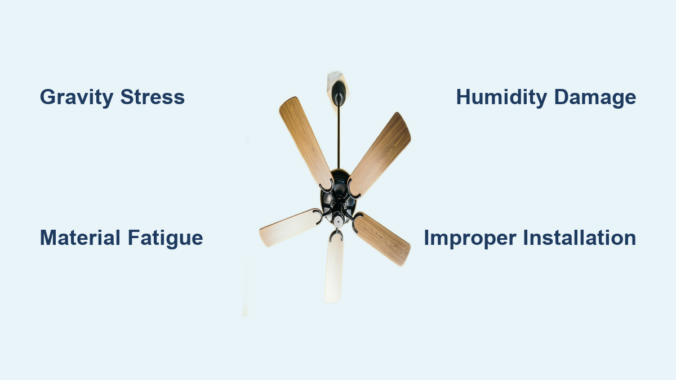
That unsettling wobble in your ceiling fan isn’t just annoying—it’s a warning sign that something’s wrong. When ceiling fan blades droop, they lose their perfect horizontal alignment, creating an uneven rotation that affects both performance and safety. This common issue impacts homes across the country, yet most homeowners don’t understand why their ceiling fan blades droop or how to fix it. Whether you’ve noticed a subtle tilt in one blade or are trying to prevent droop before it starts, understanding the mechanics behind this phenomenon gives you the knowledge to maintain optimal airflow and avoid costly repairs. In this guide, we’ll uncover the exact reasons why ceiling fan blades droop, how to spot early warning signs, and most importantly—what you can do to prevent or correct it before your fan becomes a safety hazard.
Why Gravity and Material Fatigue Cause Ceiling Fan Blade Droop
The relentless force of gravity is the primary culprit behind why ceiling fan blades droop over time. Every time your fan sits idle in its horizontal position, gravity pulls downward on each blade, creating constant stress at the mounting points where blades connect to the fan hub. This continuous gravitational stress accumulates over months and years, gradually deforming blade materials at a microscopic level. The deformation may start imperceptibly small, but these tiny changes compound into visible drooping that compromises your fan’s performance.
Material fatigue dramatically accelerates this gravitational deformation. Different blade materials succumb to droop through distinct mechanisms:
- Wooden blades experience fiber compression as wood fibers slowly compact under constant load
- MDF and engineered wood suffer from binding agent breakdown that allows structural relaxation
- Plastic blades undergo polymer chain relaxation where molecules slowly shift position
- Metal blades (though more resistant) develop microscopic stress fractures at mounting points
The quality of materials determines how quickly droop develops—premium hardwoods resist deformation longer than thin particleboard, while high-grade ABS plastic maintains shape better than budget alternatives. Even the best materials will eventually droop under gravity’s constant pull, but understanding these mechanisms helps you choose fans that resist droop longer.
How Blade Thickness and Design Affect Droop Development
Thinner blades often resist droop better than thicker ones despite seeming counterintuitive. This occurs because thinner blades generate less gravitational force while maintaining sufficient rigidity. The structural design matters equally—blades with internal reinforcement like metal ribs or composite cores maintain their shape far longer than flat, unreinforced designs.
The mounting bracket design significantly impacts droop resistance. Quality fans use robust brackets with multiple attachment points that distribute stress evenly across the blade. Budget models often use minimal hardware that concentrates stress at just one or two points, creating weak spots where drooping begins. When shopping for a new fan, examine the blade-to-hub connection—more screws and wider mounting surfaces generally indicate better droop resistance.
Temperature and Humidity’s Shocking Impact on Blade Droop
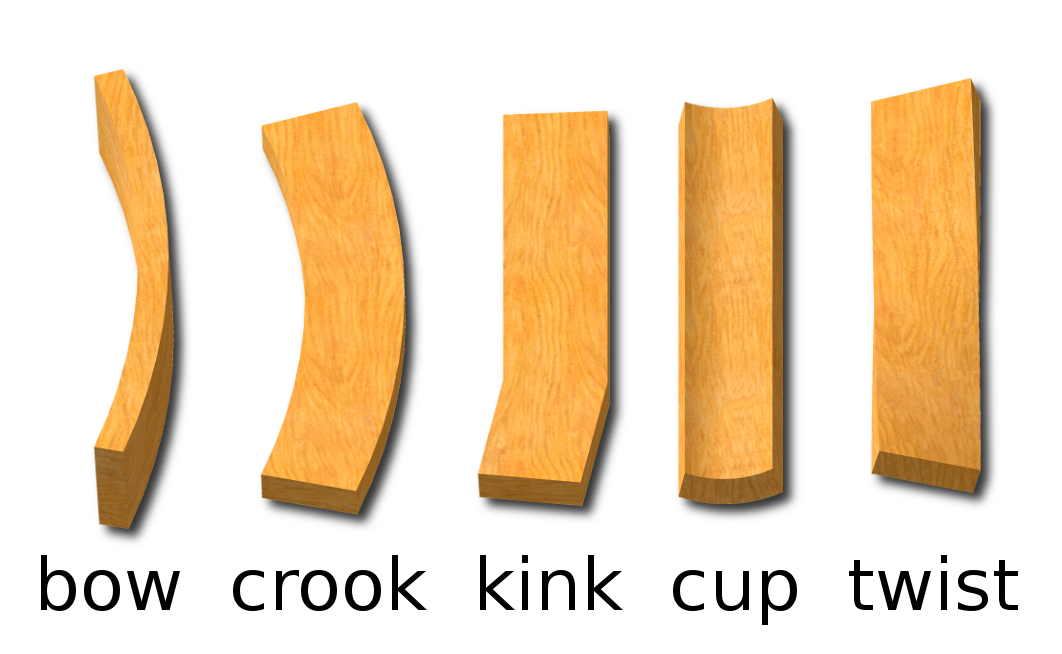
Your home’s climate control directly affects how quickly your ceiling fan blades droop, with humidity proving particularly destructive for wooden blades. Wood’s hygroscopic nature means it continuously absorbs and releases moisture based on ambient humidity levels. During humid periods, wooden blades absorb moisture and expand slightly; when dry conditions return, they contract. This ongoing expansion-contraction cycle creates internal stress that weakens wood fibers and accelerates warping.
Critical humidity thresholds for wooden blades:
– Below 30% humidity: Wood dries out, becoming brittle and prone to cracking
– 40-60% humidity: Ideal range that minimizes moisture-related stress
– Above 70% humidity: Excessive moisture absorption causes swelling and warping
Temperature fluctuations compound humidity damage through thermal cycling. Each heating and cooling cycle creates microscopic damage at the molecular level, gradually reducing the material’s ability to resist deformation. Rooms like bathrooms and kitchens create perfect storm conditions with frequent humidity spikes from showers and cooking, making ceiling fans in these locations especially vulnerable to rapid droop development.
How to Protect Blades from Environmental Damage
Maintaining indoor humidity between 40-60% provides optimal conditions for wooden ceiling fan blades. Use these practical strategies:
- Install a whole-house dehumidifier if you live in a coastal or humid climate
- Ensure proper bathroom ventilation with exhaust fans that vent outdoors
- Avoid placing ceiling fans near heating vents or recessed lighting that creates heat pockets
- In dry climates, use humidifiers to prevent wood from becoming too brittle
For existing fans showing early droop signs in humid environments, consider applying a moisture-resistant finish to wooden blades. Marine-grade polyurethane creates a protective barrier that minimizes moisture absorption while maintaining the wood’s natural appearance.
3 Critical Installation Mistakes That Cause Ceiling Fan Blades to Droop
Improper installation creates immediate stress points that accelerate blade droop development from day one. These common mistakes transform what should be a balanced system into uneven stress distribution that guarantees premature drooping.
Mistake #1: Mounting on an unlevel bracket – Even a slight tilt in the mounting bracket places abnormal loads on specific blades. Always verify level in multiple orientations using a high-quality bubble level before securing the fan body. A perfectly level mount distributes gravitational stress evenly across all blades.
Mistake #2: Incorrect screw torque – Loose screws allow blade movement that gradually widens mounting holes, while overtightened screws can crack blade materials. Follow manufacturer torque specifications precisely—typically 35-45 inch-pounds for most residential fans. Use a torque screwdriver for accuracy.
Mistake #3: Mismatched downrod length – Installing a fan too close to a high ceiling or too far from a low one creates vibration patterns that accelerate blade stress. Match downrod length to ceiling height using this simple formula: Ceiling height (feet) minus 8 = ideal downrod length (inches). For a 10-foot ceiling, use a 24-inch downrod.
How to Verify Proper Installation in 5 Minutes
Perform this quick alignment check to catch installation issues before they cause droop:
- Turn off the fan and let blades stop completely
- Place a straightedge across multiple blades near the hub
- Check for consistent gaps between straightedge and blades
- Measure distance from ceiling to blade tip at multiple points
- All measurements should be within 1/8 inch of each other
Any noticeable variation indicates improper installation that will accelerate blade droop. Correct these issues immediately before permanent deformation occurs.
How to Identify Early Signs of Ceiling Fan Blade Droop
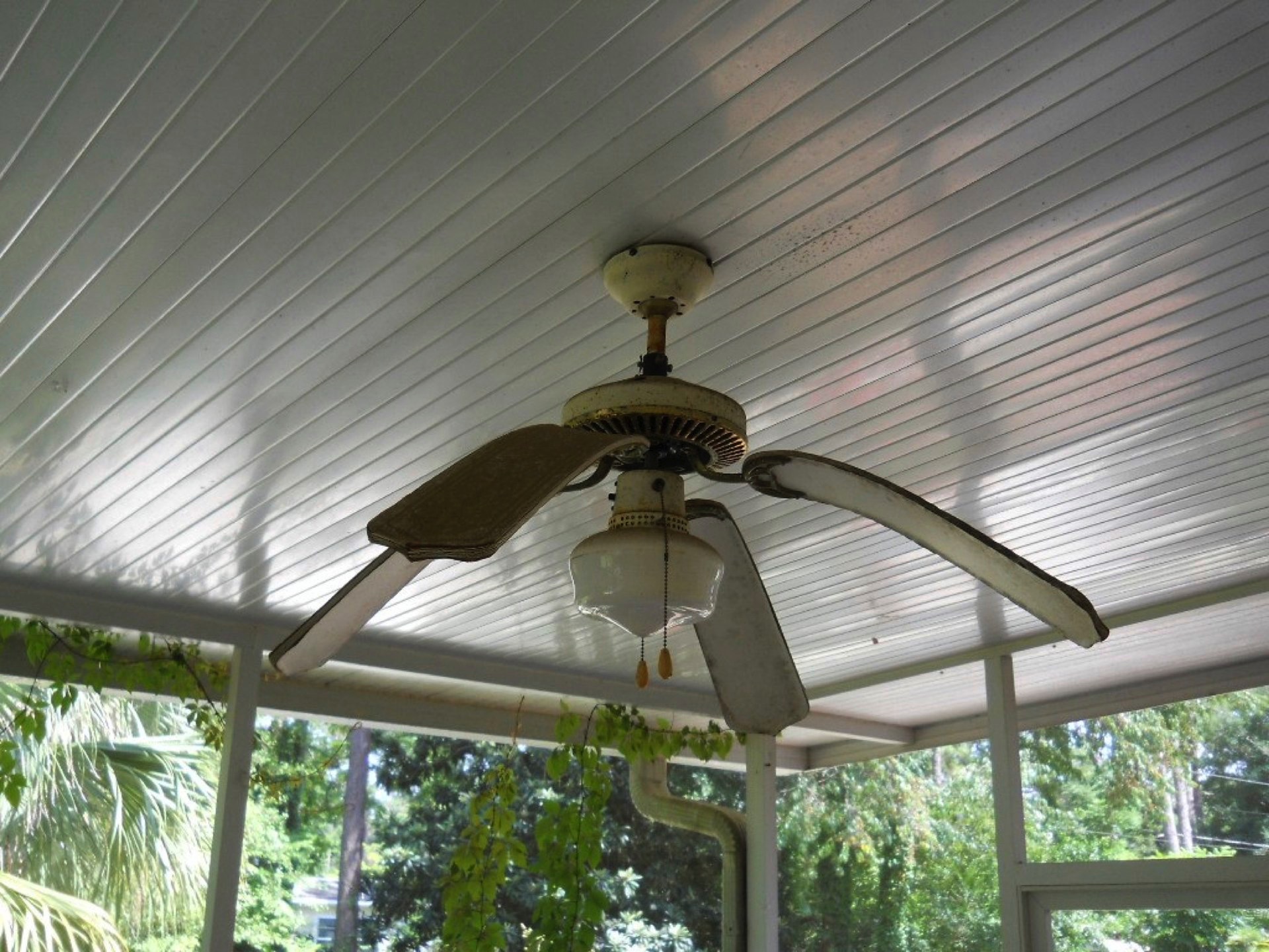
Catching blade droop early allows for simple correction before replacement becomes necessary. Learn to recognize these subtle warning signs before they progress to severe drooping:
Visual indicators appear most clearly when viewing the fan from directly below. A properly functioning fan forms a perfect horizontal circle when stationary. Early droop shows as a subtle slope where the blade tip hangs lower than the mounting point. The most reliable detection method involves placing a straightedge across multiple blades near the hub—any gap larger than 1/16 inch indicates developing droop.
Performance symptoms often precede visible droop:
– Increased vibration at specific speed settings
– Rhythmic clicking sounds corresponding to blade rotation
– Reduced airflow despite running at previous effective speeds
– Unusual humming that wasn’t present when fan was new
Pro Tip: Perform monthly visual inspections using your smartphone camera. Point the camera upward at the fan while it’s stationary and review the image on your screen. Digital magnification makes subtle alignment issues much easier to spot than with the naked eye.
Permanent Solutions for Severely Drooping Ceiling Fan Blades
When blade droop becomes severe (more than 1/4 inch deviation), temporary fixes won’t provide lasting results. These proven solutions address the root causes rather than just symptoms:
Blade replacement offers the most reliable resolution for moderate to severe droop. High-quality replacement blades made from better materials can extend your fan’s service life significantly. For wooden fans, consider upgrading to moisture-resistant composite blades that won’t succumb to humidity-related warping. Always purchase exact model-specific replacements to maintain proper balance.
Complete fan replacement becomes cost-effective when:
– The fan is over 10 years old
– Multiple blades show severe droop
– Motor bearings show excessive play
– Replacement blades cost more than 50% of a new comparable fan
Modern energy-efficient models use advanced blade designs that resist droop while consuming 20-30% less electricity than older units. The long-term energy savings often offset the initial investment.
When to Call a Professional: Seek professional help immediately if you notice:
– Severe wobbling that shakes light fixtures
– Loud grinding or screeching noises
– Visible separation between blades and mounting brackets
– Any signs of electrical issues like burning smells
Safety should always come first—severely drooping blades under constant stress could potentially detach, causing property damage or injury.
Preventing Future Droop: Long-Term Strategies That Work
Investing in quality during your next fan purchase pays dividends in droop resistance. Look for these features that significantly extend blade life:
- Blade construction: Solid hardwood or high-density composites outperform thin MDF
- Mounting system: Multiple screw points with metal reinforcement brackets
- Environmental rating: Damp-rated fans for humidity-prone areas like kitchens
- Warranty coverage: Minimum 5-year warranty on blades indicates manufacturer confidence
Establish a simple maintenance routine that prevents droop development:
– Check blade alignment quarterly using the straightedge method
– Tighten mounting screws annually (don’t overtighten)
– Clean blades monthly to prevent dust buildup that creates imbalance
– Operate fan at medium speed regularly rather than constantly on high
Expert Note: For existing fans showing early droop signs, applying gentle upward pressure to drooping blades for 24-48 hours can sometimes reverse minor deformation. Place books or foam blocks carefully under affected blades to apply constant, gentle upward pressure while the fan remains off. This technique works best for wooden blades in the early stages of droop development.
Understanding why ceiling fan blades droop empowers you to take proactive steps that maintain performance and safety. By addressing environmental factors, ensuring proper installation, and implementing regular maintenance, you can significantly extend your fan’s service life while maintaining optimal airflow throughout your home. When droop does appear, recognizing the early warning signs allows for timely intervention before minor issues become major problems requiring complete replacement.
Leave a Reply