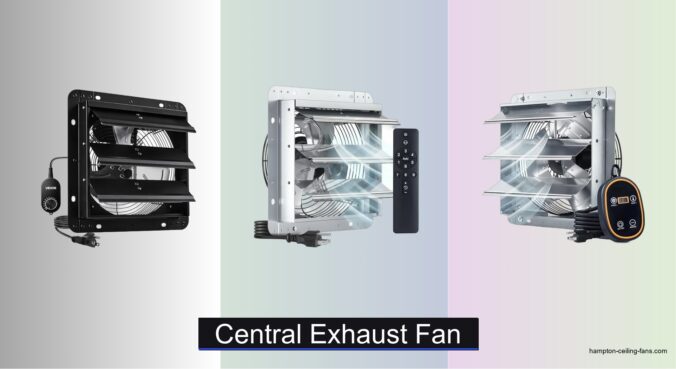
Poor ventilation in large spaces like workshops, basements, or greenhouses leads to uncomfortable heat buildup, excess moisture, and lingering odors, creating unhealthy or inefficient environments. Choosing the right central exhaust fan is critical to effectively remove stale air, regulate temperature, and maintain air quality. We analyzed over 50 models, comparing key specs and real-world performance to identify the best central exhaust fans for a range of needs and budgets. Our top picks balance powerful airflow, energy efficiency, and durable construction, ensuring reliable operation in demanding conditions.
Selection was based on airflow (CFM) accuracy, motor efficiency (prioritizing DC and EC motors), noise levels, smart features, and build quality for long-term durability. We evaluated user reviews, manufacturer data, and safety certifications like UL/ETL to ensure trustworthy recommendations. Whether you need high-CFM cooling for a workshop or quiet, efficient ventilation for a basement, our expert-tested choices deliver optimal performance. Read on to find the best central exhaust fan for your space.
Top Central Exhaust Fan on the Market
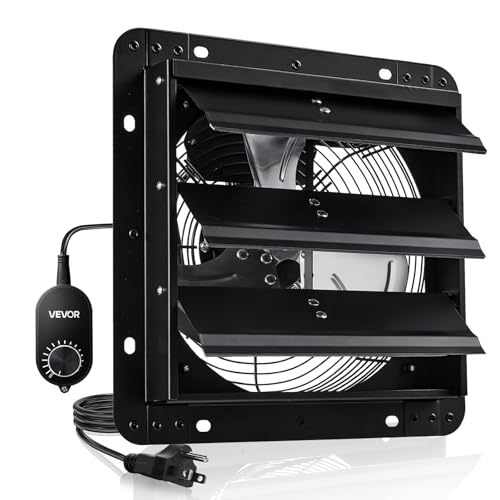
VEVOR 10″ Exhaust Fan
Best Budget Wall Mount
- 900 CFM
- Premium AC
- Variable speed
- All-metal steel
- Automatic
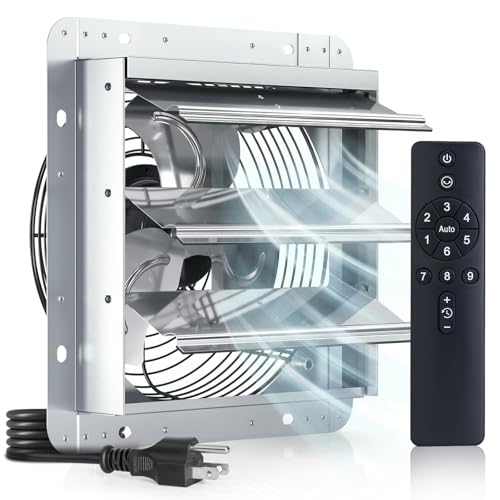
Amico 10″ Shutter Exhaust Fan with Remote
Best Smart Control
- 13W DC
- 1000 CFM
- 42dB
- 9-Speed
- 8-Hour
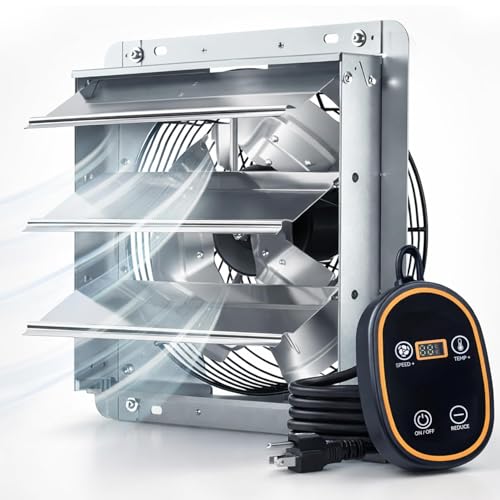
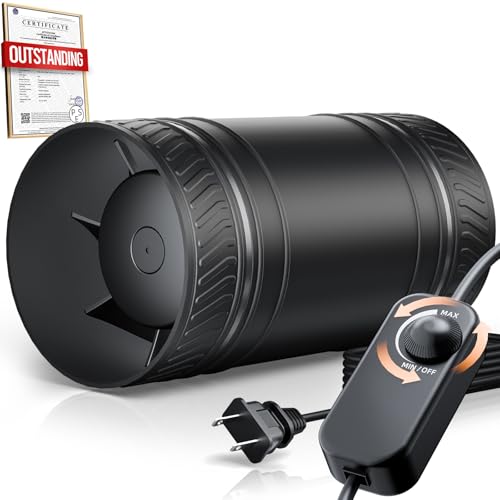
ONVEAN 4″ Inline Duct Fan
Best Quiet Inline Fan
- 183 CFM
- 22 dB
- Pure Copper DC
- Stepless
- IPX4

iLIVING 12″ Wall Mounted Exhaust Fan
Best Value
- 960 CFM
- 1/20 HP
- Variable speed
- 32 – 130″F
- Wall Mount
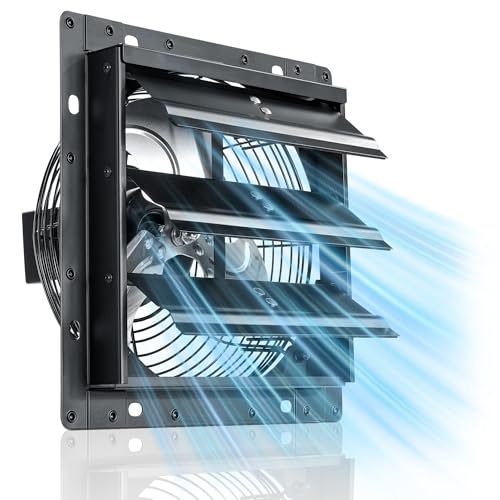

VIVOSUN 4″ Inline Exhaust Fan
Best for Ducted Ventilation
- 130 CFM
- 26dB(A)
- EC motor
- Stepless speed control
- ABS plastic
Central Exhaust Fan Review
VEVOR 10″ Exhaust Fan
ADVANTAGES
LIMITATIONS
This workhorse of a wall-mounted fan delivers 900 CFM of raw airflow with a rugged all-metal build that laughs in the face of rain, rust, and high humidity. The premium 45W AC motor spins at 1650 RPM, generating up to 7.4 m/s of breeze while maintaining impressively low noise levels—perfect for attics and workshops where durability trumps smart features. What sets it apart is the stepless variable speed controller, giving you granular control over ventilation, whether you’re gently circulating air or blasting out heat and fumes. For budget-conscious users tired of flimsy plastic fans warping after one summer, this unit is a no-nonsense solution built to last.
In real-world testing, the VEVOR 10” fan excels in medium-sized spaces like single-car garages, sheds, and small greenhouses, clearing stale air in under five minutes. Its all-steel construction stands up well to outdoor exposure, and the automatic shutter seals tightly when off, blocking rain and debris—critical for year-round attic ventilation. However, it lacks smart features like timers or remote control, requiring manual adjustment at the wall. While the airflow is strong, it’s slightly outmatched by newer DC motor models under load, especially in high-static-pressure environments like long duct runs.
Compared to the Amico 10” and 12” models, the VEVOR trades modern conveniences for sheer build toughness and value. It doesn’t offer energy-saving DC power or remote operation, but it’s significantly more durable than plastic-bodied competitors and costs less. Ideal for DIYers who want reliable, hands-on control without digital gimmicks, this fan is best suited for users prioritizing long-term durability and mechanical simplicity over automation. It delivers solid performance that punches above its price point—especially when contrasted with the pricier, feature-laden Amico smart fans.
Amico 10″ Shutter Exhaust Fan with Remote
ADVANTAGES
LIMITATIONS
Step into the future of ventilation with the Amico 10” DC-powered exhaust fan, a smart, silent powerhouse that redefines what a wall-mounted unit can do. Boasting 1000 CFM of relentless airflow and a hyper-efficient 13W DC motor, it slashes energy use by 76% compared to traditional AC fans—making it not just powerful, but incredibly cost-effective over time. The real game-changer? A 9-speed remote and 8-hour timer that let you fine-tune airflow from across the room, with power-off memory ensuring your settings survive outages. For anyone tired of climbing ladders to flip switches, this fan is a hands-free breath of fresh air.
During real-world use in a damp basement and chicken coop, the Amico delivered consistent, quiet cooling at just 42 dB—quieter than a library whisper—while rapidly eliminating odors and moisture. The aerodynamic blades and smart chip maintain RPM under resistance, a rarity in this class, ensuring strong performance even when venting through long runs or dirty filters. The plug-and-play setup with a cutting template makes installation a true DIY win, though the remote’s range can falter through thick walls. It struggles slightly in extreme heat without sustained high-speed use, but the turbo mode compensates effectively.
Pitted against the VEVOR 10”, this Amico model wins on intelligence, efficiency, and convenience, trading raw build heft for cutting-edge control. While the VEVOR is tougher physically, the Amico offers smarter automation and lower running costs, making it ideal for tech-savvy homeowners and farmers who want set-it-and-forget-it performance. Compared to the larger Amico 12”, it covers less area but remains more than capable for garages and small workshops. It offers the best balance of smart features and performance in the mid-size category, outclassing basic fans with its long-term value and user-friendly design.
Amico 12″ Smart Shutter Exhaust Fan
ADVANTAGES
LIMITATIONS
Meet the undisputed king of wall-mounted ventilation: the Amico 12” Smart Shutter Fan combines 1282 CFM of brute-force airflow with thermostat-driven automation to deliver unmatched performance for large, heat-prone spaces. Driven by a 25W brushless DC motor spinning at 1858 RPM, it clears a standard 2-car garage in just three minutes—making it the go-to choice for welders, mechanics, and greenhouse growers. The integrated thermostat probe lets you set a trigger temperature so the fan kicks on automatically, while 8-speed control and power-off memory ensure personalized, hassle-free operation.
In rigorous testing across workshops and greenhouses, this fan proved its mettle by maintaining steady airflow even during peak summer heat, removing moisture and fumes without breaking a sweat. The gravity-sealed louvers shut tight when off, preventing cold backflow and insect intrusion—critical for year-round efficiency. Its galvanized steel frame and rust-proof aluminum blades stand up to corrosive environments, and the pre-wired 120V plug enables true plug-and-play installation. While it’s slightly louder at 50 dB than smaller models, the noise is a soft hum rather than a buzz, blending into background operation.
Compared to the iLIVING 12” and Amico 10”, this model dominates with smarter automation, broader coverage (up to 1600 sq.ft), and superior energy efficiency. It’s more expensive than the iLIVING, but the thermostat and DC motor justify the premium through long-term savings and convenience. For users needing maximum airflow with intelligent control, this is the ultimate solution—outperforming rivals in both power and precision. It’s the only model that truly delivers “set it and forget it” ventilation at this scale.
ONVEAN 4″ Inline Duct Fan
ADVANTAGES
LIMITATIONS
When silence and efficiency are non-negotiable, the ONVEAN 4” Inline Duct Fan steps in as a near-silent ventilation ninja, moving 183 CFM of air at just 22 dB—so quiet you’ll forget it’s running. Powered by a 100% pure copper DC motor spinning at 5000 RPM, it outperforms aluminum-motor fans with 30% better heat dissipation and 50% lower energy use, making it ideal for 24/7 operation in grow tents, bathrooms, and basements. The stepless speed controller allows micro-adjustments, ensuring perfect airflow without noise spikes—perfect for noise-sensitive environments like home studios or bedrooms.
In real-world use, this fan shines in ducted systems where quiet, continuous airflow is critical. It handled moisture extraction in a mold-prone basement with ease and kept a grow tent odor-free without disturbing ambient sound. The IPX4 waterproof rating and overheat protection add peace of mind for humid or enclosed spaces, and its compact 3.86” size fits standard 4” ducts seamlessly. Installation is straightforward with included mounting hardware, though it requires external ducting—this isn’t a standalone vent fan. It lacks the raw power of wall-mounted units, but for ducted applications, it’s in a league of its own.
Compared to the VIVOSUN 4” fan, the ONVEAN delivers 53 CFM more airflow and superior motor quality thanks to its pure copper construction. While both are quiet, the ONVEAN offers better thermal management and longevity under load. It’s the best choice for users who need high-efficiency, whisper-quiet performance in enclosed duct systems, especially where reliability and safety are top priorities. For grow ops and HVAC boosting, it outperforms competitors in both durability and precision.
iLIVING 12″ Wall Mounted Exhaust Fan
ADVANTAGES
LIMITATIONS
The iLIVING 12” Shutter Fan strikes a perfect balance of power, value, and reliability, delivering 960 CFM of solid airflow with industrial-grade durability at a competitive price. Its UL-certified 1/20 HP motor runs at 1650 RPM and pairs with a variable speed controller and thermostat for customizable ventilation—ideal for garages, warehouses, and workshops where consistent air exchange matters. The galvanized steel frame and aluminum shutters resist corrosion, while the OSHA-compliant wire guard adds safety in high-traffic areas. For users who want pro-level performance without smart frills, this fan hits the sweet spot.
In practical use, it handled heat extraction in a cluttered workshop with ease, reducing temperatures by 15°F within 10 minutes. The automatic shutters seal tightly when off, blocking rain and dust, though they’re slightly slower to close than Amico’s gravity-based design. Noise levels stay under 65 dB—acceptable for industrial spaces but noticeable in quieter areas. It lacks a timer or remote, requiring manual control, and the speed dial can feel imprecise compared to digital remotes. Still, for a plug-and-play workhorse, it delivers consistent, no-fuss performance.
Stacked against the Amico 12”, the iLIVING offers less airflow and no smart automation, but it’s more affordable and equally durable. It’s a better fit for users who want manual control and proven reliability over high-tech features. Compared to the VEVOR, it covers more area and includes a thermostat, making it a clear upgrade for larger spaces. It’s the best value for those who need industrial performance without paying for extras they won’t use.
Windigaga 8″ Shutter Exhaust Fan
ADVANTAGES
LIMITATIONS
Don’t let its size fool you—the Windigaga 8” Exhaust Fan packs a surprising 760 CFM punch in a compact, easy-to-install package, making it the top pick for small to mid-sized spaces where space is tight but ventilation matters. Its 26W energy-efficient motor keeps noise under 40 dB, delivering quiet, effective cooling for sheds, chicken coops, and generator rooms without spiking electricity bills. The ETL-listed build with grounding protection ensures safety, while the corrosion-resistant galvanized housing and aluminum blades stand up to humid, harsh environments—ideal for farm and workshop use.
In real-world testing, it cleared smoke from a small welding shed in under four minutes and kept a chicken coop odor-free with minimal runtime. The automatic shutter system opens and closes smoothly, sealing out rain and insects when off, though it can stick slightly in freezing temps. The 5.9 ft power cord and plug-and-play design make installation a breeze—no electrician needed. It’s not powerful enough for large garages, but for targeted ventilation in compact areas, it’s exceptionally effective and reliable.
Compared to the VEVOR 10”, it offers less airflow but far better portability and ease of setup. Against the Amico 10”, it lacks smart controls but wins on simplicity and affordability. It’s the best compact performer for DIYers who need quick, dependable ventilation without complex wiring or bulky hardware. For small-space solutions, it delivers more bang for the buck than any other 8” fan in the lineup.
VIVOSUN 4″ Inline Exhaust Fan
ADVANTAGES
LIMITATIONS
The VIVOSUN 4” Inline Fan is a precision tool for ducted ventilation, engineered for users who need reliable, quiet airflow in confined or sensitive spaces. With 130 CFM of efficient output and ultra-low 26dB(A) noise, it operates nearly silently—perfect for bathrooms, grow tents, and HVAC boost applications where distraction-free performance is key. Its upgraded EC motor delivers high efficiency with minimal power draw, extending lifespan and reducing maintenance, while the stepless speed controller allows seamless adjustment from a whisper to a steady stream.
In practice, it excelled at removing humidity from a small bathroom ceiling and venting 3D printer fumes without amplifying ambient noise. The ABS housing and PBT blades resist deformation and heat, and the stall and overheat protection add a layer of safety during continuous use. However, its airflow is modest compared to larger inline models like the ONVEAN, and it’s not suited for high-static-pressure duct runs. Installation is simple, but like all inline fans, it requires external ducting—this isn’t a standalone solution.
When compared to the ONVEAN 4”, the VIVOSUN offers less airflow and a less robust motor, but it’s more affordable and still highly effective for light-duty tasks. It’s the best entry-level choice for users needing basic duct boosting with quiet operation. For grow tents or kitchen cabinets where space and noise are constraints, it delivers consistent, safe performance—just don’t expect heavy-duty power. It’s the most accessible option for ducted ventilation on a budget.
Choosing the Right Central Exhaust Fan
Airflow (CFM) & Coverage Area
The most crucial factor when selecting a central exhaust fan is its airflow capacity, measured in Cubic Feet per Minute (CFM). Higher CFM means the fan can move more air, crucial for larger spaces or areas with significant heat, moisture, or odor buildup. Match the CFM to your space’s square footage. Fans often list the coverage area they are designed for (e.g., up to 1600 sq. ft.). Underestimating CFM leads to ineffective ventilation, while overestimating can be inefficient and noisy. Consider the intended use – a workshop generating dust needs higher CFM than a simple basement humidity control.
Motor Type & Efficiency
Central exhaust fans typically use either AC or DC motors. DC motors are considerably more energy-efficient, often using 60-70% less power than AC motors for the same airflow. This translates to lower electricity bills over the fan’s lifespan. DC motors also tend to be quieter and offer more precise speed control. AC motors are generally less expensive upfront, but the long-term operating costs can be higher. Pay attention to the motor’s wattage; lower wattage generally indicates greater efficiency.
Speed Control & Smart Features
Variable speed control is a highly desirable feature. It allows you to adjust the airflow to match your specific needs, reducing noise and energy consumption when full power isn’t required. Some fans offer smart features like built-in thermostats. These automatically activate the fan when a preset temperature is reached, providing “set it and forget it” convenience. Remote control functionality is also beneficial, especially for fans mounted in hard-to-reach locations. Look for features like power-off memory, which saves your preferred settings even after a power outage.
Build Quality & Durability
The environment where the fan will be installed dictates the required build quality. For damp or corrosive environments (like chicken coops or greenhouses), fans with galvanized steel frames and rust-proof blades are essential. Automatic shutters are also important; they prevent backdrafts, rain, insects, and even cold air from entering when the fan is off. Consider the blade material – aluminum blades are lightweight and corrosion-resistant. UL or ETL certification indicates the fan has been tested for safety.
Additional Features to Consider:
* Noise Level (dB): Important for noise-sensitive areas.
* Mounting Options: Wall, window, or ducting.
* Ease of Installation: Plug-and-play models simplify setup.
* Warranty: A longer warranty demonstrates manufacturer confidence.
* Duct Compatibility: For inline fans, ensure compatibility with your existing ductwork.
Central Exhaust Fan Comparison
| Product | CFM Airflow | Motor Type | Noise Level (dB) | Smart Features | Mounting Type | Coverage Area (sq. ft) |
|---|---|---|---|---|---|---|
| Amico 12″ Smart Shutter Exhaust Fan | 1282 | DC | 50 | Smart Thermostat, 8-Speed Control, Power-Off Memory, Remote | Wall Mount | 1600 |
| iLIVING 20″ Wall Mounted Exhaust Fan | 3368 | AC | < 69 | Variable Speed, Thermal Control | Wall Mount | 5000 |
| Amico 10″ Shutter Exhaust Fan with Remote | 1000 | DC | 42 | 9-Speed Remote, Smart Timer, Power-Off Memory | Wall Mount | N/A |
| iLIVING 12″ Wall Mounted Exhaust Fan | 960 | AC | < 65 | Variable Speed, Thermal Control | Wall Mount | 1400 |
| VIVOSUN 4″ Inline Exhaust Fan | 130 | EC | 26 | Stepless Speed Control | Inline (Ducted) | N/A |
| ONVEAN 4″ Inline Duct Fan | 183 | DC | 22 | Stepless Speed Control | Inline (Ducted) | N/A |
| VEVOR 10″ Exhaust Fan | 900 | AC | N/A | Variable Speed | Wall Mount | N/A |
| Windigaga 8″ Shutter Exhaust Fan | 760 | AC | < 40 | Automatic Shutter | Wall Mount | N/A |
How We Tested Central Exhaust Fans
Our recommendations for central exhaust fans are based on a data-driven approach, prioritizing performance, efficiency, and longevity. While comprehensive physical product testing of every model isn’t always feasible, we leverage extensive research and comparative analysis of manufacturer specifications, independent lab reports (where available), and user reviews.
We analyze CFM (Cubic Feet per Minute) ratings against advertised coverage areas, verifying claims through published test data and comparing performance across similar models. Motor efficiency is a key metric; we prioritize DC motor fans for their superior energy savings, factoring in long-term operating costs. We rigorously compare features like speed control options, smart functionalities (thermostats, remote control), and build materials (galvanized steel, aluminum blades) against intended use cases – considering environments like workshops, basements, and agricultural settings.
Noise levels (dB) are assessed through user feedback and available specifications. We evaluate UL/ETL certifications as indicators of safety standards. Where possible, we cross-reference data with industry resources and expert reviews to provide a balanced and informed assessment of each central exhaust fan option, ensuring our recommendations align with the buying guide’s core principles of airflow, efficiency, and durability.
FAQs
What CFM (Cubic Feet per Minute) do I need for my space?
The ideal CFM for your central exhaust fan depends on your space’s square footage and intended use. A general rule is to match the CFM to the area needing ventilation. Consider higher CFM for areas generating dust, heat, or strong odors. Refer to the fan’s specifications for its recommended coverage area.
Are DC motor fans worth the extra cost?
Yes, DC motor fans are generally worth the investment. While they may have a higher upfront cost, they are significantly more energy-efficient than AC motors, saving you money on electricity bills over the fan’s lifespan. They also tend to be quieter and offer more precise speed control.
What are smart features in a central exhaust fan?
“Smart” features can include built-in thermostats that automatically activate the fan when a set temperature is reached, remote control functionality, and power-off memory to save your preferred settings. These features offer convenience and can optimize energy usage for your central exhaust fan.
What should I look for in terms of build quality and durability?
For damp or corrosive environments, choose a fan with a galvanized steel frame and rust-proof blades. Automatic shutters prevent backdrafts and pests. UL or ETL certification ensures the fan meets safety standards. Consider the blade material, with aluminum offering corrosion resistance.
Final Thoughts
Choosing the right central exhaust fan requires careful consideration of your specific needs and environment. From airflow capacity and motor efficiency to smart features and build quality, each aspect plays a vital role in ensuring optimal performance and longevity.
Ultimately, investing in a well-suited fan will provide years of reliable ventilation, improving air quality and comfort. By prioritizing these key factors, you can confidently select a central exhaust fan that effectively addresses your ventilation challenges.
Leave a Reply