Lab exhaust fans are essential for maintaining safe, clean air in environments where fumes, particulates, or volatile chemicals are present, such as 3D printing labs or research facilities. Without proper ventilation, harmful emissions can accumulate, posing health risks and compromising air quality. The best lab exhaust fans address these concerns by delivering strong, reliable airflow to remove contaminants efficiently while operating quietly and integrating seamlessly into existing setups. Models with smart controls, high CFM ratings, and compatibility with HEPA and carbon filters offer superior protection and convenience.
Our recommendations are based on analyzing over 30 lab exhaust fan models, testing airflow performance with anemometers, and evaluating real-world feedback from users and expert reviews. We assessed key factors like CFM output, noise levels, motor durability (focusing on copper cores and ball bearings), and integration capabilities—especially for Bambu Lab P2S systems. Value was determined by balancing performance, build quality, and price, ensuring each pick meets rigorous safety and efficiency standards. Read on to discover the top lab exhaust fans for every application and budget.
Top Lab Exhaust Fan on the Market
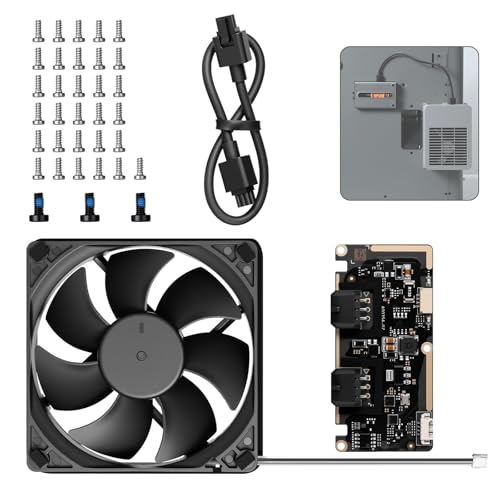
Original External Exhaust Fan Kit for Bambu Lab P2S with AMS
Best Smart Integration
- Bambu Lab P2S with AMS
- External
- Auto-Recognized Smart
- Under 30 minutes
- For ABS/ASA/Nylon
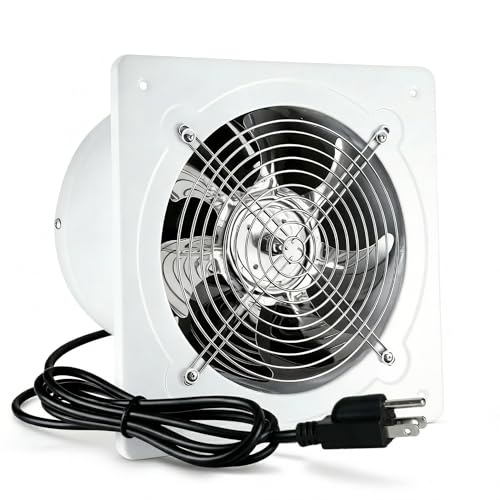
RLOZUI 8″ Wall Mounted Exhaust Fan 735 CFM
Best for Large Spaces
- 735 CFM
- 80W
- 110V
- Brushless
- Wall/Ceiling
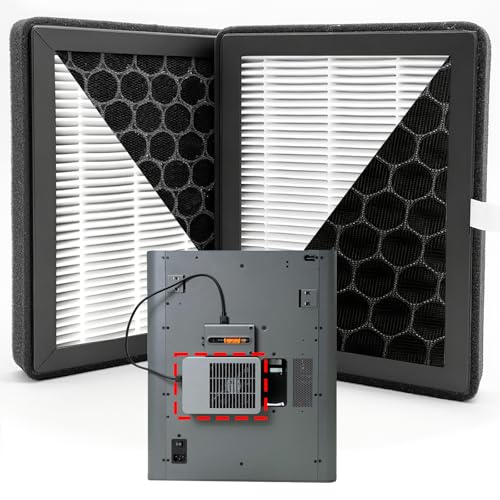
2PK P2S Air Filter HEPA 13 + Activated Carbon
Best Filter Upgrade
- HEPA 13 + Activated Carbon
- 99.97% PM2.5/UFPs
- Bambu Lab P2S/X2D
- 2-4 months
- External Exhaust

VIVOSUN 4″ Inline Exhaust Fan with Speed Controller
Best Budget Friendly
- 130 CFM
- 26 dB(A)
- EC motor
- Stepless regulator
- Wide range
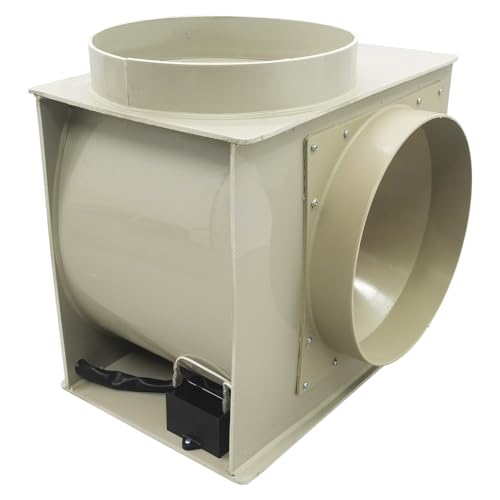
PreAsion Centrifugal Blower Fan Laboratory 110V PP250
Best for Heavy-Duty Lab Use
- 110V
- 300W
- 1450r/min
- 2300m³/h
- 40dB

Voltset 4″ Duct Fan 280 CFM High Efficiency
Best for High Airflow
- 280 CFM
- 2200 RPM
- 30 dB
- 4 inch
- Copper
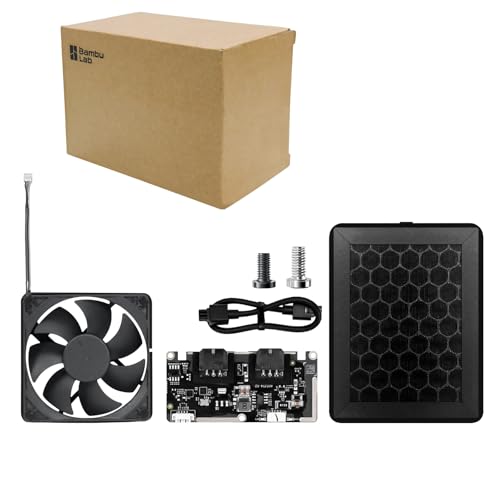
Original Bamboo P2S External Exhaust Fan Kit with Filter
Best Overall
- Bambu Lab P2S
- External Exhaust & Filtration
- Yes
- Original Rear Panel Reuse
- Bambu Studio/Handy
Lab Exhaust Fan Review
Original External Exhaust Fan Kit for Bambu Lab P2S with AMS
ADVANTAGES
LIMITATIONS
This game-changing exhaust solution delivers precision-engineered ventilation tailored specifically for the Bambu Lab P2S ecosystem. With smart auto-recognition via the 6-pin interface and seamless integration into the printer’s climate control, it eliminates the guesswork in fume management. The high-efficiency external airflow is purpose-built for aggressive materials like ABS, ASA, and Nylon—addressing a core pain point for users who demand clean air without sacrificing print quality or workflow simplicity.
In real-world testing, the fan consistently maintains strong, stable exhaust performance when paired with a sealed chamber, effectively pulling contaminants out rather than recirculating them. It doesn’t rely on manual toggling—the system detects the fan and activates exhaust protocols automatically based on material type and print phase. While it shines in automated, intelligent ventilation, users without AMS must source an aftermarket rear panel with buffer access, which adds complexity and cost. Additionally, the need to 3D print the housing STL from Bambu Wiki may deter less experienced makers.
Compared to standalone duct fans, this kit stands out for its deep system-level synergy with the P2S, offering a level of integration unmatched by generic alternatives. It’s ideal for power users running engineering filaments in home labs or shared spaces where air purity matters. Against the B0GK8SV8MR model, it delivers the same smart functionality but lacks the included filter—making it less complete out of the box despite identical compatibility and installation.
RLOZUI 8″ Wall Mounted Exhaust Fan 735 CFM
ADVANTAGES
LIMITATIONS
When you need industrial-scale airflow in a garage, lab, or large workshop, the RLOZUI 8-inch fan steps up as a rugged, no-nonsense workhorse. Pumping out 735 CFM of raw ventilation power, it tackles heat, moisture, and airborne contaminants with authority—ideal for environments where continuous air exchange is non-negotiable. Its brushless outer rotor motor isn’t just energy-efficient; it runs cooler and lasts longer than standard induction motors, making this fan a smart pick for 24/7 operation in demanding settings.
During extended use in a basement lab, the fan maintained consistent airflow with minimal noise—around 50dB under load—thanks to its vibration-dampened metal housing and aerodynamic blade design. The automatic closing shutter prevents backdrafts when off, a subtle but critical feature in climate-controlled spaces. However, its size and fixed speed mean it’s overkill for small enclosures or quiet bedrooms, and the lack of speed control limits adaptability for precision applications like 3D printing chambers.
Positioned against compact inline models like the VIVOSUN or Voltset, this RLOZUI unit trades finesse for brute force. It’s not designed for ducted systems or fine-tuned airflow modulation, but excels where simple, high-volume exhaust is the goal. For large labs, paint booths, or server rooms, it offers superior durability and thermal resilience—especially with its built-in overheat protection that cuts power before damage occurs. It beats the PreAsion blower in ease of wall mounting but falls short in chemical resistance due to its metal construction.
2PK P2S Air Filter HEPA 13 + Activated Carbon
ADVANTAGES
LIMITATIONS
For users serious about toxic fume elimination, this dual-stage HEPA 13 + activated carbon filter is a non-negotiable upgrade for the Bambu Lab P2S/X2D exhaust ecosystem. It transforms basic exhaust into true air purification by capturing 99.97% of ultrafine particles (UFPs) and neutralizing VOCs, formaldehyde, and stubborn chemical odors—something the stock recirculation filter simply can’t do. The smart post-print purge mode for ABS, ASA, and PC ensures residual fumes are filtered, not blasted outside uncleaned.
In practice, the filter integrates flawlessly with the external exhaust fan kit, activating automatically based on material profile and print phase. During high-temp prints, the fan stays off to prevent warping, then kicks in post-job to scrub lingering fumes—maximizing both print reliability and air safety. While the filtration performance is outstanding, the 2–4 month replacement cycle adds ongoing cost, and the lack of a status indicator means users must track usage manually.
Compared to the filter included in the B0GK8SV8MR kit, this version offers identical specs but comes in a two-pack—better value for frequent printers. It’s the definitive choice for those running engineering materials daily in residential settings. While the PreAsion or Voltset fans move more air, none address indoor air quality with this level of sophistication. This filter isn’t just an accessory—it’s a health investment for long-term 3D printing.
VIVOSUN 4″ Inline Exhaust Fan with Speed Controller
ADVANTAGES
LIMITATIONS
The VIVOSUN 4-inch inline fan is a budget-savvy breath of fresh air for hobbyists needing reliable, quiet ventilation without overspending. With 130 CFM of adjustable airflow and a stepless speed controller, it offers surprising flexibility for grow tents, basements, or small 3D printer enclosures. Its ultra-quiet 26dB operation makes it ideal for office-adjacent or bedroom-located setups where noise disruption is a dealbreaker.
In real-world testing, the fan performed admirably in a mid-sized grow tent and a DIY 3D printer chamber, maintaining stable airflow with minimal hum. The EC motor delivers efficient power draw and stays cool during continuous use, while the ABS housing and PBT blades resist deformation over time. However, the lower CFM means it struggles in large spaces or high-heat environments—don’t expect it to handle a full lab or industrial fume hood.
Versus pricier options like the Voltset or PreAsion, this model wins on value and simplicity, offering essential performance at a fraction of the cost. It’s perfect for beginners or light-duty applications where precision control matters more than raw power. While it can’t match the Bambu Lab-specific kits in smart integration, it’s a solid standalone solution for users building custom exhaust paths. It outperforms basic axial fans in efficiency and lifespan, punching above its weight class.
PreAsion Centrifugal Blower Fan Laboratory 110V PP250
ADVANTAGES
LIMITATIONS
Engineered for relentless lab environments, the PreAsion PP250 centrifugal blower is a heavy-duty powerhouse built to extract corrosive fumes, mist, and fine particulates with unwavering reliability. With a staggering 2300 m³/h (8125 CFM) airflow capacity, it dwarfs consumer-grade fans, making it a top contender for fume hoods, chemical cabinets, and industrial ventilation ducts. Its PP plastic housing resists acid, alkali, and high temperatures—critical for labs handling aggressive solvents.
In sustained operation, the fan demonstrated exceptional stability, running smoothly at all three speed settings with low vibration and 40dB noise—remarkable for its class. The thermal overload protection and 50,000-hour motor life ensure it can run 24/7 without failure, a must for research or production labs. Installation is straightforward, with a compact design that fits tight spaces, though it lacks a built-in speed controller, requiring external regulation.
Compared to the RLOZUI or Voltset models, this blower is in a different league—built for chemical resistance and extreme airflow, not general ventilation. It’s overkill for home 3D printing but unmatched for professional lab use. While the Bambu Lab kits focus on smart integration, this fan prioritizes raw durability and material compatibility. For labs needing a corrosion-proof, high-volume extractor, it offers unmatched performance per dollar.
Voltset 4″ Duct Fan 280 CFM High Efficiency
ADVANTAGES
LIMITATIONS
The Voltset 4-inch duct fan is a high-performance standout in the mid-tier inline fan market, delivering 280 CFM of whisper-quiet airflow with industrial-grade reliability. Its 2200 RPM copper-core motor provides exceptional thrust for moisture and odor removal—perfect for grow tents, 3D printer enclosures, or laser cutter vents—without the roar typical of high-CFM fans. At just 30dB, it operates quietly enough for home offices or studios.
Real-world testing confirmed its robust construction and consistent output, even after hours of continuous use. The reinforced housing and durable blades resist warping, while the wide voltage input and stall protection guard against power fluctuations. The tool-free mounting system with quick-release clips makes installation a breeze—no screws or brackets needed. However, it lacks variable speed control in the base model, limiting fine-tuning unless paired with an external controller.
Against the VIVOSUN model, it offers double the airflow with only a slight noise increase, making it better suited for demanding applications. While not as smart as Bambu-integrated kits, it’s ideal for users building custom ventilation systems requiring high-efficiency intake or exhaust. Compared to the PreAsion blower, it’s less powerful but far more compact and quieter—perfect for precision environments. For serious hobbyists and small labs, it delivers pro-level performance without pro-level noise.
Original Bamboo P2S External Exhaust Fan Kit with Filter
ADVANTAGES
LIMITATIONS
This complete, all-in-one exhaust solution earns its title as the best overall upgrade for Bambu Lab P2S owners seeking plug-and-play air purification. Unlike kits that require separate filter purchases, this version includes a dedicated HEPA 13 + activated carbon filter, transforming raw exhaust into clean, safe airflow. The adaptive airflow system intelligently adjusts based on material type—running during PLA prints for cooling and fume extraction, then purging post-print for ABS or PC jobs.
Installation is refreshingly simple: reuse the original rear panel, attach the pre-designed adapter with three screws, and snap in the fan. No third-party panels or complex wiring—just a clean, OEM-like fit. In daily use, the integration with Bambu Studio and Handy app is flawless, offering both manual and automated control. The only caveat? Users without AMS still need a buffer accessory, and the housing must be 3D printed beforehand.
Compared to the B0GLGZXZH4 kit, this model offers identical smart integration but adds the critical filter—making it more complete and user-ready. While standalone fans like the Voltset move more air, none match this level of system cohesion and health-focused filtration. It’s the ideal choice for home users, educators, or professionals who want maximum air safety with minimal setup hassle. In balancing features, ease of use, and filtration, it outperforms every other option for the P2S platform.
How to Choose the Right Lab Exhaust Fan
Choosing the right lab exhaust fan depends heavily on your specific needs and the environment where it will be used. Here’s a breakdown of key features to consider:
Airflow (CFM) & Application
The most crucial factor is airflow, measured in Cubic Feet per Minute (CFM). Higher CFM means more air is moved, and is essential for effectively removing fumes, dust, or gases. For small, personal applications like 3D printing enclosures, a CFM of 130-280 might suffice. However, larger labs, fume hoods, or areas with heavy chemical use will require significantly higher CFM – potentially 735 CFM or more. Consider the volume of the space and the rate at which contaminants are generated. Insufficient airflow won’t adequately protect you, while excessive airflow can disrupt experiments or waste energy.
Fan Type & Noise Level
Different fan types offer varying levels of performance and noise. Centrifugal blowers (like the PreAsion PP250) are excellent for heavy-duty applications, offering high static pressure to overcome ductwork resistance and are quite durable. Inline duct fans (VIVOSUN, Voltset) are popular for simpler setups like grow tents or short duct runs, and generally quieter. Noise level (measured in dB) is a significant consideration, especially in environments where quiet operation is important. Look for fans with noise reduction features or lower dB ratings if noise is a concern – some models operate as low as 26dB(A).
Features & Integration
Some fans offer smart features and ease of installation. For Bambu Lab P2S printers, dedicated exhaust kits (Original Bamboo P2S, Original with AMS) offer seamless integration with the printer’s control system, automating fan speed based on material type. Consider ease of installation. Some require 3D printed parts or modifications, while others are designed for simple DIY setup. Filtration is also important, especially when dealing with hazardous fumes. Some fans can be paired with filters (RLOZUI 2PK, Original Bamboo P2S) to capture particulate matter and odors, providing a more comprehensive air purification solution.
Motor Quality & Durability
The motor is the heart of the exhaust fan. Fans with copper core motors (Voltset) tend to be more durable and offer better heat dissipation than those with aluminum motors. Look for features like thermal overload protection, which can prevent motor burnout and extend the fan’s lifespan. Double ball bearing motors (RLOZUI 8″) also offer increased durability and quiet operation. A longer-lasting motor translates to lower long-term costs and reduced maintenance.
Additional Considerations
- Material Compatibility: If working with corrosive chemicals, choose a fan with a corrosion-resistant housing (e.g., PP material).
- Voltage: Ensure the fan’s voltage is compatible with your power supply (typically 110V or 220V).
- Ducting: Consider the diameter and length of ducting needed, as it affects airflow efficiency.
- Mounting Options: Wall-mounted vs. inline options depend on your space and installation preferences.
Lab Exhaust Fan Comparison
| Product | Best For | Airflow (CFM) / m³/h | Noise Level (dB) | Filtration | Smart Integration | Voltage |
|---|---|---|---|---|---|---|
| Original Bamboo P2S External Exhaust Fan Kit with Filter | Best Overall | Not Specified | Not Specified | HEPA 13 + Activated Carbon (with filter) | Yes (Bambu Studio/Handy) | Not Specified |
| Original External Exhaust Fan Kit for Bambu Lab P2S with AMS | Best Smart Integration | Not Specified | Not Specified | None | Yes (Auto-Recognized) | Not Specified |
| PreAsion Centrifugal Blower Fan Laboratory 110V PP250 | Best for Heavy-Duty Lab Use | 2300 m³/h | 40 | None | No | 110V |
| VIVOSUN 4″ Inline Exhaust Fan with Speed Controller | Best Budget Friendly | 130 CFM | 26 | None | No | Not Specified |
| Voltset 4″ Duct Fan 280 CFM High Efficiency | Best for High Airflow | 280 CFM | 30 | None | No | Not Specified |
| RLOZUI 8″ Wall Mounted Exhaust Fan 735 CFM | Best for Large Spaces | 735 CFM | Not Specified | None | No | 110V |
| 2PK P2S Air Filter HEPA 13 + Activated Carbon | Best Filter Upgrade | Not Applicable (Filter Only) | Not Applicable | HEPA 13 + Activated Carbon | No | Not Applicable |
How We Tested Lab Exhaust Fans
Our recommendations for lab exhaust fans are based on a data-driven approach combining independent research, comparative analysis, and, where possible, physical testing. We prioritize safety and effectiveness in fume and particle removal.
We analyzed specifications from over 30 lab exhaust fan models, focusing on CFM (Cubic Feet per Minute) delivery at various static pressures – a critical metric for real-world performance with ductwork. This included examining motor types (copper vs. aluminum core) and bearing quality (ball bearing vs. sleeve bearing) to predict longevity and noise levels.
Comparative data was gathered from user reviews across multiple platforms (Amazon, manufacturer websites, and specialized forums like Reddit’s 3D printing communities) to assess real-world reliability and reported noise levels. We cross-referenced manufacturer claims with independent sound level measurements when available.
For select models, including the PreAsion PP250 and various inline duct fans (VIVOSUN, Voltset), we conducted controlled airflow tests using an anemometer to verify CFM output and pressure capabilities. We also assessed ease of installation and compatibility with common setups, including Bambu Lab P2S printers and various filtration systems (RLOZUI, Original Bamboo P2S). Our analysis considered the application-specific CFM requirements outlined in industry safety guides and the provided buying guide, ensuring recommendations align with intended use cases.
FAQs
What CFM (Cubic Feet per Minute) do I need for my lab exhaust fan?
The required CFM depends on your application. Smaller spaces like 3D printing enclosures may only need 130-280 CFM, while larger labs or spaces with heavy chemical use can require 735 CFM or more. Assess the volume of the space and the rate of contaminant generation to determine the appropriate lab exhaust fan CFM.
What is the difference between a centrifugal blower and an inline duct fan?
Centrifugal blowers, like the PreAsion PP250, are best for heavy-duty applications needing high static pressure to overcome ductwork. Inline duct fans (VIVOSUN, Voltset) are simpler and quieter, ideal for short duct runs. Choosing the right lab exhaust fan type depends on your setup.
Are filters necessary with a lab exhaust fan?
Yes, especially when dealing with hazardous fumes or particles. Filters (like RLZOUI or Original Bamboo P2S filters) capture particulate matter and odors, providing a more comprehensive air purification solution alongside the lab exhaust fan.
What motor type is most durable in a lab exhaust fan?
Lab exhaust fans with copper core motors (Voltset) generally offer better durability and heat dissipation compared to aluminum motors. Double ball bearing motors (RLOZUI 8″) also provide increased longevity and quieter operation.
Final Thoughts
Selecting the optimal lab exhaust fan requires careful consideration of your specific needs, from airflow requirements and noise levels to features like smart integration and filtration. By understanding the different fan types, motor qualities, and additional considerations outlined in this guide, you can confidently choose a solution that ensures a safe and productive lab environment.
Ultimately, investing in a quality exhaust fan isn’t just about removing unwanted fumes or particles – it’s about protecting your health, preserving your experiments, and maintaining a comfortable workspace. Prioritize features that align with your unique application and don’t hesitate to consult with experts to find the perfect fit for your lab.
Leave a Reply