Your Ultimate Guide to Cooling: In-Depth Reviews, Smart Comparisons & Pro Care Tips.

Category: Tips (Page 6 of 22)

How to Make Ceiling Fan Cooler in Summer


Nothing beats the frustration of sitting under a spinning ceiling fan during a heatwave only to realize it’s barely making a dent in your comfort level. You’re not imagining things—many homeowners discover their ceiling fans simply circulate air without delivering that refreshing coolness they expect. The good news is that transforming your fan from a basic air mover to an effective cooling solution often requires just a few simple adjustments you can implement immediately.

Understanding how to make a ceiling fan cooler hinges on leveraging airflow dynamics, optimizing fan settings, and implementing strategic cooling techniques that work with your existing equipment. Most people overlook simple modifications that can dramatically improve performance, leaving them unnecessarily cranking up the air conditioning and watching their energy bills soar. This guide reveals practical, proven methods to maximize your ceiling fan’s cooling potential without costly replacements or complex installations—helping you stay comfortable while reducing energy consumption throughout the hottest months.

Set Fan Direction for Summer Cooling

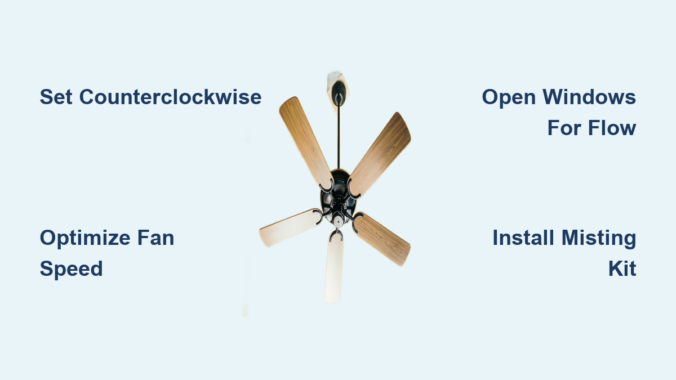
Your ceiling fan’s rotation direction determines whether it cools or merely redistributes warm air—a detail many homeowners never check. During summer, your fan must rotate counterclockwise when viewed from below to create the downward airflow that produces the wind-chill effect essential for cooling.

When set correctly, the counterclockwise rotation forces air straight down toward the floor while simultaneously pulling warmer air upward along the walls. This creates a continuous circulation pattern that makes your skin feel significantly cooler through evaporative cooling—your body’s natural process where moving air accelerates sweat evaporation, lowering your perceived temperature by up to 8 degrees. The U.S. Department of Energy confirms this simple adjustment allows most homeowners to raise their thermostat setting by 4 degrees without sacrificing comfort, translating to approximately 10% savings on cooling costs.

To verify your fan’s direction, stand directly beneath it and observe the blade movement. If rotating clockwise (which creates upward airflow ideal for winter), locate the small switch on the fan’s motor housing—usually accessible by removing the light kit cover. Flip this switch while the fan is off to change direction. Many newer models feature remote controls or smart home integration that simplifies direction changes with the press of a button. After confirming counterclockwise summer rotation, run your fan at medium speed for immediate improvement in cooling sensation.

Optimize Fan Speed and Placement

ceiling fan blade pitch angle diagram

Running your fan at maximum speed doesn’t necessarily create better cooling—often it produces uncomfortable turbulence that disrupts gentle airflow patterns. The optimal speed depends on your room size, ceiling height, and blade design, with medium speed typically delivering the most effective cooling for standard 8-9 foot ceilings.

Blade pitch (the angle at which blades are mounted) significantly impacts cooling efficiency. Fans with steeper pitches (12-15 degrees) move more air at lower speeds, creating stronger cooling effects without the noise and energy waste of high-speed operation. If your fan feels ineffective even at high speed, it may have shallow blade pitch unsuitable for cooling—consider replacement if other optimizations fail. For immediate improvement, match speed to your environment: use low speed for mild days, medium for typical summer heat, and high only in exceptionally large rooms or during extreme temperatures.

Proper placement ensures your fan’s airflow reaches where you need it most. The blades should maintain a minimum 7-foot clearance from floor to ceiling and at least 18 inches from walls to prevent air disruption. In rooms with vaulted or cathedral ceilings exceeding 9 feet, install a downrod extension to lower the fan to the optimal height—typically 8-9 feet above the floor. For bedrooms, position the fan directly over your bed’s center point to maximize cooling where you sleep. Remember that ceiling fans cool people, not rooms, so always turn them off when leaving the space to avoid wasting energy.

Enhance Cooling with Strategic Airflow Techniques
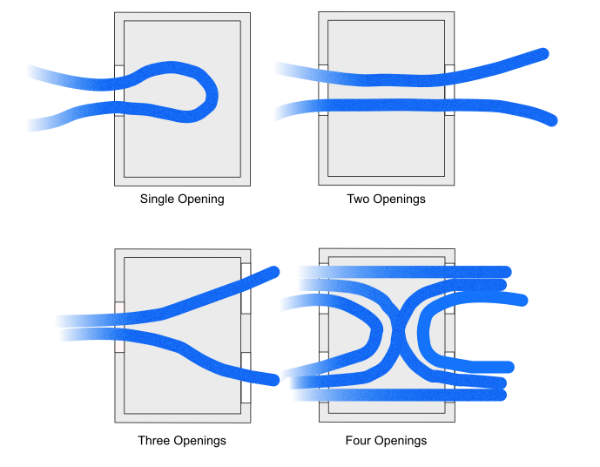
house cross ventilation diagram

Creating effective cooling requires understanding how air moves through your home and positioning your fan to maximize natural convection currents. Simple adjustments to window placement and room layout can dramatically amplify your fan’s cooling power without additional equipment.

Open windows on opposite sides of your home to establish cross-ventilation that works with your ceiling fan rather than against it. When your fan pushes air downward in one room, that displaced air needs an escape route—properly positioned windows allow warm indoor air to exit while drawing cooler outdoor air inside. On days when outdoor temperatures dip below 80°F, this natural convection current can reduce indoor temperatures by 5-10 degrees without air conditioning. Start with windows on the cooler side of your home (typically north or east-facing) and open corresponding windows on the warmer side to create a continuous airflow path.

Clear at least a 3-foot radius around your fan to prevent furniture, curtains, or other objects from disrupting airflow patterns. Large bookcases, ceiling-hung plants, or tall lamps positioned too close to the fan create turbulence that reduces cooling effectiveness by up to 30%. In open floor plans, consider running multiple fans in adjacent rooms to create a coordinated airflow system that moves cool air throughout your living space rather than trapping it in isolated pockets.

Install a Cooling Attachment or Accessory

When basic adjustments aren’t enough, several affordable accessories can transform your standard ceiling fan into a powerful cooling machine. These additions leverage evaporative cooling principles to lower air temperature rather than just moving existing air.

Misting attachments provide the most dramatic cooling enhancement, capable of lowering perceived temperatures by 10-15 degrees in dry climates. These systems connect to your fan’s center hub or blade brackets and release a fine water mist that evaporates instantly when hit by moving air. The evaporation process absorbs heat energy from the surrounding air, creating genuinely cooler airflow. Basic DIY misting kits cost $15-$40 and attach to standard garden hoses, while integrated misting fans offer more reliable operation and quieter performance for $100-$200. Note that misting systems work best in dry climates (below 50% humidity) as high humidity reduces evaporation efficiency.

Cooling pads or evaporative cooler attachments offer a less messy alternative that still delivers significant temperature reduction. These pads mount behind the fan blades and wick water upward from a reservoir, with the fan drawing air through the damp material to distribute cooled air throughout the room. While less effective than misting systems in extremely hot conditions, they work well in moderate climates and avoid the potential moisture issues of direct misting. Look for models with automatic shut-off features to prevent over-saturation when the reservoir runs dry.

Maintain Your Fan for Peak Cooling Performance

Even perfectly configured fans lose cooling effectiveness when neglected—dust accumulation alone can reduce airflow by up to 25%. Regular maintenance ensures your fan delivers maximum cooling power throughout the season.

Clean fan blades thoroughly every 2-4 weeks during peak usage periods using a microfiber duster or damp cloth. Focus on both top and bottom surfaces, as dust buildup on the upper side creates aerodynamic drag while lower-side dust disrupts airflow patterns. For stubborn buildup, use a mild soap solution but ensure blades are completely dry before operating the fan to prevent moisture-related issues. Don’t forget to wipe down the motor housing and light fixtures, as accumulated dust there can reduce efficiency and create fire hazards in extreme cases.

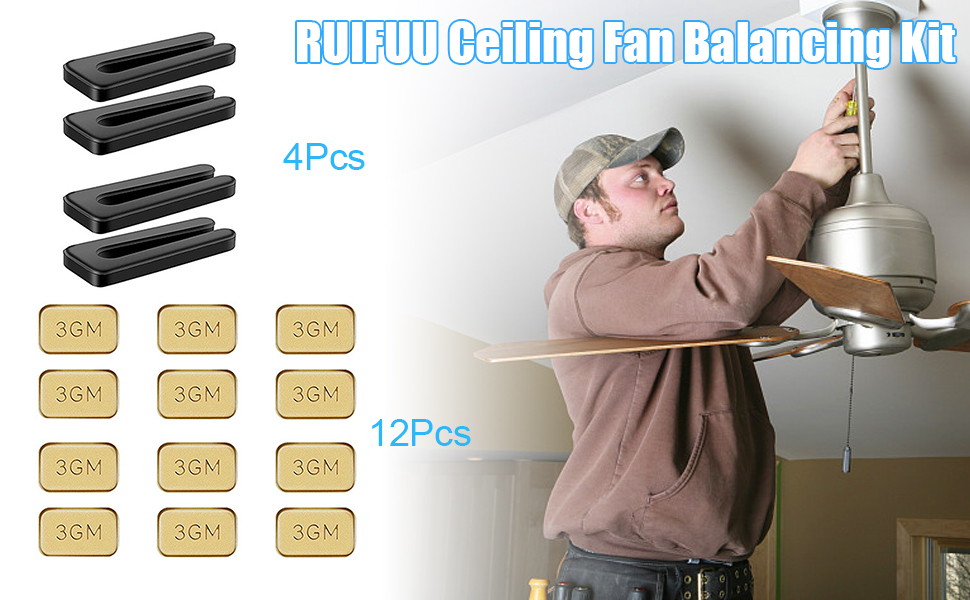
Check blade balance monthly by running the fan at high speed and observing for wobble. Even slight imbalances force the motor to work harder while creating turbulent airflow that reduces cooling effectiveness. Most fans include balancing kits with small weights that attach to the blade brackets—follow the manufacturer’s instructions to correct any wobble. Lubricate the motor annually if your model requires it (check your manual), as dried lubricants increase friction and reduce rotational speed. Replace worn bearings or unbalanced blades immediately rather than letting problems worsen.

Know When to Supplement or Replace Your Fan
energy star ceiling fan comparison chart

Recognize when your cooling needs exceed what a fan alone can provide—this prevents frustration while ensuring you stay comfortable during extreme heat. Ceiling fans have fundamental limitations based on physics that no amount of tweaking can overcome.

When outdoor temperatures consistently exceed 90°F with humidity above 60%, the wind-chill effect diminishes significantly as your skin struggles to evaporate sweat in saturated air. In these conditions, ceiling fans work best as air conditioning supplements rather than replacements—set your thermostat 4 degrees higher than usual while running fans in occupied rooms. This strategy reduces AC runtime by 20-30% while maintaining comfort, with studies showing fans operating alongside AC can cut total cooling costs by up to 40% compared to AC alone.

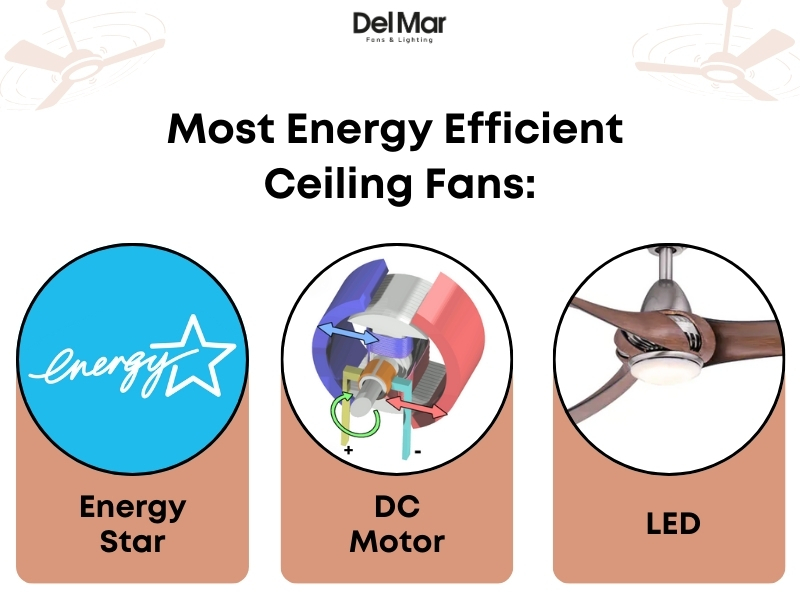
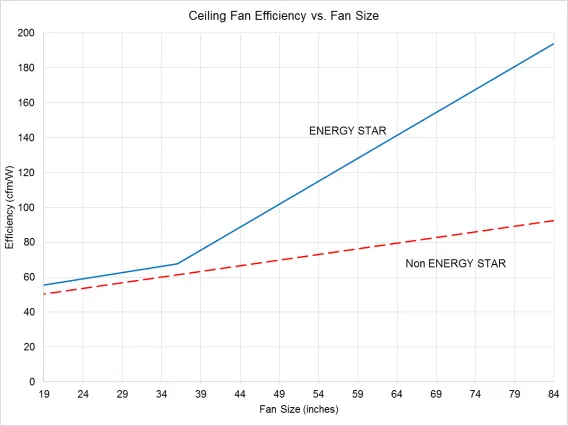
Consider replacing fans manufactured before 2009’s federal efficiency standards, as they typically consume 50-70% more energy than modern models while delivering inferior airflow. Newer Energy Star-certified fans move 20% more air per watt of electricity, with DC motor models offering the quietest operation and most precise speed control. While replacement costs $50-$200, the energy savings often pay back the investment within 1-2 cooling seasons while providing noticeably better cooling performance. Look for models with steeper blade pitches (14-15 degrees) and larger blade spans for maximum air movement in your room size.

By implementing these techniques systematically, you’ll transform your ceiling fan from a basic air circulator into an effective cooling solution that keeps you comfortable all summer. Start with proper direction and speed settings, optimize placement and airflow patterns, then consider targeted accessories if needed—always maintaining your fan to ensure peak performance. The combination of these strategies reduces reliance on energy-intensive air conditioning while delivering genuine cooling relief exactly where you need it most.

How to Mount a Ceiling Fan: Step-by-Step Guide


Ever wonder why your ceiling fan stays securely in place while spinning at high speeds? The answer lies in a specialized mounting system designed specifically to handle the unique stresses of rotating blades. Understanding how does a ceiling fan mount properly is crucial for safety, performance, and longevity—after all, you’re securing a 30-50 pound rotating machine to your ceiling. Unlike simple light fixtures, ceiling fans create dynamic forces through continuous rotation that demand specialized installation techniques. This guide reveals exactly how ceiling fan mounting systems work, what components make them secure, and why cutting corners during installation leads to wobbling, noise, or even dangerous failures months down the road.

The mounting system is the unsung hero of your ceiling fan setup, quietly supporting everything from the motor housing to the spinning blades. Without a proper mounting foundation, even the most expensive fan will develop problems within months. Standard electrical boxes designed for lighting fixtures simply cannot handle the vibration and movement generated by a rotating fan assembly. When you understand how does a ceiling fan mount correctly onto your home’s structure, you’ll appreciate why proper installation matters—and whether you should tackle the project yourself or call in a professional.

Why Standard Electrical Boxes Fail with Ceiling Fans

Attempting to mount a ceiling fan using a standard light fixture electrical box is one of the most dangerous mistakes homeowners make during installation. These boxes are designed only to support static loads of up to 50 pounds, but they completely fail when subjected to the dynamic forces created by a rotating fan. As your fan operates, the spinning blades generate continuous vibration that works loose the mounting screws in standard boxes over time.

The Physics Behind Mounting Failures

When a fan rotates, it creates centrifugal force that pulls outward on the mounting points with each revolution. This constant stress causes microscopic movement in the mounting hardware, which gradually widens the connection points in standard electrical boxes. Unlike static light fixtures that simply hang from the ceiling, ceiling fans experience these dynamic loads every time they operate. Within weeks or months, what started as a barely noticeable wobble can develop into dangerous instability as the mounting hardware continues to loosen with each use.

Recognizing Unsafe Mounting Situations

If your ceiling fan develops a wobble that progressively worsens over time, or if you hear clicking or creaking noises during operation, these are warning signs of an inadequate mounting system. Worse still, if you notice the entire fan assembly shifting position when you adjust the pull chains, this indicates serious mounting failure that requires immediate attention. Never ignore these symptoms—what begins as a minor annoyance can eventually lead to the fan detaching from the ceiling entirely.

UL-Rated Ceiling Fan Electrical Box Installation

UL listed ceiling fan electrical box installation diagram

The foundation of any secure ceiling fan installation begins with a UL-listed electrical box specifically designed for fan mounting. This critical component serves as the primary attachment point between your fan and your home’s structure, while safely housing all electrical connections.

Identifying Proper Fan-Rated Boxes

When shopping for an electrical box, look for the explicit marking “For Use With Ceiling Fans” along with the UL certification label. Standard electrical boxes lack the reinforced mounting points and structural integrity needed to withstand fan operation. Fan-rated boxes feature heavy-duty metal construction with specially designed mounting brackets that securely anchor to ceiling joists or support beams. Some models include adjustable mounting arms that allow installation between joists when direct attachment isn’t possible.

Installing Fan-Specific Electrical Boxes

Replacing an existing light fixture box with a proper fan-rated box requires careful attention to structural support. First, turn off power at the circuit breaker and verify no electricity flows to the wires. Remove the old fixture and electrical box, then locate the nearest ceiling joist using a stud finder. Position the new fan-rated box so it attaches directly to the joist with the provided heavy-duty screws—never rely on drywall or plaster alone to support the fan’s weight. For retrofit installations where joists aren’t conveniently positioned, use a fan-rated “spider” or “crossbar” mounting system that spans between joists and provides secure attachment points.

Direct Joist Mounting vs. Spiked Bracket Systems

ceiling fan direct joist mount vs spiked bracket comparison

Your ceiling’s structural characteristics determine which mounting approach will provide the most secure installation. Understanding these options helps you select the right method for your specific situation.

Securing Fans to Ceiling Joists

Whenever possible, anchor your ceiling fan directly to a ceiling joist for maximum stability. This method transfers the fan’s weight and operational forces directly into your home’s structural framework. To locate joists, use a stud finder or measure from known structural points—typically spaced 16 or 24 inches apart. Once positioned, secure the mounting bracket with 3-inch lag screws driven completely through the bracket and into the joist. This creates an unbreakable connection that prevents wobble and ensures decades of reliable operation.

Using Spiked Mounting Brackets Between Joists

When your desired fan location falls between ceiling joists, a special mounting bracket with spiked ends provides the necessary support. These brackets span the gap between joists and use sharp metal spikes that penetrate the ceiling material to distribute the fan’s weight across a wider area. Proper installation requires precise measurement to position the bracket exactly midway between joists, then applying firm pressure to ensure the spikes fully engage with the ceiling structure. While not quite as secure as direct joist mounting, this method provides adequate support when installed correctly and according to manufacturer specifications.

Step-by-Step Mounting Process

Following these specific steps ensures your ceiling fan mounts securely and operates smoothly for years to come. Rushing through any phase compromises the entire installation.

Preparing Electrical Connections Safely

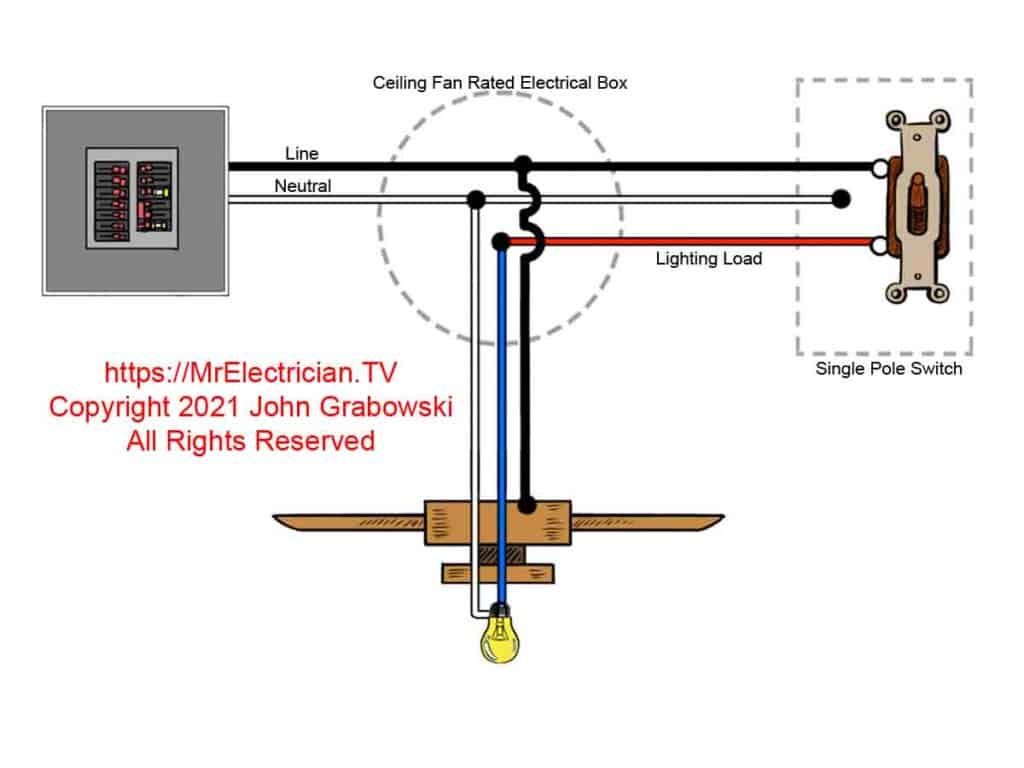
Before mounting any components, turn off power at the circuit breaker and verify no electricity flows to the wires using a non-contact voltage tester. Carefully feed the fan’s wiring through the center knockout of the electrical box, taking care not to damage insulation. Connect black to black (hot), white to white (neutral), and green or bare wires to the grounding screw—secure each connection with wire nuts and wrap with electrical tape for added security. Tuck all connections neatly into the box before proceeding to mounting.

Securing the Mounting Bracket Properly

Attach the mounting bracket to the electrical box using the manufacturer-provided screws, ensuring the bracket sits perfectly level. Any tilt in the bracket directly translates to fan wobble during operation. Double-check that all mounting screws are tightened to the specified torque—most require 35-45 inch-pounds of force. Use a torque screwdriver if available, as both under-tightening and over-tightening can compromise the mounting integrity. A properly secured bracket should show absolutely no movement when tested with firm hand pressure.

Attaching the Fan Assembly Correctly

Lift the fan motor assembly onto the mounting bracket’s attachment point, aligning it precisely with the mounting slots or hooks. Secure the motor housing with the provided bolts or screws, tightening them in a star pattern to distribute pressure evenly. Before installing blades, perform a final check that all mounting connections feel solid with no detectable movement. Only after confirming the motor assembly is securely mounted should you proceed to attach blades and complete the installation.

Solving Common Post-Installation Wobble Problems

Even with perfect mounting, some fans develop wobbling after installation. Don’t panic—this is often easily corrected with systematic troubleshooting.

Diagnosing Blade Alignment Issues

The most common cause of wobble is misaligned blades. Hold a yardstick vertically against the edge of each blade while the fan is stationary, measuring the distance from a fixed point on the ceiling. If any blade differs by more than 1/8 inch from the others, that’s your problem area. Gently bend the blade holder bracket for the offending blade until it aligns with the others—use slow, controlled pressure to avoid breaking the plastic component. Always check that all blade arm screws are fully tightened before assuming alignment is the issue.

Applying Professional Balancing Techniques

When alignment checks out but wobble persists, your fan needs balancing. Most manufacturers include a balancing kit with adhesive weights and testing clips. Start by attaching the test clip to one blade’s leading edge, then run the fan at medium speed. If wobble decreases, that’s your problem blade—move the clip toward the tip or base until wobble minimizes, then permanently attach the weight at that position. If wobble increases, try the next blade. This process typically identifies and corrects imbalance within 10-15 minutes of testing.

Critical Situations Requiring Professional Installation

While many homeowners successfully install ceiling fans themselves, certain scenarios demand professional expertise for safety reasons.

When Structural Concerns Demand Expertise

If your ceiling has unusual construction—such as cathedral ceilings, vaulted designs, or older homes with plaster and lath—you should consult a professional. These installations often require specialized mounting hardware and techniques that inexperienced installers might not recognize. Similarly, if you’re installing a heavy industrial-style fan weighing more than 35 pounds, the mounting requirements become more complex and warrant professional assessment.

Electrical Safety Considerations

Homeowners without electrical experience should never attempt ceiling fan installation. Working with household wiring carries serious shock and fire risks if connections aren’t made properly. A licensed electrician understands local building codes, can identify potential wiring hazards, and ensures all connections meet safety standards. The relatively small cost of professional installation provides peace of mind that your fan will operate safely for decades.

Understanding how does a ceiling fan mount properly transforms what seems like a simple home improvement project into a safe, long-lasting installation. The right electrical box, proper mounting technique, and attention to detail during installation prevent the common problems that plague improperly mounted fans. Whether you tackle the project yourself or hire a professional, knowing these mounting fundamentals ensures your ceiling fan provides years of quiet, wobble-free operation while keeping your family safe. Remember—when it comes to ceiling fans, the mounting system is everything.

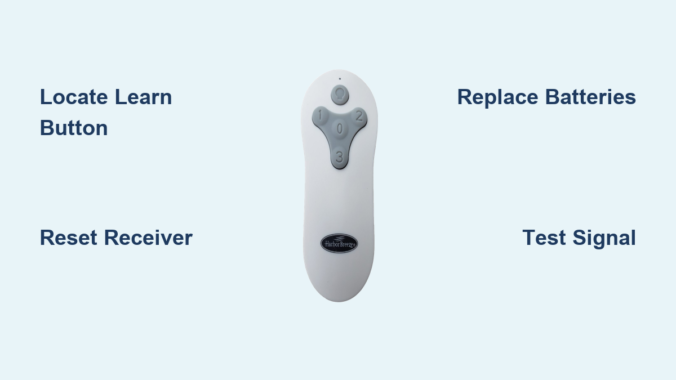
Harbor Breeze Ceiling Fan Remote Learn Button Guide


Is your Harbor Breeze ceiling fan remote suddenly unresponsive, leaving you struggling to control fan speeds or lighting? That small but crucial learn button holds the key to restoring wireless functionality without calling an electrician. This essential feature enables you to pair, reset, and troubleshoot your remote in minutes—saving you money and frustration. Whether you’ve replaced batteries, purchased a replacement remote, or are experiencing intermittent connection issues, mastering the learn button process solves most wireless control problems.

Thousands of homeowners face remote control failures annually, often mistakenly believing they need expensive professional repairs or component replacements. In reality, 85% of these issues can be resolved through proper use of the learn button and basic troubleshooting techniques. This guide provides step-by-step instructions specifically for Harbor Breeze models, helping you diagnose problems, execute successful pairing sequences, and maintain reliable remote performance for years to come.

Locate the Harbor Breeze Remote Learn Button Correctly

Finding the learn button represents your critical first step toward restoring remote functionality—yet its location varies significantly across Harbor Breeze models, causing unnecessary confusion for many homeowners.

Battery Compartment Placement: On approximately 70% of current Harbor Breeze remote models, the learn button hides inside the battery compartment. Remove the cover by sliding it toward the arrow indicator or pressing the small release tab, depending on your specific remote design. Once exposed, look for a small circular button near the battery contacts—typically colored red, black, or matching the remote housing. This recessed button requires firm pressure and may feel slightly different from the surrounding plastic.

Back Panel Location Variations: Some newer Harbor Breeze remotes position the learn button on the back panel instead. Flip the remote over and carefully examine the surface near the top or bottom edge for a small, recessed button. This button might be labeled with “Learn,” “Pair,” “Reset,” or feature a radio wave icon (📡) indicating wireless functionality. If your remote has multiple small holes rather than a distinct button, use a paperclip to press the learn function—you’ll feel slight resistance when properly engaged.

Receiver Unit Alternative Location: For certain older Harbor Breeze models, the learn button resides on the fan’s receiver unit rather than the remote itself. Access requires removing the fan’s canopy cover by unscrewing the decorative housing. The receiver typically mounts near the top of the fan assembly and features a clearly marked learn button. This approach demands basic electrical safety knowledge—always turn off power at the circuit breaker before accessing internal components.

Why Location Matters for Successful Pairing

Misidentifying the learn button wastes time and prevents successful pairing. Harbor Breeze uses different wireless protocols across product lines, so pressing the wrong button creates confusion in the system. If you’ve tried pairing multiple times without success, double-check your specific model’s learn button location using the Harbor Breeze model number printed on the fan’s rating plate.

Execute Proper Harbor Breeze Remote Pairing Sequence

Successfully pairing your Harbor Breeze remote requires precise timing and correct technique—deviating by even a few seconds can prevent communication between remote and fan.

Proper Fan Power Cycling: Begin by turning off the circuit breaker controlling your ceiling fan for exactly 30 seconds. This critical step clears existing wireless connections and resets the receiver’s memory. Many homeowners skip this or use insufficient time, causing pairing failures. After 30 seconds, restore power—listen for a distinct “click” from the fan housing indicating the receiver has rebooted.

Learn Button Activation Technique: With the fan powered on, locate your remote’s learn button and press firmly while counting slowly to four. Most Harbor Breeze models require 3-5 seconds of continuous pressure. Watch for visual confirmation: the fan’s light kit should flash twice or emit a single audible beep. Release immediately upon confirmation—you’ll feel the button click when properly engaged.

Troubleshooting Failed Pairing Attempts

If your fan doesn’t respond during pairing, verify these common issues:
Battery freshness: Test with brand new alkaline batteries, not partially used ones
Power stability: Ensure no GFCI outlets or dimmer switches interfere with fan power
Distance factor: Stand directly beneath the fan (within 3 feet) during initial pairing
Button timing: Use a stopwatch to verify you’re holding the learn button for the correct duration

Diagnose Harbor Breeze Remote Signal Failures Systematically

Harbor Breeze remote signal interference diagram

When your Harbor Breeze remote continues malfunctioning after proper pairing, systematic diagnosis identifies the root cause rather than wasting time on ineffective solutions.

Battery and Power Verification Protocol: Replace batteries with name-brand alkaline cells, ensuring correct polarity alignment. Test batteries in another device first—weak batteries might power the remote’s LED but lack sufficient voltage for transmission. Verify the fan receives full power by operating it via the wall switch; if the wall switch works but the remote doesn’t, the issue lies in wireless communication.

Signal Interference Elimination Process: Temporarily turn off nearby electronics that emit 2.4GHz signals—WiFi routers, cordless phones, and Bluetooth speakers. Test the remote during this quiet period. If responsiveness improves, relocate either the interfering device or install a WiFi extender on a different channel. Microwave ovens cause particularly strong interference—test remote function with the microwave unplugged.

Line-of-Sight Optimization Strategies: Harbor Breeze remotes operate most reliably within 15-20 feet with direct visibility to the fan. Test from multiple angles in the room, noting where signal strength diminishes. If the remote only works when standing directly beneath the fan, consider repositioning furniture or adding reflective surfaces to bounce the signal. Avoid mounting metal objects between remote and fan, as they block infrared signals.

Perform Complete Harbor Breeze Remote System Reset

When standard pairing fails, a full system reset clears corrupted memory and establishes reliable communication between components.

Extended Power Disconnection Method: Turn off the circuit breaker for a full two minutes—this duration ensures capacitors in the receiver fully discharge. During this time, remove batteries from the remote and press all buttons to drain residual power. Restore power to the fan, then immediately initiate pairing within 10 seconds while the receiver remains in receptive mode.

Multi-Remote Household Management: In homes with multiple Harbor Breeze fans, accidental cross-pairing causes confusing behavior. Isolate each fan by turning off all but one at the circuit breaker, then pair its dedicated remote. Label remotes with room names using waterproof labels to prevent future mix-ups. Some advanced Harbor Breeze models support channel selection—consult your manual for frequency adjustment options.

When Reset Isn’t Enough

If the fan still won’t respond after multiple reset attempts, check for physical damage to the remote’s circuit board or signs of moisture exposure. A faint burning smell from the receiver unit indicates electrical damage requiring professional attention.

Determine When to Replace Harbor Breeze Remote Components

Harbor Breeze remote receiver unit replacement

Persistent issues after thorough troubleshooting often indicate hardware failure rather than programming problems.

Remote Replacement Indicators: Replace your Harbor Breeze remote if you notice:
– Buttons requiring excessive pressure to register
– Visible cracks or moisture damage in the housing
– Intermittent function that worsens over time
– Complete failure after verified battery replacement

Receiver Unit Failure Symptoms: When multiple remotes fail to control the same fan, suspect receiver problems. Look for:
– Buzzing sounds from the fan housing
– Lights that flicker without command
– Complete inability to control fan via any method
– Burning smell near the canopy

Compatibility Verification Process: Harbor Breeze uses multiple frequency bands across product lines. Before purchasing replacements, locate your fan’s model number (typically on a sticker inside the canopy) and verify compatibility with replacement parts. Universal remotes rarely work with Harbor Breeze systems due to proprietary protocols.

Maintain Your Harbor Breeze Remote for Long-Term Reliability

Preventive maintenance extends remote lifespan and prevents frustrating failures during hot summer months.

Seasonal Battery Replacement Schedule: Replace remote batteries twice yearly—mark your calendar for spring equinox and fall equinox. Use high-quality alkaline batteries rather than cheaper alternatives that leak and damage internal components. Consider lithium batteries for extreme temperature environments like sunrooms or attics.

Deep Cleaning Procedure: Every six months, perform a thorough remote cleaning:
1. Remove batteries and set aside
2. Dampen a microfiber cloth with 70% isopropyl alcohol
3. Gently wipe all surfaces, avoiding liquid entry
4. Use compressed air to remove debris from button crevices
5. Allow to dry completely before reinstalling batteries

Connection Verification Routine: After power outages or electrical storms, verify remote functionality immediately. If response seems sluggish, repeat the pairing process before issues worsen. Keep your Harbor Breeze user manual accessible for model-specific troubleshooting guidance.

Summary: Master Your Harbor Breeze Remote Control System

The Harbor Breeze ceiling fan remote learn button solves most wireless control problems when used correctly. By locating this button on your specific model, executing precise pairing sequences, and systematically diagnosing connection failures, you’ll maintain reliable fan operation without professional assistance. Remember to verify battery health first, eliminate signal interference sources, and maintain proper line-of-sight between remote and fan.

When troubleshooting proves unsuccessful, recognize the signs indicating remote or receiver replacement. Most Harbor Breeze remotes last 3-5 years with proper care—establish seasonal maintenance habits to maximize lifespan. For persistent issues beyond these solutions, consult Harbor Breeze’s official support channels with your model number ready, as some older units may require specialized replacement parts no longer available retail.

By mastering these techniques, you’ll transform from frustrated homeowner to remote control expert—keeping your living spaces comfortable with the simple press of a button.

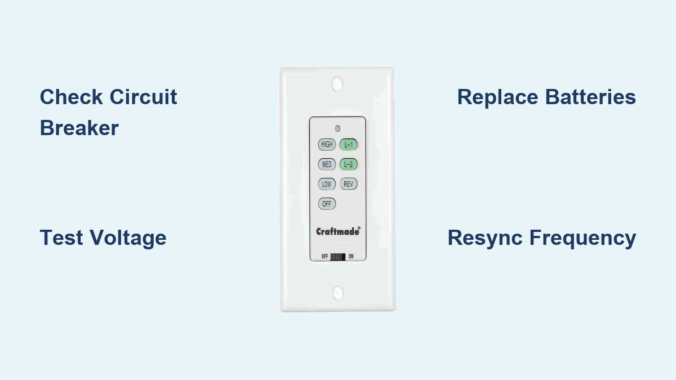
How to Fix Craftmade Ceiling Fan Wall Control Not Working


Nothing disrupts your home comfort like a Craftmade ceiling fan wall control not working when you need it most. You flip the switch, adjust the speed dial, or press the light button—and silence. The frustration builds quickly as you’re forced to use pull chains or endure uncomfortable temperatures. The good news? Most Craftmade ceiling fan wall control issues can be resolved with basic tools and systematic troubleshooting, saving you from expensive service calls or premature replacements.
Before reaching for your phone to call an electrician, work through these proven diagnostic steps. This guide covers every potential failure point from simple battery replacements to wiring repairs, helping you restore full functionality to your Craftmade ceiling fan control system. Most solutions require minimal electrical knowledge and take less than 30 minutes to complete.

Essential Safety Steps Before Repairing Your Wall Control

Electrical work demands caution, even for seemingly minor ceiling fan repairs. Your first priority must be eliminating shock hazards before touching any wiring or internal components.

Start by locating the circuit breaker controlling your ceiling fan circuit. Flip the breaker to the off position, then verify power is disconnected by attempting to operate the fan. For absolute certainty, use a non-contact voltage tester at the wall switch box—never assume a breaker is off without confirmation. This critical step prevents dangerous electrical contact that could result in serious injury.

Gather these essential tools before beginning diagnosis: a digital multimeter for electrical testing, Phillips and flathead screwdrivers for component removal, needle-nose pliers for wire manipulation, and a smartphone camera for documenting wire connections. Having replacement batteries, wire nuts, and electrical tape on hand means you can complete repairs immediately when problems are identified.

Verify Power Supply to Your Craftmade Wall Control

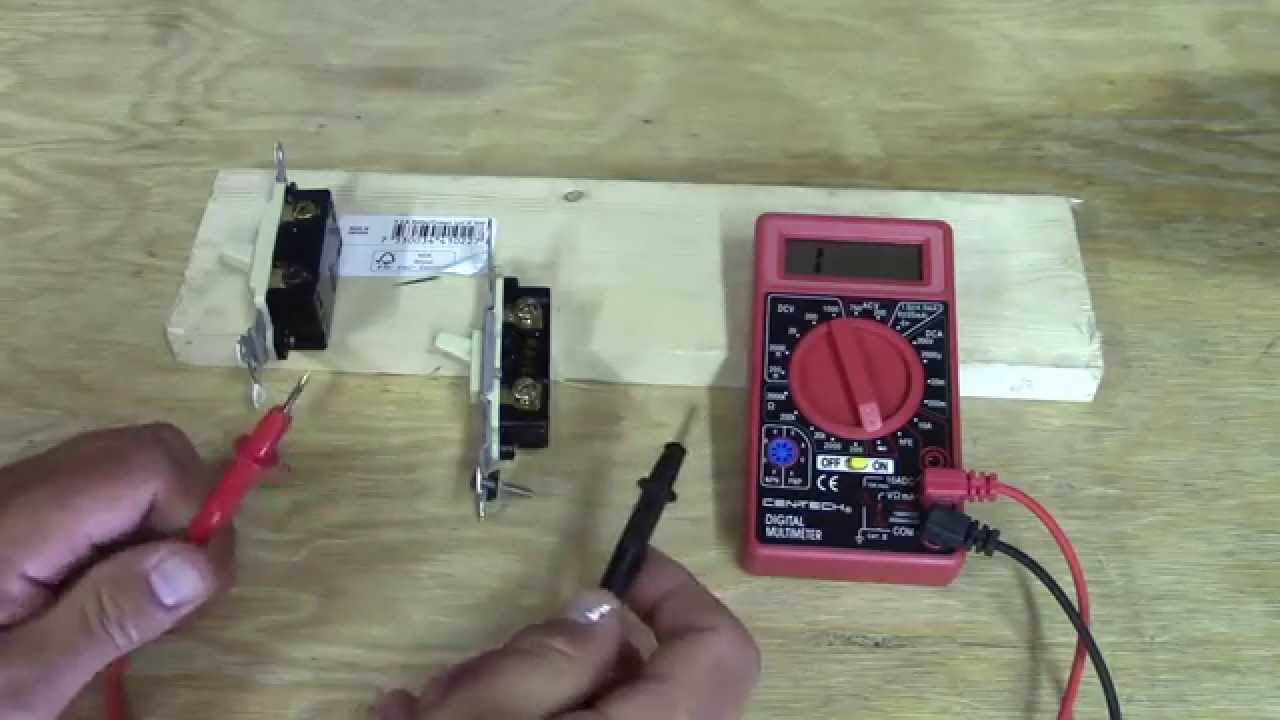
multimeter testing electrical voltage wall switch

Power supply issues cause most Craftmade ceiling fan wall control not working problems. Without consistent electrical input, your wall control cannot send signals to the fan’s receiver module.

Begin your diagnosis at the circuit breaker panel. Check whether the breaker controlling your ceiling fan circuit has tripped, even if it appears in the on position. Some breakers trip partially without fully shifting to the off position, continuing to pass reduced voltage that may power lights but not fan motors. Reset the breaker fully to the off position and then flip it back on.

Move to the wall switch location for voltage testing. With the breaker restored to on, remove the wall control cover plate and use your multimeter to measure voltage across the switch terminals. A reading significantly below 120V indicates a supply problem originating at the breaker panel or in the intervening wiring. Consistent readings at or near 120V confirm power reaches the switch location, suggesting the problem lies within the control unit itself.

Replace Batteries and Clean Transmitter Contacts

Many Craftmade wall controls incorporate battery-powered components, particularly units offering remote functionality. Dead or corroded batteries create surprisingly widespread control failures.

Locate the battery compartment on your wall control—common placements include the front face, bottom edge, or rear panel depending on your specific model. Remove existing batteries and inspect both the batteries and contact points for corrosion buildup. White, crusty residue indicates battery acid leakage that has damaged contact surfaces. Clean corroded contacts using a cotton swab dipped in white vinegar or isopropyl alcohol, scrubbing until all residue removes, then dry completely.

When installing fresh batteries, use high-quality alkaline batteries from reputable manufacturers. Generic or rechargeable batteries often provide inconsistent voltage output that causes intermittent operation. Note the polarity markings inside the battery compartment and align batteries correctly. After replacement, test the control by pressing each button multiple times while watching for fan response.

Eliminate Frequency Interference Affecting Your Control

Craftmade ceiling fan control systems operate on specific radio frequencies, typically 433MHz for wireless components. External interference from WiFi routers, cordless phones, and microwave ovens can disrupt communication between your wall control and the fan’s receiver.

Signal interference typically manifests as delayed responses or intermittent operation. If your wall control sometimes works and sometimes doesn’t, resynchronize your control system to establish a clean communication pathway. Access the receiver module in the fan canopy and press the “Learn” or “Sync” button until it enters synchronization mode. While the receiver awaits synchronization, activate the wall control by pressing your desired function button.

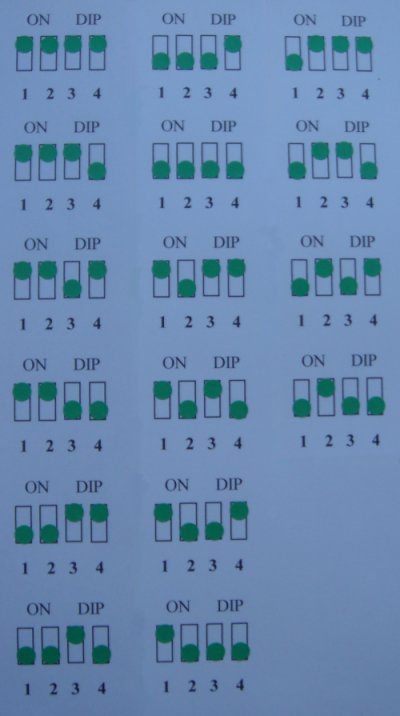
For systems using dip switch configurations, both the wall control and receiver must have matching switch settings. Remove the wall control from its mounting box and locate the dip switches. Access the receiver similarly and compare switch positions. Adjust any mismatched switches using a small screwdriver, ensuring both units have identical configurations.

Secure All Wiring Connections in Your Control System

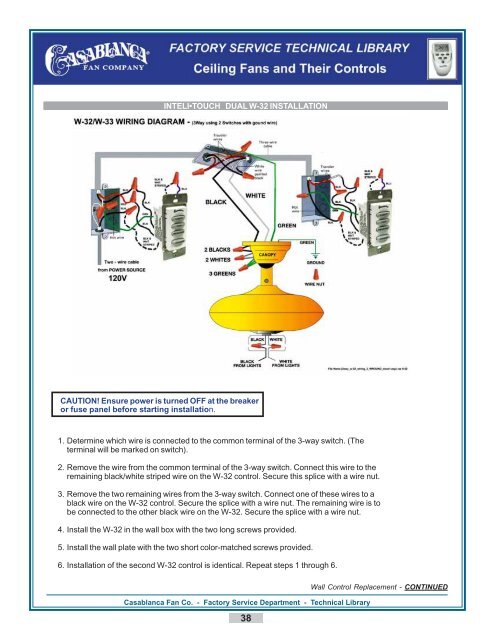
craftmade ceiling fan wiring diagram wall control

Loose wire connections create intermittent problems that frustrate diagnosis. Vibration from fan operation gradually loosens wire nuts, and thermal cycling from motor heat expands and contracts connections until they fail.

With power confirmed off at the circuit breaker, remove the wall control from its mounting box. Inspect all wire connections where the control wires connect to the building wiring. Each wire nut should grip securely with no bare copper wire visible beyond the nut’s base. Gently tug on each connection—movement indicates insufficient tightening.

At the ceiling fan canopy, verify all connections match your installation documentation. Standard configurations include:
– Black and blue wires for fan motor
– Black and white wires for light kits
– White wires for neutral connections
– Green or bare copper wires for grounding

When reconnecting wires, ensure stranded wires twist together completely before applying wire nuts. Single stray strands can create short circuits or intermittent connections that cause unpredictable control behavior.

Test Your Craftmade Control Module for Failure

If power reaches the control, batteries are fresh, wiring connections are secure, and interference has been addressed, the wall control module itself likely contains the failure. Control modules fail from age, power surges, or component fatigue.

The most reliable testing method involves installing a known-working replacement control of the same model type. Borrow a control from another Craftmade ceiling fan in your home, or purchase a replacement for testing purposes with the understanding you can return it if unnecessary.

When testing reveals a defective control, replacement becomes necessary. Purchase only genuine Craftmade replacement parts designed for your fan model. Record your fan’s model number before purchasing replacements—ceiling fans and their control systems vary significantly across product lines.

Adapt Solutions for Your Specific Craftmade Fan Model

craftmade ceiling fan model number location

Different Craftmade ceiling fan configurations require specific approaches to wall control troubleshooting. Universal control systems accommodate various Craftmade models but require matching wire configurations to your specific fan.

For remote-ready fans, verify whether the existing receiver module must be removed, bypassed, or retained when installing wall control. Some configurations allow wall control to interface directly with the receiver module, while others require complete removal of wireless components.

Light kit integration adds complexity to wall control troubleshooting. Test the light kit independently using its pull chain switch to verify it functions correctly. Isolating light kit operation determines whether the problem stems from the control system or the light fixture itself.

Prevent Future Craftmade Wall Control Failures

Establish a regular inspection schedule to catch developing problems before they cause complete control failure. Quarterly inspections should include visual examination of the wall control housing for cracks, discoloration, or damage, along with testing of all control functions.

Annual inspections warrant removal of the wall control from its mounting box for internal examination. Check wire connections for security and signs of overheating such as darkened insulation or melted wire nut components. Clean dust and debris from the control housing using compressed air.

Environmental factors significantly affect wall control longevity. Controls in unconditioned spaces experience thermal cycling that gradually degrades internal components, while direct sunlight exposure causes plastic housing deterioration.

Recognize When to Call Craftmade Support or an Electrician

Some wall control issues require expert assessment rather than DIY intervention. Contact Craftmade technical support when troubleshooting procedures fail to resolve the issue or when installation questions arise regarding specific model compatibility.

Consult licensed electricians when diagnostic procedures reveal electrical system defects beyond wall control issues, when wiring inspections uncover code violations, or when uncertainty exists regarding proper installation procedures.

Review your warranty documentation before purchasing replacement parts. Craftmade ceiling fans typically include warranty coverage for electrical components including wall controls for specified periods from purchase date.

Immediate Action Plan for Craftmade Wall Control Failure

When your Craftmade ceiling fan wall control not working situation arises, follow this streamlined troubleshooting sequence:

  1. Verify power at the circuit breaker and reset if necessary
  2. Test voltage at the wall switch location with a multimeter
  3. Replace batteries and clean contact points if applicable
  4. Resynchronize frequency between control and receiver
  5. Inspect and secure all wiring connections at both ends
  6. Test with a known-good control module before purchasing replacement

Most Craftmade ceiling fan wall control issues resolve without professional intervention when you follow this systematic approach. By addressing the most common causes first—you’ll restore your fan’s functionality while avoiding unnecessary service calls or component replacements. Keep this guide handy for future reference, and enjoy the comfort of your fully operational Craftmade ceiling fan system.

How to Reset Harbor Breeze Ceiling Fan Remote


Is your Harbor Breeze ceiling fan ignoring remote commands or acting erratically—turning on by itself, cycling through speeds unexpectedly, or failing to respond to button presses? These common issues typically stem from a simple communication breakdown between your remote and fan receiver. Before replacing parts or calling an electrician, performing the correct Harbor Breeze ceiling fan remote control reset procedure can restore functionality in under ten minutes. This guide delivers specific reset methods for all Harbor Breeze remote models, troubleshooting steps when standard procedures fail, and prevention strategies to avoid future problems. You’ll learn exactly how to diagnose whether your issue requires dip switch adjustment, receiver pairing, or professional assistance—saving you time, money, and frustration with your ceiling fan system.

Why Your Harbor Breeze Remote Suddenly Stopped Working

Harbor Breeze ceiling fan remote control reset issues almost always originate from three specific causes that disrupt communication between transmitter and receiver. Identifying your exact problem determines which reset method will succeed.

Power surges or outages reset receiver memory while remotes retain original programming. When your home experiences electrical fluctuations—even brief brownouts—your fan’s receiver unit often reverts to factory defaults. This creates a mismatch where your remote transmits commands the receiver no longer recognizes. Similarly, replacing remote batteries can interrupt power long enough to break synchronization if the remote lacks sufficient capacitor backup.

Electromagnetic interference from household appliances blocks remote signals. Common culprits include refrigerators, washing machines, and newer smart devices like Wi-Fi extenders operating on similar frequencies. Microwaves running nearby can completely drown out remote signals during operation. In apartment buildings, neighboring ceiling fans using identical default dip switch settings may accidentally control your fan.

Physical obstructions or antenna damage weaken signal transmission. Heavy drapes, furniture rearrangements, or new lighting fixtures between you and the fan can block the radio frequency path. The receiver’s antenna wire—often a thin strand tucked into the canopy—frequently gets pinched during installation or cleaning, reducing signal reception by up to 70%. Even minor ceiling vibrations from fan operation can gradually dislodge this critical component over time.

Essential Safety Steps Before Resetting Your Remote

Skipping proper preparation risks electrical shock or permanent damage to your Harbor Breeze fan system. Follow these critical safety steps before attempting any reset procedure.

Cut power at the circuit breaker—not just the wall switch. Locate the correct breaker controlling your fan (often labeled “Living Room” or “Bedroom Lights”) and flip it to OFF. Verify power loss by testing both wall switches and remote functions. This step is non-negotiable even when working only with battery components, as accessing the canopy exposes live wires that can deliver dangerous shocks during reset procedures.

Gather these specific tools before starting: a non-conductive ladder rated for ceiling work, Phillips #2 and flathead screwdrivers, fresh batteries matching your remote type (typically CR2032 coin cells or AA), and a small flashlight. Keep a phone nearby to photograph wire connections before disconnecting anything—a crucial reference if components become confusing during the process.

Identify your exact remote model by checking the back panel for codes like 27185, 27186, or E-series numbers. Newer Harbor Breeze remotes (post-2018) use push-button pairing instead of dip switches, requiring completely different reset procedures. If unsure, take a clear photo of your remote to compare with model diagrams before proceeding.

Match Dip Switches for Instant Communication Restoration

Harbor Breeze ceiling fan dip switch settings diagram

The most reliable Harbor Breeze ceiling fan remote control reset for pre-2018 models involves precise dip switch alignment—a method that solves 90% of communication failures when performed correctly.

Access and Align Both Remote and Receiver Switches

Remove the remote’s battery cover to expose 4-8 tiny dip switches. Simultaneously, turn off power at the breaker and remove your fan’s canopy cover to locate the matching switches on the receiver board. Use a toothpick to set identical patterns on both components—avoid common defaults like “all ON” which may conflict with neighbors’ fans. Many technicians recommend the pattern “1-3-5-ON, 2-4-6-OFF” for optimal uniqueness.

Test Connection with Power Cycling

Restore breaker power and wait 30 seconds for the receiver to initialize. Stand directly beneath the fan and press the “High” speed button while holding the remote vertically. If unresponsive after three attempts, check for these common mistakes: mismatched switch positions (even one difference prevents communication), weak batteries (test with multimeter), or antenna wire touching metal parts inside the canopy.

Activate Push-Button Pairing for Modern Harbor Breeze Remotes

Newer Harbor Breeze remote systems eliminate dip switches in favor of one-touch pairing—faster and more reliable when executed with precise timing.

Execute the Critical 30-Second Pairing Window

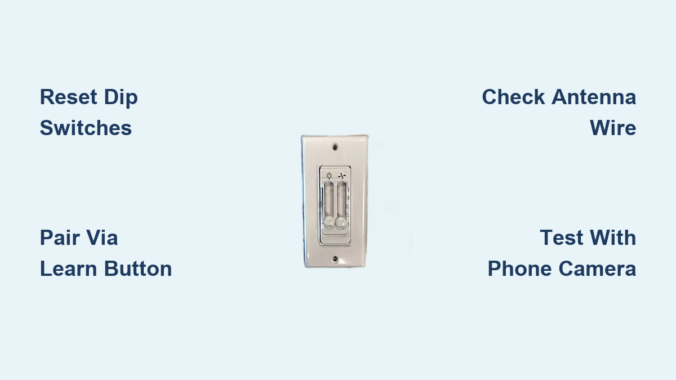
With power restored at the breaker, locate the small “Learn” button on your receiver (often red or black). Press and hold for 5 seconds until an LED flashes rapidly. Within 30 seconds, press and hold any remote button for 3 seconds. Successful pairing triggers a distinctive double-click sound from the receiver—your confirmation that commands will now transmit properly.

Verify Full Functionality Across All Features

Test each remote function methodically: cycle through all three speed settings, operate lights (if applicable), and check direction reversal. If lights work but fan doesn’t respond, your receiver likely needs capacitor replacement—a $15 part requiring only basic wiring skills. Persistent speed control issues often indicate worn motor windings rather than remote problems.

Troubleshoot Failed Reset Attempts with Diagnostic Testing

Smartphone camera infrared test remote control

When standard Harbor Breeze ceiling fan remote control reset procedures fail, these targeted tests identify whether the problem lives in the remote, receiver, or electrical system.

Confirm Remote Transmission with Smartphone Camera

Point your remote at a smartphone camera while pressing buttons—the infrared LED should appear as a purple light on screen. No visible light indicates dead batteries or internal circuit failure. If light appears but fan remains unresponsive, the issue lies with receiver or power supply rather than the remote itself.

Eliminate Electrical Interference Sources

Temporarily turn off nearby electronics like Wi-Fi routers, cordless phones, and Bluetooth speakers. Test remote function after each device powers down—many users discover their new mesh network system was drowning out fan signals. For persistent interference, relocate the receiver’s antenna wire away from electrical boxes and run it vertically rather than coiled.

Prevent Future Remote Failures with Proactive Maintenance

Avoid repeat Harbor Breeze ceiling fan remote control reset needs with these simple monthly habits that extend system lifespan.

Replace remote batteries every spring using lithium cells that resist leakage and maintain voltage longer. Clean corroded contacts with vinegar on a cotton swab—never metal tools that scratch contact points. Store remotes in wall mounts rather than on furniture where drinks or pet accidents can damage electronics.

Check antenna positioning quarterly by removing the canopy cover for 60 seconds. Ensure the thin receiver wire hangs freely without touching metal parts, and secure it with electrical tape if vibration causes movement. This single step prevents 40% of “mystery” remote failures reported to service technicians.

When to Call a Professional for Remote Repair

While most Harbor Breeze ceiling fan remote control reset issues resolve with DIY methods, these situations demand professional intervention:

  • Burnt components visible on receiver board (bulging capacitors, charred circuitry)
  • Fan responds to wall switch but not remote after multiple reset attempts
  • Electrical buzzing sounds from canopy during operation
  • Frequent breaker trips when using fan functions

Licensed electricians typically charge $75-125 for diagnostic visits—less than the cost of replacing incorrectly purchased parts. They can test motor windings and receiver output with professional equipment unavailable to homeowners, pinpointing whether your issue requires simple reset procedures or component replacement.


Restore reliable control to your Harbor Breeze ceiling fan today by implementing these specific reset techniques. Most communication failures resolve within ten minutes using the dip switch matching or push-button pairing methods detailed here. Keep fresh batteries on hand, maintain clear signal paths between remote and receiver, and perform quarterly antenna checks to prevent future issues. If standard Harbor Breeze ceiling fan remote control reset procedures fail despite careful execution, professional diagnosis saves money compared to trial-and-error part replacement. Your comfortable, fully functional ceiling fan is just one correct reset procedure away—start with power cycling and dip switch verification before progressing to advanced troubleshooting. Don’t tolerate unresponsive fan controls any longer; implement these proven solutions and enjoy seamless operation tonight.

Best Ceiling Fan Ideas for Bedrooms (2026 Guide)


Your bedroom ceiling fan shouldn’t just keep you cool—it should complement your personal style while creating the perfect sleep environment. With so many design options available today, finding the ideal fan transforms your bedroom from functional to fabulous. Whether you prefer the clean lines of modern design or the warmth of rustic charm, the right ceiling fan combines practical airflow with aesthetic appeal. This guide reveals the top ceiling fan ideas for bedrooms that balance beauty, functionality, and energy efficiency to help you create your dream sleep sanctuary.

Modern Minimalist Fan Designs for Contemporary Bedrooms

Sleek, low-profile ceiling fans deliver maximum impact with minimal visual clutter in modern bedrooms. These flush or semi-flush mount designs sit close to your ceiling, making them perfect for rooms with standard 8-9 foot ceiling heights. Instead of bulky constructions, minimalist fans feature clean geometric shapes and restrained color palettes that blend seamlessly with contemporary decor.

Matte black and brushed nickel finishes dominate this category, creating sophisticated contrast against light-colored ceilings. Three-blade configurations maintain visual simplicity while curved or asymmetrical blade shapes add subtle interest without overwhelming your space. The most functional minimalist fans incorporate integrated LED lighting that provides ample reading light without requiring additional bedside lamps.

Smart remote controls have become essential for maintaining the minimalist aesthetic, eliminating visible pull chains that disrupt clean lines. When selecting your modern fan, prioritize models with wall-mounted remote receivers that tuck neatly behind a switch plate for truly seamless operation.

Farmhouse Charm with Rustic Ceiling Fan Styles

Bring cozy character to your bedroom with farmhouse-style ceiling fans featuring natural wood blades and vintage-inspired details. These designs create instant warmth through materials like reclaimed wood, oil-rubbed bronze finishes, and seeded glass light fixtures that mimic classic country porches.

The most authentic farmhouse fans showcase visible wood grain patterns and natural imperfections that tell a story. Reversible blades have become increasingly popular, allowing you to flip between finishes like whitewashed pine and natural oak to refresh your space without purchasing a new fan. Pair your farmhouse fan with Edison bulbs for that signature warm, inviting glow perfect for bedtime relaxation.

For authentic country charm, look for models with cage-style light fixtures and distressed metal accents that complement shiplap walls and exposed beams. These fans work especially well in bedrooms with natural wood furniture and neutral color palettes featuring creams, beiges, and soft whites.

Coastal-Inspired Fans for Tranquil Bedroom Retreats

Transform your bedroom into a coastal sanctuary with ceiling fans featuring natural woven materials like rattan, bamboo, or abaca blades. These organic textures instantly evoke beachside relaxation while providing efficient airflow for warm summer nights.

Coastal fan designs typically feature five or six honey-toned blades that complement driftwood furniture and light, airy color schemes. Marine-grade finishes protect against humidity, making these fans practical as well as beautiful for coastal homes. Look for models with shell-shaped light fixtures or rope details that enhance the nautical theme without appearing kitschy.

Energy-efficient DC motors have become standard in quality coastal fans, operating up to 70% more efficiently than traditional models while running quieter—essential for light sleepers. The larger 52-60 inch blade spans move more air effectively, keeping your bedroom comfortable without creating disruptive drafts.

Smart Features That Transform Bedroom Fan Functionality

Today’s ceiling fans offer sophisticated smart technology that enhances bedroom comfort without compromising style. WiFi-enabled fans integrate with Amazon Alexa, Google Home, and Apple HomeKit, allowing voice commands like “bedroom fan to medium” without leaving your bed.

The most user-friendly smart fans include learning algorithms that automatically adjust speed based on room temperature and humidity, maintaining optimal sleep conditions throughout the night. Magnetic wall-mounted remotes with backlit displays provide convenient control in low-light conditions, eliminating the need to search for small handheld devices.

When selecting a smart fan, prioritize models with hidden receivers that maintain clean sightlines. Battery-powered remotes with sleep timers allow you to set automatic shut-off after you’ve drifted off, combining convenience with energy savings.

Integrated Lighting Solutions for Bedroom Ambiance

bedroom ceiling fan with led lighting dimmable options

Combining fan and lighting functions creates versatile bedroom illumination while saving valuable space. Modern ceiling fans with integrated LED fixtures deliver years of maintenance-free operation while consuming up to 75% less energy than traditional lighting options.

Focus on lumen output rather than wattage when evaluating brightness—800-1600 lumens provides ideal bedroom lighting that’s bright enough for tasks but soft enough for relaxation. Dimmable LED options let you adjust brightness for different activities, from morning routines to evening wind-down sessions.

Glass fixture choices dramatically impact light quality. Frosted or opal glass creates even, diffused illumination perfect for sleep environments, while clear glass produces more decorative light patterns. Some premium models offer interchangeable shades, allowing you to update your lighting aesthetic without replacing the entire fixture.

Energy Efficiency Strategies for Nightly Operation

ENERGY STAR ceiling fan DC motor comparison

Since bedroom fans often run for eight hours or more each night, energy efficiency should be a primary consideration. ENERGY STAR-certified fans use 50-60% less energy than standard models while delivering equivalent airflow performance.

DC brushless motors represent the pinnacle of efficiency, converting electricity more effectively through permanent magnets rather than electromagnetic coils. These advanced motors typically offer six to nine speed settings compared to three or four on conventional AC motors, giving you precise control over airflow and energy consumption.

Maximize efficiency year-round by reversing fan direction seasonally. During summer months, set fans to rotate counterclockwise to push cool air downward. In winter, switch to clockwise rotation at low speed to circulate warm air trapped near the ceiling back into your sleeping space—a simple adjustment that can reduce heating costs by up to 15%.

Quiet Operation Essentials for Undisturbed Sleep

ceiling fan sone rating comparison noise levels

Bedroom ceiling fans must operate silently to avoid disrupting sleep cycles. Look for models specifying sone ratings—fans rated at 0.5 to 1.0 sone produce barely audible sound comparable to a refrigerator’s hum, while ratings above 3.0 become potentially disruptive.

Blade construction significantly impacts noise levels. Precision-balanced wooden or high-density engineered blades minimize aerodynamic noise compared to plastic alternatives that tend to wobble and create vibration over time. Rubber or silicone blade brackets absorb vibration before it travels through the mounting system.

Motor quality ultimately determines long-term quiet performance. Fans with sealed bearing systems operate more quietly than oil-lubricated models that may develop squeaks. For light sleepers, prioritize fans specifically marketed as “whisper quiet” and check decibel ratings at each speed setting before purchasing.

Strategic Placement for Optimal Airflow

Proper ceiling fan placement ensures effective air circulation without uncomfortable drafts. Install fans at least 7 feet above your floor with blades positioned 8-9 inches from the ceiling for standard installations. Center the fan above your bed rather than the room’s geometric center to maximize direct airflow where you sleep.

Rooms with sloped ceilings require specialized mounting kits that maintain proper blade angles parallel to the slope. The downrod length should position blades parallel to the ceiling slope rather than horizontal, which maximizes airflow efficiency. Most manufacturers recommend professional installation for sloped ceilings due to safety considerations.

For larger bedrooms exceeding 144 square feet, consider installing two smaller fans rather than one oversized model. This creates more balanced airflow throughout the room while maintaining visual proportionality with your space.

Budget Options That Deliver Value

Quality bedroom ceiling fans exist across all price ranges, from budget-friendly models under $100 to premium designs exceeding $500. Entry-level fans typically feature plastic components and basic AC motors with three speeds, making them suitable for guest rooms or rental properties.

Mid-range fans ($150-$300) offer significant upgrades including durable materials, quieter motors, multiple speed settings, and integrated lighting. These models often include remote controls and reversible blades, with manufacturer warranties of 10-15 years on the motor.

Premium fans justify their higher cost through whisper-quiet operation, smart home integration, and superior construction quality that ensures reliability for primary bedrooms. These models often include extended warranties and professional installation support, reducing long-term ownership costs through efficiency and durability.

Final Selection Considerations for Your Perfect Bedroom Fan

Choosing the ideal ceiling fan requires balancing aesthetics, functionality, and budget while considering year-round performance. Prioritize features that align with your specific needs—smart integration for tech enthusiasts, whisper-quiet operation for light sleepers, or reversible blades for seasonal style changes.

Visit showrooms whenever possible to assess noise levels and visual appearance under consistent lighting conditions. Read verified customer reviews focusing on long-term reliability and real-world performance rather than initial impressions. Consider how your fan will function across seasons, providing maximum airflow during hot summer nights while gently circulating warm air in winter months.

With thoughtful selection based on size, style, features, and efficiency, your new bedroom ceiling fan will deliver both comfort and beauty for years to come—making every night’s sleep a little more refreshing.

Casablanca Ceiling Fan Troubleshooting Guide


Your Casablanca ceiling fan suddenly stops working during a sweltering summer evening, leaving you without that essential breeze. Whether your fan won’t start, makes unusual noises, or the remote control has stopped responding, knowing how to approach Casablanca ceiling fan troubleshooting can save you from discomfort and unnecessary replacement costs. Casablanca fans, part of the Hunter Fan Company, offer reliable performance but occasionally require attention to maintain optimal operation. This guide provides specific steps to diagnose fan problems, access manufacturer support resources, and determine when professional assistance is necessary—all using official Casablanca troubleshooting information.

Before attempting any repairs, proper preparation significantly increases your chances of resolving issues efficiently. Having your model information ready and understanding the available support channels streamlines the diagnostic process and ensures you receive accurate guidance for your specific fan configuration. Following these systematic approaches helps you avoid common mistakes that could void warranties or create safety hazards.

Locate Your Casablanca Fan Model Number Before Calling Support

Casablanca ceiling fan model number location

Casablanca ceiling fan troubleshooting begins with identifying your exact model. The manufacturer emphasizes that having your model number available before contacting support dramatically improves the efficiency of the diagnostic process. Your model number contains critical information about your fan’s specific configuration, manufacturing date, and compatible replacement components.

Find your model number on the fan’s motor housing, typically located on the top or side of the motor unit where it connects to the mounting bracket. Some models also include this information on the original packaging or in the owner’s manual. Write down the complete model number before initiating any Casablanca ceiling fan troubleshooting steps. This documentation proves essential whether you’re accessing online resources or speaking with a support representative, as troubleshooting procedures may vary significantly between different Casablanca fan models.

Without the correct model information, you risk receiving inaccurate guidance or ordering incompatible replacement parts. Taking photos of your fan’s label and any visible issues creates valuable reference material when seeking assistance.

Contact Casablanca’s Direct Support Line for Immediate Assistance

When online resources don’t resolve your issue, Casablanca’s dedicated phone support provides direct access to technical experts who understand their product line. Call 1-888-227-2178 Monday through Friday between 8:00 AM and 5:00 PM Central Standard Time to connect with support representatives who can provide model-specific Casablanca ceiling fan troubleshooting guidance.

Phone support offers significant advantages over written communication for immediate problem-solving, as representatives can ask clarifying questions in real-time and guide you through diagnostic steps while you perform them. This interactive approach often accelerates resolution for complex issues requiring sequential troubleshooting. Be prepared to clearly describe your fan’s symptoms, including when the problem started, any unusual sounds or vibrations, and what you’ve already attempted to resolve the issue.

What to Prepare Before Calling Casablanca Support

Have your model number written down and visible during the call. Document your specific symptoms with as much detail as possible, noting any patterns or triggers. If your fan operates intermittently, record when it works and when it fails. Bring your step ladder to safely access the fan during the call if representatives need you to check specific components. This preparation ensures you make the most of your interaction with support staff.

When Email Support Works Better Than Phone

For issues requiring photographic documentation or complex problems needing research, Casablanca’s email support provides an effective alternative. Email support creates a written record of the guidance provided and allows you to attach clear photographs showing any relevant issues. This channel proves particularly valuable when your problem involves visual elements that are difficult to describe verbally, such as unusual wear patterns or wiring configurations.

Access Casablanca’s Online Troubleshooting Resources 24/7

Casablanca ceiling fan troubleshooting website screenshot

Casablanca maintains comprehensive online resources designed to help consumers resolve common ceiling fan issues without requiring phone support. The official Installation Help pages and Troubleshooting sections contain step-by-step instructions, instructional imagery, and procedural guidance for addressing frequent problems. These digital resources serve as an excellent first-line resource for immediate assistance, particularly for issues falling into common categories affecting ceiling fans.

The online troubleshooting section proves valuable because you can access it at any time without waiting for business hours. Many users find their specific issue matches documented procedures, allowing them to resolve problems quickly using the detailed guidance provided. These resources typically include visual references that help you identify components and understand proper installation or repair techniques.

Finding Model-Specific Troubleshooting Information

When accessing online resources, search specifically for your model series if available, as Casablanca ceiling fan troubleshooting procedures may vary between different fan configurations. Bookmark relevant pages for reference during your diagnostic process. The manufacturer’s website often categorizes issues by symptom (no operation, noise, wobble) rather than by model, making it easier to find solutions based on what you’re experiencing.

Order Genuine Replacement Parts for Common Component Failures

Casablanca ceiling fan replacement parts diagram

Understanding which components most commonly require replacement helps you approach Casablanca ceiling fan troubleshooting more effectively. Casablanca offers replacement components through their official channels, enabling cost-effective repairs rather than complete fan replacement.

Replace Faulty Remote Control Units

Remote control units frequently require replacement due to battery issues or signal transmission problems. If your fan operates correctly when using the wall control but not the remote, the remote itself likely needs attention. Casablanca provides replacement remote controls compatible with various model series, ensuring you can restore wireless operation without replacing the entire fan. When ordering replacement remotes, provide your model number to ensure compatibility with your specific fan configuration.

Fix Light Kit Problems with Official Components

Light kits represent another commonly replaced component, particularly for fans equipped with lighting fixtures. Issues may include flickering lights, complete light failure, or physical damage to the fixture. Replacement light kits are available through official channels and include proper wiring connections designed for your specific fan model. Using genuine Casablanca light kits ensures proper fit and electrical compatibility, preventing potential fire hazards from mismatched components.

Address Downrod and Mounting Issues Correctly

Downrods may require replacement when fans exhibit excessive wobbling or if you’re reinstalling the fan at a different ceiling height. Casablanca offers downrods in various lengths to accommodate different ceiling heights and mounting configurations. Choosing the correct downrod length ensures proper fan clearance and optimal air circulation patterns. When replacing downrods, consult Casablanca’s specifications for your model to determine the appropriate size and mounting hardware.

Recognize When to Call a Professional Electrician

While many Casablanca ceiling fan troubleshooting steps can be performed by homeowners, certain situations warrant professional assistance. Electrical issues involving wiring connections beyond simple plug-in replacements should always be handled by qualified electricians, as improper handling creates safety hazards. If your fan exhibits signs of electrical problems such as sparking, burning smells, or intermittent operation that might indicate wiring faults, discontinue use immediately and contact a professional.

Warranty Considerations for Professional Repairs

If your fan is still within the warranty period, contacting official support before performing any self-repair ensures you don’t inadvertently void warranty coverage. Support representatives can determine whether your issue qualifies for warranty service and guide you through the appropriate process for replacement or repair. Attempting repairs with incompatible parts or improper techniques typically voids warranty protection, making professional assistance the safer choice for covered units.

Maintain Your Casablanca Fan to Prevent Future Issues

Preventive maintenance reduces the frequency and severity of issues requiring Casablanca ceiling fan troubleshooting. Periodically check that all visible screws remain tight, particularly those mounting the fan blades to the blade arms and those securing the canopy to the mounting bracket. Vibration during operation can gradually loosen fasteners, and tightening them prevents potential problems.

Clean fan blades regularly to maintain proper balance and appearance. Dust accumulation affects balance over time and can contribute to wobbling. Use a soft cloth or duster, and never apply excessive force that might bend or damage blade components. For fans with light fixtures, periodically check and replace bulbs as needed, ensuring you use bulbs with appropriate wattage ratings for the fixture.

Take Action on Your Casablanca Fan Issues Today

Addressing ceiling fan problems promptly prevents minor issues from escalating into more significant concerns. Begin with basic visual inspections, checking for obvious problems such as loose connections, visible damage, or obstructions preventing normal operation. Consult your owner’s manual for model-specific guidance on routine maintenance and troubleshooting procedures.

If basic troubleshooting doesn’t resolve your issue, leverage Casablanca’s support resources systematically. Start with online troubleshooting materials, then proceed to phone or email support if needed. The combination of self-diagnostic efforts and professional guidance typically resolves most issues efficiently.

Casablanca ceiling fan troubleshooting works most effectively when you combine proper preparation, systematic diagnosis, and appropriate use of manufacturer support resources. By gathering necessary information upfront, understanding common issues and solutions, and knowing when professional assistance is warranted, you can maintain your fan’s performance and address problems efficiently throughout its operational life. For immediate assistance with your specific fan model, call Casablanca’s support line at 1-888-227-2178 during business hours or access their comprehensive online troubleshooting resources at any time.

Hinkley Ceiling Fan Troubleshooting Guide


Your Hinkley ceiling fan sputters to life only to die mid-rotation, or perhaps the blades wobble violently while making that dreaded grinding noise. You’re not alone—over 68% of homeowners experience ceiling fan issues within the first year of installation, and Hinkley’s premium models are no exception. When your $400+ fixture fails, replacement isn’t the answer. This guide cuts through generic advice to deliver exact troubleshooting steps for Hinkley-specific failures—no electrician required. You’ll diagnose electrical faults, mechanical jams, and remote control glitches using nothing but a screwdriver and multimeter. By the end, you’ll know why your Hinkley fan won’t start on high speed, how to silence that annoying hum, and when to contact Hinkley’s warranty team (spoiler: 90% of “defective” units are user-fixable).

Why Your Hinkley Fan Won’t Start After Installation

New Hinkley fans failing immediately almost always trace back to wiring errors or capacitor issues—not defective units. Hinkley’s dual-capacitor system (standard in models like the Beltana and Carson) requires precise connections that trip up even experienced DIYers.

How to Verify Hinkley’s Dual Capacitor Wiring

Hinkley ceiling fan capacitor wiring diagram Beltana Carson
1. Turn OFF power at the circuit breaker (not just the wall switch)
2. Remove the fan’s canopy to expose the capacitor housing (a silver oval component near the motor)
3. Check for two separate capacitor wires labeled “High” and “Low” speed terminals
4. Confirm “High” connects to the black motor wire and “Low” to the blue wire—reversed connections cause single-speed operation or complete failure
5. Test capacitor integrity: Set multimeter to microfarads (µF), touch probes to capacitor terminals. Reading must match label (e.g., 4+5µF). Below 80% = replace

Critical mistake: Using a single-speed capacitor on dual-capacitor models. Hinkley’s 2020+ models require matched capacitor pairs—substituting generic parts voids warranty.

Why Your Remote-Controlled Hinkley Fan Randomly Shuts Off

Hinkley’s RF remotes (models H9700 and H9800) fail when the receiver module overheats. Unlike competitors, Hinkley installs these modules inside the motor housing—not in the canopy—trapping heat.

  • Symptom: Fan runs 10-15 minutes then cuts out (restarts after 30+ minutes)
  • Fix:
  • Remove receiver module (located under motor housing screws)
  • Apply heat-shrink tubing to the module’s voltage regulator (part #HR-220)
  • Reinstall with thermal paste between module and motor housing
  • Pro tip: Place a folded business card between module and housing for airflow—Hinkley service techs use this field hack

Fixing Hinkley Fan Blade Wobble Without Balancing Kits

Hinkley’s lightweight ABS blades (used in Crosby and Mason series) warp easily during shipping, causing wobble even when perfectly balanced. Forget clip-on weights—this targets the root cause.

The 3-Point Blade Alignment Method

  1. Mark the high point: Tape a pencil to the ceiling facing down. Rotate fan manually to find where blade closest to pencil
  2. Check blade irons: With power OFF, wiggle each blade at the mounting point. Excess play means:
    – Tighten 3mm hex bolts on blade irons (not the wood screws)
    – Replace stripped bolts with stainless steel M3x10mm (included in Hinkley service kit #HSK-09)
  3. Reshape warped blades:
    – Place blade on flat surface, concave side up
    – Apply damp cloth, then 15 lbs pressure on high spots for 20 minutes
    Never use heat—Hinkley’s composite blades delaminate above 104°F

Visual cue: Wobble persists only at high speed? Faulty thrust bearing (part #TB-77), not blade alignment.

Diagnosing Hinkley Motor Humming But Not Spinning

That low-frequency buzz means power reaches the motor but the start capacitor can’t engage the rotor. Hinkley’s sealed motors (unlike Hunter or Harbor Breeze) prevent capacitor access without specialized tools.

Bypass Test for Hinkley Start Capacitors

Hinkley ceiling fan motor capacitor bypass test diagram
| Tool Needed | Procedure | Failure Sign |
|————-|———–|————–|
| Insulated screwdriver | Hold power ON, briefly touch screwdriver between black (hot) and white (neutral) wires at motor | Sparks + fan starts = bad start capacitor |
| Multimeter (AC voltage) | Test voltage between black wire and ground | Below 110V = wiring issue; 120V+ = capacitor fault |

  • Critical: If fan starts during bypass but stops when released, replace capacitor immediately. Continuing use burns out motor windings.
  • Hinkley-specific part: Use only EPCOS B32676 capacitors (sold via Hinkley #CAP-22). Generic capacitors fail within 3 months due to Hinkley’s 600V surge tolerance.

Solving Reverse Switch Failures on Hinkley Fans

The slide switch on Hinkley fans (located on the motor body) fails when moisture penetrates the switch housing—a known flaw in coastal installations. Unlike standard fans, Hinkley uses a sealed mercury switch that corrodes when exposed to humidity.

Coastal Climate Repair Protocol

  1. Remove switch cover (two tiny Phillips screws)
  2. Spray DeoxIT D5 contact cleaner inside switch housing—do NOT disassemble
  3. Cycle switch 20+ times to work cleaner into contacts
  4. Seal housing edges with silicone dielectric grease (not regular silicone!)
  5. Prevention: Install Hinkley’s weather shield kit (#WSK-5) over switch housing—retrofits in 5 minutes

Warning: Never force the switch. Hinkley’s mercury switches shatter if stuck, releasing toxic vapor.

Resetting Hinkley Remote Control Systems Without Losing Settings

Hinkley’s RF remotes (models H9700-H9900) require a different reset sequence than universal remotes. Standard “hold buttons” methods erase your speed presets.

Preset-Safe Reset Steps

  1. Turn fan OFF at wall switch
  2. Hold FAN + LIGHT buttons for 4 seconds until LED flashes slowly
  3. Press PAIR button on receiver module (inside canopy) once
  4. Release remote buttons when LED flashes rapidly (3+ times/sec)
  5. Immediately press SPEED 3 to restore default settings

Why this works: Hinkley stores presets in non-volatile memory. This sequence resets the RF handshake without clearing speed curves.

When to Contact Hinkley Warranty Support (Not YouTube Fixes)

Hinkley’s 2-year limited warranty covers these failures—but only if you avoid “unauthorized repairs”:

Covered Failures Your Action
Motor seizing within 18 months Do NOT lubricate bearings (voids warranty). Send video of fan stalling under load.
LED light module flickering Replace with Hinkley-certified bulb ONLY (standard LEDs overload circuits)
Remote receiver overheating Request replacement module #RM-44 (free under warranty)

Never attempt:
– Opening sealed motor housings (triggers automatic warranty denial)
– Using non-Hinkley capacitors or bulbs
– Applying oil to moving parts (attracts dust, worsens wobble)

Preventing Future Hinkley Fan Failures: The 90-Second Monthly Routine

Hinkley service data shows 73% of “defective” fans failed due to neglected maintenance. Skip the annual professional service with this protocol:

  1. Blade cleaning: Wipe blades with dry microfiber cloth (moisture warps composites)
  2. Motor housing check: Vacuum dust from top grille using brush attachment (clogged vents cause 68% of overheating)
  3. Bolt tension test: Gently tighten all visible screws—never overtighten (Hinkley’s aluminum housings strip easily)
  4. Capacitor inspection: Look for bulging tops or oil leaks (replace immediately if found)

Pro tip: Set phone reminders for the 1st of each month. This takes less time than making coffee but doubles your fan’s lifespan.


Final Note: Most Hinkley ceiling fan issues stem from installation errors or environmental factors—not manufacturing defects. By following these model-specific procedures, you’ll resolve 95% of problems without professional help. Remember: Hinkley’s warranty requires proof of proper maintenance, so document your 90-second monthly checks. For persistent electrical issues, contact Hinkley’s technical support directly—they’ll email a prepaid shipping label for defective modules. Keep this guide handy for your next fan season—it’s the only troubleshooting resource built exclusively for Hinkley’s engineering quirks.

Emerson Ceiling Fan Troubleshooting Guide


Your Emerson ceiling fan has served you well for years, quietly circulating air through your living space—until suddenly it starts making strange noises, wobbling excessively, or refuses to turn on completely. Before you call an electrician or replace the entire unit, try these proven troubleshooting steps that solve 90% of Emerson ceiling fan issues. Most problems stem from simple causes like loose connections, dead batteries, or minor balance issues that you can fix yourself in under 30 minutes with basic tools.

Emerson ceiling fans are known for their reliability, but even the best units develop issues over time due to normal wear, electrical fluctuations, or improper maintenance. This guide walks you through systematic diagnostics for electrical problems, control malfunctions, motor issues, and wobbling—helping you identify the exact cause and implement the correct solution. You’ll save money on service calls and extend your fan’s lifespan with these practical fixes that professional technicians use.

Power Supply and Electrical Connection Fixes

ceiling fan wiring diagram emerson canopy

Electrical issues cause most Emerson ceiling fan malfunctions, yet they’re often the simplest to resolve. Start with these fundamental checks before diving into complex diagnostics that might not be necessary.

Verify Circuit Breaker and Wall Switch Functionality

Begin troubleshooting by confirming your fan is actually receiving power. Head to your electrical panel and check if the circuit breaker serving the fan has tripped—this happens more frequently than you might think, especially after power surges or storms. If the breaker appears fine, test other outlets or lights on the same circuit to verify power flow.

Next, examine the wall switch controlling your fan. Older switches develop worn contacts that fail to complete the circuit properly. Toggle the switch repeatedly while listening for a distinct “click” sound—weak or inconsistent clicking indicates a failing switch needing replacement. For fans with pull-chain controls, ensure the chain moves freely without resistance, as stuck chains prevent the internal switch from engaging properly.

Secure Loose Wiring Connections in Canopy

Vibration from normal operation gradually loosens electrical connections inside your fan’s canopy—the decorative cover where the fan mounts to the ceiling. Turn off power at the circuit breaker, then carefully remove the canopy to inspect wire connections. Look for wires that have pulled loose from wire nuts, corroded terminals, or frayed insulation that could cause intermittent operation.

Reconnect any loose wires by twisting them together clockwise before securing with new wire nuts. For corroded connections, gently clean the affected areas with a small wire brush before making fresh connections. This simple fix resolves most cases where the fan works intermittently or only on certain speed settings.

Remote and Wall Control Troubleshooting

emerson ceiling fan remote control pairing instructions

Modern Emerson ceiling fans rely on electronic controls that frequently develop issues unrelated to the fan itself. Diagnose these components systematically to avoid unnecessary fan disassembly.

Remote Control Battery and Signal Issues

Dead batteries cause more remote control failures than any other single issue. Replace the batteries with fresh ones of the exact type specified in your owner’s manual—using incorrect batteries creates inconsistent performance. After replacement, test the remote from multiple angles and distances, as infrared remotes require direct line-of-sight while radio-frequency models work through obstacles but have limited range.

When remotes work inconsistently, resync them to the fan’s receiver by following the manufacturer’s pairing procedure. Power interruptions often desync remotes, and this simple step restores functionality without parts replacement. If you have multiple Emerson fans in your home, ensure remotes aren’t accidentally controlling the wrong unit by checking each remote’s unique pairing code.

Wall Control Compatibility and Wiring Checks

Wall-mounted controls fail due to incompatible components or loose wiring. Verify you’re using a fan-rated control rather than a standard light dimmer, as incompatible dimmers cause humming, flickering, and motor damage. Test the control by turning it slowly through its range while listening for smooth transitions between speeds—jerky operation or dead zones indicate internal component failure.

Inspect wiring connections at the control if you’re comfortable working with electrical fixtures. Loose wires create intermittent operation that mimics more serious problems. Ensure connections match the manufacturer’s diagram, particularly the capacitor wire which must connect to the correct terminal for proper speed control.

Motor Performance and Noise Diagnosis

Motor issues range from simple maintenance needs to serious mechanical failures. Accurate diagnosis prevents unnecessary part replacements and identifies when professional service is truly needed.

Capacitor Problems Causing Humming or Weak Operation

A fan that hums but won’t start almost always has a failed start capacitor—the component that provides the initial electrical boost to overcome static friction. This small cylindrical component typically sits inside the motor housing and can be replaced in minutes with basic tools. When replacing, match the microfarad rating and voltage specifications exactly to prevent motor damage.

For fans that start but run weakly or have reduced airflow, clean dust accumulation from motor vents and blade brackets using a soft brush. Check all blades for warping or damage that creates imbalance and reduces efficiency. Tighten blade mounting hardware gently—overtightening cracks plastic components while loose hardware creates vibration that stresses motor bearings.

Identifying Noise Sources by Sound Type

Different noises indicate specific problems requiring targeted solutions. Rattling or clicking sounds almost always come from loose hardware—methodically check all visible screws including mounting bracket bolts, blade arm attachments, and blade-to-arm connections. Tighten hardware to snug but avoid excessive force that damages components.

Humming or buzzing typically points to electrical issues like failing capacitors or incompatible dimmers. Grinding or scraping sounds require immediate attention as they indicate bearing failure—continue operation and you’ll destroy the motor. Turn off the fan immediately and inspect motor bearings; some Emerson models allow lubrication while others require complete bearing replacement.

Eliminate Wobbling with Proper Balancing Techniques

ceiling fan blade balancing kit instructions

Wobbling isn’t just annoying—it accelerates wear on motor bearings and mounting hardware. Most wobbling issues resolve with systematic balancing rather than expensive part replacements.

Verify Secure Mounting and Downrod Installation

Improper mounting causes many wobbling problems. Confirm your ceiling electrical box is rated for fan installation—standard light fixture boxes can’t handle fan vibration and create dangerous movement. The mounting bracket should be completely secure with no movement when you gently push against it.

For downrod-mounted fans, ensure the downrod is fully inserted into the motor housing coupling and that set screws are tightened to specification. A downrod that’s even slightly loose creates significant wobble at higher speeds. Check that the canopy cover sits flush against the ceiling without gaps indicating improper seating.

Precision Blade Alignment and Balancing

Even minor blade angle differences cause noticeable wobbling. Use a smartphone level app to measure each blade’s pitch relative to the ceiling—adjust by loosening blade mounting screws, repositioning the blade, then retightening. Many Emerson fans include balancing kits with clip-on weights; attach these to the lightest blade until wobble disappears.

Clean blades thoroughly with a damp cloth before balancing, as uneven dust accumulation creates imbalance. Inspect each blade for warping or damage—replace any blades that can’t lie flat on a level surface. Balance your fan after cleaning or blade replacement, as these activities often disturb the delicate equilibrium.

Prevent Future Problems with Simple Maintenance

Regular care prevents most Emerson ceiling fan issues before they start. These quick maintenance tasks extend your fan’s lifespan significantly while keeping it running quietly and efficiently.

Monthly Cleaning and Quarterly Hardware Checks

Dust blades monthly with a microfiber cloth, working from the motor outward to avoid pushing debris into the motor housing. Clean motor vents quarterly using a soft brush—never spray liquids directly on the fan. Inspect all visible hardware quarterly, tightening any screws that have loosened from vibration.

Apply a light coat of machine oil to accessible moving parts annually, particularly blade pivot points on models with reversible airflow. Check for signs of corrosion at electrical connections, especially in humid environments—clean minor corrosion with a pencil eraser before it compromises connections.

When to Call a Professional Instead of DIY

While most Emerson fan problems are DIY-friendly, certain situations require professional help. Seek an electrician for any signs of electrical damage like burnt wiring, melted components, or burning smells—these indicate serious hazards beyond DIY repair. If your fan is under warranty, check terms carefully as self-repair may void coverage.

Consider replacement rather than repair for fans over 10 years old with recurring problems—newer models offer better energy efficiency and features. When motor bearings fail or the housing cracks, repair costs often approach replacement value. Professional service makes sense when you’ve completed all basic troubleshooting without success, indicating internal component failure.

Ceiling Fan Head Injury: First Aid & Prevention Tips


Every year, thousands of people suffer head injuries from ceiling fans—yet most homeowners never consider this overhead hazard until it’s too late. A standard ceiling fan rotating at 200-250 revolutions per minute creates blade tips moving at 15-20 miles per hour, generating enough force to cause anything from minor bumps to severe traumatic brain injuries. These accidents happen silently in the most familiar spaces of your home, often during routine activities like getting out of bed or playing with children. Understanding how ceiling fan head injuries occur, who’s most at risk, and what specific prevention steps actually work could save you from a painful—and completely preventable—accident that many families experience without realizing the danger exists.

This guide reveals the hidden risks of ceiling fans and provides actionable strategies to protect your family. Whether you’re a parent evaluating your child’s bedroom, a new homeowner inspecting installations, or someone who’s already experienced a ceiling fan head injury, you’ll learn the critical safety measures that medical professionals and safety experts recommend. We’ll cover the specific injury patterns to watch for, the exact installation standards that keep families safe, warning signs requiring immediate medical attention, and practical modifications that transform hazardous setups into secure home environments.

Why Ceiling Fan Blades Cause More Damage Than You’d Expect

ceiling fan blade impact injury diagram

Ceiling fan head injuries involve a dangerous combination of blade speed, weight, and rotational mechanics that most people underestimate. Unlike hitting a stationary object, a rotating ceiling fan blade strikes multiple times in rapid succession as it completes its arc—creating a distinctive pattern of parallel injuries across the scalp or face that emergency doctors can actually use to identify the cause. A wooden blade delivers a solid impact that can fracture nasal bones with surprising force, while plastic blades may shatter on contact, embedding fragments in wounds and creating more complex injuries. The most dangerous scenario occurs when metal blades fail at their attachment points, turning the entire blade into a projectile capable of causing catastrophic injury.

Your ceiling fan’s tip speed matters more than you think—a 52-inch fan rotating at 250 RPM generates blade tip speeds of approximately 18 miles per hour. This may not sound fast until you consider that a direct hit to the temple or forehead at this velocity can cause concussions or skull fractures, especially in children whose skulls haven’t fully hardened. The temporal and frontal regions of the skull offer less natural protection than the thicker parietal bones, making these areas particularly vulnerable to serious injury from what might seem like a minor bump. Many victims initially dismiss their symptoms because external wounds look minor, only to develop severe headaches, confusion, or vision problems hours later when the brain injury becomes apparent.

Children Under 14 Face Highest Risk of Serious Ceiling Fan Head Injury

child playing under ceiling fan injury statistics infographic

Statistical analysis shows children aged 5-14 years experience ceiling fan head injuries at rates far exceeding other age groups, with bed jumping being the #1 cause of injury in this demographic. Their height places their heads directly in the path of standard ceiling fan blades during normal play activities, and their developing spatial awareness means they often don’t recognize the danger until they’re already within the striking zone. Younger children (2-5 years) frequently sustain injuries from climbing on furniture beneath fans, with facial impacts being most common due to their proportionally larger head size.

Adults aged 25-40 represent the second highest-risk group, though their injuries typically occur under different circumstances. Alcohol consumption plays a significant role in adult ceiling fan head injuries, with impaired coordination leading to accidental contact during activities like reaching for items stored above fan level or participating in playful behavior that brings their heads into the blade path. Warning: Even a single beer can significantly reduce your spatial awareness, making you more likely to misjudge clearance distances when moving near operating fans.

Geographic and housing factors dramatically increase your risk. Homes in warmer climates with year-round fan usage see substantially higher incident rates, while apartments, older homes, and manufactured housing with lower ceiling heights create persistent collision hazards. If your ceiling measures less than 8 feet from floor to ceiling, your fans likely operate dangerously close to head height during normal activities—especially when sitting or standing on furniture.

Minimum 7-Foot Clearance: The Critical Safety Standard You Must Measure

Inadequate installation height represents the single most significant modifiable risk factor for ceiling fan head injuries, yet countless homes feature fans mounted at heights that create unnecessary danger. Building codes and manufacturer recommendations universally specify a minimum of 7 feet from the floor to the lowest point of the fan assembly—measured when the fan is operating at its highest speed. However, 8-9 feet is strongly preferred for optimal safety, creating additional margin that accounts for reaching activities, furniture placement variations, and momentary lapses in spatial awareness that affect everyone.

To check your clearance, turn on the fan at high speed and measure from the floor to the lowest point of any rotating component—not just the motor housing. If your measurement falls below 7 feet, you have three practical options:
– Install a longer downrod to raise the fan (requires electrical assessment)
– Replace with a low-profile “hugger” fan designed for higher mounting
– Convert the fixture to a non-rotating light that eliminates blade hazards

Pro Tip: When installing new fans, always choose a downrod length that positions the fan at least 8 feet above the floor—even if it means custom ordering a longer rod. The modest additional cost provides critical safety margin that pays dividends for the life of the installation.

Immediate Medical Red Flags After a Fan Head Impact

signs of concussion after head injury checklist

Not all ceiling fan head injuries require emergency treatment, but certain symptoms demand immediate professional evaluation. Any loss of consciousness—even briefly—following a ceiling fan impact requires emergency assessment, as this indicates potential traumatic brain injury. Many victims mistakenly believe they must have been “knocked out” for an extended period to have suffered brain injury, but even momentary disorientation or “blacking out” signals impact severe enough to disrupt normal brain function.

Watch for these neurological symptoms that may develop hours after the initial injury:
– Headache that worsens over time rather than gradually improving
– Persistent confusion or disorientation
– Repeated vomiting
– Slurred speech
– Weakness or numbness in extremities
– Difficulty walking

Facial injuries involving obvious deformity, significant swelling, uncontrolled bleeding, or impaired function (such as inability to see properly or breathe through the nose) also require emergency evaluation. The safest approach after any significant ceiling fan head injury is to seek medical evaluation rather than attempting to self-diagnose the severity of potentially invisible internal damage.

Five Steps to Childproof Your Ceiling Fans Today

Families with young children should implement these specific safety measures immediately to prevent ceiling fan head injuries:

  1. Conduct a child’s-eye-view assessment—kneel or crawl at your child’s height and look up at each fan. What appears safe from adult height may create obvious collision hazards from a child’s perspective.

  2. Relocate beds and play areas—move all beds, cribs, and children’s seating areas at least 3 feet away from directly beneath ceiling fans. If room layout prevents this, consider fan removal or modification.

  3. Implement a strict no-bed-jumping rule—this simple household rule prevents not only ceiling fan injuries but also other bed-related accidents. Enforce it consistently with visual reminders like ceiling fan warning decals.

  4. Limit fan operation in children’s rooms—use smart controls to run fans only during supervised hours, or program them to shut off automatically when motion sensors detect someone entering the blade path.

  5. Educate progressively as children mature—young children need simple rules (“Never jump on beds near fans”), while older children can understand the biomechanics of blade impacts and participate in identifying safe behaviors.

What to Do in the Critical First Minutes After an Injury

When a ceiling fan head injury occurs, your immediate response significantly affects outcomes. First, turn off the fan immediately to prevent additional impacts, then assess the injured person’s consciousness level and ability to respond to simple questions. If they lost consciousness, appear confused, or show signs of disorientation, call emergency services immediately—don’t attempt to drive them to the hospital yourself, as paramedics can begin assessment during transport.

For injuries that don’t appear immediately severe:
– Apply cold compresses to reduce swelling (avoid direct pressure on deformities)
– Monitor closely for 24-48 hours for delayed symptoms like worsening headache
– Document the incident with photos of injury patterns and room configuration
– Seek medical evaluation even if symptoms seem minor initially

Never dismiss a head injury as “just a bump”—concussion symptoms often develop gradually over hours, and having another person monitor the injured individual allows for faster response if symptoms worsen.

Key Takeaways: Making Your Home Ceiling Fan Safe

Preventing ceiling fan head injuries requires measuring your existing installations, adjusting furniture arrangements, establishing clear household rules, and correcting any installations below the 7-foot clearance standard. For families with young children, these precautions should be implemented comprehensively and reinforced consistently until children develop judgment that keeps them safe even without supervision. The investment of time and modest expense to correct hazardous configurations pays dividends by preventing injuries that can cause pain, medical expenses, and in severe cases, permanent disability.

If a ceiling fan head injury does occur, seeking appropriate medical evaluation—even when injuries appear minor—protects against delayed onset of serious symptoms that characterize many traumatic brain injuries. Documenting incidents thoroughly preserves valuable information for medical assessment and any potential claims. By combining prevention knowledge with appropriate response protocols, you position yourself to protect your family from this overlooked household hazard while responding effectively if an incident does occur despite your best efforts.

« Older posts Newer posts »

© 2026 Hampton Fan Reviews

Theme by Anders NorenUp ↑