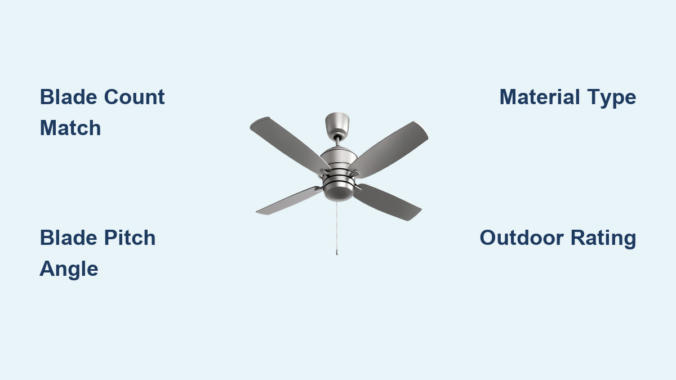
Your ceiling fan blades do far more than just spin—they’re precision-engineered components that determine how effectively your home stays cool, how quietly your space remains, and how seamlessly your decor comes together. Choosing the right type of ceiling fan blades isn’t just about aesthetics; it directly impacts airflow performance, energy consumption, and long-term durability. With so many different types of ceiling fan blades available today, from standard residential configurations to specialized outdoor-rated assemblies, understanding what makes each type unique empowers you to make a decision that perfectly balances form with function. This guide cuts through the confusion to show you exactly which blade types deliver optimal comfort for your specific living environment.
Most homeowners don’t realize that something as seemingly simple as blade count dramatically affects both performance and noise levels. Whether you’re dealing with a low-ceiling bedroom that needs quiet operation or a high-ceiling living space requiring powerful circulation, the specific blade configuration you select will determine whether your fan becomes a barely noticeable comfort companion or a constant source of frustration. By the end of this guide, you’ll know precisely which ceiling fan blade types work best for your room dimensions, ceiling height, and lifestyle needs—saving you time, money, and the hassle of returns.
Why Four-Blade vs. Five-Blade Configurations Make or Break Your Comfort
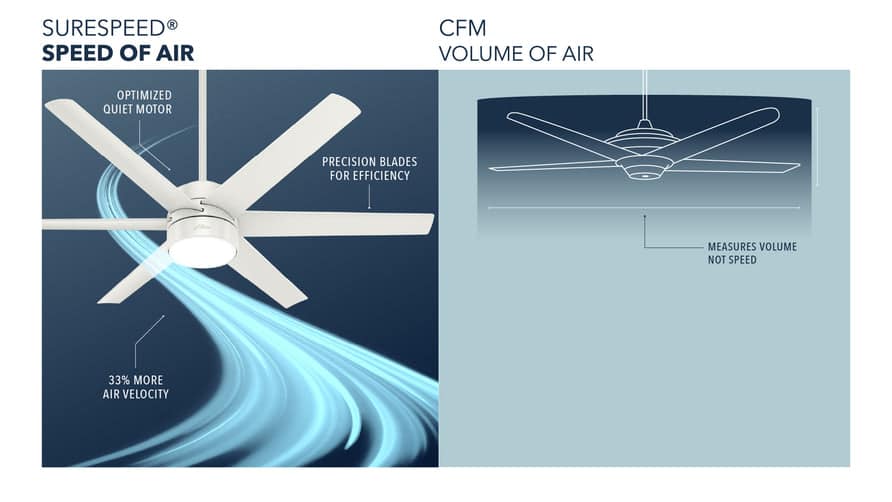
Four-blade ceiling fans deliver noticeably stronger airflow than their five-blade counterparts because reduced blade count creates less aerodynamic resistance during rotation. This configuration allows the motor to spin faster while consuming similar energy, making four-blade fans ideal for spaces where powerful circulation takes priority—like living rooms, home gyms, or kitchens during cooking season. The minimalist visual profile also complements modern and contemporary interiors where clean lines enhance your decor rather than compete with it.
Five-blade configurations provide smoother, quieter operation perfect for bedrooms, nurseries, and home offices where noise sensitivity matters most. The additional blade surface area compensates for slower rotational speeds, maintaining comparable overall airflow while reducing the mechanical noise that can disrupt sleep or concentration. When selecting between these different types of ceiling fan blades, consider your room’s primary function: choose four blades for maximum airflow in high-traffic areas and five blades for whisper-quiet performance in rest spaces.
How Blade Pitch Affects Your Fan’s Real-World Performance
Blade pitch—the angle at which blades cut through the air—directly impacts how much air your fan moves with each rotation. Standard residential fans typically feature blade pitches between 12-15 degrees, but ENERGY STAR-certified models often incorporate precisely engineered pitches that maximize airflow while minimizing energy consumption. Higher-pitched blades (16+ degrees) move more air per rotation but require more powerful motors and generate slightly more noise, making them better suited for industrial applications than residential bedrooms.
When evaluating different types of ceiling fan blades, check the manufacturer’s specifications for blade pitch to ensure it matches your performance priorities. Residential spaces generally benefit from moderate pitch angles that balance airflow with quiet operation, while commercial environments often require steeper pitches to move air across vast square footage.
Hugger Fan Blades: The Smart Solution for Low-Ceiling Rooms
Hugger ceiling fans (also called flush-mount or low-profile fans) solve the clearance problem in rooms with ceilings under 8 feet by eliminating the standard downrod entirely. These fans mount directly to the ceiling with blades positioned just inches below the motor housing, creating a streamlined profile that prevents head bumps while maintaining effective airflow. Contrary to popular belief, hugger fans don’t sacrifice performance—their blades are carefully engineered with optimized pitch angles to compensate for the reduced vertical clearance between blades and floor.
Critical Installation Considerations for Flush-Mount Blades
Before installing hugger fan blades, verify your ceiling height meets minimum safety requirements. Building codes mandate at least 7 feet of clearance between blade tips and finished floor, which means 8-foot ceilings represent the absolute minimum height for safe operation. Measure your room carefully and remember that sloped ceilings require special mounting considerations that may affect blade clearance at the lowest point.
Hugger fan blades come in the same material varieties as standard fans—wood, composite, and metal—so you won’t need to compromise your design vision. However, avoid oversized blade spans in small rooms, as the reduced vertical clearance magnifies noise issues from blades moving too much air too quickly.
Wet-Rated vs. Damp-Rated Blades: Outdoor Performance You Can Trust
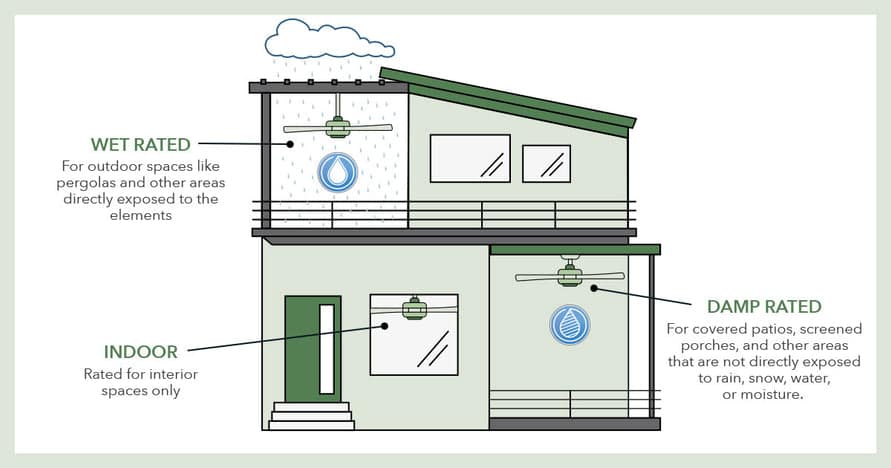
Installing standard indoor blades outdoors guarantees premature failure—moisture infiltration causes warping, corrosion, and electrical hazards within months. Outdoor ceiling fans require specific environmental ratings that match your installation location’s exposure level:
- Dry-rated blades: For indoor use ONLY (never install outdoors)
- Damp-rated blades: Suitable for covered patios and screened porches protected from direct rain
- Wet-rated blades: Engineered for pool areas, open decks, and locations with direct weather exposure
Wet-rated blades feature fully sealed motor housings and blade mounting systems that prevent moisture intrusion from any angle. These specialized different types of ceiling fan blades incorporate marine-grade polymers, epoxy-coated metals, or treated composites that resist UV degradation, salt corrosion, and constant moisture exposure without warping or losing structural integrity.
Coastal Climate Considerations for Outdoor Blades
If you live within 15 miles of the ocean, standard damp-rated blades won’t survive long-term exposure to salt spray. Coastal environments demand wet-rated fans with additional corrosion-resistant coatings specifically designed to withstand salt-laden air. Look for blades with stainless steel hardware and non-corrosive composite materials that won’t degrade when regularly exposed to ocean breezes.
ENERGY STAR Blades: The Secret to Silent, Efficient Cooling
ENERGY STAR-certified ceiling fan blades incorporate aerodynamic refinements that reduce energy consumption by 20-30% compared to standard models while delivering equal or greater airflow. These blades feature computational fluid dynamics-optimized profiles with refined leading edges and precisely calculated surface areas that slice through air with minimal resistance. The result? You get the same cooling comfort while using significantly less electricity—especially important when running fans continuously during hot summer months.
The lightweight composite materials used in ENERGY STAR blades reduce rotational inertia, allowing smaller, more efficient motors to achieve required airflow specifications. This weight reduction also contributes to quieter operation and faster speed response times when you adjust settings. When shopping for different types of ceiling fan blades, look for the ENERGY STAR label to ensure you’re getting maximum efficiency without sacrificing performance.
Smart Fan Blades: Automated Comfort That Learns Your Preferences
Modern smart ceiling fans integrate blade control with home automation systems to create truly responsive comfort environments. These advanced different types of ceiling fan blades automatically adjust speed and direction based on real-time inputs from:
- Smart thermostats (increasing speed when room temperature rises)
- Occupancy sensors (turning off when rooms are empty)
- Weather APIs (pre-cooling spaces before afternoon heat arrives)
- Time-based schedules (gently waking you with increased airflow)
The most sophisticated models incorporate machine learning algorithms that analyze your usage patterns over time, eventually anticipating your comfort needs without manual input. Remote control functionality eliminates the frustration of reaching for pull chains on high-mounted fans, while voice control through Alexa or Google Assistant lets you adjust blade speed without lifting a finger.
Compatibility Checklist Before Buying Smart Blades
Before investing in smart fan blades, verify these critical compatibility factors:
– Existing smart home ecosystem (Alexa, Google Home, Apple HomeKit)
– Wi-Fi network strength in installation location
– Electrical box weight capacity (smart fans are heavier)
– Ceiling height requirements for optimal sensor performance
Replacement Blade Upgrades: Transform Your Existing Fan’s Performance
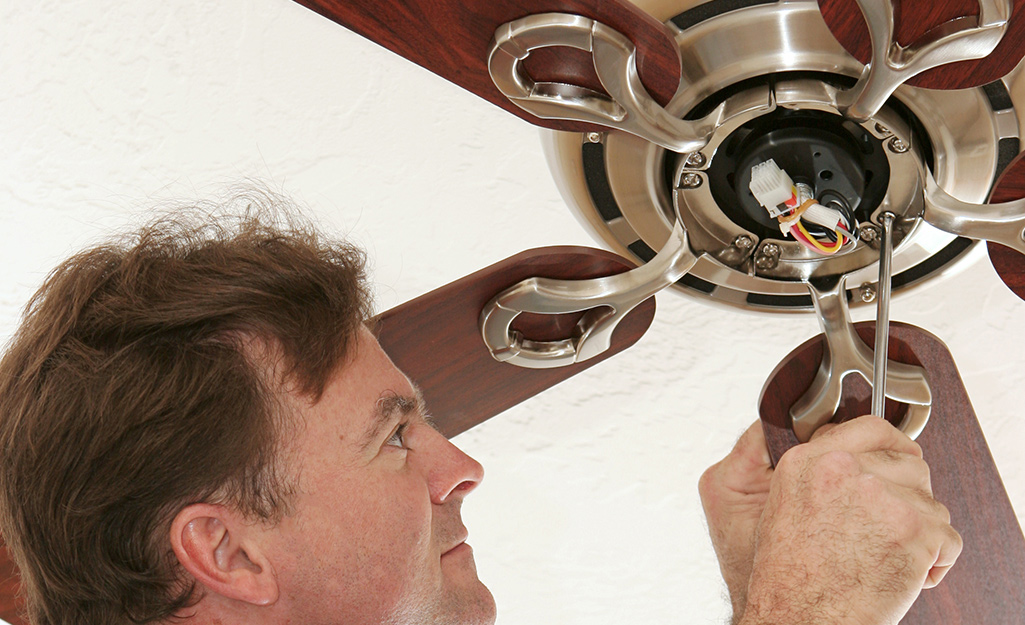
You don’t need to replace your entire fan to improve performance—quality replacement blades can dramatically enhance airflow, reduce noise, and refresh your decor. Homeowners frequently upgrade from four to five blades (or vice versa) to better match room requirements, with kits typically including all necessary hardware and installation instructions. When selecting replacement different types of ceiling fan blades, maintain consistent weight distribution by replacing all blades simultaneously with identical materials.
Material Matters: Choosing the Right Replacement Blades
Each blade material delivers distinct performance characteristics:
- Solid wood blades: Traditional look, moderate weight, susceptible to warping in humidity
- Engineered composites: Dimensionally stable, lightweight, moisture-resistant
- Metal blades: Modern aesthetic, durable, but potentially noisier at high speeds
- Recycled polymer: Eco-friendly option with excellent moisture resistance
Pro tip: For bedrooms, choose heavier composite blades that operate more quietly at lower speeds. For living areas where maximum airflow matters most, lighter wood or polymer blades allow faster rotation with less motor strain.
Blade Span Guidelines: Match Fan Size to Room Dimensions
Your fan’s blade span—the diameter created by rotating blades—must correspond to room size for optimal performance. Undersized fans struggle to circulate air effectively, while oversized units create uncomfortable drafts and unnecessary noise. Follow these industry-standard guidelines:
- Rooms under 75 sq. ft. (bathrooms, small bedrooms): 29-36 inch blade span
- Rooms 75-144 sq. ft. (standard bedrooms, offices): 36-42 inch blade span
- Rooms 144-225 sq. ft. (living rooms, master bedrooms): 44-50 inch blade span
- Rooms over 225 sq. ft. (great rooms, open floor plans): 52-60+ inch blade span
When selecting different types of ceiling fan blades, remember that ceiling height affects optimal blade span too—higher ceilings can accommodate larger spans without creating uncomfortable downdrafts. Measure your space carefully before purchasing to ensure your new blades deliver perfect airflow without compromise.
Final Note: The right ceiling fan blades transform your comfort experience from merely functional to perfectly tailored. By matching blade configuration to your specific room requirements, environmental conditions, and performance priorities, you’ll enjoy optimal airflow, energy efficiency, and aesthetic harmony for years to come. Whether you’re replacing damaged blades or upgrading your entire cooling system, understanding these critical differences ensures you’ll never settle for subpar performance again.
Leave a Reply