Have you ever wondered how a ceiling fan can move air without visible blades? Bladeless ceiling fans have transformed home cooling by replacing traditional spinning blades with sleek, continuous rings that somehow deliver powerful airflow through seemingly empty space. Unlike conventional fans that chop through air with rotating blades, these innovative fixtures create a smooth, uninterrupted breeze that many find more comfortable and less disruptive to daily activities. Understanding how does a bladeless ceiling fan work reveals fascinating aerodynamics that challenge over a century of fan design tradition.
The secret isn’t that these fans lack blades entirely—they simply hide them inside the housing—but rather how they leverage air itself to multiply airflow with remarkable efficiency. Instead of forcing air downward through brute mechanical force, bladeless designs employ sophisticated amplification technology that pulls surrounding air into the stream, creating a continuous flow that feels more natural and less turbulent than traditional fans. This article explains the engineering principles behind this technology, how the internal components interact to create airflow, and what makes bladeless fans a compelling option for modern homes.
Airflow Amplification: The Core Technology Explained
Bladeless ceiling fans operate on a principle called airflow amplification, sometimes marketed as “air multiplier” technology. This isn’t just clever branding—it’s a scientifically sound aerodynamic process that dramatically increases air movement with minimal energy input. The fan draws air into a concealed internal impeller that spins at high speeds (often exceeding 2,000 RPM), then accelerates this air through a narrow slit along the outer edge of the fan’s housing.
This high-velocity stream creates what’s known as the Coandă effect, where airflow naturally adheres to curved surfaces rather than traveling in straight lines. As the fast-moving air travels along the housing’s surface, it pulls in additional stationary air from the surrounding environment through a process called inducement. This amplification effect is the game-changer—most bladeless fans achieve ratios between 15 to 20 times, meaning a fan might process just 50 cubic feet per minute internally while delivering 750 to 1,000 cubic feet per minute to your room.
The result? A continuous, unbroken stream of air that creates a notably different sensation than traditional fans. Conventional fans produce oscillating pressure zones as blades rotate, creating that characteristic “chopping” feeling. Bladeless fans maintain consistent air velocity at any fixed location, delivering a steady breeze ideal for sleep, concentration, or quiet conversations.
Why Continuous Airflow Feels More Comfortable
The difference in airflow patterns explains why many users prefer bladeless designs for living spaces and bedrooms. Traditional fans create pulsed airflow that can feel disruptive—strong gusts followed by lulls as each blade passes your position. This inconsistent pattern can interfere with sleep quality and make quiet activities more challenging.
Bladeless fans eliminate this pulsation entirely, creating what engineers call laminar flow—a smooth, consistent movement of air without turbulence. This steady breeze provides more even cooling throughout the room without the sudden changes in air pressure that traditional fans produce. Many users report that this consistent airflow creates a more natural, outdoor-like breeze sensation rather than the mechanical feeling of conventional fans.
Hidden Impeller System: The Engine Inside Your Fan

Despite their minimalist exterior, bladeless ceiling fans contain sophisticated internal components working in concert. The visible housing serves both aesthetic and functional purposes, typically constructed from ABS plastic, aluminum, or composite materials chosen for durability and acoustic properties. This housing must contain high-velocity airflow without flexing or vibrating, as any movement could introduce unwanted noise.
At the heart of the system sits the impeller assembly, a set of small blades arranged radially that spins at remarkable speeds. These hidden blades draw air through intake vents located on the bottom or sides of the housing, accelerating it before expelling through the narrow aperture. The impeller’s design—the angle, curvature, and number of blades—directly affects both noise level and amplification efficiency, making these parameters critical targets for manufacturer optimization.
The aperture itself represents the most precisely engineered element. This narrow slit (typically just a few millimeters wide) must maintain consistent dimensions along its entire length. Manufacturing tolerances are extremely tight, with premium manufacturers employing precision machining to ensure each unit meets exacting specifications. Any variation in this critical component can create turbulence, noise, or uneven airflow distribution.
Brushless Motor Technology Powering Silent Operation
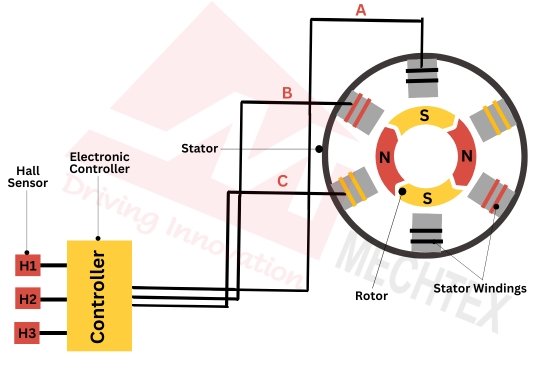
Modern bladeless ceiling fans almost universally employ brushless DC (BLDC) motors, a technology that has largely replaced traditional AC induction motors. These brushless motors offer significant advantages perfectly aligned with bladeless fan requirements, starting with remarkably quiet operation. By eliminating the friction and wear associated with carbon brushes in traditional motors, brushless designs run smoother and quieter—essential for the peaceful experience bladeless fans aim to provide.
The electronic commutation in brushless DC motors enables precise speed control across a much wider range than AC motors. This allows bladeless fans to offer anywhere from three to ten discrete speed settings or even continuous variable-speed operation. The smooth acceleration and deceleration eliminates sudden starts and stops, contributing to the overall refined feel of these designs.
Power consumption typically ranges between 15 and 45 watts at maximum speed, comparable to or slightly lower than traditional ceiling fans. The efficiency advantage comes not just from the motor itself but from the entire airflow system working together—the aerodynamic optimization means less energy is wasted creating turbulence and noise, translating more electrical input into useful air movement.
Safety Advantages of Bladeless Design
The absence of exposed rotating blades provides a significant safety benefit that makes bladeless fans particularly suitable for specific environments. Traditional ceiling fans pose potential hazards for curious children or playful pets who might reach up and make contact with moving blades. While modern fans include safety features, the risk remains present with any exposed blade design.
Bladeless fans eliminate this risk entirely, making them ideal for:
- Nurseries and children’s bedrooms
- Playrooms and activity spaces
- Homes with birds or other pets that might fly near ceiling fixtures
- Commercial spaces like gyms or studios where people might jump or reach upward
The smooth, continuous surfaces also simplify cleaning and maintenance. Traditional fans accumulate dust on multiple blade surfaces that require careful wiping, and this buildup can eventually affect balance and performance. Bladeless designs need only a quick wipe of the housing surface, typically taking just minutes rather than the extended cleaning traditional fans require.
Bladeless vs Traditional Fans: Airflow Pattern Differences
Understanding the distinct airflow patterns helps determine which fan type suits your needs. Traditional ceiling fans move air through mechanical displacement, creating a conical airflow pattern directed primarily downward. The blade design—pitch, number, and surface area—determines both air volume and pressure generated.
Bladeless fans create airflow through aerodynamic amplification, resulting in a broader, more diffuse pattern that spreads horizontally. This horizontal circulation excels at mixing stratified air layers, bringing cooler air from lower portions upward while distributing conditioned air more uniformly. The continuous airflow creates less noticeable movement directly beneath the fan but more even distribution throughout the room.
Consider these factors when choosing:
- Room size: Bladeless fans work well in medium-sized rooms with standard ceilings
- Ceiling height: Traditional fans may be better for very high ceilings needing concentrated downdraft
- Noise sensitivity: Bladeless fans operate quieter (as low as 30 decibels)
- Aesthetics: Bladeless designs complement contemporary interiors
Energy Efficiency and Long-Term Value
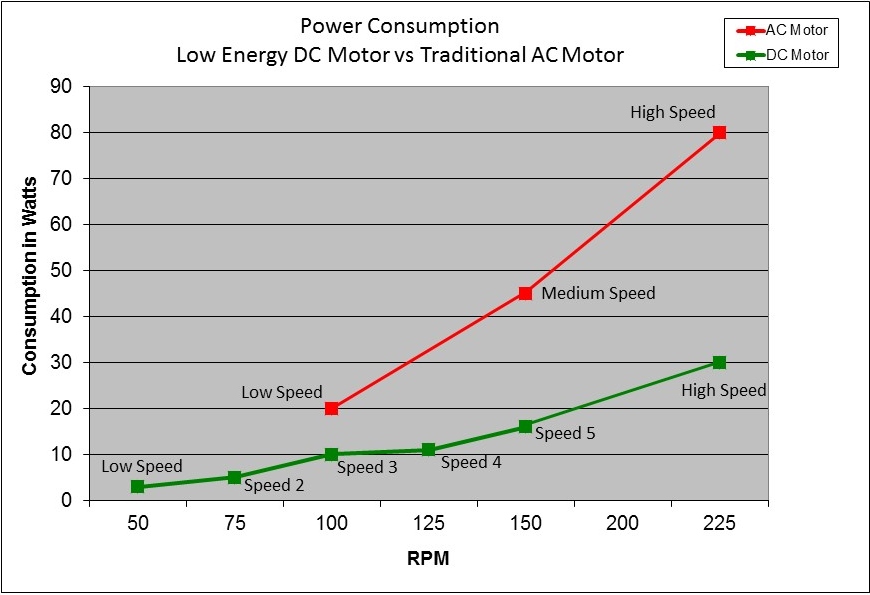
Bladeless ceiling fans generally compare favorably with traditional models in energy efficiency, particularly at lower speeds where brushless DC motors maintain high efficiency across a wider range. At typical residential usage levels (running for hours at partial capacity), this efficiency advantage becomes pronounced.
The brushless DC motors in bladeless fans are designed for exceptionally long operational life—50,000 to 100,000 hours under normal conditions, translating to 15-30 years of service at typical residential usage. This significantly exceeds the 10-15 year lifespan common for many traditional ceiling fans.
While bladeless fans typically cost more upfront ($150-$500+ compared to $50-$200 for traditional models), their energy efficiency, longer lifespan, and reduced maintenance requirements can offset this premium over time. The specialized nature of components may result in higher repair costs if problems develop, though the simpler mechanical design often means fewer problems occur.
Ideal Installation Locations for Bladeless Fans
Bladeless ceiling fans perform exceptionally well in specific applications where their characteristics provide distinct advantages. Bedrooms benefit enormously from the quiet operation, as the gentle, continuous airflow provides cooling without disrupting sleep. The absence of visible rotating blades also eliminates visual disturbance that can interfere with rest.
Modern living spaces and open-concept floor plans often feature contemporary design aesthetics that complement bladeless fan styling. These fans can serve as design elements rather than functional necessities to be hidden. Commercial spaces like boutique hotels, upscale restaurants, and professional offices frequently adopt bladeless designs for both appearance and quiet operation.
However, large spaces with high ceilings may benefit more from traditional fans’ powerful airflow delivery. Budget-conscious consumers may find better value in traditional fans for secondary rooms where premium features provide less additional value.
Understanding how does a bladeless ceiling fan work helps you appreciate the innovation behind these sleek fixtures while making an informed decision about bringing one into your space. Whether the priority is quiet operation, modern aesthetics, safety for children and pets, or willingness to invest more upfront for long-term value, the technology behind bladeless fans represents a remarkable engineering achievement in home comfort.
Leave a Reply