You’ve probably wondered whether it’s safe to leave your ceiling fan running while you’re at work, sleeping, or even away on vacation. The good news is modern ceiling fans are explicitly engineered for continuous operation—most can safely run 24 hours a day, 7 days a week without risk of mechanical failure or fire hazard. Manufacturers design these appliances with “continuous duty” motors certified for indefinite runtime, meaning you can leave your fan spinning without worry. Understanding how your fan handles extended operation, what safety systems protect it, and how to maintain it properly will help you maximize both comfort and longevity while keeping energy costs minimal.
Ceiling fan motors operate within a safe temperature range of 85°F to 140°F during continuous use, staying well below dangerous thresholds. Built-in thermal protection automatically shuts down the unit if temperatures become excessive—typically activating between 105°C and 130°C—then resets once the motor cools sufficiently. Premium brands like Hunter, Casablanca, and Emerson explicitly state in their documentation that their fans are designed for 24/7 operation without duty cycle limitations. Whether you run your fan for 8 hours, 24 hours, or several weeks straight, the motor handles the continuous workload it was engineered to manage.
This guide covers everything you need to know about continuous ceiling fan operation, including safety considerations, energy costs, lifespan expectations, and maintenance requirements. You’ll learn how thermal protection keeps your fan safe during extended runtime, how much it costs to run a fan around the clock, and what environmental factors affect long-term durability. By the end, you’ll have a complete understanding of how to safely maximize your ceiling fan’s performance through continuous operation.
Why Your Ceiling Fan Won’t Overheat During 24/7 Operation
Modern ceiling fans incorporate sophisticated thermal management systems that make continuous operation completely safe under normal conditions. The key lies in how manufacturers engineer these appliances specifically for indefinite runtime rather than intermittent use.
How Thermal Cutoff Systems Protect Your Fan During Extended Use
Every quality ceiling fan contains at least one thermal cutoff device embedded directly within the motor windings. This automatic safety feature disconnects power when internal temperatures approach concerning levels, typically activating between 105°C and 130°C (221°F to 266°F). The critical detail many homeowners miss is that this temperature threshold remains significantly below the point where motor insulation would degrade or cause fire hazards.
When thermal protection activates, your fan will shut down completely until it cools sufficiently—usually within 15 to 45 minutes depending on ambient conditions. Higher-end models often include secondary thermal sensors that gradually reduce motor speed before reaching critical temperatures, preventing the abrupt shutdown of basic thermal cutoffs. If your fan cycles on and off repeatedly during hot weather, this indicates the thermal protection is working correctly rather than signaling a malfunction.
Pro Tip: If your fan shuts down due to thermal protection, clean dust from blades and motor housing before restarting. Persistent shutdowns after cleaning suggest bearing wear that requires professional attention.
Capacitor-Start vs Brushless DC Motors: Which Handles Continuous Use Better?
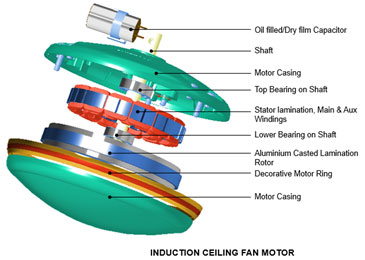
The motor type inside your ceiling fan significantly impacts its capability for continuous operation. Capacitor-start induction motors represent the most common design in modern ceiling fans, featuring sealed bearings and permanent lubrication that eliminates the need for ongoing maintenance during extended runtime. These reliable workhorses typically consume 10-90 watts depending on speed setting.
Brushless DC (BLDC) motors have become increasingly prevalent in ENERGY STAR certified models, offering superior energy efficiency while generating less heat during operation—often consuming 50-70% less electricity than equivalent AC motors. The electronic commutation system in BLDC motors produces minimal friction at the bearing surfaces, further extending operational lifespan during continuous use. While DC motors cost more upfront, their reduced energy consumption makes them economically favorable for applications requiring 24/7 operation.
Safety Myths vs Reality: Can Continuous Fan Operation Cause Fires?
Many homeowners worry that leaving a ceiling fan running unattended creates fire hazards, but industry data tells a different story. Properly installed and maintained ceiling fans present minimal fire risk during continuous operation—significantly lower than many common household appliances.
Why Thermal Protection Makes Continuous Operation Safer Than You Think
The primary fire risk factors for ceiling fans include improper electrical connections, damaged wiring insulation, and accumulation of dust and debris on motor housing—none of which are caused by continuous operation itself. In fact, consistent operation may help identify potential problems early through increased noise, vibration, or unusual odors that might go unnoticed during sporadic use.
Critical Safety Check: Verify your fan has UL 507 certification, which requires testing under sustained operation conditions. This certification ensures the fan meets electrical safety, mechanical hazard, and fire risk standards for continuous use.
Damp vs Wet Location Ratings: What They Mean for Bathroom Fans
If you’re installing a fan in a bathroom, kitchen, or covered outdoor space, select a model with appropriate location ratings to ensure safe continuous operation in moisture-prone environments. Standard indoor fans are rated for humidity up to 90% without condensation, while:
- Damp-rated fans feature sealed motor housings and corrosion-resistant hardware suitable for covered porches or bathrooms with proper ventilation
- Wet-rated fans can tolerate direct water exposure and are appropriate for fully exposed outdoor installations
Running a standard indoor fan continuously in a high-moisture environment significantly accelerates bearing degradation as moisture infiltrates lubrication systems. For bathrooms where continuous operation improves moisture control, always specify damp-rated units.
Exact Cost Calculation: Running Your Fan 24/7 for a Month

One of the most common concerns about continuous ceiling fan operation is energy cost, but the financial reality is surprisingly favorable. Ceiling fans consume minimal electricity compared to other cooling and circulation appliances, making around-the-clock operation economically practical for most households.
AC vs DC Motors: Monthly Cost Comparison for Continuous Operation
Energy consumption varies significantly based on motor type and speed settings. At average residential electricity rates of $0.12 to $0.16 per kilowatt-hour in the United States:
Standard AC Motor (75-watt high speed):
– Daily consumption: 1.8 kWh
– Monthly consumption: 54 kWh
– Monthly cost: $6.48 to $8.64
Energy-Efficient DC Motor (35-watt high speed):
– Daily consumption: 0.84 kWh
– Monthly consumption: 25.2 kWh
– Monthly cost: $3.02 to $4.03
The significant cost differential between AC and DC motors makes the higher initial purchase price of DC motors economically favorable for applications requiring 24/7 operation. For fans running continuously year-round, the energy savings typically offset the higher purchase price within 2-5 years.
How Continuous Fan Operation Actually Lowers Your Overall Cooling Costs
The energy savings from continuous fan operation often exceed the electricity consumed by the fan itself. During summer months, continuous operation at low to medium speeds creates consistent air circulation that enhances evaporative cooling from skin moisture, allowing thermostat settings to be raised 2-4°F while maintaining equivalent comfort levels.
Real-World Impact: The energy savings from reduced air conditioning usage typically exceed the energy consumed by the fan by a factor of 10:1 or greater. For example, raising your thermostat by just 2°F could reduce cooling costs by 4-8% while the fan consumes less than $1 per week to operate continuously.
Environmental Factors That Actually Shorten Fan Lifespan
While ceiling fans are designed for continuous operation, several environmental factors significantly influence how long your fan will last under around-the-clock use. Understanding these factors helps you select the appropriate fan for your installation location and maintenance schedule.
How Extreme Temperatures Impact Continuous Operation Longevity
Ceiling fan motors operate most efficiently and experience minimal wear within ambient temperature ranges of 50°F to 85°F. Operation in environments exceeding 100°F ambient temperature significantly increases motor operating temperatures, potentially triggering thermal protection more frequently and accelerating bearing degradation over time.
Pro Tip: If installing a fan in a hot attic space or unconditioned room, select models specifically rated for high-temperature environments. These units feature enhanced thermal management systems that maintain reliability even when ambient temperatures reach 110°F+.
Why Dust Accumulation Is Worse Than Continuous Runtime
Dust and particulate buildup affects both performance and longevity during continuous operation more than the runtime itself. Heavy dust accumulation acts as insulation, trapping heat within the motor and potentially triggering premature thermal protection activation. Dust can also infiltrate bearing assemblies, accelerating wear and potentially causing audible noise during operation.
Cleaning frequency should increase with environmental dust levels:
– Monthly cleaning in homes with pets or near construction sites
– Every 3-6 months in average household environments
– Every 6-12 months in clean, low-traffic environments
Premium vs Budget Fans: Which Lasts Longer Running Continuously?
Not all ceiling fans are created equal when it comes to continuous operation capability. Understanding the differences between premium and budget models helps you make an informed decision based on your intended usage patterns.
What Lifetime Motor Warranties Really Mean for Continuous Operation
Premium manufacturers like Hunter, Casablanca, and Emerson typically offer lifetime motor warranties because they engineer their units for 15-25 years of continuous operation. These warranties cover the motor against defects but usually exclude labor costs and require proof of proper installation.
Key Warranty Insight: Lifetime motor warranties apply only to the original purchaser and typically require registration within 30 days of purchase. Keep your receipt and installation records to validate claims if thermal protection issues develop after years of continuous use.
When Budget Fans Fail Under 24/7 Operation Stress
Budget ceiling fans often use shaded-pole motors with simpler thermal protection systems and less sophisticated bearing assemblies. While technically designed for continuous duty, these units typically show significant wear after 5-8 years of continuous operation compared to 15-25 years for premium models.
Warning Sign: If your budget fan develops bearing noise (grinding or scraping sounds) after 3-5 years of continuous use, replacement is often more cost-effective than repair. Bearing replacement typically costs 40-60% of a new premium fan’s price.
Essential Maintenance Checklist for 24/7 Ceiling Fan Operation
Proper maintenance ensures your ceiling fan operates reliably during continuous use while maximizing its operational lifespan. The good news is that modern ceiling fans require relatively minimal maintenance compared to other household appliances, though regular attention to key areas prevents problems before they develop.
Monthly Inspections That Prevent Costly Failures
For fans running continuously, perform these quick checks monthly:
– Visual inspection for abnormal wobble or vibration
– Listen carefully for unusual bearing noise or grinding sounds
– Check for odors that might indicate motor overheating
– Verify speed settings operate smoothly through all levels
These quick checks take only a minute but provide valuable early warning of developing problems that could interrupt your fan’s continuous operation. Pay particular attention to any burning smells or discolored plastic near the motor housing, which indicate thermal stress requiring immediate attention.
Why Modern Fans Should Never Be Lubricated
Modern sealed-bearing ceiling fans do not require user-applied lubrication under normal operating conditions. The factory-sealed lubrication is designed to last the operational life of the bearing system, and adding lubricants can actually introduce contaminants that accelerate bearing wear.
Critical Mistake to Avoid: Never apply household oils or greases to your ceiling fan motor. These attract dust and create abrasive compounds that damage bearings faster than dry operation. Older fans with oil ports may require annual lubrication, but most contemporary units are maintenance-free.
Troubleshooting Overheating During Continuous Operation
Even fans designed for continuous operation can develop thermal issues over time. Recognizing early warning signs helps you address problems before they cause complete failure and keeps your continuous operation running smoothly.
Immediate Steps When Your Fan Shuts Down from Thermal Protection
If your continuously running fan suddenly stops, follow this troubleshooting sequence:
1. Wait 30 minutes for automatic thermal reset before attempting restart
2. Clean all blades and motor housing thoroughly to remove dust buildup
3. Verify proper voltage at the fan (low voltage increases current draw and heat)
4. Check for obstructions that might restrict airflow around the motor
5. Operate at lowest speed initially after cleaning to monitor temperature
Persistent thermal shutdowns after these steps indicate internal problems like bearing failure or winding degradation that typically require professional service or replacement.
How to Deep Clean Without Disassembling Your Fan
For fans running continuously in dusty environments, perform this deep cleaning method monthly:
1. Turn off power at the circuit breaker
2. Use a microfiber duster with extendable handle to reach blades
3. Apply mild detergent solution to a soft cloth (never spray directly)
4. Wipe blades from motor housing toward tip to avoid imbalance
5. Clean motor housing with dry cloth first, then slightly dampened cloth
Pro Tip: Place a pillowcase over each blade before cleaning to catch falling dust—this prevents mess on furniture below and makes cleanup faster.
When Continuous Operation Becomes Too Much for Your Ceiling Fan
While ceiling fans are built for continuous operation, eventually replacement becomes more practical than continued repair. Knowing when to replace your fan ensures you maintain reliable operation without throwing good money after declining performance.
Four Warning Signs It’s Time for Replacement
Watch for these indicators that your continuously operating fan has reached its practical lifespan:
– Frequent thermal protection activation despite regular cleaning
– Progressive bearing noise that worsens over time (grinding or scraping sounds)
– Visible motor housing discoloration from sustained high temperatures
– Capacitor failure causing reduced speed or humming without rotation
If your fan shows multiple warning signs and is more than 10 years old, replacement typically provides better value than repair. Modern DC motor fans offer dramatically improved efficiency that quickly offsets the purchase price through energy savings.
Final Verification: Is Your Ceiling Fan Ready for Non-Stop Use?
Before committing to continuous ceiling fan operation, verify these critical factors to ensure safe, reliable performance:
Installation Checklist for Safe 24/7 Operation
- Confirm proper mounting to a ceiling-rated electrical box (minimum 50 lbs capacity)
- Verify correct wiring with secure connections and proper grounding
- Check blade clearance (minimum 18 inches from walls, 7 feet from floor)
- Ensure appropriate location rating for environmental conditions
Fans installed in bathrooms or covered outdoor areas require damp or wet location ratings for safe continuous operation. Never install a standard indoor fan in moisture-prone environments expecting reliable 24/7 performance.
How to Test Thermal Protection Without Causing Damage
After installation or maintenance, verify thermal protection functionality:
1. Run fan continuously at high speed for 2-3 hours
2. Monitor motor housing temperature with infrared thermometer
3. Confirm temperature remains below 150°F (65°C) during operation
4. Allow fan to run until thermal protection activates (if designed to do so)
Safety Note: Never deliberately overheat your fan to test thermal protection. Most quality units won’t activate protection under normal ambient conditions—the test simply verifies expected temperature ranges during extended operation.
Maximizing Your Ceiling Fan’s Continuous Operation Benefits
Ceiling fans represent one of the most reliable appliances designed for continuous operation, with modern units engineered specifically for 24/7 runtime without supervision. The combination of thermal protection systems, sealed bearing assemblies, and electrical safety features enables safe indefinite operation when properly installed and maintained.
For optimal results, select ENERGY STAR certified DC motor fans for continuous operation applications—they consume 50-70% less energy while generating less heat than traditional AC motors. Perform monthly inspections and quarterly cleaning based on your environmental conditions, and keep detailed maintenance records to support warranty claims if needed.
The economic case for continuous ceiling fan operation remains compelling: modest energy costs of $3-9 per month for typical residential units combined with HVAC efficiency improvements that often yield 10:1 energy savings. With proper care, your ceiling fan can provide years of trouble-free continuous operation, keeping your home comfortable while consuming minimal energy around the clock.
Leave a Reply