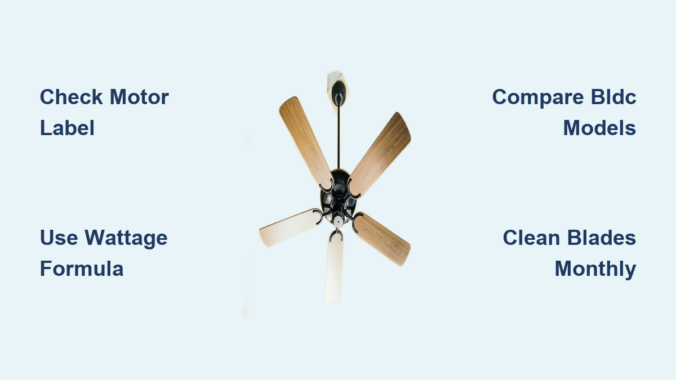
Your ceiling fan’s wattage directly impacts your monthly electricity costs—yet most homeowners have no idea how much power their fans actually consume. A typical 48-inch ceiling fan running at high speed uses 75 watts, but this number can range from 15 watts for small efficient models to over 100 watts for large commercial units. Knowing precisely how to calculate your ceiling fan wattage empowers you to reduce energy waste, compare efficiency between models, and make strategic decisions that cut your cooling costs without sacrificing comfort. This guide reveals exactly how to determine your fan’s power consumption, project accurate operating costs, and implement proven strategies to minimize electricity usage.
Most people overestimate ceiling fan energy consumption, assuming these fixtures drain significant power. The reality? Even running a standard 75-watt fan continuously for 24 hours only consumes 1.8 kWh—less than many household appliances. By learning to calculate these values yourself using the methods in this guide, you’ll gain control over your home’s energy profile and discover opportunities to reduce costs through smarter fan operation and selection.
Locate Your Ceiling Fan’s Exact Wattage Rating
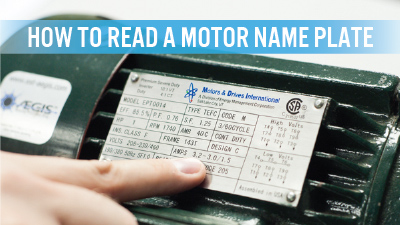
Finding your fan’s precise wattage requires checking specific documentation sources rather than relying on estimates. The most accurate specification comes from the motor label physically attached to the fan assembly—typically visible when removing the canopy during installation or maintenance. This metal or adhesive label contains critical electrical data including voltage, amperage, and wattage consumption at various speeds. For example, you might see “75W High / 45W Medium / 25W Low” indicating power draw at different settings.
Access Motor Labels Without Professional Help
You don’t need an electrician to find your fan’s wattage rating. Turn off power at the circuit breaker, then carefully remove the canopy cover using a ladder and screwdriver. The motor label is usually positioned on the top or side of the motor housing—look for a rectangular metal plate with electrical specifications. Take a photo with your phone for reference before reassembling. If your fan has integrated lighting, ensure you’re reading the motor wattage separate from the light kit’s consumption.
Verify Wattage When Labels Are Missing or Faded
When physical labels are inaccessible or illegible, check your original packaging and user manual for electrical specifications. Manufacturers must list wattage for regulatory compliance, typically in the “Technical Specifications” section. If you’ve discarded these materials, search the manufacturer’s website using your model number (found on any remaining labels or receipts). Reputable retailers like Home Depot or Lowe’s also publish detailed wattage information in their online product listings for current models.
Estimate Wattage Using Industry Standards
When documentation is completely unavailable, reference these industry-standard wattage ranges based on blade span:
– 30-inch fans: 42 watts
– 48-inch fans: 75 watts
– 52-inch fans: 84 watts
– 72-inch fans: 100 watts
Important: These figures represent conventional fans at high speed. Energy-efficient BLDC models consume roughly half these amounts. If your fan is less than 5 years old, it likely uses 20-30% less power than these estimates.
Calculate Daily Energy Consumption in 3 Simple Steps
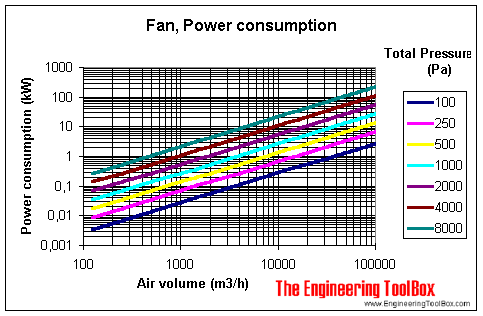
Translating wattage into actual energy usage requires converting to kilowatt-hours (kWh)—the standard billing unit for electricity. This three-step calculation reveals your fan’s true operating cost.
Convert Fan Wattage to Kilowatts Correctly
The critical first step divides your fan’s wattage by 1,000 to convert to kilowatts. For example, a 65-watt fan becomes 0.065 kW (65 ÷ 1,000 = 0.065). Never skip this conversion—electricity rates are always per kilowatt-hour, not watt-hour. Mistaking watts for kilowatts inflates your cost calculations by 1,000 times.
Track Your Actual Daily Operating Hours
Most people overestimate how long fans run. Use your smartphone timer for three representative days: note when you turn fans on/off in each room. The average household operates ceiling fans 8-12 hours daily, but this varies significantly by season and room usage. Bedrooms typically run 7-8 hours nightly, while living areas might operate 4-6 hours during daytime heat.
Apply the Daily kWh Formula with Precision
Multiply your kilowatt value by daily operating hours: (Wattage ÷ 1,000) × Hours = Daily kWh. A 55-watt fan running 10 hours daily consumes 0.55 kWh (55 ÷ 1,000 = 0.055 × 10 = 0.55). At $0.13 per kWh, this costs just $0.07 daily—less than a penny per hour of operation.
Project Monthly Electricity Costs Accurately
Monthly cost calculations require two additional data points beyond daily consumption: your billing cycle length and exact electricity rate.
Determine Your Utility Billing Period Length
Check your latest electricity bill for the exact number of days in your billing cycle—typically 28-32 days. Using 30 days as a standard introduces significant error for accurate budgeting. Multiply your daily kWh by this precise number: 0.55 kWh × 31 days = 17.05 kWh monthly for our 55-watt example.
Use Your Actual Electricity Rate, Not Averages
The national average ($0.13/kWh) misrepresents your true costs. Find your exact rate on your utility bill—often tiered with higher rates after certain usage thresholds. California residents might pay $0.25/kWh while Louisiana customers pay $0.10/kWh. Calculate costs using your specific rate: 17.05 kWh × $0.18 = $3.07 monthly.
Compare Fan Models Before Purchasing
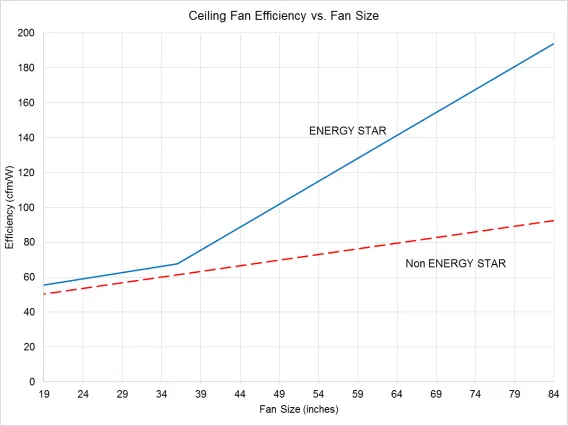
When shopping for new fans, calculate projected costs using the same formula. A 35-watt BLDC fan operating 10 hours daily costs just $1.43 monthly at $0.13/kWh—versus $2.54 for a 75-watt conventional model. The $1.11 monthly difference compounds to $13.32 annually per fan, making efficiency upgrades financially worthwhile.
Identify All 5 Factors That Increase Your Fan’s Wattage
Understanding what drives wattage consumption helps you optimize efficiency without sacrificing comfort.
Speed Settings: How Each Level Impacts Power Consumption
Fan wattage varies dramatically by speed setting. A typical 75-watt fan might use:
– High speed: 75W
– Medium speed: 45W
– Low speed: 25W
Pro Tip: Running at medium instead of high speed cuts power consumption by 40% while still providing adequate airflow in most conditions. Use low speed for gentle circulation during mild weather.
Blade Size vs. Wattage: The Direct Relationship
Larger blades require more power to move equivalent air volumes. A 72-inch fan consumes 100 watts—more than double a 30-inch model’s 42 watts. Select the smallest fan that adequately covers your room (blade span should be 24-48 inches less than room width).
Motor Type Comparison: BLDC vs. Traditional
BLDC (Brushless DC) motors consume 50% less power than traditional induction motors while delivering equal airflow. A 75-watt conventional fan becomes a 35-watt BLDC equivalent. The higher upfront cost pays back in 1-2 years through energy savings for frequently used fans.
Maintenance Issues That Increase Power Draw
Dust accumulation creates drag that forces motors to work harder. A fan with heavy dust buildup can consume 15-20% more power. Clean blades monthly with a microfiber cloth to maintain optimal efficiency.
Environmental Factors That Force Higher Wattage
Poorly insulated rooms or high ceilings require fans to operate at higher speeds to achieve the same cooling effect, increasing power consumption. Install fans with downward airflow in rooms over 8 feet tall to improve efficiency.
Implement Proven Strategies to Reduce Fan Wattage Consumption
Optimize Speed Settings for Maximum Efficiency
Run fans at the lowest effective speed—most rooms require only medium settings for adequate circulation. Install wall controls with variable speed dials instead of basic pull chains for precise power management.
Use Fans Only When Rooms Are Occupied
Ceiling fans cool people, not spaces. Install motion sensors or smart controls that automatically turn fans off when rooms are empty—reducing unnecessary operation by 30-50%.
Pair Fans with Air Conditioning Strategically
Use fans to distribute cooled air more effectively, allowing you to raise thermostat settings by 4°F without comfort loss. This reduces total cooling system wattage far more than the fan’s consumption.
Maintain Fans for Sustained Efficiency
Tighten loose blade screws monthly to prevent wobble that increases power draw. Lubricate motor bearings annually per manufacturer instructions to reduce friction-related energy loss.
Reference Wattage Charts for Common Fan Sizes
Use these verified wattage ranges when documentation is unavailable:
| Blade Span | Conventional Fan | BLDC Equivalent |
|---|---|---|
| 30 inches | 42 watts | 20 watts |
| 48 inches | 75 watts | 35 watts |
| 52 inches | 84 watts | 40 watts |
| 72 inches | 100 watts | 48 watts |
Key Insight: BLDC fans consume 50-60% less power while delivering equal or better airflow. The premium price pays for itself in 12-18 months for fans operating 8+ hours daily.
Troubleshoot Unexpectedly High Wattage Readings
If your fan consumes significantly more power than specifications indicate:
– Check for binding in the motor housing
– Verify all blade screws are tight and balanced
– Test with a wattage meter to rule out electrical issues
– Replace worn motor bearings causing excess friction
Apply Wattage Calculations to Multi-Fan Households
For homes with multiple fans, multiply single-fan calculations by the number of units. Five 75-watt fans running 10 hours daily cost $2.44 daily at $0.13/kWh—versus $1.14 for five 35-watt BLDC models. Prioritize replacing fans in high-use areas (bedrooms, living rooms) first for maximum savings.
Understanding how to calculate ceiling fan wattage transforms you from a passive consumer to an energy-savvy homeowner. By applying these precise calculation methods and efficiency strategies, you’ll reduce unnecessary consumption while maintaining optimal comfort. The most impactful action? Replace your oldest, highest-use fans with ENERGY STAR-certified BLDC models—their 50% lower wattage delivers immediate savings that compound year after year. Start with one strategic upgrade today, and you’ll recoup the investment through lower electricity bills while enjoying superior air circulation.
Leave a Reply