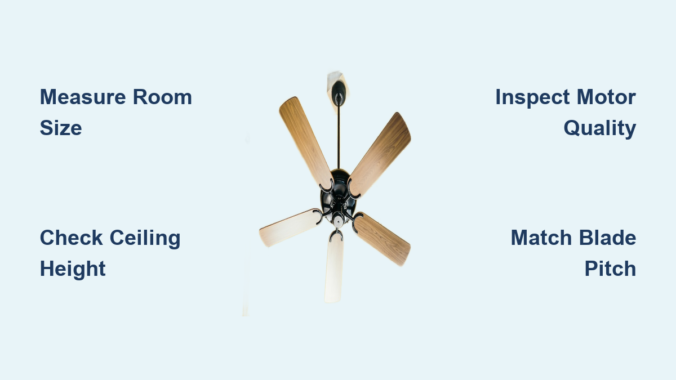
Do you feel frustrated when your current ceiling fan fails to deliver comfortable airflow or looks out of place in your beautifully decorated room? You’re not alone—nearly 70% of homeowners regret their ceiling fan purchase within the first year due to improper sizing, inadequate airflow, or style mismatches. The right ceiling fan should seamlessly blend with your home’s aesthetic while providing effective air circulation that reduces energy costs year-round. This comprehensive guide cuts through the confusion by showing you exactly how to select a ceiling fan that matches your room dimensions, ceiling height, and personal style preferences. You’ll discover critical factors most shoppers overlook, from motor quality indicators to blade pitch science, ensuring your new fan delivers optimal performance for years to come.
Measure Your Room Before Shopping
Grab your tape measure before browsing fan catalogs—room size determines the perfect blade span for effective air circulation. Choosing incorrectly creates either weak airflow that fails to cool your space or excessive drafts that make rooms uncomfortable. Understanding your exact square footage prevents costly mistakes and ensures your fan operates at peak efficiency.
For compact spaces under 75 square feet like bathrooms and home offices, select a fan with a 29 to 36-inch blade span. These compact models provide sufficient circulation without overwhelming small ceilings. Medium rooms between 75 and 144 square feet—typical bedrooms and dining areas—need 42 to 48-inch fans for balanced airflow. Large living spaces exceeding 144 square feet require 52 to 72-inch blade spans to move air effectively across the entire area.
What happens with the wrong size fan?
Installing an undersized fan in a large room creates weak airflow pockets where stagnant air collects. Oversized fans in small rooms generate uncomfortable drafts and operate less efficiently as the motor works harder than necessary. For rooms larger than 400 square feet, two properly sized fans spaced 8-10 feet apart deliver more even air distribution than one oversized unit straining to cover excessive space.
Ceiling Height Determines Mounting Style

Your ceiling height directly impacts which mounting option delivers optimal performance and safety. Standard 8-9 foot ceilings require different solutions than vaulted or cathedral ceilings, and choosing incorrectly creates both performance issues and potential safety hazards.
Standard ceilings (8-9 feet)
For ceilings at or below 8 feet, flush-mount “hugger” fans that attach directly to the ceiling provide the safest installation. These low-profile designs keep blades at least 7 feet above floor level—critical for preventing accidental contact. Standard 8-9 foot ceilings work best with a 3-5 inch downrod, positioning the fan 8-9 feet above the floor where air circulates most effectively.
High and sloped ceilings
Ceilings over 9 feet require longer downrods to position blades at the optimal height. A 10-foot ceiling typically needs a 6-inch downrod, while 14-foot ceilings require 24-inch or longer downrods. Sloped ceilings demand special mounting kits that maintain proper blade angle—most accommodate up to 45-degree slopes. Steeper angles require specialized hardware or sloped-ceiling specific fans to ensure stable operation without wobbling.
Motor Quality Makes or Breaks Performance
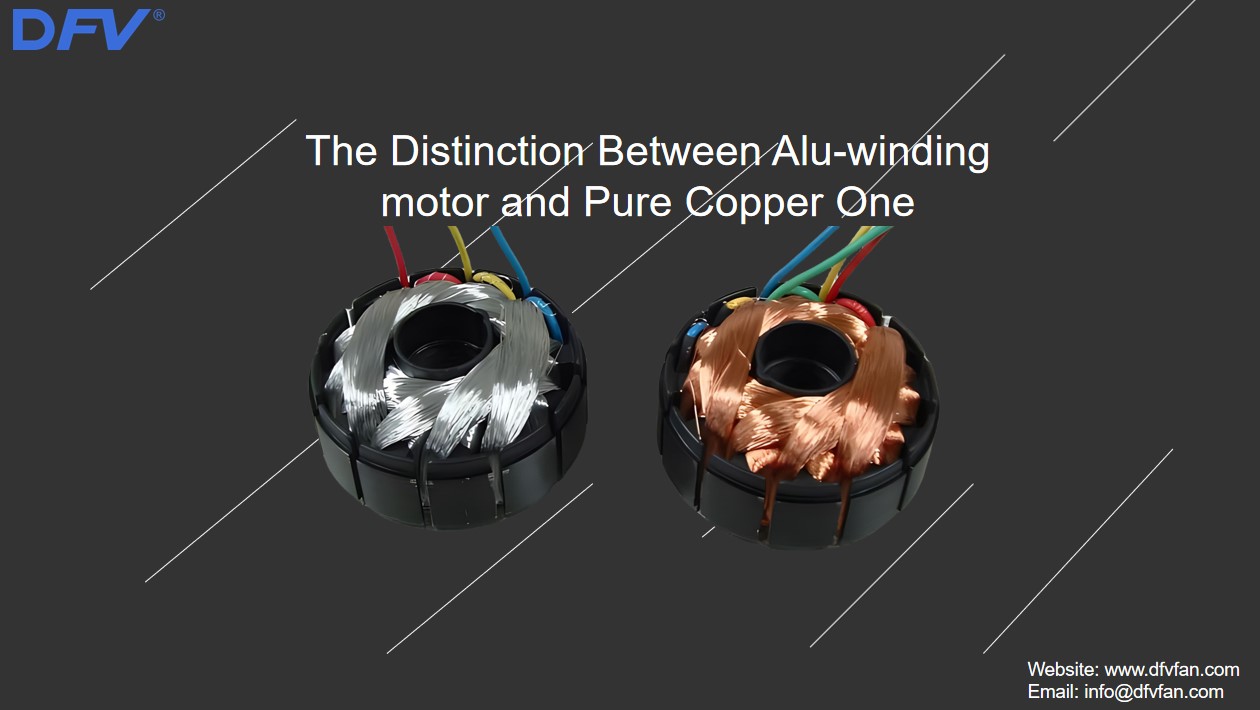
The motor determines your fan’s lifespan, noise level, and energy efficiency—far more than decorative elements. Quality motors feature copper windings instead of cheaper aluminum, sealed bearings that prevent dust accumulation, and multiple speed settings for precise airflow control.
What to look for in fan motors
Seek Energy Star certified models with silicone steel motor housings that reduce vibration and electromagnetic interference. Higher-quality fans deliver at least 75 cubic feet per minute (CFM) per watt of energy consumption—the sweet spot for efficient airflow without inflated electricity costs. Test fans in showrooms if possible, listening for smooth operation without wobbling, rattling, or excessive humming at any speed setting.
Blade Design Affects Airflow More Than You Think
Blade count influences both aesthetics and performance, but blade pitch matters even more. Most residential fans feature five blades as the optimal balance between airflow efficiency and visual appeal, though three-blade models move more air for larger spaces.
Critical blade specifications
The angle at which blades tilt (pitch) dramatically impacts airflow. Quality fans feature 12-15 degree pitches, with 14 degrees representing the sweet spot for most homes—moving substantial air without excessive noise or energy consumption. Steeper pitches increase airflow but create more noise at high speeds.
Material considerations
Wood blades offer classic aesthetics but may warp in humid environments. Plastic or polymer blades resist moisture and maintain shape but may appear less premium. Metal blades suit contemporary spaces and clean easily but can transmit motor noise. Match blade material to your room’s humidity level and decor style for best results.
Match Fan Style to Your Room’s Personality
Your ceiling fan should enhance—not clash with—your existing decor. Contemporary spaces benefit from sleek designs with minimal blade exposure and finishes like matte black or brushed nickel. Traditional interiors pair well with five-blade wood-finish fans and ornate motor housings.
Outdoor installation requirements
For covered patios and porches, select damp-rated fans with sealed motors and rust-resistant finishes. These handle humidity but aren’t designed for direct rain exposure. True outdoor spaces require wet-rated fans that withstand direct precipitation with special waterproofing and plastic blades that resist moisture damage.
Control Options Impact Daily Convenience

How you operate your fan affects both convenience and energy savings. Pull-chain controls offer simple reliability but require reaching up to adjust settings. Wall-mounted controls provide fixed-location operation with variable speed and light dimming capabilities.
Smart control advantages
Remote controls offer maximum flexibility with backlit buttons for nighttime use. High-end models integrate with home automation systems for voice control through Alexa or Google Assistant, plus scheduling and energy monitoring. Consider whether you need integrated lighting—high-lumen fixtures work for primary lighting needs, while dimmable kits serve supplementary lighting purposes.
Energy Efficiency Saves Money Year-Round
Quality ceiling fans reduce cooling costs significantly when used properly, but efficiency varies dramatically between models. Energy Star certified fans use 60% less energy than standard models through independently verified efficiency.
DC motor benefits
Direct current (DC) motor fans represent today’s most efficient option, consuming up to 70% less electricity than traditional AC motors while operating more quietly with additional speed settings. Though more expensive upfront, DC fans typically recoup their cost through energy savings within two to three years.
Seasonal operation tips
Remember fans cool people, not rooms—always turn them off when leaving a space. In winter, reverse fan direction to clockwise rotation to push warm air trapped near the ceiling back down, potentially reducing heating costs by up to 10%.
Installation Realities You Must Consider
Evaluate whether your installation requires professional help. Standard replacements where electrical boxes are already fan-rated qualify as DIY projects for experienced homeowners. Houses without fan-rated electrical boxes need special mounting hardware installed before fan installation.
When to call a professional
High ceilings, complex wiring, or uncertainty about electrical work warrants professional installation costing $100-$250. Licensed electricians ensure proper wiring, secure mounting, and compliance with local codes—critical for safety with heavy fan units that vibrate during operation.
Make Your Final Selection Confidently
With room measurements, ceiling height, style preferences, and budget in mind, prioritize motor quality and energy efficiency over purely aesthetic features. Read verified purchaser reviews to identify recurring issues with specific models, and look for minimum five-year motor warranties that demonstrate manufacturer confidence.
Smart buying strategy
The cheapest option rarely offers best value over a fan’s 10-15 year lifespan. A mid-range fan from a reputable manufacturer with solid warranty coverage typically delivers optimal performance, durability, and value. Take your time comparing options—your perfect airflow solution awaits with the right information.
Quick Reference: Ceiling Fan Sizing Guide
| Room Size | Recommended Blade Span | Best Applications |
|---|---|---|
| Up to 75 sq ft | 29-36 inches | Bathrooms, small offices |
| 75-144 sq ft | 42-48 inches | Bedrooms, dining rooms |
| 144-225 sq ft | 52 inches | Large bedrooms, living rooms |
| Over 225 sq ft | 54-72 inches or dual fans | Great rooms, open concepts |
Leave a Reply