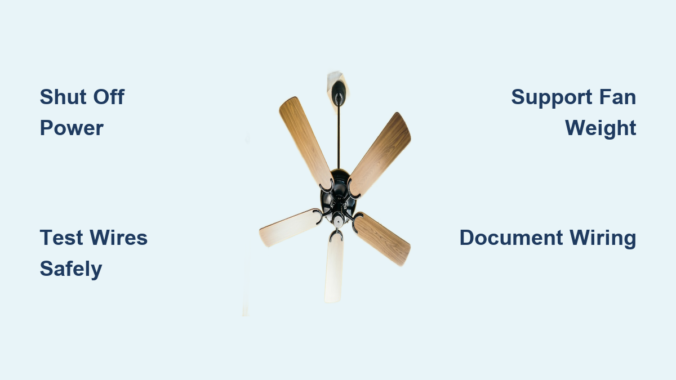
Removing a ceiling fan might seem intimidating, but with proper preparation and safety measures, most homeowners can complete this task confidently. Whether you’re replacing an outdated fixture, troubleshooting performance issues, or updating your room’s design, knowing how to take out a ceiling fan correctly protects both you and your home’s electrical system. This essential DIY project typically takes 45-90 minutes for someone with basic tool experience, though complex installations may require additional time.
Before you begin, understand that electricity safety is non-negotiable—never rely solely on wall switches, always verify power shutdown with testing equipment, and never rush critical steps. The consequences of working with live wires can be fatal, while improper handling can damage your ceiling or the fan itself. By following these proven procedures, you’ll remove your ceiling fan efficiently while avoiding common pitfalls that send unprepared DIYers to emergency rooms or electricians’ offices.
Verify Power Shutdown Before Touching Wires

Failing to properly disconnect power causes most ceiling fan removal accidents. Locate your electrical panel and identify the breaker controlling the fan circuit—look for labels like “ceiling fan,” “bedroom,” or numbered designations matching your room. Flip the breaker to “off,” then test the fan with both wall switch and remote to confirm it’s unresponsive. This step alone isn’t sufficient because some fans maintain live connections even when switched off.
Use a non-contact voltage tester on all wire connections and mounting points inside the canopy area. Hold the tester near wire nuts and the ceiling box until you get no indication of voltage. Test multiple points and repeat if unsure—better to spend extra time verifying than risk electrocution. If your tester indicates power remains present, return to the panel and turn off additional breakers systematically.
Wear safety glasses to protect against falling debris and work gloves for better grip on metal components. Non-slip footwear prevents ladder accidents if you need to descend quickly. Remember: always assume wires are live until personally verified otherwise with proper testing equipment.
Assemble These Critical Tools Before Starting

Skipping proper tool preparation leads to damaged components and frustrating delays. You’ll need:
- Phillips head screwdrivers (#1 and #2) with magnetic tips
- Flathead screwdrivers (small and medium)
- Needle-nose pliers for wire manipulation
- Lineman’s pliers for cutting wire ties
- Non-contact voltage tester (mandatory)
- Sturdy step ladder rated for your ceiling height
For tight spaces, a headlamp provides hands-free illumination inside the canopy area. A smartphone camera captures wiring configurations before disassembly—these photos become invaluable references during reinstallation. A magnetic parts tray prevents lost screws, while electrical tape secures exposed wire ends after disconnection.
Position your ladder on a level surface following the “four-to-one rule”: for every four feet of height, place the base one foot away from the wall. Fully extend spreader bars and ensure the ladder locks securely. If possible, have a helper stabilize the ladder and assist with weight management during fan removal.
Remove the Canopy Without Damaging Components
Canopy removal methods vary significantly by mounting system. Identify your fan type first:
- Downrod systems (most common): The canopy hangs below the mounting bracket with 2-4 perimeter screws. Remove screws while supporting the canopy, then slide it down the downrod.
- Hugger/flush-mount fans: The canopy may require blade or light fixture removal first. Check for hidden screws under decorative caps.
- Angled ceiling installations: Look for a set screw on the mounting bracket that must be loosened before canopy removal.
Before disconnecting wires, photograph the wiring configuration from multiple angles. Note which colors connect to which—black to black (or red), white to white, green/bare to ground. Write the fan’s manufacturer and model number on masking tape for future reference. If your fan has a remote control system, document the receiver module’s position and connections.
Disconnect Wiring Using Safe Techniques
Never pull on wires themselves when disconnecting connections. Grip wire nuts firmly and twist counterclockwise to release. Separate connections carefully while noting original pairings:
- Black fan wire → Black (hot) house wire
- White fan wire → White (neutral) house wire
- Green/bare fan wire → Green/bare ground wire or bracket screw
- Blue wire (if present) → Light kit connection
After disconnecting, wrap electrical tape around each exposed wire end to prevent accidental contact. For remote-controlled fans, disconnect the receiver module from both the fan harness and house wiring. If you encounter non-standard wiring (white wires carrying current, missing grounds), take extra photos and consider consulting an electrician before proceeding.
Lower the Fan Assembly Without Dropping It
Ceiling fans weigh 15-50 pounds—dropping one causes serious injury or damage. Support the fan’s weight throughout removal:
- For downrod systems: Lift slightly and rotate the ball joint out of the mounting bracket saddle
- For hook mounts: Lift and slide the hook off its bracket tab
- For direct mounts: Remove mounting bolts before lowering
On sloped ceilings, locate and loosen the bracket’s set screw before attempting release. If working alone, use a helper hand tool that clamps to the downrod or position a sturdy object below to catch the fan if it slips. With blades removed (2-3 screws per blade), the motor assembly maneuvers more easily through tight spaces.
Fix Stubborn Hardware Issues Immediately
Seized screws and stuck components halt removal progress. When facing stubborn hardware:
- Apply penetrating oil (WD-40 or PB Blaster) to screw threads and wait 5-10 minutes
- Use a hair dryer to heat surrounding metal, expanding it slightly for easier turning
- For rounded screw heads, employ a screw extractor kit designed for damaged fasteners
If the canopy won’t slide down after screw removal, run a thin knife around its perimeter to break paint or debris seals. Check for hidden screws accessible only from below once partially lowered. In tight spaces where blades interfere with removal, take them off first—most attach with 2-3 screws per blade.
Dispose of Components Responsibly After Removal
Ceiling fans contain valuable recyclable materials. Before discarding your fan:
- Salvage the motor for DIY projects like homemade ventilation fans or pottery wheels
- Repurpose blades as garden trellises or decorative art pieces
- Keep functional light kits for future fixtures
- Donate working units to Habitat for Humanity ReStores
For proper disposal:
– Remove non-metal components before taking to scrap metal dealers
– Check municipal recycling programs for small appliance acceptance
– If leaving the electrical box exposed, install a blank cover plate to prevent access
Assess Your Electrical Box Before New Installation
Non-fan-rated electrical boxes create dangerous failure points. After removal, verify your box is suitable for new fan installation:
- Look for “UL Listed for Fan Support” or similar labeling
- Ensure the box attaches directly to ceiling joists, not just drywall
- Confirm the mounting bracket fits flush against the box
If your existing box lacks fan support rating, replace it before installing a new fixture. Loose boxes that move when manipulated require professional attention—they cannot safely support fan weight and vibration long-term. Patch any damaged ceiling areas with spackle before painting to match surrounding surfaces.
Recognize When Professional Help Is Necessary
Certain situations demand electrician expertise:
- Discovering non-standard wiring configurations during removal
- Finding damaged wires or questionable electrical boxes
- Encountering structural concerns with ceiling support
- Physical limitations preventing safe ladder work
Professional removal costs typically range from $40-$150 per hour depending on complexity. While this seems expensive, it’s a wise investment when dealing with electrical hazards. If you’re unsure about any step in the process, stop immediately and consult a qualified electrician—your safety is worth far more than any time savings.
Taking out a ceiling fan requires methodical attention to safety protocols and careful component handling. Always verify power shutdown with testing equipment, support the fan’s weight properly during removal, document configurations through photos, and handle materials responsibly. By following these proven procedures, you’ll complete your ceiling fan removal safely and efficiently while avoiding the common mistakes that turn simple projects into hazardous situations. Remember: when in doubt, call a professional—some risks simply aren’t worth taking with household electricity.
Leave a Reply