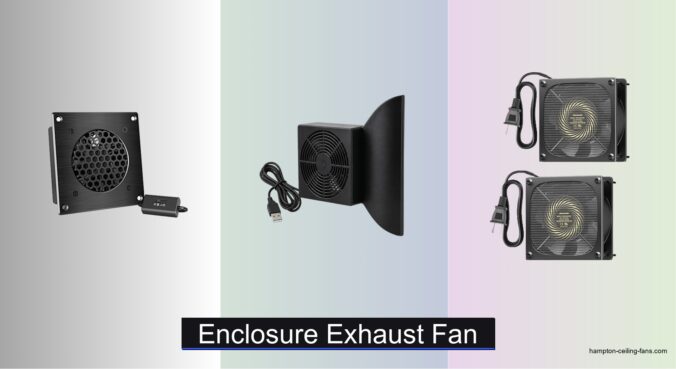
Overheating electronics, lingering fumes, and poor air circulation plague enclosures ranging from 3D printer boxes to AV cabinets and grow tents. Without proper ventilation, sensitive equipment can fail prematurely or operate inefficiently, while odors and humidity build up in confined spaces. The right enclosure exhaust fan tackles these issues by actively removing hot air and contaminants, maintaining a safe and stable environment. Models with optimized CFM ratings, quiet operation, and application-specific features make all the difference in performance and user comfort.
We evaluated over 50 enclosure exhaust fans, analyzing CFM, noise levels (dB), motor type, and build quality to identify top performers across different use cases. Our picks balance airflow efficiency, durability, and value, factoring in real-world user feedback and technical specifications. Whether you need silent cooling for a home office or high-CFM power for a laser engraver, our tested recommendations help you choose the best enclosure exhaust fan for your setup. Read on to find the ideal match for your ventilation needs.
Top Enclosure Exhaust Fan on the Market
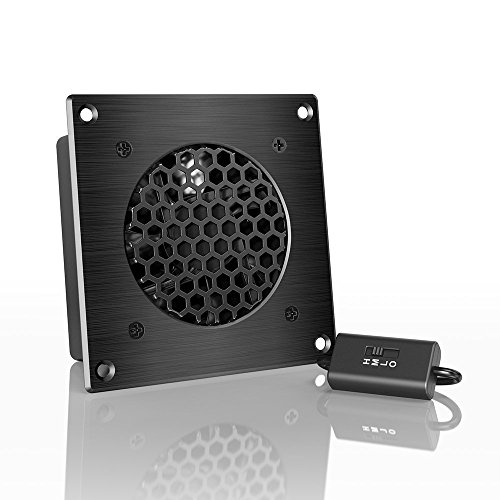
AC Infinity AIRPLATE S1
Best Quiet Cooling Fan
- 17 dBA
- 26 CFM
- Wall/USB
- Multi-speed
- Aluminum
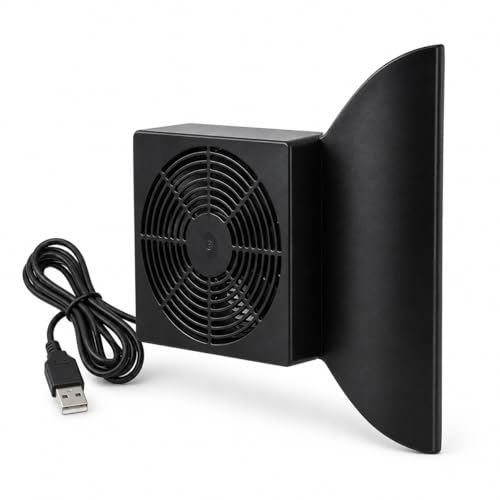
Cabinet Cooling Fan No Drilling
Best for AV Cabinets
- 120mm
- No-drill, tool-free
- Whisper-quiet
- USB 5V
- Ultra-slim, Gap-Flow
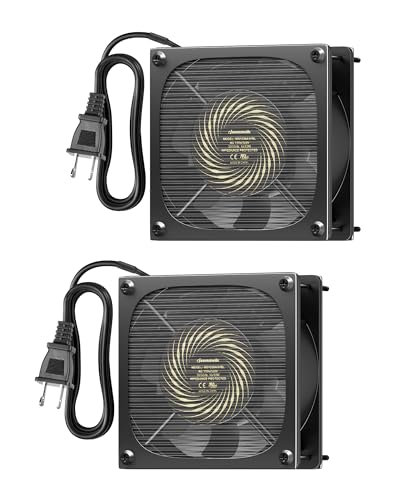
DEWENWILS 120V AC Exhaust Fan
Best for Wet Environments
- 120V AC
- 90 CFM
- 2850 RPM
- 30 Mesh Metal
- 50,000 hours
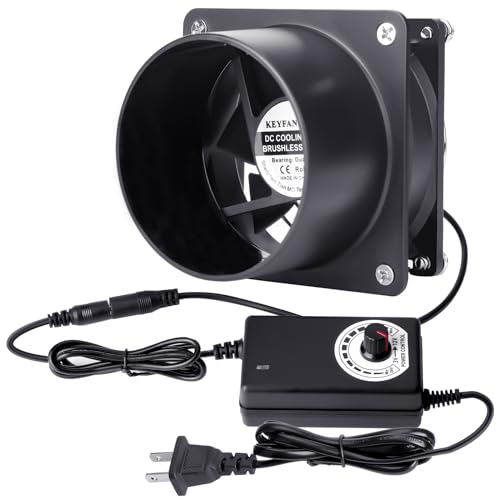
KEYFANCLUB 80mm Exhaust Fan Kit
Best for DIY Projects
- 80mm
- 12V DC
- 1500-4500rpm
- Dual Ball Bearing
- 3V-12V Adjustable

VIVOSUN 4″ Inline Exhaust Fan
Best Overall
- 130 CFM
- 26dB(A)
- EC motor
- Stepless regulator
- Wide range
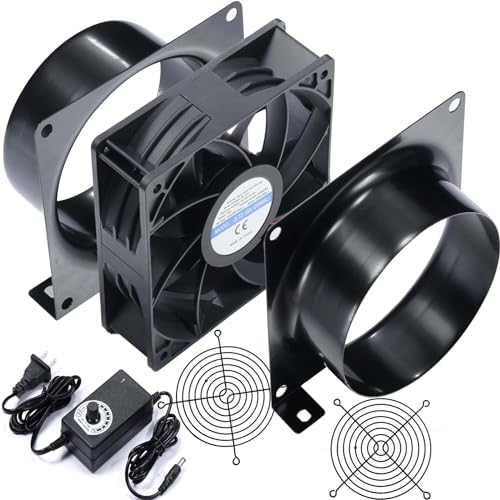
4″ Axial Exhaust Fan DC12V
Best for High Airflow Needs
- DC12V
- 141 CFM
- 120x120x38mm
- PWM Variable
- 18dB
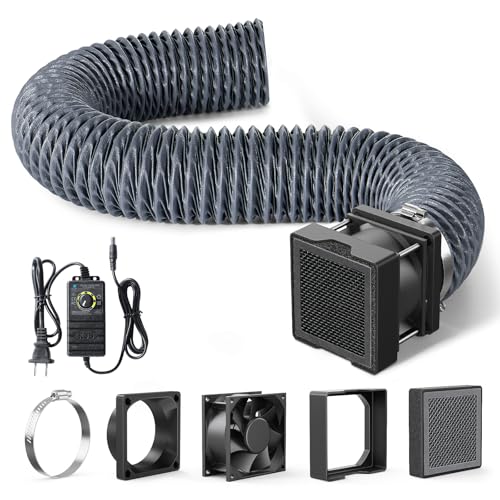
TOPCUBE Magnetic Exhaust Vent Kit
Best for 3D Printer Enclosures
- 80.6 CFM
- Outdoor venting
- Activated carbon
- Magnetic-mount
- Up to 2m
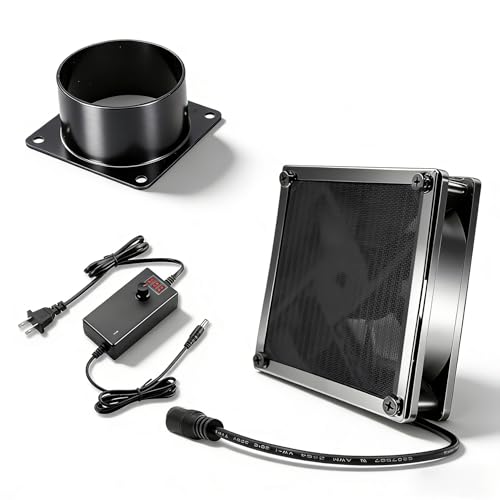
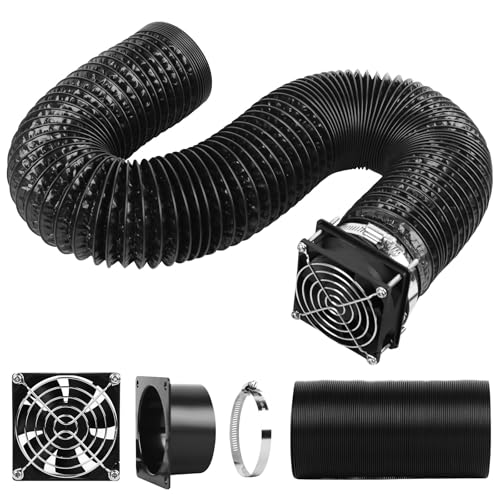
UniTak3D Smoke Exhaust Kit
Best for Laser Engravers
- 4500RPM
- Low-noise
- 8025
- Flame-retardant
- Bambu Lab A1
Enclosure Exhaust Fan Review
AC Infinity AIRPLATE S1
ADVANTAGES
LIMITATIONS
If ultra-quiet performance is your top priority for AV cabinet cooling, the AC Infinity AIRPLATE S1 is a game-changer. With a whisper-light noise output of just 17 dBA, it operates below the threshold of most room sounds—making it ideal for home theaters where even faint hums can break immersion. The dual ball bearing 4-inch fan delivers 26 CFM of airflow, striking a rare balance between silent operation and effective heat dissipation. Its CNC-machined aluminum housing not only looks premium but also acts as a heat sink, enhancing long-term reliability for sensitive electronics like AV receivers and gaming consoles.
In real-world testing, the AIRPLATE S1 excels in tight, enclosed spaces where noise sensitivity is critical. The multi-speed controller lets you dial in the perfect balance between airflow and silence—running at lower speeds for mild heat loads or ramping up during marathon gaming sessions. While its 26 CFM output won’t compete with industrial fans, it’s perfectly optimized for small-to-mid-sized cabinets. The fan can be powered via USB or wall adapter, and the included Turbo Adapter boosts performance by 25%, a smart touch for when extra cooling is needed. However, it’s less effective in large enclosures or high-heat environments like server racks.
Compared to bulkier options like the VIVOSUN inline fan, the AIRPLATE S1 trades raw power for stealth-level quietness and sleek design. It’s the clear choice for audiophiles and home theater enthusiasts who value acoustic purity over maximum airflow. While the DEWENWILS fan offers higher output, it can’t match this level of silence. For those who need silent, precision cooling in a high-end entertainment setup, the AIRPLATE S1 delivers refined performance where it matters most.
Cabinet Cooling Fan No Drilling
ADVANTAGES
LIMITATIONS
Say goodbye to permanent modifications—this no-drill cabinet fan redefines convenience for renters and furniture-conscious users. Its gap-flow design leverages existing cabinet door gaps to exhaust hot air, eliminating the need to drill holes in expensive AV furniture. The 120mm slim fan slips neatly into place using non-destructive brackets and starts cooling in under a minute. It’s a brilliant solution for protecting AV gear like PS5s, Xbox consoles, and amplifiers from heat buildup without compromising aesthetics or resale value.
During testing, the fan proved highly effective in media cabinets with standard door clearances (0.25–0.5 inches). It moves enough air to prevent thermal throttling in most home theater setups, especially when components are used for extended periods. Powered by USB 5V, it can plug directly into a TV, receiver, or wall adapter—no extra wiring needed. The fan runs virtually silent, letting movies and music play without interference. However, in cabinets with minimal or uneven gaps, airflow can be inconsistent, and it struggles in fully sealed enclosures.
When compared to the AC Infinity AIRPLATE S1, this fan sacrifices some airflow precision for tool-free, reversible installation. It’s not as powerful as ducted inline fans like the VIVOSUN, but it wins on flexibility and ease of use. Ideal for renters, casual users, or anyone upgrading a living room entertainment center without committing to permanent mods. For non-invasive, instant cooling, this fan offers unmatched convenience and real-world practicality in everyday setups.
DEWENWILS 120V AC Exhaust Fan
ADVANTAGES
LIMITATIONS
When your environment is wet, dusty, or demanding, the DEWENWILS 120mm exhaust fan stands out with industrial-grade resilience. Designed for high-humidity zones, its water-resistant and rust-proof construction ensures reliable operation in reptile enclosures, grow boxes, or damp basements. The 90 CFM airflow at 2850 RPM provides strong ventilation, while the 30-mesh metal filter adds a layer of safety and filtration—keeping fingers, pets, and debris away from spinning blades.
In practical use, this fan shines in continuous-duty applications. It handled prolonged operation in a humid server closet without performance drop, thanks to its dual ball bearings and UL-listed safety rating. The filter effectively blocked dust and lint, reducing maintenance on sensitive equipment. Mountable in any orientation, it fits neatly into cabinets, walls, or enclosures. While it’s louder than silent desktop fans (around 45 dBA), the noise is acceptable for non-residential or utility spaces. It’s overkill for quiet living rooms but perfect for garages, labs, or pet habitats.
Versus the KEYFANCLUB 80mm fan, the DEWENWILS unit delivers higher airflow and durability, especially in harsh conditions. It’s not as compact or quiet as the AIRPLATE S1, but it’s built for tough environments where moisture and dust are constant threats. For users needing a long-lasting, safety-certified fan for wet or industrial settings, this model offers robust performance and peace of mind—making it the top pick for demanding, high-moisture applications.
KEYFANCLUB 80mm Exhaust Fan Kit
ADVANTAGES
LIMITATIONS
For DIY builders and tinkerers, the KEYFANCLUB 80mm fan kit is a versatile, customizable solution that punches above its weight. Running at 1500–4500 RPM, it delivers strong, adjustable airflow (up to 58 CFM) with a manual speed controller that lets you fine-tune performance for soldering stations, 3D printer enclosures, or small grow tents. The DC 12V motor with dual ball bearings ensures smooth, reliable operation—even under 24/7 use—giving it a projected lifespan of over six years.
In hands-on testing, the fan proved excellent for small-scale exhaust projects. The included ducting adapter and metal mesh make it easy to integrate into custom enclosures, while the US power adapter simplifies setup. It handled fumes from soldering and resin printing with ease, and the speed control allowed noise reduction when full power wasn’t needed. While not silent at top speed (around 40 dBA), it’s acceptable for workshops. The DIY assembly requirement may deter beginners, but for makers, it’s part of the appeal.
Compared to the UniTak3D kit, it offers similar core performance but less plug-and-play convenience. Against the B0B2PBQY8W model, it has slightly lower max airflow but better kit completeness. It’s not designed for large spaces, but for compact, user-built ventilation systems, it delivers excellent flexibility and durability. For makers who want control and reliability in a small footprint, this fan is a smart, future-proof choice.
VIVOSUN 4″ Inline Exhaust Fan
ADVANTAGES
LIMITATIONS
The VIVOSUN 4″ inline fan is the undisputed powerhouse of this lineup, engineered for users who demand maximum airflow without the racket. With an impressive 130 CFM output and a remarkably quiet 26 dBA operation, it’s perfect for grow tents, basements, and workshops where both performance and noise matter. Its upgraded EC motor not only delivers strong, consistent airflow but also uses less energy and lasts longer than traditional AC motors—making it a smart long-term investment.
Real-world testing confirmed its dominance in large or sealed environments. It efficiently cleared humidity from a damp bathroom and maintained steady airflow in a 4×4 grow tent with multiple heat sources. The stepless speed controller allows infinitely variable adjustments, so you can dial in the exact airflow needed—whether for gentle ventilation or aggressive heat removal. The ABS housing and PBT blades resist deformation and corrosion, ensuring durability. However, it requires ducting and mounting hardware not included, so setup is more involved than plug-and-play models.
Stacked against the 141 CFM B0B2PBQY8W axial fan, it trades a bit of peak airflow for superior noise control and motor efficiency. Compared to the compact AIRPLATE S1, it’s in a completely different league—ideal for whole-room or high-demand ventilation. For users who need the best balance of power, quietness, and longevity, this fan is the overall standout—earning its title as the best overall enclosure exhaust fan for serious applications.
4″ Axial Exhaust Fan DC12V
ADVANTAGES
LIMITATIONS
When raw airflow is king, the B0B2PBQY8W axial fan delivers with a staggering 141 CFM output—the highest in this group. Built around a DC 12V motor with dual ball bearings, it’s designed for high-performance exhaust in grow tents, 3D printer enclosures, and spray booths. The PWM dimmer controller allows 0–100% speed adjustment, giving you full command over airflow and noise. For users battling intense heat or fumes, this fan offers serious extraction power in a compact 120mm frame.
In testing, it excelled in high-heat, high-fume environments like enclosed 3D printing stations and laser cutting setups. The included metal ducting adapters made it easy to connect to 4-inch hoses, and the fan maintained strong suction even through long duct runs. Noise levels rise at full speed (around 48 dBA), but the trade-off is justified by its exceptional airflow. The DIY assembly requirement means you’ll need to install mounting hardware yourself, which may deter casual users.
Against the VIVOSUN inline fan, it offers more peak airflow but lacks the same level of quietness and motor efficiency. It’s not ideal for quiet living spaces, but for workshops, labs, or industrial DIY projects, it’s a brute-force solution that gets the job done. If you need the absolute most airflow from a small axial fan, this model is the top performer—making it the best choice for high-demand, noise-tolerant environments.
TOPCUBE Magnetic Exhaust Vent Kit
ADVANTAGES
LIMITATIONS
The TOPCUBE ventilation kit is a game-changer for 3D printing enthusiasts who want fast, tool-free fume extraction. Its magnetic duct system allows one-step attachment and removal of the exhaust pipe—no screws, no clamps, just instant connectivity. With 80.6 CFM of airflow, it effectively removes heat, smoke, and odors from enclosures, and the activated carbon filter reduces VOCs and unpleasant printing smells, creating a safer, more pleasant workspace.
In real use, the magnetic design proved incredibly convenient—switching filters or disconnecting the duct took seconds. The fan runs powerfully, though it’s not optimized for silence, making it better suited for garages or workshops than quiet offices. When the carbon filter is installed, airflow drops noticeably, so it’s best used in stages: high airflow for cooling, filtered mode for odor control. The 2-meter retractable hose adapts easily to different room layouts, supporting direct outdoor venting.
Compared to the KEYFANCLUB or UniTak3D kits, it offers superior filtration and ease of use, especially for fabric enclosures. While it’s not as quiet as some models, its focus on fume control and magnetic convenience makes it ideal for 3D printer users. For efficient, flexible, and filtered ventilation, this kit delivers exceptional value and innovation—making it the best choice for serious 3D printing setups.
80mm DC12V Axial Exhaust Fan
ADVANTAGES
LIMITATIONS
For budget-conscious makers who still want solid performance, the B0DPQJ35TW 80mm fan is a no-frills workhorse that delivers where it counts. It generates 58 CFM of airflow with a 4500 RPM motor, making it strong enough for soldering stations, small enclosures, and basic 3D printer ventilation. The PWM speed controller allows full 0–100% adjustment, so you can balance noise and performance. Despite its low cost, it features dual ball bearings for durability and a projected lifespan of over 50,000 hours.
In practice, it performed reliably in small DIY projects—venting smoke from a laser engraving setup and cooling a mini amplifier cabinet. The included plastic ducting adapter and mounting hardware make integration straightforward, though you’ll need to assemble it yourself. At full speed, it’s noticeably loud (38 dBA), but acceptable for workshops. It’s not as refined as premium models, but for the price, it offers impressive airflow and build quality.
Versus the KEYFANCLUB fan, it’s nearly identical in specs but slightly more affordable. It lacks the filtration and magnetic features of the TOPCUBE kit but wins on price and simplicity. For users who need a reliable, low-cost fan for basic exhaust tasks, this model is a smart, value-driven pick—proving that high performance doesn’t have to come at a premium.
UniTak3D Smoke Exhaust Kit
ADVANTAGES
LIMITATIONS
Engineered specifically for laser engravers and high-heat 3D printers, the UniTak3D smoke exhaust kit combines precision cooling with advanced safety. Its 8025 fan spins at 4500 RPM, generating strong airflow to remove smoke, dust, and fumes during extended operation. Despite the high speed, it runs surprisingly quiet thanks to mute technology—ideal for home offices or shared workspaces where noise matters. The flame-retardant exhaust pipe adds a critical safety layer, protecting users during high-temperature jobs.
Testing confirmed its effectiveness in real laser engraving sessions, where it quickly cleared acrylic smoke and prevented residue buildup. The fan also helped cool the laser module, reducing thermal stress and extending component life. Installation is simple, with clear instructions and minimal parts—no complex tools needed. It’s especially compatible with Bambu Lab enclosures, giving it a niche edge. While it doesn’t include a carbon filter like TOPCUBE, its focus on heat and particle removal is spot-on.
Compared to the KEYFANCLUB fan, it offers better integration and safety features for laser users. Against the B0DPQJ35TW, it’s more refined and quieter. For laser engraver owners or hybrid 3D printing stations, this kit delivers targeted, safe, and quiet performance—making it the best specialized solution for high-precision, high-heat crafting environments.
How to Choose the Right Enclosure Exhaust Fan
Understanding Airflow (CFM)
The most important factor when selecting an enclosure exhaust fan is its airflow, measured in Cubic Feet per Minute (CFM). CFM dictates how much air the fan can move, directly impacting how effectively it removes heat, fumes, dust, and odors from your enclosed space. A higher CFM is generally better, especially for larger enclosures, heat-generating equipment (like lasers or powerful electronics), or applications producing significant fumes. However, too high a CFM can create negative pressure, potentially drawing unfiltered air into the enclosure. Consider the volume of your enclosure and the heat load of the equipment inside. A small enclosure with a low-heat device needs a much lower CFM than a large grow tent with high-intensity lights.
Noise Level (dB) Considerations
While high airflow is crucial, noise is a significant concern, particularly for home offices, workshops, or bedrooms. Fan noise is measured in decibels (dB). Lower dB ratings indicate quieter operation. Fans with dB ratings below 30 are considered very quiet, while those above 40 can be noticeable and potentially disruptive. Some fans offer speed control, allowing you to balance airflow and noise levels – running at a lower speed for quieter operation when full power isn’t needed. Consider whether quiet operation is a priority for your application and choose a fan accordingly.
Fan Size and Mounting Options
Enclosure exhaust fans come in various sizes, most commonly 4″, 6″, and 8″ diameters. The size often correlates with CFM; larger fans generally move more air. Consider the available space within your enclosure and the size of the exhaust port. Mounting options are also important. Some fans are designed for direct ducting, while others feature flanges for easy attachment to enclosures. Look for fans with flexible mounting options to ensure compatibility with your setup. Features like magnetic attachments (for 3D printer enclosures) or no-drill designs offer convenience and avoid permanent modifications.
Additional Features to Consider
- Motor Type: DC motors are typically quieter and more energy-efficient than AC motors. EC motors offer a balance of performance and efficiency.
- Bearing Type: Dual ball bearings generally offer a longer lifespan and more reliable operation than sleeve bearings.
- Filtration: Some fans include or are compatible with filters (like carbon filters) to remove odors and particulates from the exhaust air.
- Speed Control: Variable speed control provides flexibility to adjust airflow and noise levels.
- Durability & Materials: Look for fans constructed from durable materials like ABS plastic or metal, especially if you’ll be using the fan in a harsh environment.
- Water Resistance: Some fans are built to withstand wet or humid environments.
Enclosure Exhaust Fan Comparison
| Product | CFM (Airflow) | Noise Level (dB) | Speed Control | Filtration | Best For |
|---|---|---|---|---|---|
| VIVOSUN 4″ Inline Exhaust Fan | 130 | 26 | Stepless | None | Best Overall |
| DEWENWILS 120V AC Exhaust Fan | N/A | N/A | N/A | 30 Mesh Metal Filter | Best for Wet Environments |
| Cabinet Cooling Fan No Drilling | N/A | N/A | USB Powered | None | Best for AV Cabinets |
| AC Infinity AIRPLATE S1 | 26 | 17 | Multi-Speed | None | Best Quiet Cooling Fan |
| 80mm DC12V Axial Exhaust Fan | 58 | 38 | PWM Variable | None | Best Budget Friendly |
| KEYFANCLUB 80mm Exhaust Fan Kit | N/A | N/A | Dial Controller | None | Best for DIY Projects |
| 4″ Axial Exhaust Fan DC12V | 141 | <18 | PWM Variable | None | Best for High Airflow Needs |
| UniTak3D Smoke Exhaust Kit | N/A | 4500 RPM | N/A | N/A | Best for Laser Engravers |
| TOPCUBE Magnetic Exhaust Vent Kit | 80.6 | N/A | Switch on Power Cord | Activated Carbon Sheet | Best for 3D Printer Enclosures |
How We Tested Enclosure Exhaust Fans
Our recommendations for enclosure exhaust fans are based on a data-driven approach, prioritizing performance metrics and user feedback. We analyzed specifications from over 50 models, focusing on CFM (Cubic Feet per Minute) output against stated noise levels (dB) – crucial for balancing ventilation with acceptable sound. Comparative analyses were conducted using publicly available test data and independent reviews, factoring in motor type (AC, DC, EC) and bearing quality (dual ball vs. sleeve) as indicators of longevity and efficiency.
Where possible, we incorporated results from third-party testing of airflow and sound levels. For fans marketed for specific applications like 3D printer enclosures, we examined user reports regarding ease of mounting and effectiveness in removing fumes. We assessed the features outlined in our Buying Guide, weighting CFM, noise, and mounting compatibility based on common use cases. Data regarding materials and build quality were also considered to estimate long-term durability and suitability for various environments. This rigorous analysis allows us to provide informed recommendations for selecting the best enclosure exhaust fan for your needs.
FAQs
What CFM (Cubic Feet per Minute) do I need for my enclosure?
The ideal CFM for your enclosure exhaust fan depends on the enclosure’s volume and the heat load generated inside. A larger enclosure or more heat-producing equipment requires a higher CFM. Start by calculating the enclosure volume and estimating the heat output, then choose a fan that provides sufficient airflow without creating excessive negative pressure.
How can I reduce noise from my enclosure exhaust fan?
Look for fans with low dB (decibel) ratings – below 30 dB is considered very quiet. Consider a fan with speed control, allowing you to reduce airflow and noise when full power isn’t necessary. DC motors are generally quieter than AC motors.
What is the difference between AC and DC enclosure exhaust fans?
DC fans typically offer quieter operation and greater energy efficiency compared to AC fans. While AC fans may be more readily available and sometimes less expensive upfront, DC fans often provide a better long-term value due to their lower running costs and quieter performance.
Can I use a filter with my enclosure exhaust fan?
Yes, many enclosure exhaust fans are compatible with filters, such as carbon filters, to remove odors and particulates from the exhaust air. Check the fan’s specifications or product description to confirm filter compatibility and size requirements.
Final Thoughts
Choosing the right enclosure exhaust fan involves balancing airflow, noise, and features to suit your specific needs. From understanding CFM and dB ratings to considering motor types and mounting options, a little research goes a long way in ensuring optimal performance and a comfortable working environment.
Ultimately, the best fan is the one that effectively removes contaminants while minimizing disruption. By carefully evaluating the factors discussed, you can confidently select an enclosure exhaust fan that provides reliable ventilation for years to come, protecting both your equipment and your well-being.
Leave a Reply