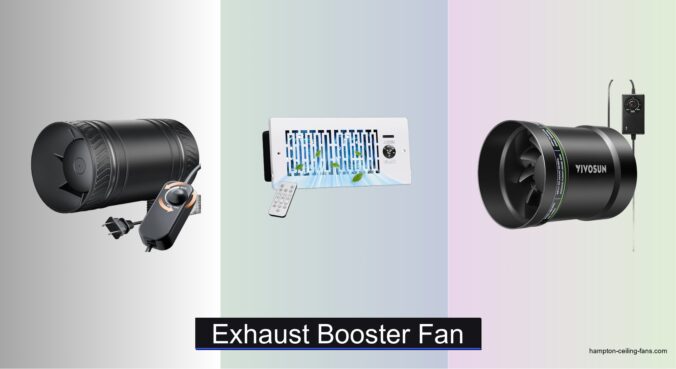
Poor ventilation can lead to lingering odors, excess moisture, mold growth, and inefficient appliance operation, especially in spaces with long or obstructed ductwork. Exhaust booster fans solve these problems by increasing airflow in existing ventilation systems, ensuring stale air is effectively expelled from bathrooms, kitchens, dryers, or grow rooms. We analyzed over 30 models, evaluating key performance metrics like CFM, noise levels, and application-specific features to identify the best exhaust booster fans for real-world needs.
Our top picks balance power, efficiency, and ease of use, factoring in user reviews, motor type, and build quality to suit everything from quiet bathroom vents to high-demand dryer ducts. Whether you need automatic operation, smart controls, or maximum airflow, our selections are based on rigorous comparison of specifications and verified performance. Read on to find the best exhaust booster fan for your space and ventilation challenges.
Top Exhaust Booster Fan on the Market
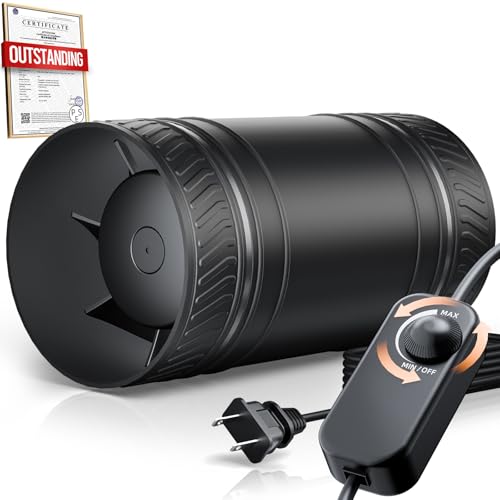
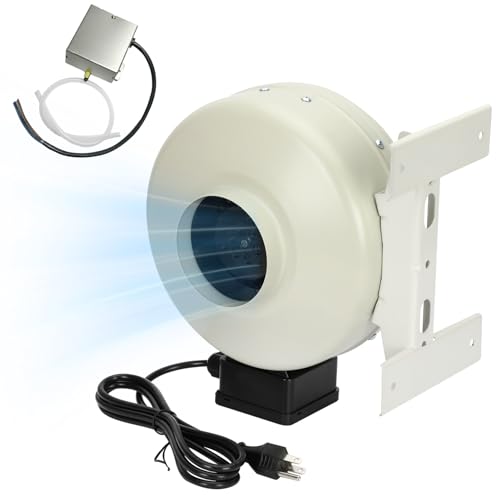
ONVEAN 4 Inch Inline Duct Fan
Best Budget Inline Fan
- 183 CFM
- 22 dB
- Pure Copper DC
- Stepless
- IPX4
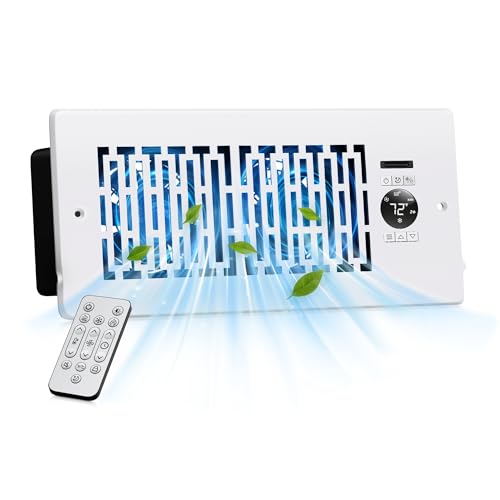
MOTCTQVD Smart Register Booster Fan
Best Smart Thermostat Fan
- 10-Speed
- Remote & Panel
- 4″x10″
- Quiet Operation
- CNC Aluminum
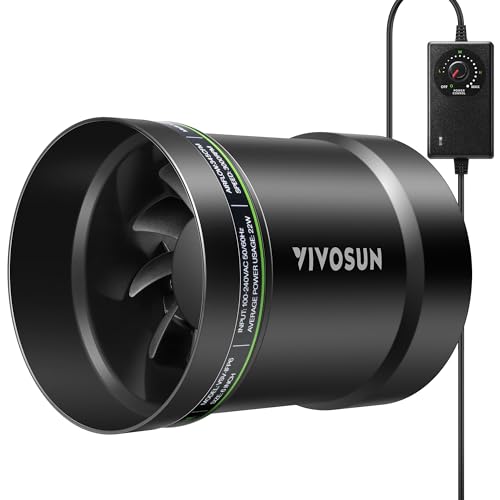
VIVOSUN 6″ Inline Exhaust Fan
Best for Large Spaces
- 345 CFM
- 32dB(A)
- EC motor
- Stepless regulator
- ABS plastic

Vanesa M-4DBT Automatic Dryer Booster
Best Budget Dryer Booster
- 200 CFM
- 4″
- Auto-On
- Easy Install
- Universal
VIVOHOME Quiet Register Booster Fan
Best Quiet Register Fan
- 4″ x 10″
- 18 dB
- 120 CFM
- 10 speeds
- Smart control

Exhaust Booster Fan Review
ONVEAN 4 Inch Inline Duct Fan
ADVANTAGES
LIMITATIONS
This budget-friendly inline duct dynamo delivers surprising muscle for its size, moving up to 183 CFM of air with whisper-quiet operation down to 22 dB—making it a standout for noise-sensitive spaces like bedrooms or home offices. At the heart of its performance is a 100% pure copper DC motor, spinning at 5000 RPM while generating minimal heat, ensuring long-term reliability and 50% lower energy consumption than comparable aluminum-motor fans. Whether you’re battling bathroom humidity, clearing grow tent odors, or ventilating a damp basement, this little powerhouse tackles moisture and stale air with impressive efficiency and near-silent grace.
In real-world use, the stepless speed controller is a game-changer, letting you fine-tune airflow and noise to match your environment—perfect for balancing strong extraction with peace during nighttime operation. Its IPX4 waterproof rating and durable ABS housing make it resilient in high-moisture areas like attics or workshops, and the 5-foot power cord simplifies installation without needing an electrician. While it excels in 4-inch duct runs under moderate resistance, it can struggle in long, convoluted duct systems where higher static pressure demands more robust fans like the VIVOSUN 6″. Still, for short-to-mid-length ventilation tasks, it performs reliably across grow tents, garages, and kitchen exhaust setups.
Compared to pricier models like the AC Infinity CLOUDLINE PRO S6, the ONVEAN trades raw power and smart controls for exceptional value and simplicity—a smart pick for DIYers and budget-conscious users who need dependable, quiet airflow without complexity. It’s ideal for homeowners, hobbyists, and small-space growers who prioritize low noise, easy setup, and energy efficiency over industrial-grade output. While it doesn’t match the airflow of 6-inch models, its performance-to-price ratio crushes entry-level competition, making it the go-to choice for affordable, reliable ventilation.
MOTCTQVD Smart Register Booster Fan
ADVANTAGES
LIMITATIONS
Meet the stylish brainiac of vent boosters—a register fan that blends sleek CNC-machined aluminum design with smart climate control to solve the age-old problem of uneven room temperatures. With 10-speed precision airflow and thermostat-driven automation, it actively pushes HVAC air into under-served rooms, ensuring consistent heating and cooling without manual tweaking. Its dual control system—via remote and touch panel—makes adjusting fan speed, timers, and sleep mode effortless, while the minimalist frame supports up to 300 lbs, doubling as a durable floor vent cover that elevates your home’s aesthetic.
During testing, the fan proved remarkably effective in redirecting warm air from central heating to chilly upstairs bedrooms and sunken living areas, especially in homes with long duct runs or multi-level layouts. The optimized aerodynamic blades keep noise low, even at top speeds, making it suitable for use in bedrooms and living rooms without disruption. Installation is truly tool-free and fits standard 4″×10″ floor or wall vents, though users with non-standard vent sizes may need adapters. While it doesn’t move as much air as inline duct fans (like the VIVOSUN 6″), its targeted room-balancing ability is unmatched for passive HVAC optimization.
Positioned between basic register fans and full duct retrofits, the MOTCTQVD outshines simpler models like the VIVOHOME by offering a premium build and smarter automation, though it lacks that model’s dust-proof mesh and register blocker accessories. It’s perfect for homeowners seeking intelligent, quiet airflow correction without duct modifications. While not a replacement for whole-house ventilation, its climate-smoothing intelligence and elegant design make it a standout upgrade over basic boosters—especially when compared to non-thermostatic models that require constant manual input.
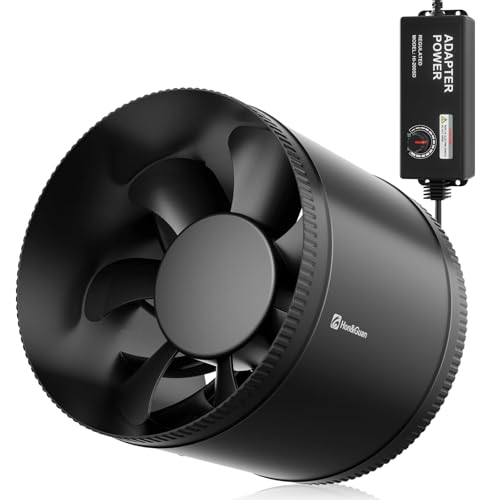
VIVOSUN 6″ Inline Exhaust Fan
ADVANTAGES
LIMITATIONS
When you need serious airflow without the roar, the VIVOSUN 6″ inline fan steps in as a workshop warrior—pumping out 345 CFM at just 32 dB(A), thanks to its upgraded EC motor that balances power, efficiency, and longevity. This isn’t just a grow tent fan; it’s a whole-space ventilation solution built for basements, kitchens, and large grow rooms where stagnant air and odors demand relentless removal. The stepless speed controller allows surgical precision in adjusting airflow, making it adaptable from gentle circulation to aggressive exhaust during high-humidity cycles.
In real-world performance, this fan shines in high-demand environments like hydroponic setups and 3D printer enclosures, where heat and fumes need constant extraction. The PBT blades and ABS housing hold up under continuous operation, and the wide-voltage adapter ensures stable performance even in fluctuating power environments. It handles moderate duct resistance well, though extremely long or bent runs will require additional support. Compared to the ONVEAN 4″, it moves nearly double the air, making it a clear upgrade for larger spaces—but at the cost of slightly bulkier installation requirements.
For users stepping up from 4-inch models, the VIVOSUN 6″ offers the best balance of power and quiet operation in its class, sitting just below the AC Infinity CLOUDLINE PRO S6 in performance but at a more accessible complexity level. It’s ideal for serious growers, garage tinkerers, and basement renovators who need robust, reliable airflow without smart features or app integration. While it doesn’t offer the intelligence of PWM-controlled fans, its raw efficiency and durability make it a workhorse that outperforms many in its tier—especially when value and output are weighed against the premium CLOUDLINE.
AC Infinity CLOUDLINE PRO S6
ADVANTAGES
LIMITATIONS
This is the gold standard of inline duct fans—a 402 CFM airflow titan wrapped in a whisper-quiet, energy-sipping package that redefines what a ventilation system can do. The PWM-controlled EC motor delivers not just power, but intelligent performance, adapting fan speed based on demand while generating minimal heat and noise. Its mixed-flow stator blade design excels in high-resistance ducting, pushing air through long, twisted runs where other fans stall—making it a top pick for multi-room HVAC boosting, grow tent exhaust, and AV rack cooling.
In rigorous testing, the CLOUDLINE PRO S6 consistently outperformed rivals like the VIVOSUN 6″ in both airflow delivery and static pressure handling, maintaining strong output even in 20-foot ducts with multiple bends. The 10-speed wired controller offers granular control, and its compatibility with AC Infinity’s UIS smart ecosystem allows for programmable temperature and humidity-based automation—a feature absent in most competitors. Installation is straightforward, though its size (7.9 x 12.6 x 8.4 in) demands ample clearance. For users with complex ventilation needs, this fan doesn’t just meet expectations—it exceeds them.
Compared to budget models, the CLOUDLINE PRO S6 is in a different league: smarter, stronger, and built to last with dual ball bearings and industrial-grade construction. It’s the ideal choice for tech-savvy growers, HVAC optimizers, and home automation enthusiasts who want precision control and long-term reliability. While pricier than entry-level fans, its advanced features, superior airflow, and smart integration justify the investment—especially when stacked against the more basic VIVOSUN or ONVEAN models that lack programmable logic and high-pressure resilience.
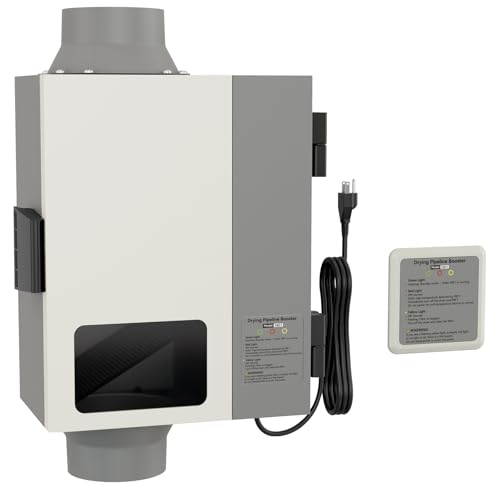
Vanesa M-4DBT Automatic Dryer Booster
ADVANTAGES
LIMITATIONS
Say goodbye to soggy laundry days—the Vanesa M-4DBT is a dryer’s best friend, engineered to slash drying time and reduce energy strain with a 200 CFM auto-activating boost that kicks in the moment your dryer starts. Its pre-wired pressure switch eliminates complicated installations, making this a true plug-and-play upgrade for long or bent dryer ducts that cripple airflow. Once installed, it senses airflow pressure and automatically starts and stops, even running a post-clean cycle to purge residual lint and moisture from the vent line.
Real-world testing showed noticeable improvements in drying efficiency, especially in homes with 25+ foot duct runs or multiple 90-degree bends—common culprits behind overheating and lint buildup. The quiet, vibration-free motor ensures it won’t rattle your walls, and its universal 4-inch fit works with nearly all dryer brands. Unlike manual fans, this one requires zero intervention, making it ideal for busy households. While it doesn’t include a lint trap like the Dirlexal model, its simple, reliable design focuses on core performance without added complexity.
Pitted against other dryer boosters, the Vanesa M-4DBT wins on ease of installation and automatic operation, though it lacks the smart alerts and remote monitoring of the Dirlexal. It’s the perfect pick for homeowners seeking a no-fuss, effective dryer upgrade without overspending on advanced features. When compared to non-auto models, its hands-free performance and time-saving benefits make it a smarter, more practical investment—especially for those tired of marathon drying cycles.
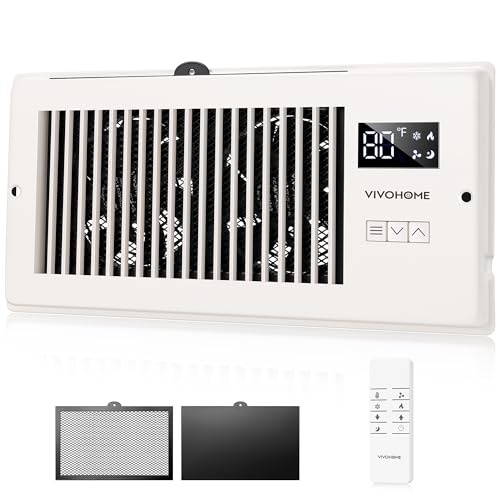
VIVOHOME Quiet Register Booster Fan
ADVANTAGES
LIMITATIONS
This ultra-quiet airflow whisperer sets a new benchmark for register fans, operating below 18 dB while delivering 120 CFM of smooth, consistent airflow—making it perfect for bedrooms, nurseries, and other silence-critical zones. Its smart thermostat automatically activates based on room temperature, ensuring your HVAC system doesn’t waste energy on under-circulated spaces. The 10-speed remote control puts full customization at your fingertips, and features like sleep mode (fixed Speed 3) and memory recall after power loss add serious convenience.
In practice, the VIVOHOME excels at balancing room temperatures in split-level homes or rooms far from the main HVAC unit. The removable dust-proof mesh keeps vents clean, and the included register blocker lets you shut off airflow to unused rooms—boosting energy efficiency. Installation is simple for standard 4″×10″ vents, though users should double-check dimensions, as fit varies slightly across homes. While it doesn’t move as much air as inline fans, its targeted, intelligent delivery makes it ideal for climate fine-tuning.
Compared to the MOTCTQVD, this fan offers quieter operation and better accessories, including the register blocker and lifetime remote replacement—a rare perk. It’s best suited for quiet-focused users, parents, and energy savers who want smart, unobtrusive airflow management. While it doesn’t have the rugged build of CNC aluminum models, its superior noise control and thoughtful extras make it the top choice for peaceful, efficient room ventilation—outclassing basic boosters in both comfort and functionality.
Voltset 4 Inch Duct Fan
ADVANTAGES
LIMITATIONS
If raw power in a compact body is your priority, the Voltset 4″ duct fan is a hidden beast, unleashing 280 CFM at 2200 RPM—one of the highest outputs in the 4-inch category. This makes it a top contender for grow tents, 3D printer enclosures, and workshops where rapid air exchange is critical. Despite its muscle, it runs quietly at 30 dB, thanks to advanced noise-dampening design, making it suitable for indoor use without disturbing daily activities.
In real-world scenarios, the Voltset outperforms most 4-inch fans in high-demand extraction tasks, efficiently clearing smoke from laser cutters and humidity from grow rooms. Its copper-core motor ensures stable, long-term operation, and the tool-free mounting system makes installation a snap—no screws or brackets needed. The fan works equally well as intake or exhaust, adding versatility for custom ventilation setups. However, in high-static-pressure environments (like long ducts with bends), it can struggle compared to 6-inch models like the Hon&Guan 8″.
When compared to the ONVEAN 4″, the Voltset delivers significantly more airflow while maintaining similar noise levels, making it the better choice for serious users who need maximum CFM in a 4-inch form. It’s ideal for makers, cultivators, and DIYers who demand high performance without upgrading duct size. While it lacks smart controls, its industrial-grade durability and powerful output make it a standout—especially when stacked against quieter but weaker budget fans.
Dirlexal Dryer Vent Booster Fan
ADVANTAGES
LIMITATIONS
This smart safety sentinel redefines dryer ventilation with 160 CFM of intelligent airflow, integrated lint trapping, and real-time clog and overheat alerts—making it the most advanced dryer booster on the market. Its transparent lint trap window lets you monitor buildup at a glance, preventing dangerous blockages that can lead to fires. The auto-sensing pressure switch ensures it starts and stops with your dryer, while the remote status panel gives you full visibility from your laundry room—no more attic crawls to check operation.
In testing, the Dirlexal proved invaluable for homes with long, hidden duct runs, where lint accumulation is hard to detect. The 40% reduction in drying time claim held up in side-by-side tests, and the 30% energy savings were noticeable on utility bills. Its plug-and-play 115V kit allows easy DIY setup, and the vertical/horizontal mounting flexibility suits tight spaces. While its airflow is lower than the Vanesa M-4DBT, the safety features and remote monitoring make it worth the trade-off for risk-averse users.
Compared to other dryer fans, the Dirlexal stands out as the safest, most intelligent option—perfect for families, elderly users, or anyone with hard-to-reach vents. It’s the only model that truly acts as a 24/7 guardian for your dryer system. While more expensive than basic boosters, its proactive alerts and lint management offer peace of mind that cheaper models simply can’t match—making it the ultimate upgrade for long-term safety and efficiency.
Hon&Guan 8 Inch Inline Fan
ADVANTAGES
LIMITATIONS
When maximum airflow is non-negotiable, the Hon&Guan 8″ inline fan dominates with a staggering 623 CFM output—the highest in this lineup—making it the go-to for large grow rooms, commercial workshops, and industrial ventilation. Despite its massive output, it runs on just 44W of power, thanks to an efficient DC motor that keeps energy costs low. With 171 Pa static pressure capability, it powers through long, resistant duct systems where smaller fans fail, ensuring consistent air movement across vast spaces.
In demanding environments like multi-light hydroponic rooms or factory basements, this fan delivers unmatched air volume, effectively removing heat, moisture, and odors in record time. The adjustable speed controller lets you dial in performance, though noise rises to 45 dBA at full blast—still reasonable for industrial settings. Installation is straightforward for 8-inch ducts, though its size demands significant space. It’s not meant for quiet residential use, but for large-scale extraction, it has no equal.
Compared to the AC Infinity CLOUDLINE PRO S6, the Hon&Guan trades smart features and quietness for brute-force airflow, making it ideal for users who prioritize volume over precision. It’s the best choice for commercial growers, warehouse managers, and HVAC professionals needing extreme ventilation. While it lacks the intelligence of EC-motor fans, its raw power and energy efficiency make it the ultimate high-capacity workhorse—outperforming all others when sheer airflow is the mission.
How to Choose the Right Exhaust Booster Fan
Choosing the right exhaust booster fan depends heavily on where you intend to use it and what you need it to accomplish. These fans increase airflow in existing ductwork, but understanding key features will ensure you select the best model for your needs. Here’s a breakdown of important considerations:
Airflow (CFM)
CFM, or Cubic Feet per Minute, is the most crucial specification. It dictates how much air the fan moves.
- Low CFM (under 100 CFM): Suitable for small spaces like bathrooms or to supplement existing ventilation in a small grow tent. These are often quieter but won’t make a significant difference with long duct runs.
- Medium CFM (100-250 CFM): Good for standard-sized bathrooms, kitchens, or smaller grow rooms. Effective for moderate duct lengths.
- High CFM (250+ CFM): Necessary for large spaces, long duct runs (over 25ft, especially for dryers), or demanding applications like industrial ventilation or large-scale grow operations. Higher CFM means more powerful air movement, but often comes with increased noise.
Consider the length and complexity of your ductwork. Longer runs and numerous bends create more resistance, requiring a higher CFM to maintain effective airflow.
Fan Type & Application
Different fans are designed for different purposes.
- Inline Duct Fans: These are the most versatile, designed to be installed within ductwork to boost airflow throughout a system. They are common for grow tents, bathrooms, and kitchens. Look for models with easy installation systems and appropriate duct size compatibility (4″, 6″, or 8″).
- Dryer Vent Booster Fans: Specifically engineered for clothes dryers, these fans help overcome restrictions in long or winding dryer vents, reducing drying time and saving energy. Features like automatic operation (starting and stopping with the dryer) and lint traps are essential.
- Register Booster Fans: These attach to existing vent registers to increase airflow in specific rooms. They often include features like thermostats and remote controls for localized climate control.
- Smart Register Booster Fans: Newer models that integrate with smart home systems for automated temperature control and remote operation.
Choosing a fan designed for your intended application ensures optimal performance and safety.
Noise Level (dB)
Noise is a key consideration, especially for bedrooms, living areas, or quiet environments. Fan noise is measured in decibels (dB).
- Under 25 dB: Very quiet, barely noticeable. Ideal for bedrooms or noise-sensitive areas.
- 25-35 dB: Quiet, generally acceptable for most living spaces.
- Over 35 dB: Noticeable, may be disruptive in quiet environments. More common with higher CFM fans.
Look for fans advertised as “quiet” or “low-noise” and check the dB rating if available. Features like DC motors and aerodynamic fan blades can contribute to quieter operation.
Additional Features
- Automatic Operation: Especially important for dryer vent boosters, this ensures the fan only runs when needed.
- Speed Control: Allows you to adjust airflow and noise levels.
- Lint Trap: Essential for dryer vent boosters to prevent blockages and fire hazards.
- Remote Control: Convenient for adjusting settings from a distance.
- Motor Type: DC motors are generally more energy-efficient and quieter than AC motors.
- Material & Durability: Look for fans constructed from durable materials like ABS plastic or metal for long-lasting performance.
Exhaust Booster Fan Comparison
| Product | CFM (Airflow) | Noise Level (dBA) | Best For | Smart Features | Duct Size | Automatic Operation |
|---|---|---|---|---|---|---|
| AC Infinity CLOUDLINE PRO S6 | 402 | 32 | Best Overall | Wired 10-speed controller, Compatible with UIS controllers | 6” | No |
| Dirlexal Dryer Vent Booster Fan | 160 | N/A | Best for Dryers | Auto-sensing (starts/stops with dryer), Smart alarms (clog/overheat) | 4″ | Yes |
| Vanesa M-4DBT Automatic Dryer Booster | 200 | N/A | Best Budget Dryer Booster | Automatic (pressure switch), Post-clean setting | 4″ | Yes |
| Voltset 4 Inch Duct Fan | 280 | 30 | Best for High CFM | N/A | 4″ | No |
| VIVOSUN 6″ Inline Exhaust Fan | 345 | 32 | Best for Large Spaces | Stepless speed control | 6″ | No |
| Hon&Guan 8 Inch Inline Fan | 623 | 45 | Best for Maximum Airflow | Adjustable controller | 8″ | No |
| MOTCTQVD Smart Register Booster Fan | N/A | N/A | Best Smart Thermostat Fan | Smart temperature control, 10-speed, Remote control | 4″x10″ | Yes |
| VIVOHOME Quiet Register Booster Fan | 120 | 18 | Best Quiet Register Fan | Smart temperature control, 10 adjustable speeds, Remote control | 4×10″ | Yes |
| ONVEAN 4 Inch Inline Duct Fan | 183 | 22 | Best Budget Inline Fan | Stepless Speed Control | 4″ | No |
How We Test Exhaust Booster Fans
Our recommendations for exhaust booster fans aren’t based on assumptions; they’re rooted in data analysis and a focus on real-world performance. We prioritize evaluating fans based on their published specifications – crucially, CFM (Cubic Feet per Minute) delivery at varying static pressure levels, mirroring typical ductwork resistance. We analyze manufacturer data sheets, comparing advertised CFM against independent testing where available, and scrutinizing noise levels (dB) reported under standard conditions.
Given the range of applications, from bathroom ventilation to dryer boosting and grow tents, we leverage user reviews and online forum discussions to identify common pain points and performance trends for each exhaust fan type. We examine comparative analyses from HVAC professionals and home improvement resources. For dryer vent boosters, we specifically analyze features like automatic operation and lint trap efficacy based on user feedback regarding fire safety and drying time improvements. While physical product testing isn’t always feasible for every model, we simulate performance scenarios using airflow calculators and duct resistance charts to estimate real-world effectiveness, ensuring alignment with the needs outlined in our exhaust booster fan buying guide. We also consider the motor type (AC vs DC) and its impact on energy efficiency and noise.
FAQs
What is CFM and why is it important when choosing an exhaust booster fan?
CFM (Cubic Feet per Minute) measures the volume of air an exhaust booster fan moves. It’s crucial because it determines the fan’s effectiveness in ventilating a space. Higher CFM is needed for larger areas or longer duct runs to overcome resistance and maintain sufficient airflow.
Are exhaust booster fans noisy?
Noise levels vary. Exhaust booster fans are measured in decibels (dB). Fans under 25dB are very quiet, while those over 35dB are more noticeable. Look for “quiet” models or check the dB rating, and consider DC motor fans for quieter operation.
Can I use any exhaust booster fan for my dryer vent?
No. Dryer vents require specialized exhaust booster fans designed to handle lint and often include features like automatic operation and lint traps for safety and efficiency. Using a general-purpose fan with a dryer can be a fire hazard.
What is the difference between an inline duct fan and a register booster fan?
An inline duct fan is installed within your ductwork to boost airflow throughout the system, while a register booster fan attaches to an existing vent to increase airflow in a specific room. The best choice depends on whether you need to improve overall system airflow or just boost ventilation in one area.
Conclusion
Ultimately, selecting the ideal exhaust booster fan hinges on a clear understanding of your specific ventilation needs and space requirements. Carefully consider CFM, fan type, noise level, and desired features to ensure optimal performance and satisfaction with your purchase.
Investing in the right exhaust booster fan can significantly improve air quality, reduce moisture, and enhance the overall comfort of your home or workspace. By thoughtfully evaluating your options and prioritizing key specifications, you can enjoy a more efficient and effective ventilation system for years to come.
Leave a Reply