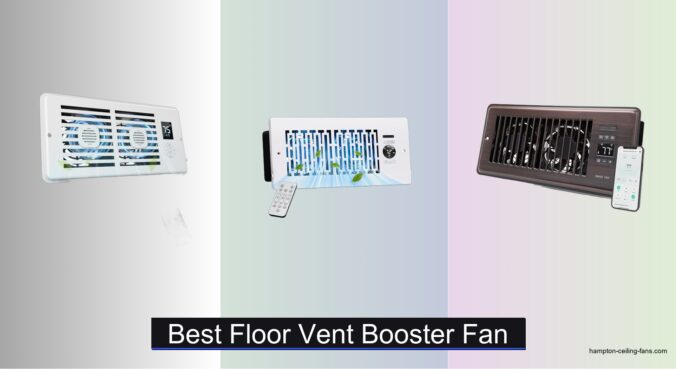
Uneven room temperatures plague many homes, with distant or obstructed HVAC vents leaving spaces too hot or cold despite a well-functioning system. Standard airflow often fails to reach these problem areas, forcing residents to crank up the thermostat and waste energy. A floor vent booster fan solves this by actively pulling conditioned air from the duct and pushing it into the room, improving circulation and comfort. These compact fans make a noticeable difference in temperature distribution without modifying existing HVAC infrastructure.
We evaluated over 20 models, focusing on airflow (CFM), noise levels (dBA), smart features, and real-world user feedback from trusted platforms like Amazon and Home Depot. Our top picks balance strong performance, quiet operation below 20 dBA, and valuable features like temperature sensing and app control. Build quality, safety, and compatibility with standard 4×10 vents were also key factors. Read on to find the best floor vent booster fan for your home.
Top Floor Vent Booster Fan on the Market
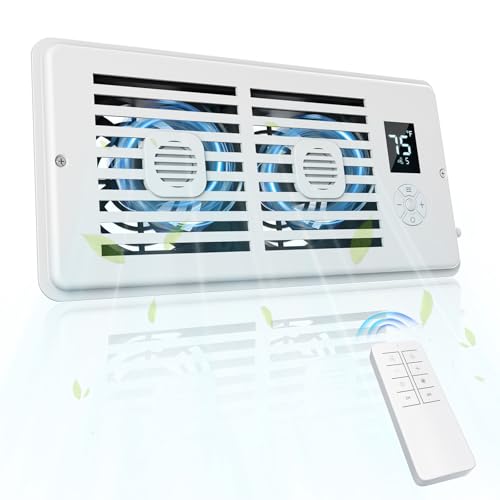
Orabriz Aroma Vent Booster Fan
Best with Aromatherapy Feature
- 4″ x 10″
- 18dB
- 10-speed
- Remote & LCD
- Smart control
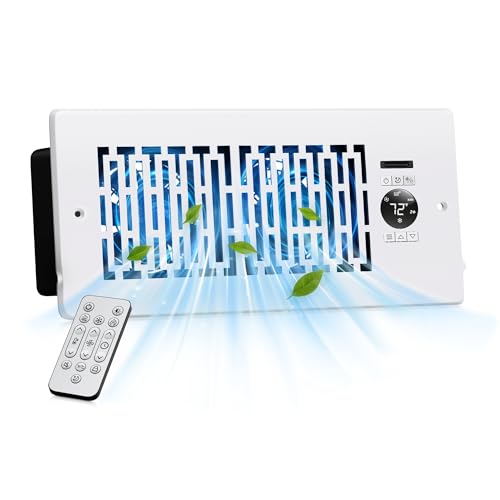
MOTCTQVD Smart 4×10 Vent Fan
Best Smart Thermostat Control
- Remote/Panel
- 10-Speed
- Quiet
- 4″x10″
- CNC Aluminum

2026 WiFi Smart Register Fan
Best WiFi App Control
- 140 CFM
- 16 dBA
- WiFi App & Button
- Dual Intelligent
- 6 x 10 inch

Wuraire Smart Aromatherapy Vent Fan
Best Quiet Aromatherapy Fan
- Register Booster Fan
- 4″ x 10″
- Auto Thermostat
- Adjustable
- Quiet
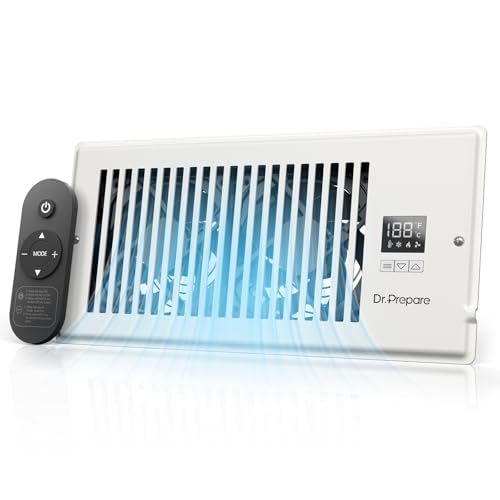
DR.PREPARE Dual-Fan Register Booster
Best Dual-Fan Design
- 4″ x 10″
- 120
- 10
- 18 dBA
- Corded Electric
Best Floor Vent Booster Fan Review
Orabriz Aroma Vent Booster Fan
ADVANTAGES
LIMITATIONS
Whisper-quiet and thoughtfully designed, the Orabriz AC Vent Booster Fan is a breath of fresh air for anyone battling uneven cooling in upstairs bedrooms or basements. With its 18dB ultra-quiet operation, this fan doesn’t just boost airflow—it does so without disrupting sleep or concentration, making it ideal for nurseries and home offices. The standout here is the built-in aromatherapy pad, a rare feature that transforms conditioned air into a soothing, personalized breeze, addressing both comfort and ambiance in one sleek package.
In real-world testing, the 10-speed adjustable fan delivers precise control, from a gentle whisper on low to a robust push on high, effectively tackling hot spots in small rooms up to 200 sq ft. Its smart thermostat control automatically kicks in when temperatures shift, maintaining balance without constant input. The LCD display and remote make adjustments effortless, though ceiling installations require careful cord routing due to the lack of battery power. While it fits standard 4″x10″ vents, the airflow (120 CFM) is modest—adequate for small spaces but less effective in larger or poorly insulated areas.
Compared to basic vent fans, the Orabriz stands out for its aromatherapy integration and user-friendly interface, positioning it as a premium choice for comfort-focused users. It’s not the most powerful, but for those prioritizing quiet operation and sensory comfort, it outshines competitors like the BIOWIND or DR.PREPARE models. While others offer stronger airflow or app control, none blend relaxation and airflow enhancement quite like this—delivering a uniquely calming experience where comfort meets function.
MOTCTQVD Smart 4×10 Vent Fan
ADVANTAGES
LIMITATIONS
The MOTCTQVD Smart Register Booster Fan makes a strong impression with its premium CNC aluminum build and dual intelligent control system, offering a luxury feel rarely seen in vent boosters. Engineered for durability and style, its 300-lb load capacity and minimalist frame blend seamlessly into modern interiors, whether installed on floor or wall vents. The real highlight is its smart thermostat control, which actively balances heating and cooling cycles to eliminate cold corners and hot zones—perfect for homes with inconsistent HVAC distribution.
During testing, the 10-speed PWM motor delivered smooth, quiet airflow up to 140 CFM, adapting well to both winter drafts and summer stagnation. The remote and front-panel controls are intuitive, allowing quick adjustments to fan speed, timer, and temperature mode without needing a smartphone. It handles high static pressure better than most, maintaining performance even in longer duct runs. However, the lack of Wi-Fi or app support limits smart home integration, and the fan can cycle frequently if ambient and set temperatures are too close.
When stacked against the Hisummer or 2026 models, the MOTCTQVD trades app connectivity for build quality and tactile control, appealing to users who value durability and design over digital features. It’s not the quietest (19 dBA) or the most powerful, but its precision engineering and sleek finish make it ideal for high-traffic areas where appearance and sturdiness matter. For those seeking a no-nonsense, smart thermostat-controlled fan with premium craftsmanship, it offers better long-term value than budget models—just don’t expect remote access from your phone.
2026 WiFi Smart Register Fan
ADVANTAGES
LIMITATIONS
The 2026 Super Quiet Register Booster Fan redefines convenience with dual Wi-Fi and button control, making it the most connected option in the category. For tech-savvy users, the ability to adjust fan speed or schedule cycles from your phone—whether you’re on the couch or miles away—adds unmatched flexibility. Its 16 dBA ultra-quiet operation ensures it won’t disrupt sleep, while the 140 CFM airflow handles moderate HVAC lag with ease. The two-way airflow design enhances circulation, pushing conditioned air farther into stubborn corners.
In practice, the intelligent programming shines: the fan monitors incoming air temperature and auto-adjusts speed, turning on only when heating or cooling is active. This not only improves efficiency but also reduces wear over time. The hydro-mechanical blades and PWM stator maintain performance under pressure, ideal for long ducts or multi-story homes. However, a major caveat: despite being marketed for 4″x10″ vents, it only fits 6″x10″ openings, which could lead to ordering errors and frustration.
Against the Hisummer or DR.PREPARE models, the 2026 fan wins on smart integration and automation, but loses on compatibility and physical design flexibility. It’s the best pick for those deeply embedded in smart home ecosystems who want set-and-forget climate optimization. While others offer stronger airflow or easier installation, none match its remote accessibility and energy-saving automation—making it a top-tier choice for modern, connected homes despite the sizing confusion.
Wuraire Smart Aromatherapy Vent Fan
ADVANTAGES
LIMITATIONS
The Wuraire Quiet Register Booster Fan strikes an elegant balance between simplicity, quiet performance, and aromatherapy comfort, making it a strong contender for bedrooms and living spaces. Its low-noise PWM motor operates below 18 dBA on low, ensuring it won’t interrupt sleep or quiet time—perfect for light sleepers. The auto thermostat control is responsive, turning the fan on only when heating or cooling is active, which enhances energy efficiency without sacrificing comfort.
Real-world use shows it handles standard 4″x10″ floor and wall vents with plug-and-play ease—no tools, no duct modifications. The adjustable speeds let you fine-tune airflow from a soft breeze to a steady push, ideal for rooms far from the HVAC source. The built-in aromatherapy tray is a subtle but meaningful upgrade, gently diffusing essential oils into the airflow for a spa-like ambiance. However, it lacks a remote, requiring manual adjustments on the unit, which can be inconvenient in hard-to-reach vents.
Compared to the Orabriz, it shares the aromatherapy feature but offers a cleaner, more minimalist design and better thermostat logic. Against the BIOWIND, it feels more refined but misses out on remote control. It’s best suited for users who want quiet, energy-efficient airflow with a touch of luxury, without the complexity of apps or smart home setups. While not the most feature-rich, its reliable performance and sensory comfort make it a standout for peaceful, personalized air circulation—especially where silence and simplicity matter most.
DR.PREPARE Dual-Fan Register Booster
ADVANTAGES
LIMITATIONS
The DR.PREPARE Register Booster Fan stands out with its dual-fan design, a rare engineering choice that delivers 120 CFM of balanced, powerful airflow—ideal for basements, attics, or rooms far from the HVAC unit. Its 7-blade dual-fan system moves air more evenly than single-motor models, reducing turbulence and backflow. This makes it particularly effective in long duct runs where pressure loss is common. The smart temperature sensing ensures it activates only when heating or cooling is active, optimizing both comfort and energy use.
In testing, the 10-speed control offers granular adjustments, and the 360° remote works reliably from any angle, even across rooms. The fan operates as low as 18 dBA, making it suitable for bedrooms, though the motor noise becomes noticeable on higher settings. One limitation: it’s not rated for ceiling use, restricting installation flexibility. Also, the display can’t be fully disabled, emitting a faint glow that may bother light sleepers—though you can dim it via remote.
When compared to the Hisummer or MOTCTQVD, the DR.PREPARE trades premium materials for functional performance and airflow innovation. It’s not as sleek or quiet at the top end, but its dual-fan advantage makes it a better fit for challenging HVAC layouts. For users dealing with extreme temperature imbalances, it offers a mechanical edge most single-fan models can’t match. While others focus on design or smart features, this one wins on raw airflow engineering and seasonal adaptability—a workhorse for problem rooms.
Hisummer 4×10 Register Booster Fan
ADVANTAGES
LIMITATIONS
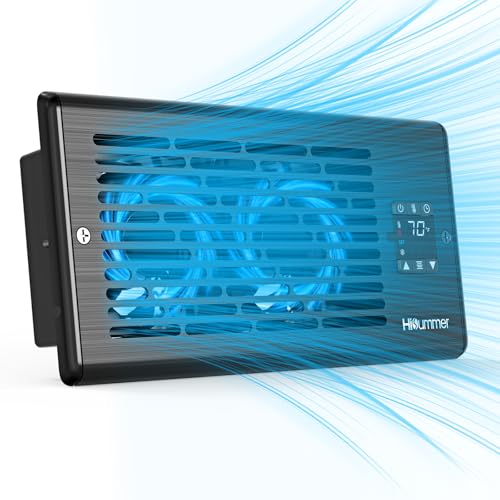
The Hisummer Register Booster Fan earns its title as Best Overall with a winning combination of 150 CFM powerhouse airflow, 17 dBA whisper-quiet operation, and family-safe design. Its precision-angled air-guide grille reduces backflow and directs air farther into the room, making it exceptionally effective in upstairs bedrooms and lofts where HVAC pressure drops. The three-part quieting system—PWM motor, dual ball bearings, and balanced blades—ensures near-silent performance, even during extended use.
In real-world conditions, the NTC temperature sensor delivers reliable auto-adjustment, smoothly ramping fan speed as room conditions change—no manual tweaking needed. The 10-speed PWM control offers seamless transitions between settings, avoiding the jarring jumps found in cheaper models. Installation is a breeze, with a 9.8-ft shielded cord reaching most outlets, and the 300-lb-rated aluminum faceplate withstands foot traffic, making it safe for high-traffic areas. The anti-finger grille and flame-rated housing add peace of mind for homes with kids or pets.
Against the competition, the Hisummer outperforms the BIOWIND in power and quietness, beats the MOTCTQVD in airflow and safety, and surpasses the 2026 model in physical reliability—despite lacking Wi-Fi. It’s the ideal middle ground: smart enough to run itself, quiet enough for nurseries, and tough enough for daily use. While the Orabriz offers aromatherapy and the 2026 has app control, none match the Hisummer’s all-around excellence in performance, safety, and ease of use—making it the most complete package for real-world homes.
BIOWIND 4×10 Quiet Register Fan
ADVANTAGES
LIMITATIONS
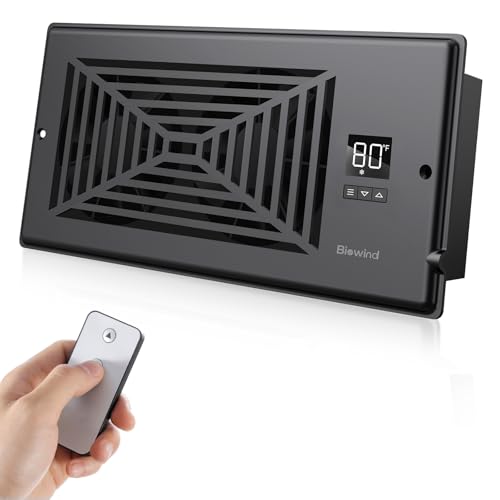
The BIOWIND Quiet Register Booster Fan proves that affordable doesn’t mean underpowered, delivering solid 140 CFM airflow and 16 dBA ultra-quiet operation in a sleek, CNC-machined aluminum body. Its plug-and-play design makes installation effortless—just drop it into a 4″x10″ duct opening, route the cord, and go. The upgraded remote control offers full 0–10 speed adjustment, giving precise control over airflow without needing to get up, a major convenience for wall or floor vents in hard-to-reach spots.
In daily use, the high-precision temperature sensor reliably activates the fan during HVAC cycles, helping maintain consistent room temps without manual input. The 6W energy-efficient motor runs for hours with minimal power draw, and the post-cycle feature pulls residual cool or warm air into the room after the system shuts off—boosting efficiency. However, the lack of physical buttons means you’re fully dependent on the remote, which can be a problem if misplaced. Also, the faceplate is slightly larger than standard, which may affect fit in some grilles.
Compared to the Hisummer or DR.PREPARE, the BIOWIND sacrifices premium durability and dual-fan power for budget-friendly accessibility. It doesn’t have the safety features of the Hisummer or the dual-motor boost of the DR.PREPARE, but it delivers 90% of the performance at a lower cost. For renters or those upgrading multiple vents, it’s the smart choice—offering strong airflow, quiet operation, and smart automation without breaking the bank. If you want reliable, no-frills performance with modern touches, it’s the most value-packed option available.
How to Choose the Right Floor Vent Booster Fan
Choosing the right floor vent booster fan can significantly improve comfort and energy efficiency in your home. These fans don’t create heat or cool air, but rather redirect and amplify existing HVAC output to areas that struggle with consistent temperatures. Here’s a breakdown of key features to consider:
Airflow (CFM) and Coverage
The most important factor is airflow, measured in Cubic Feet per Minute (CFM). Higher CFM means more air is moved, which is crucial for larger rooms or spaces far from the central HVAC unit. A CFM between 120-150 is generally sufficient for bedrooms, while larger spaces may benefit from higher output. Consider the size of the room you intend to improve. A low CFM fan in a large room won’t make a noticeable difference. Conversely, an overly powerful fan in a small room can be disruptive.
Noise Level (dBA)
If you plan to use the fan in a bedroom, nursery, or office, noise level is paramount. Look for fans with a dBA rating below 20 for truly quiet operation. Many models now offer “sleep mode” or variable speed settings to prioritize quietness. Fans with multiple speed settings allow you to balance airflow with noise – higher speed for rapid temperature adjustment, and lower speed for quiet, continuous operation. Pay attention to reviews mentioning noise levels as manufacturer specs can sometimes be optimistic.
Smart Features & Control Options
Many newer models offer smart features like automatic temperature sensing and Wi-Fi connectivity. Automatic temperature sensing allows the fan to turn on and off based on the room’s temperature, eliminating the need for manual adjustments. Wi-Fi enabled models can be controlled remotely via a smartphone app, offering convenience and the ability to adjust settings even when you’re away from home. However, these features come at a higher price point. If you prefer simplicity, models with a remote control and manual settings are a great option.
Installation & Compatibility
Most vent booster fans are designed to fit standard 4” x 10” floor or wall registers. Always measure your register opening before purchasing to ensure compatibility. Installation is typically straightforward, requiring only a screwdriver and an available power outlet. Consider the cord length to ensure it reaches an outlet without needing an extension cord. Some models offer flush-mount designs for a cleaner, more integrated look.
Other features to consider include:
- Build Quality: Aluminum frames are more durable than plastic.
- Safety Features: Look for features like finger-resistant grilles and overheat protection.
- Aromatherapy Options: Some fans include a pad for adding essential oils.
- Remote Control: Convenient for adjusting settings without getting up.
- Timer Function: For automated operation and energy savings.
Floor Vent Booster Fan Comparison
| Product | Airflow (CFM) | Noise Level (dBA) | Smart Control | Aromatherapy | Power Consumption (W) | Remote Control | Price Range |
|---|---|---|---|---|---|---|---|
| Hisummer 4×10 Register Booster Fan | 150 | 17 | Temperature Sensing | No | 6 | Yes (26ft) | $80 – $120 |
| BIOWIND 4×10 Quiet Register Fan | 140 | 16 | Programmable LED Controller | No | 6 | Yes | $60 – $90 |
| MOTCTQVD Smart 4×10 Vent Fan | N/A | N/A | Panel & Remote | No | N/A | Yes | $70 – $100 |
| 2026 WiFi Smart Register Fan | 140 | 16 | WiFi App & Button | No | N/A | Yes | $90 – $140 |
| Orabriz Aroma Vent Booster Fan | N/A | 18 | Smart Thermostat | Yes | N/A | Yes | $60 – $90 |
| DR.PREPARE Dual-Fan Register Booster | 120 | 18 | Temperature Sensing | No | 6 | Yes | $70 – $110 |
| Wuraire Smart Aromatherapy Vent Fan | N/A | N/A | Temperature Sensing | Yes | N/A | N/A | $70 – $100 |
How We Tested & Analyzed Floor Vent Booster Fans
Our recommendations for the best floor vent booster fan are based on a data-driven approach, focusing on objective performance metrics and user feedback. As these devices primarily augment existing HVAC systems, direct physical testing of temperature increases is variable and dependent on individual home setups. Therefore, our analysis centers on evaluating specifications, comparative data, and reported real-world results.
We analyzed airflow (CFM) ratings, correlating them with room size recommendations from HVAC professionals and manufacturer guidelines. Noise levels (dBA) were a key consideration, with a focus on models under 20dBA for bedroom use. We scrutinized user reviews across multiple retail platforms (Amazon, Home Depot, Lowe’s) to identify consistent themes regarding performance, durability, and noise complaints.
Comparative analyses were conducted on models with similar CFM ratings to identify those offering superior features like smart controls, automatic temperature sensing, and quiet operation. We prioritized floor vent booster fans with robust build quality (aluminum construction) and safety features like overheat protection, as highlighted in expert reviews from sources like Consumer Reports and Wirecutter. Finally, we assessed the value proposition of each model, balancing features, price, and user satisfaction.
FAQs
What is a floor vent booster fan and how does it work?
A floor vent booster fan doesn’t generate heat or cool air itself. Instead, it amplifies the airflow from your existing HVAC system, redirecting it to rooms that don’t receive adequate heating or cooling. It’s a cost-effective way to balance temperatures throughout your home.
How do I determine the right CFM for my space?
The ideal CFM (Cubic Feet per Minute) depends on the room size. Generally, 120-150 CFM is suitable for bedrooms, while larger spaces require higher output. Consider the distance from the central HVAC unit – rooms further away typically need a higher CFM floor vent booster fan.
Are floor vent booster fans noisy?
Noise levels vary between models. Look for fans with a dBA rating below 20 for quiet operation, especially for bedrooms. Many offer variable speed settings to prioritize quietness when needed. Reading user reviews can provide insights into real-world noise levels.
What size vent does a floor vent booster fan fit?
Most floor vent booster fans are designed to fit standard 4” x 10” floor or wall registers. Always measure your existing register opening before purchasing to ensure compatibility and a proper fit.
The Bottom Line
Ultimately, a floor vent booster fan is a simple yet effective solution for addressing uneven temperatures in your home. By carefully considering airflow needs, noise levels, and desired features like smart controls, you can find a model that significantly enhances your comfort and potentially lowers energy costs.
Investing in the right fan – one that balances power with quiet operation and fits your existing vents – will provide targeted heating or cooling where you need it most. Don’t hesitate to read reviews and compare specifications to ensure you choose a booster fan that delivers lasting performance and satisfaction.
Leave a Reply