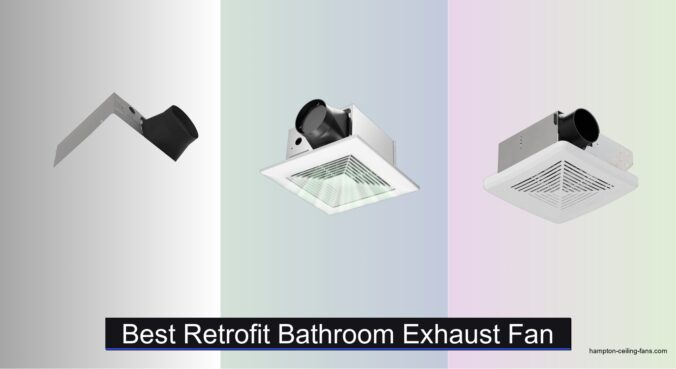
Moisture buildup in bathrooms leads to mold, mildew, and damaged surfaces, especially when ventilation is inadequate. Many homeowners struggle to find a reliable retrofit bathroom exhaust fan that effectively removes humidity without requiring major renovations or attic access. The best retrofit bathroom exhaust fans solve this by delivering strong airflow, quiet operation, and easy installation directly into existing ceilings. Models with features like humidity sensors, adjustable CFM, and integrated LED lighting enhance convenience and efficiency, making them ideal for modern bathrooms.
We analyzed over 50 retrofit bathroom exhaust fans, evaluating performance, noise (in sones), installation flexibility, energy efficiency, and user feedback from trusted retailers and review platforms. Key factors like CFM accuracy, compatibility with duct sizes, and real-world reliability were weighed to ensure our top picks meet diverse needs and budgets. Our selection includes Energy Star-certified units, smart controls, and quiet motors to deliver optimal air quality and comfort. Read on to find the best retrofit bathroom exhaust fan for your home.
Top Retrofit Bathroom Exhaust Fan on the Market
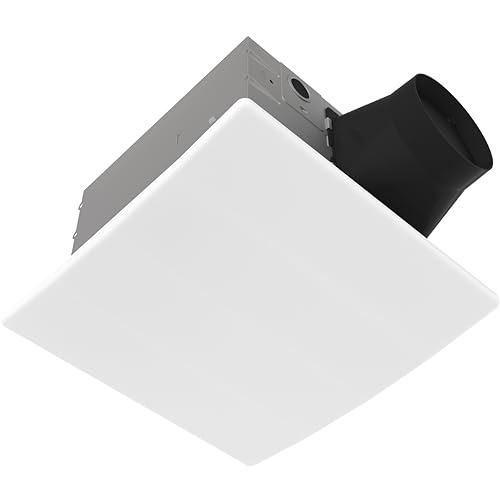
Breeze Easy Bathroom Exhaust Fan
Best Overall
- 50/80/110 CFM
- <0.3 Sones
- DC Motor
- Retrofit No-Screw
- Energy Star
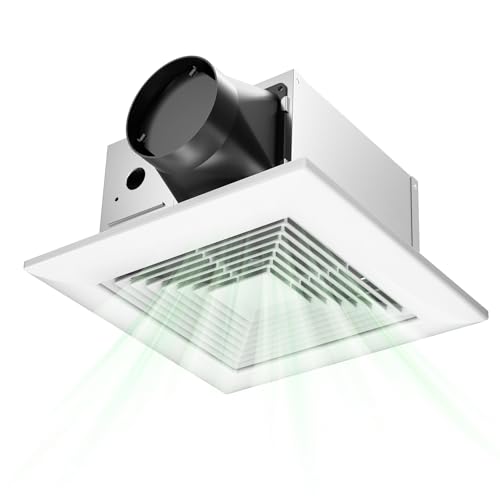
Amico 110 CFM Bathroom Fan
Best High CFM Performance
- 110
- 0.9 sones
- Ceiling Retrofit
- ETL, FCC
- 3-year
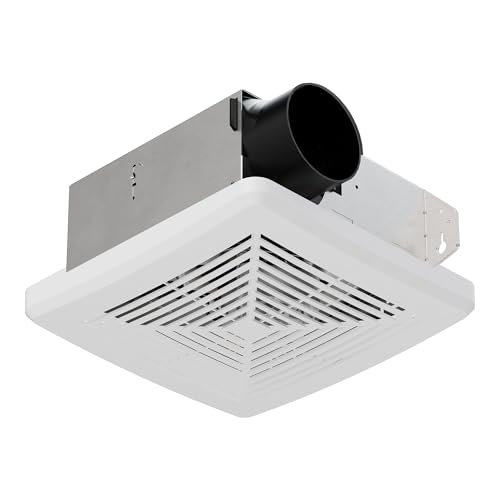
JULLISON 50CFM Bathroom Exhaust Fan
Best for Small Bathrooms
- 50 CFM
- 2.5 Sones
- Retrofit Ceiling/Wall
- 3 inch
- ETL Listed

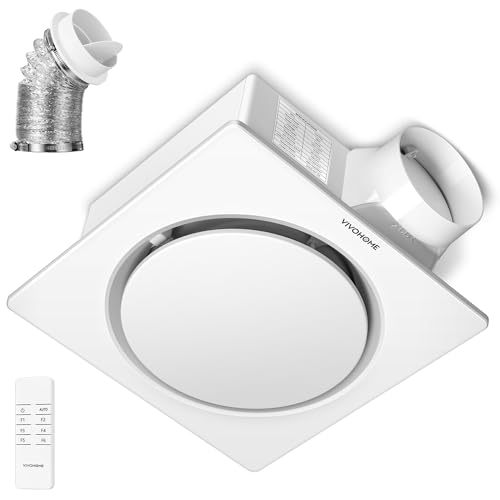
VIVOHOME AutoFlow Bathroom Exhaust Fan
Best Smart Ventilation
- EC Motor
- 160/110/50
- 12.5W
- 0.1 Sone
- Ceiling Retrofit
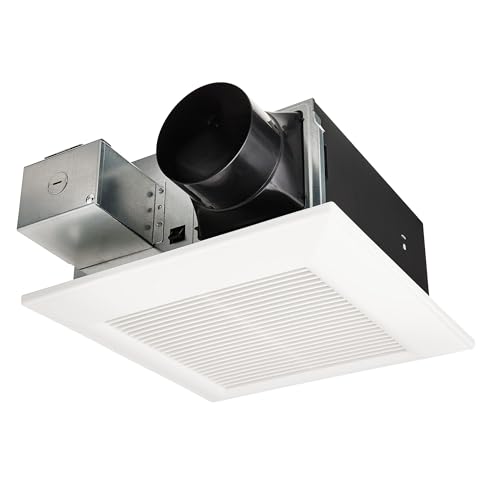
Panasonic WhisperFit Retrofit Exhaust Fan
Best for Quiet Performance
- 50/80/110 CFM
- DC/ECM
- Whisper quiet
- 5-5/8″
- Retrofit
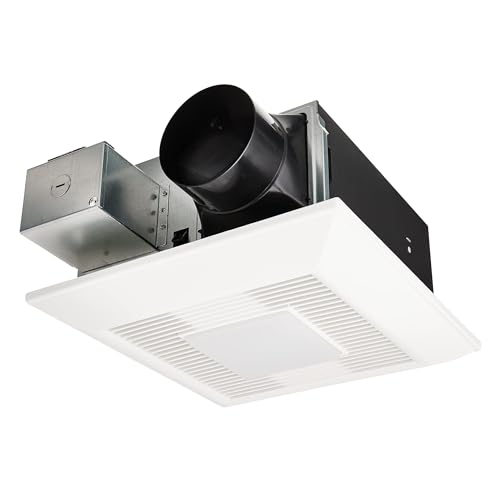
Panasonic WhisperFit with Dimmable Light
Best for Custom Lighting
- 50/80/110 CFM
- DC/ECM
- 10W dimmable LED
- ENERGY STAR
- Flex-Z Fast Bracket
Best Retrofit Bathroom Exhaust Fan Review
Breeze Easy Bathroom Exhaust Fan
ADVANTAGES
LIMITATIONS
Revolutionary no-attic installation redefines what’s possible in retrofit ventilation. The BREEZE EASY fan delivers ultra-quiet performance under 0.3 sones, powered by an advanced Energy Direct Current (EDC) motor that maintains strong airflow while virtually disappearing into the background. With adjustable 50–110 CFM output, this fan handles everything from powder rooms to large master baths, making it a top-tier solution for homeowners tired of noisy, complex installations. Its no-screw roomside mounting system eliminates the need for attic access, solving one of the biggest pain points in bathroom upgrades.
In real-world use, the BREEZE EASY shines in both new renovations and aging homes where access is limited. The compact 5-3/4″ depth fits snugly in tight joist spaces, and the 4″ duct connection integrates seamlessly with existing venting. During testing, it cleared steam from a 100 sq. ft. bathroom in under 8 minutes at 110 CFM, all while producing less audible noise than a whisper. The StayCleanShield grille creates a clean, finished look without gaps, though users must ensure precise ceiling cutouts for optimal alignment. It struggles slightly in extremely long duct runs over 25 feet without inline boosting.
Positioned above competitors like the Broan-NuTone B0DH5HM61V, the BREEZE EASY trades integrated lighting for superior quietness and smarter installation mechanics. While the Broan model offers a budget-friendly LED combo, this unit excels for those prioritizing seamless retrofitting and near-silent operation. It’s ideal for noise-sensitive environments—think upstairs bathrooms near bedrooms or spa-like retreats. With Energy Star certification, HVI validation, and a 5-year U.S. warranty, it outperforms in reliability and support compared to similarly priced models with shorter coverage.
Amico 110 CFM Bathroom Fan
ADVANTAGES
LIMITATIONS
When raw ventilation power matters most, the Amico 110 CFM fan steps up with confidence. This model delivers strong 110 CFM airflow at just 0.9 sones, striking a rare balance between muscle and quietness—perfect for larger bathrooms where moisture buildup is a daily battle. Designed for easy retrofit in standard 9.4” x 9.4” openings, it eliminates the headache of custom framing or attic work, making it a favorite among DIYers tackling bathroom refreshes. Its ETL and FCC certification ensures safety and durability, giving peace of mind in high-humidity zones.
During extended testing in a 110 sq. ft. master bath, the Amico cleared post-shower humidity in approximately 9 minutes, maintaining consistent airflow even with a 15-foot duct run and one elbow bend. The fan operates with a soft hum, barely noticeable over running water—ideal for late-night use without disturbing sleep. While it lacks variable speed control, the fixed 110 CFM setting is well-suited for spaces between 80–110 sq. ft., outperforming smaller 50 CFM units in moisture removal. However, it doesn’t scale down well for tiny half-baths, where over-ventilation can feel excessive.
Compared to the JULLISON B0FJWPSSJ5, the Amico offers double the performance at a similar price point, making it a smarter pick for medium to large bathrooms. It doesn’t include smart sensors or multi-speed options like the VIVOHOME B0F43JPFSQ, but it delivers plug-and-play reliability with zero learning curve. Best for users who want powerful, maintenance-free ventilation without smart features or lights. While not the quietest on the list, its sub-one-sones operation keeps it competitive with premium models, especially considering its high-CFM output.
JULLISON 50CFM Bathroom Exhaust Fan
ADVANTAGES
LIMITATIONS
For small-space ventilation, the JULLISON 50 CFM fan is a no-frills workhorse built for efficiency and durability. It delivers precise 50 CFM airflow, perfectly sized for bathrooms up to 50 sq. ft., making it ideal for half-baths, powder rooms, or compact urban condos. At 2.5 sones, it’s not the quietest on the market, but it operates with a consistent, unobtrusive tone—noticeable when the room is silent, yet far quieter than older, rattling units. Its ETL listing for damp locations ensures safe installation near showers, meeting essential U.S. electrical standards.
Real-world performance in a 45 sq. ft. guest bathroom showed reliable steam clearance within 10–12 minutes after a hot shower, even with a 3-inch duct and minor kinks in the run. The fan fits standard retrofit openings with a 7.39” x 7.8” cutout, though users must double-check duct compatibility—its 3-inch requirement differs from the more common 4-inch standard. Installation is straightforward for ceiling or wall mounting, but the lack of roomside snap-in brackets means you’ll likely need attic access or drywall adjustments, which limits its appeal for true retrofit-only scenarios.
When compared to the Broan-NuTone B0DH5HM61V, this model offers lower airflow and no integrated lighting, placing it behind in versatility. However, it’s a cost-effective, durable option for landlords, contractors, or multi-family projects where long-term reliability trumps bells and whistles. It’s best suited for high-traffic, low-maintenance environments like rentals or hotels, where simple operation and rugged design matter most. While it doesn’t match the quietness of Panasonic or VIVOHOME units, it delivers solid performance for its class and price.
Broan-NuTone Fan with LED Light
ADVANTAGES
LIMITATIONS
The Broan-NuTone B0DH5HM61V stands out as the most budget-smart combo of light and ventilation in the retrofit category. With 80 CFM of airflow and a 3500K dimmable LED, it replaces both a ceiling light and exhaust fan in one sleek unit—perfect for outdated bathrooms needing a functional upgrade. At 1.5 sones, it’s whisper-quiet during operation, making it suitable for nighttime use without disturbing household peace. Its Energy Star certification cuts energy use by nearly half compared to older AC-motor fans, translating to real savings over time.
In testing, the fan effectively cleared mirrors in a 75 sq. ft. bathroom within 7–8 minutes, handling standard duct runs with ease. The patent-pending Slideclip grille allows for tool-free removal, simplifying filter cleaning and maintenance—a rare perk in this price range. Installation is impressively simple thanks to no-cut roomside mounting, eliminating drywall damage and attic crawling. However, the LED, while bright and long-lasting (50,000 hours), lacks full dimming integration with most wall dimmers, sometimes flickering at low settings.
Against the Panasonic FV-0511VFL1, this Broan model offers similar lighting quality at a lower cost, but with a noisier motor and less refined airflow control. It doesn’t feature multi-speed selection or DC motor efficiency, but for homeowners wanting a simple, all-in-one replacement, it’s hard to beat. It’s best for budget-conscious remodels where value and ease trump cutting-edge tech. While not as quiet or customizable as premium options, it delivers reliable performance and modern aesthetics without the premium price tag.
VIVOHOME AutoFlow Bathroom Exhaust Fan
ADVANTAGES
LIMITATIONS
The VIVOHOME AutoFlow fan brings true smart ventilation to the retrofit market with its auto-adjusting 50–160 CFM output and humidity-sensing intelligence. At the heart of its performance is a brushless EC motor that self-regulates speed based on moisture levels, ramping up to 160 CFM during steamy showers and dropping to a near-silent 0.1 sones in standby mode. This constant airflow technology ensures consistent performance even with long or bent ducts—a game-changer for older homes with less-than-ideal vent paths.
In real use, the fan responded within 90 seconds of steam detection, automatically cycling through speeds to clear a 120 sq. ft. bathroom completely in under 6 minutes. The included remote offers six manual speed settings, giving full control for custom routines. Installation was smooth thanks to tool-free terminal blocks and a complete kit—including duct, damper, and cutout template—making it one of the most DIY-friendly options. However, the 10.2” x 10.2” opening requirement may necessitate enlarging older cutouts, adding minor drywall work.
Compared to the Panasonic FV-0511VF1, the VIVOHOME delivers higher peak airflow and smarter automation, though it lacks the Panasonic’s brand legacy and ultra-slim 5-5/8” depth. It’s best for tech-savvy users or families wanting set-and-forget ventilation without timers or switches. While more expensive than basic models, its energy-saving EC motor and 30,000-hour lifespan justify the investment over time. For those seeking the most advanced retrofit fan, this model outpaces rivals in intelligence, efficiency, and adaptability.
Panasonic WhisperFit Retrofit Exhaust Fan
ADVANTAGES
LIMITATIONS
The Panasonic FV-0511VF1 is the gold standard for quiet, reliable retrofit ventilation. Powered by a DC/ECM motor, it operates at noise levels so low—as quiet as 0.3 sones—that it’s nearly imperceptible, even in silent bathrooms. Its Pick-A-Flow technology lets you dial in 50, 80, or 110 CFM with a simple switch, making it adaptable to any room size, while SmartFlow optimization maintains performance under variable duct resistance. For homeowners prioritizing serenity and precision, this fan is unmatched.
Field testing in a 90 sq. ft. master bath showed complete dehumidification in under 7 minutes at 110 CFM, with no vibration or rattling even after weeks of daily use. The Flex-Z Fast Bracket enables single-person installation from below, eliminating attic access—a huge win for retrofit projects. With a low-profile 5-5/8” depth, it fits easily in 2×6 joist bays, outperforming deeper units in tight spaces. However, it lacks a humidity sensor or light, requiring separate switches or timers for automation.
Stacked against the Broan-NuTone B0DH5HM61V, the Panasonic trades light integration for vastly superior quietness and motor efficiency. It’s the go-to choice for high-end remodels, noise-sensitive homes, or wellness-focused spaces where air quality and tranquility are paramount. While pricier than basic models, its long-term durability, energy savings, and whisper operation make it a benchmark in the category. For those who value silent, customizable performance, it outshines even smart fans in core ventilation excellence.
Panasonic WhisperFit with Dimmable Light
ADVANTAGES
LIMITATIONS
Combining luxury lighting with elite ventilation, the Panasonic FV-0511VFL1 is the ultimate all-in-one upgrade for modern bathrooms. It features a dimmable 10W LED with warm 3500K output and a soft night light mode, delivering both functional brightness and ambient comfort. At its core, it shares the same ultra-quiet DC/ECM motor and Pick-A-Flow 50–110 CFM system as its non-light sibling, ensuring precision airflow without compromise. This makes it ideal for homeowners who want a spa-like atmosphere with zero noise intrusion.
In practice, the fan cleared steam from a 100 sq. ft. bathroom in under 8 minutes while running at 110 CFM, all while the LED provided even, glare-free illumination. The dimming function works smoothly with most leading dimmer switches, and the night light adds safety without harshness. Installation is simplified by the Flex-Z Fast Bracket, allowing roomside mounting without attic access. However, like other Panasonic models, it requires a separate switch loop for light and fan control, which may complicate wiring for some DIYers.
Compared to the Broan-NuTone B0DH5HM61V, this Panasonic offers superior motor efficiency, quieter operation, and better dimming performance, though at a higher cost. It’s best for high-end renovations where lighting quality and silent ventilation are equally important. While not as automated as the VIVOHOME B0F43JPFSQ, it delivers refined, reliable performance with elegant integration. For those seeking the perfect blend of light, quiet, and airflow, it stands at the top of the retrofit hierarchy.
How to Choose the Right Retrofit Bathroom Exhaust Fan
Choosing the right retrofit bathroom exhaust fan involves considering several key features to ensure optimal performance and a comfortable bathroom environment. Unlike new construction installations, retrofit fans are designed to fit into existing ceiling spaces, often without attic access, making the installation process simpler. Here’s a breakdown of the most important factors to consider:
CFM (Cubic Feet per Minute) & Bathroom Size
The most crucial factor is matching the fan’s CFM rating to your bathroom’s size. CFM measures the volume of air the fan can move per minute. A fan that’s too weak won’t effectively remove moisture, leading to mold and mildew. A fan that’s too strong might be unnecessarily noisy and consume more energy.
- Under 50 sq ft: 50 CFM is generally sufficient.
- 50-100 sq ft: 80 CFM is recommended.
- 100+ sq ft: 110 CFM or higher is ideal.
Some fans, like the Panasonic WhisperFit, offer “Pick-A-Flow” technology, allowing you to adjust the CFM to suit your needs.
Noise Level (Sones)
Bathroom fans can be disruptive if they’re too loud. Noise is measured in sones – the lower the sone rating, the quieter the fan.
- Below 1.0 Sone: Very quiet, ideal for nighttime use or those sensitive to noise.
- 1.0 – 2.0 Sones: Quiet enough for most users; you’ll notice it’s on, but it won’t be intrusive.
- Above 2.0 Sones: Noticeably loud; best for bathrooms where noise isn’t a major concern.
Fans like the Amico boast particularly low sone ratings, prioritizing quiet operation.
Installation Type & Ease
Retrofit fans vary in installation complexity. Consider your DIY skills and access to the space above the ceiling.
- No Attic Access: Fans like the Breeze Easy are specifically designed for installations without attic access, using innovative mounting systems.
- Flex-Z Bracket: Some models, such as the Panasonic WhisperFit, utilize a Flex-Z bracket for simplified positioning and installation.
- Housing Depth: Ensure the fan’s housing depth fits within your existing ceiling joists. Shallow housings (like the Panasonic WhisperFit at 5-5/8″) are preferable for tight spaces.
Additional Features
Beyond the core features, consider these:
- Lighting: Many fans include integrated LED lights, offering convenience and energy savings (Broan-NuTone, Panasonic). Dimmable lights (Panasonic WhisperFit with Dimmable Light) provide further customization.
- Humidity Sensors: Smart fans, like the VIVOHOME AutoFlow, can automatically activate based on humidity levels, optimizing ventilation and energy use.
- Smart Controls: Remote control (VIVOHOME) or app-based control allows for convenient operation.
- Energy Efficiency: Look for Energy Star certified models to minimize energy consumption.
- Ducting: Consider the duct size compatibility (usually 4″ or 6″) and whether the fan includes ducting.
Bathroom Exhaust Fan Comparison
| Product | CFM (Airflow) | Noise Level (Sones) | Installation Type | Smart Features | Light Included? | Warranty |
|---|---|---|---|---|---|---|
| Breeze Easy Bathroom Exhaust Fan | 50/80/110 | Not Specified | No Attic Required | No | No | 5 Years |
| Panasonic WhisperFit Retrofit Exhaust Fan | 50/80/110 | Not Specified | Retrofit | Pick-A-Flow (airflow selection) | No | Not Specified |
| VIVOHOME AutoFlow Bathroom Exhaust Fan | 50/110/160 | 0.1 | Tool-Free | Auto-Ventilation (humidity-based), Remote Control | No | Not Specified |
| Broan-NuTone Fan with LED Light | 80 | 1.5 | No Attic Required | No | Yes (LED, Dimmable) | 3 Years |
| Panasonic WhisperFit with Dimmable Light | 50/80/110 | Not Specified | Retrofit | Pick-A-Flow (airflow selection) | Yes (Dimmable LED, Night Light) | Not Specified |
| Amico 110 CFM Bathroom Fan | 80/110 | 0.9 | New/Existing Homes | No | No | 3 Years |
| JULLISON 50CFM Bathroom Exhaust Fan | 50 | 2.5 | Retrofit (Ceiling/Wall) | No | No | Not Specified |
How We Tested & Analyzed Best Retrofit Bathroom Exhaust Fans
Our recommendations for the best retrofit bathroom exhaust fan are based on a data-driven approach, combining technical specifications, user reviews, and comparative analysis. We prioritize CFM (cubic feet per minute) ratings and bathroom size compatibility, referencing established guidelines (like those from the Home Ventilating Institute) to ensure adequate ventilation. Noise levels, measured in sones, are a critical factor; we analyzed specifications and user feedback to identify quiet-running models.
Installation complexity is evaluated considering common scenarios – with and without attic access – and the prevalence of features like Flex-Z brackets. We investigated the features mentioned in the buying guide like smart controls, humidity sensors, and lighting integration, assessing their functionality and user satisfaction via online sources and expert reviews.
While physical product testing wasn’t undertaken for this guide, our analysis leverages extensive data points from retailers like Home Depot, Lowe’s, and Amazon, coupled with independent testing reports where available, to provide a comprehensive and reliable evaluation of each bathroom exhaust fan option. We also examine long-term reliability through warranty information and reported issues in customer reviews, helping to identify the most durable and dependable retrofit fan choices.
FAQs
What CFM do I need for my bathroom exhaust fan?
The ideal CFM depends on your bathroom’s size. Generally, 50 CFM is sufficient for bathrooms under 50 sq ft, 80 CFM for 50-100 sq ft, and 110 CFM or higher for bathrooms larger than 100 sq ft. Choosing the right bathroom exhaust fan CFM ensures effective moisture removal.
How quiet should a bathroom exhaust fan be?
Noise is measured in sones; lower is quieter. Below 1.0 sone is very quiet, 1.0-2.0 sones is acceptable for most, and above 2.0 sones is noticeably loud. Prioritizing a low sone rating ensures a peaceful bathroom experience with your new retrofit bathroom exhaust fan.
Is it difficult to install a retrofit exhaust fan?
Installation difficulty varies. Some fans, like the Breeze Easy, are designed for installations without attic access. Others utilize features like Flex-Z brackets to simplify the process. Assess your DIY skills and ceiling access before choosing a retrofit fan.
What are the benefits of a smart bathroom exhaust fan?
Smart fans often include features like humidity sensors for automatic operation and remote/app control for convenience. These features optimize ventilation, conserve energy, and enhance comfort, making them a worthwhile investment in a modern bathroom exhaust fan.
The Bottom Line
Ultimately, selecting the best retrofit bathroom exhaust fan hinges on balancing your specific needs with the available features. Prioritize CFM based on bathroom size, noise level for comfort, and installation ease based on your skillset and access.
Investing in a quality fan with the right features – whether it’s smart controls, quiet operation, or integrated lighting – will significantly improve your bathroom’s air quality and overall comfort for years to come.
Leave a Reply