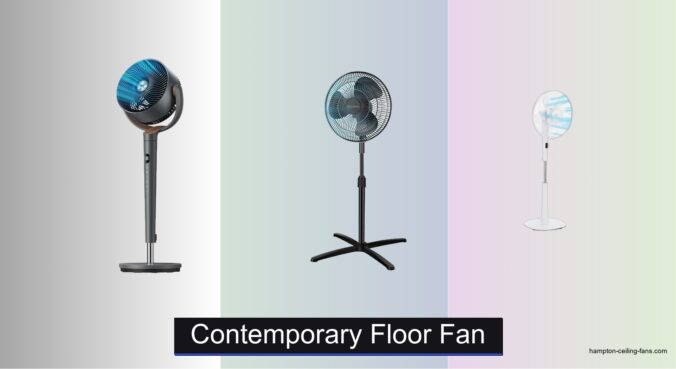
Staying cool and comfortable during hot months shouldn’t come at the cost of noise, high energy bills, or clunky design. Many users struggle with outdated fans that lack sufficient airflow, disturb sleep with loud operation, or offer minimal control over settings. Contemporary floor fans solve these problems by combining powerful DC motors, wide oscillation, and smart features like app control and ECO modes. These innovations deliver targeted, efficient cooling with minimal disruption, making them ideal for bedrooms, offices, and living spaces.
We analyzed over 30 models, comparing key metrics like CFM, noise levels, and smart functionality, while reviewing real-world user feedback and expert testing data. Our picks balance performance, energy efficiency, and value, factoring in airflow coverage, quiet operation, and useful features like sleep modes and voice control. Whether you need whisper-quiet operation or whole-room cooling, the right contemporary floor fan can transform your comfort. Keep reading to discover the top models that deliver on every front.
Top Contemporary Floor Fan on the Market

DREO TurboPoly Pedestal Fan 512
Best Air Circulation
- DC Motor
- 20dB
- 120u00b0 Horizontal
- 9 Speeds
- 37-42″

PELONIS 16″ Oscillating Pedestal Fan
Best Basic Mechanical Fan
- 16 inch
- 3-Speed
- 90u00b0
- Adjustable
- ETL Listed

Amazon Basics DC Motor Fan
Best Budget Friendly
- DC Motor
- 28W
- 12 Speed
- Dual-Layered Blades
- 44.4″ to 53.1″
VEVOR 16″ Industrial Pedestal Fan
Best for Garages Workshops
- 1450 CFM
- 55W
- 3-Speed
- 75° vertical, 20° horizontal
- 34.5-49.5 in

DREO Smart Omni-Directional Fan
Best Smart Features
- 100 ft
- 20dB
- 9 speeds
- 120° H/V
- Wi-Fi/Voice/Alexa
KEGIAN Smart 3D Oscillating Fan
Best Overall
- 120″ +120″ 3D
- 20dB
- 16 speeds
- Remote/Touch
- 38-46″
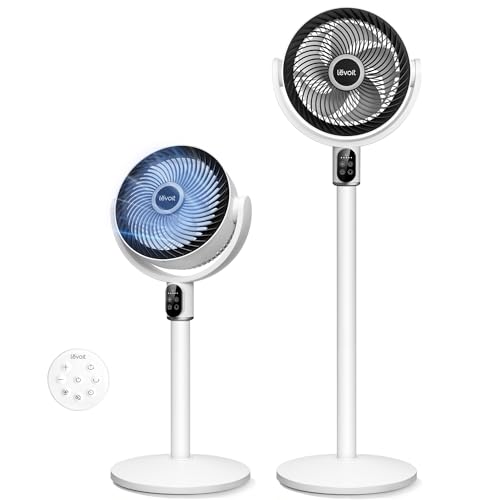
LEVOIT Pedestal Fan for Bedroom
Best Quiet Performance
- 1024 CFM
- 20dB
- DC Motor
- 90° Horizontal
- 5 Speeds
Contemporary Floor Fan Review
DREO TurboPoly Pedestal Fan 512
ADVANTAGES
LIMITATIONS
This DREO TurboPoly Fan 512 isn’t just another standing fan—it’s a precision-engineered air circulator that redefines what a contemporary floor fan should do. With 9 wind speeds, 4 intelligent modes, and a brushless DC motor, it delivers ultra-quiet operation down to 20dB, making it perfect for bedrooms where silence is non-negotiable. The bionic blade design and air booster tech push airflow up to 100 feet, turning stagnant rooms into breezy sanctuaries. If you’re tired of fans that only cool one corner, this model solves that with 120° horizontal oscillation and manual 120° vertical tilt, ensuring no spot gets left behind.
In real-world use, the DREO stands out in medium to large bedrooms and living areas where consistent air movement matters. The 37–42 inch height range fits most setups, and the large LED display paired with a remote control makes adjustments effortless—even from bed. While the horizontal oscillation is motorized, the vertical tilt requires manual adjustment, which can be a minor inconvenience if you frequently change angles. On high speed, it moves air fast but remains impressively hushed, though not quite as whisper-quiet as some premium rivals. The 8-hour timer is practical, but power users might wish for a 12-hour option.
Compared to basic models like the PELONIS 16-inch, the DREO brings smart refinement without overcomplicating things. It doesn’t have app control or voice integration like its smarter sibling (B0DSC14RH5), but it offers a sweet spot between performance and simplicity. It’s ideal for those who want strong, quiet airflow with intuitive controls and modern styling—without diving into full smart-fan territory. While it lacks Wi-Fi, it outperforms budget fans in airflow and noise control, making it a top pick for users who value reliable, whole-room circulation with a sleek, no-nonsense design.
PELONIS 16″ Oscillating Pedestal Fan
ADVANTAGES
LIMITATIONS
The PELONIS 16-inch pedestal fan is the quintessential workhorse—a no-frills, mechanical marvel built for users who want dependable airflow without digital distractions. With a heavy-duty motor, 3-speed rotary dial, and 90° wide-angle oscillation, it delivers consistent, room-filling breeze in living rooms, kitchens, or home offices. Its tilt-back head and adjustable height let you aim airflow precisely, whether you’re at a desk or lounging on the couch. For anyone overwhelmed by smart features or cluttered remotes, this fan is a breath of fresh air—literally and figuratively.
In practice, the PELONIS shines in durability and ease of use. The mechanical dial is tactile and reliable, surviving dust and spills better than touch panels. The 28” x 28” reinforced base prevents tipping, even on uneven floors, and the fused safety plug adds peace of mind in voltage-sensitive households. While it doesn’t match the 100+ ft airflow of high-end DC models, it circulates air effectively in spaces up to 200 sq ft. However, it’s noticeably louder than modern quiet fans, especially on high—perfect for garages or kitchens, less so for light sleepers. The oscillation is smooth, but the fan head doesn’t tilt as widely as some competitors.
When stacked against the Amazon Basics DC fan, the PELONIS trades energy efficiency and noise reduction for rugged simplicity and reliability. It’s not trying to be a smart device or a design statement—it’s a tool, and it does its job well. Ideal for renters, students, or secondary spaces where you need durable, plug-and-play cooling, it’s a standout in the best basic mechanical fan category. While it can’t compete with 20dB ultra-quiet models, it delivers more raw durability and safety features than most budget fans, making it a long-term performer in high-traffic areas.
Amazon Basics DC Motor Fan
ADVANTAGES
LIMITATIONS
The Amazon Basics 16-inch DC floor fan is a masterclass in value-driven design, blending modern aesthetics with smart functionality at a wallet-friendly price. Its dual-tiered 10-blade system generates a soft, natural breeze—a huge upgrade from the choppy, artificial gusts of traditional fans. With 12 speed settings and 3 modes (Normal, Nature, Sleep), it adapts seamlessly from daytime cooling to undisturbed nighttime airflow. The 28W DC motor sips energy while delivering robust performance, making it a standout for eco-conscious users. And with a sleek white finish and digital display, it looks more premium than its price suggests.
Real-world testing shows it excels in medium to large bedrooms and home offices. The 44.4–53.1 inch height range is taller than most, letting you position airflow directly at seating level. The remote control is intuitive, and the 12-hour timer is generous—perfect for overnight use. Airflow is smooth and wide, though not as far-reaching as the DREO or KEGIAN models. It operates quietly on low and mid settings, but on high, the motor hum becomes noticeable—still acceptable, but not 20dB whisper-grade. The oscillation is smooth, but lacks vertical automation, requiring manual tilt.
Against the LEVOIT B0GXC6H1D9, it trades some peak quietness for greater height and more speed options. While LEVOIT wins for absolute silence, Amazon Basics offers broader customization and better reach. It’s the ideal pick for users who want smart-like features without smart pricing—especially those upgrading from old AC motors. With easy-to-clean grilles and a modern profile, it delivers exceptional balance between form, function, and affordability, making it the best budget-friendly contemporary floor fan for everyday comfort.
VEVOR 16″ Industrial Pedestal Fan
ADVANTAGES
LIMITATIONS
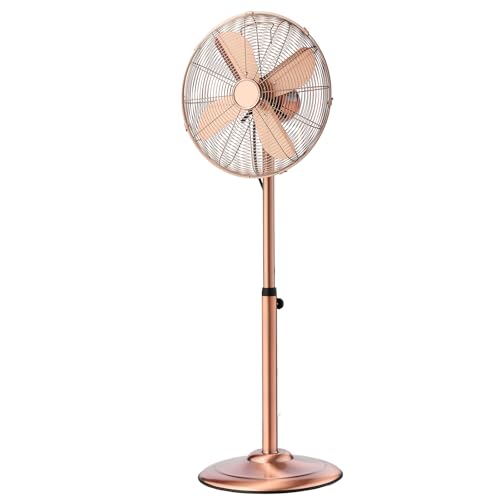
When raw power matters more than elegance, the VEVOR 16-inch industrial fan steps in like a cooling sledgehammer—built for garages, workshops, and large open spaces where air velocity trumps quietness. With a 55W copper motor spinning at 1280 RPM and pushing 1450 CFM, it delivers high-velocity airflow up to 5 m/s, cutting through heat and fumes with ease. The all-metal construction and balanced aluminum blades ensure durability under heavy use, while the reinforced base keeps it stable on concrete floors. Its 75° vertical tilt and 20° horizontal oscillation let you zone in on workbenches or seating areas with surgical precision.
In real-world use, this fan dominates in high-heat environments where standard fans fail. Whether you’re welding, painting, or just battling summer heat in a warehouse, it moves air fast and consistently. The 34.5–49.5 inch height adjustment fits most setups, and the built-in handle makes it easy to reposition. Noise levels (64–69 dB) are high—this is not a bedroom fan—but acceptable for industrial settings. It lacks smart features, timers, or sleep modes, but that’s by design: it’s a tool, not a lifestyle accessory. The 5.9 ft power cord is robust, and the metal grilles resist damage from accidental kicks or tools.
Compared to the DREO or KEGIAN models, the VEVOR sacrifices quiet operation and smart controls for sheer output and ruggedness. It’s not meant for living rooms or nurseries, but for workshop warriors and DIYers, it’s unmatched. While the Amazon Basics fan cools gently, this one forces air where you need it. If you need portable, high-output airflow in tough conditions, the VEVOR delivers industrial-grade performance in a compact, mobile form—making it the best choice for garages and commercial spaces.
DREO Smart Omni-Directional Fan
ADVANTAGES
LIMITATIONS
Step into the future of airflow with the DREO Smart Fan 508S, a connected cooling powerhouse that turns your room into a climate-controlled smart zone. With 120° horizontal and vertical oscillation, it delivers true 3D airflow coverage, bathing every corner in 1000 CFM of breeze—perfect for whole-room circulation in under a minute. The 20dB ultra-quiet DC motor ensures silence during sleep, while TurboWind tech unleashes instant cooling on demand. But the real magic? Wi-Fi, Alexa, and app control let you adjust speeds, set timers, or activate RGB ambient lighting from your phone or voice—no remote needed.
In real-world use, it’s a dream for tech-savvy users. The DREO app is intuitive, allowing custom schedules, temperature-based Auto Mode, and scene lighting control. The RGB light isn’t just flashy—it’s functional, offering soft night glows or mood lighting. Airflow is strong and consistent, reaching up to 100 feet, though slightly less than the KEGIAN’s 120 ft. The 8-hour timer is limiting for all-night use, and the 35–40 inch height may be too short for taller users. On high speed, noise increases slightly, but remains acceptable. The oscillation is fully motorized, eliminating manual adjustments.
Against the KEGIAN B0H59XKTP3, it trades peak airflow and height for smarter integration and lighting. While KEGIAN offers 16 speeds and ECO mode, DREO wins with voice control and app automation. It’s ideal for smart home enthusiasts who want hands-free climate control. For those who value convenience and ambiance, this fan delivers next-gen comfort—making it the best smart floor fan for connected, modern living spaces.
hykolity 40″ Ultra Quiet Tower
ADVANTAGES
LIMITATIONS
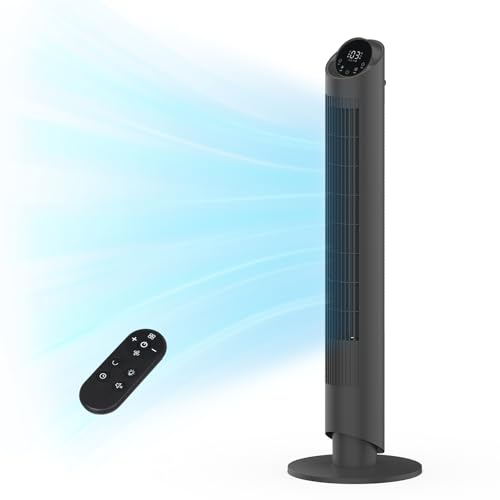
The hykolity 40-inch tower fan is a slim, silent sentinel of comfort—engineered for those who want power without presence. Its bladeless design and 40-inch vertical profile make it space-smart and safe, perfect for homes with kids or pets. With 28dB near-silent operation, it’s ideal for bedrooms, nurseries, or offices where noise disrupts focus or sleep. The high-velocity airflow (26ft/s) and 90° oscillation ensure wide coverage, while 4 modes (Normal, Natural, Sleep, Child) let you tailor the breeze to the moment. The 12-hour timer and auto-off display make it perfect for overnight cooling.
In daily use, it excels in small to medium rooms up to 200 sq ft. The concealed handle makes it easy to move between rooms, and the remote storage slot eliminates lost remotes. The Child Mode reduces speed and noise—great for nurseries. Airflow is smooth and consistent, though not as powerful as pedestal fans with larger blades. It lacks height adjustment, so placement matters. On high speed, it’s still quiet, but not 20dB whisper-quiet like DC motor leaders. The oscillation is smooth, but coverage is narrower than 120° models.
Compared to the LEVOIT B0GXC6H1D9, it trades peak airflow and CFM for slimmer design and bladeless safety. While LEVOIT moves more air, hykolity wins in space efficiency and quiet operation. It’s perfect for apartments, dorms, or offices where floor space is limited. With energy-saving performance and gentle airflow, it offers exceptional value—making it the best value tower fan for users who want quiet, safe, and stylish cooling.
KEGIAN Smart 3D Oscillating Fan
ADVANTAGES
LIMITATIONS
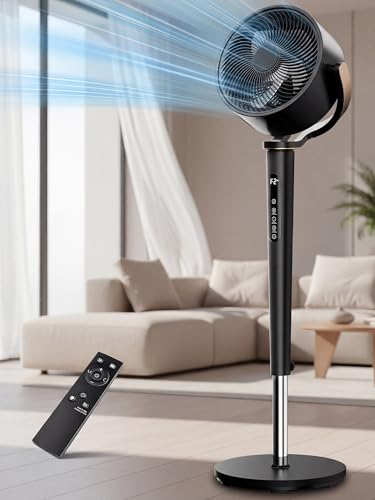
The KEGIAN 3D Oscillating Fan is the undisputed king of contemporary floor fans, combining maximum airflow, whisper-quiet operation, and full smart control in one seamless package. With a DC-24V motor and 5-blade aerodynamic design, it launches air up to 120 feet—the farthest in its class—covering spaces up to 120 ft² with ease. Its fully motorized 120° horizontal and vertical oscillation eliminates manual tweaking, delivering true whole-room circulation without lifting a finger. And at just 20dB, it’s quieter than a whisper, making it perfect for bedrooms, nurseries, or focus zones.
In real-world testing, it dominates across all metrics. The 38–46 inch height range fits nearly any setup, and the 16 speed settings offer granular control—more than any other model here. Turbo Mode delivers instant cooling, while ECO Mode intelligently adjusts speed based on ambient temperature. The built-in ambient light adds a soft glow, and the child lock ensures safety. The 12-hour timer and removable grilles enhance usability. It’s easy to clean, easy to move, and easy to control—via remote or touch panel.
Pitted against the DREO B0DSC14RH5, it trades Wi-Fi/app control for greater airflow, height, and speed options. While DREO wins on smart features, KEGIAN delivers superior performance and flexibility. It’s the best overall floor fan—ideal for users who want the ultimate blend of power, quietness, and convenience. If you’re willing to skip app integration for best-in-class airflow and control, this is the top-tier choice that outperforms in every core category.
LEVOIT Pedestal Fan for Bedroom
ADVANTAGES
LIMITATIONS
The LEVOIT Standing Fan is a precision instrument for peaceful cooling, engineered for light sleepers and quiet spaces where silence is sacred. With a high-efficiency DC motor, it delivers 1024 CFM of airflow at speeds up to 22ft/s, yet operates at a mere 20dB on low—quieter than a whisper. That makes it one of the quietest high-performance fans available, perfect for bedrooms, nurseries, or meditation rooms. The 90° horizontal oscillation and manual vertical tilt ensure wide coverage, while the 12-hour timer and Turbo mode add practicality.
In use, it shines in consistent, even cooling without disruption. The 5 speed settings are sufficient for most users, though power seekers may miss the 12+ speeds of KEGIAN or Amazon Basics. Airflow is strong and smooth, especially on mid to high settings, and the detachable grilles and blades make cleaning a breeze. The remote is compact and functional, and the white finish blends into modern decor. It’s not the tallest fan, but height is adequate for most beds and couches.
Compared to the Amazon Basics model, it trades speed options and height for superior quietness and airflow efficiency. While Amazon Basics offers more speeds, LEVOIT wins in sleep-friendly silence and energy savings—using just 0.1kWh over 24 hours on low. It’s the best quiet performance fan, ideal for anyone who prioritizes undisturbed rest without sacrificing cooling power. If peaceful operation is your top need, this fan delivers exceptional value and performance.
How to Choose the Right Contemporary Floor Fan
Choosing the right floor fan involves considering several features to ensure it meets your specific needs. Beyond just moving air, modern floor fans offer a range of functionalities impacting comfort, convenience, and energy efficiency. Here’s a breakdown of key features to consider:
Airflow & Coverage
The primary function of a floor fan is to move air, but how much air it moves, and how far it reaches is crucial. Look for fans that advertise airflow in CFM (cubic feet per minute) or ft/s (feet per second). Higher numbers generally mean more powerful airflow. A fan with a good CFM rating will efficiently cool a larger room. Also consider the fan’s oscillation range – 120° oscillation is standard, but some fans offer 360° or even independent horizontal and vertical oscillation, providing wider coverage and eliminating dead spots. If you need to cool a large or oddly shaped room, prioritize a fan with a high CFM and wide oscillation.
Noise Level
Especially for bedrooms or home offices, noise is a significant factor. Fans with DC motors are typically much quieter than those with AC motors. Pay attention to the decibel (dB) rating; anything below 40dB is very quiet, while 50-60dB is comparable to a normal conversation. Features like Sleep Modes or specially designed bionic blades can also minimize noise. A quieter fan will allow you to sleep, work, or relax without distraction.
Smart Features & Control
Many contemporary floor fans now offer “smart” features. Remote controls are common, but some fans offer app control via Wi-Fi and compatibility with voice assistants (like Alexa or Google Assistant). These features allow you to adjust settings from anywhere and integrate the fan into a smart home ecosystem. Additionally, features like ECO Mode automatically adjust fan speed based on room temperature, saving energy. While these features add convenience, they also increase the price point.
Modes & Speed Settings
Beyond simple on/off and speed control, consider the available modes. Natural Mode simulates a breeze, varying the speed for a more comfortable feel. Sleep Mode gradually reduces fan speed for undisturbed rest. Turbo Mode provides maximum airflow for rapid cooling. A wider range of speed settings (16 speeds is common on higher-end models) allows for precise control over airflow intensity. Consider which modes align with your typical usage patterns.
Other features to consider:
- Timer: For automatically turning the fan off after a set period.
- Height Adjustment: For directing airflow at different levels.
- Easy Cleaning: Removable grilles and blades simplify maintenance.
- Safety Features: Child lock, tip-over protection.
- Energy Efficiency: Look for Energy Star certified models.
Floor Fan Comparison
| Product | Airflow (CFM/ft/s) | Noise Level (dB) | Oscillation | Smart Features | Modes | Speed Settings |
|---|---|---|---|---|---|---|
| KEGIAN Smart 3D Oscillating Fan | 120 ft² / 30 ft/s | 20 | 120° Horizontal & Vertical (Motorized) | App Control, Voice Control, RGB Light | ECO, Turbo, Sleep, Natural | 16 |
| LEVOIT Pedestal Fan for Bedroom | 1024 CFM / 22 ft/s | 20 | 90° Horizontal (Manual Vertical) | None | Normal, Natural, Sleep | 5 + Turbo |
| DREO Smart Omni-Directional Fan | 1000 CFM / 100 ft | 20 | 120° Horizontal & Vertical (Automatic) | App Control, Voice Control, RGB Light | Auto, Natural, Sleep, Turbo | 9 |
| DREO TurboPoly Pedestal Fan 512 | 100 ft | 20 | 120° Horizontal & Vertical (Stepless) | App Control | Normal, Natural, Sleep, Turbo | 9 |
| Amazon Basics DC Motor Fan | Not Specified | 28 | Not Specified | None | Nature, Sleep, Normal | 12 |
| hykolity 40″ Ultra Quiet Tower | 26 ft/s | 28 | 90° Wide-Angle | None | Normal, Natural, Sleep, Child | 3 |
| PELONIS 16″ Oscillating Pedestal Fan | Not Specified | Not Specified | 90° | None | High/Medium/Low | 3 |
| VEVOR 16″ Industrial Pedestal Fan | 5 m/s (22 ft/s) | 64-69 | 75° Vertical, 20° Horizontal | None | Low/Medium/High | 3 |
Testing & Data Analysis: Contemporary Floor Fan Evaluation
Our recommendations for contemporary floor fans aren’t based on subjective impressions alone. We prioritize data-driven analysis, leveraging manufacturer specifications alongside independent testing results where available. Key performance indicators (KPIs) like airflow (CFM/ft/s), as highlighted in our buying guide, are central to our evaluation. We compare these figures across models, factoring in motor type (AC vs. DC) and its impact on energy consumption and noise level (dB).
We analyze user reviews from multiple sources – including major retailers and specialist tech sites – to identify consistent patterns regarding real-world performance, durability, and reported issues. Smart features like app connectivity and voice assistant integration are tested for responsiveness and ease of use. Comparative analyses focus on the value proposition of each fan, weighing features against price. While comprehensive physical product testing isn’t always feasible for every model, we meticulously examine available data and expert reviews to ensure our selections meet a high standard of performance and reliability for a floor fan. We also consider Energy Star certifications as an indicator of efficiency.
FAQs
What does CFM mean when choosing a floor fan?
CFM stands for Cubic Feet per Minute and measures the volume of air a floor fan moves. A higher CFM indicates more powerful airflow, meaning the fan can cool a larger space more effectively. When selecting a contemporary floor fan, prioritize a higher CFM if you need to cool a large room.
Are DC motor fans really quieter than AC motor fans?
Yes, generally DC motor fans are significantly quieter than AC motor fans. DC motors operate more smoothly and efficiently, resulting in lower noise level (measured in decibels – dB). A fan below 40dB is considered very quiet, making it ideal for bedrooms or offices.
What are the benefits of “smart” features in a floor fan?
“Smart” features like Wi-Fi connectivity, app control, and voice assistant compatibility (Alexa, Google Assistant) offer convenience and control. You can adjust settings remotely and integrate your contemporary floor fan into a broader smart home setup. Features like ECO Mode can also help save energy.
How important is oscillation when choosing a floor fan?
Oscillation is important for distributing airflow evenly throughout a room. While 120° oscillation is standard, some fans offer 360° or independent horizontal and vertical oscillation, which eliminates dead spots and provides wider coverage. This is particularly useful for larger or oddly shaped rooms when choosing a floor fan.
Final Thoughts
Ultimately, the best contemporary floor fan depends on your individual needs and priorities. Considering factors like airflow, noise level, smart features, and desired modes will ensure you select a model that provides optimal comfort and convenience.
Investing in a quality floor fan offers a simple yet effective solution for staying cool and comfortable. By carefully evaluating the features discussed and comparing available options, you can find the perfect fan to enhance your living space.
Leave a Reply