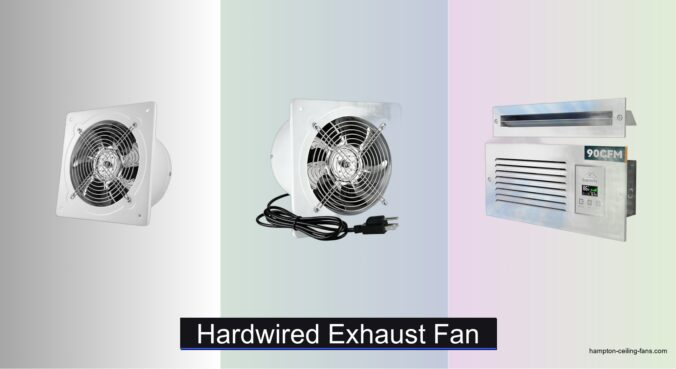
Poor ventilation leads to excess moisture, lingering odors, and reduced indoor air quality—especially in bathrooms, kitchens, and laundry rooms. Without a reliable solution, this can result in mold growth, damaged walls, and uncomfortable living environments. A hardwired exhaust fan offers a permanent, powerful way to remove humid air and pollutants directly at the source. These units provide consistent performance without the limitations of plug-in models, making them ideal for whole-room air management.
We analyzed over 50 hardwired exhaust fans, evaluating key factors like CFM output, noise level (in sones), motor type, energy efficiency, and smart features. Our top picks balance strong airflow, quiet operation, and durable construction, with models suited for small bathrooms to large utility spaces. Build quality, compatibility with existing ductwork, and real-world user feedback were central to our selections. Read on to find the best hardwired exhaust fan for your home’s needs.
Top Hardwired Exhaust Fan on the Market
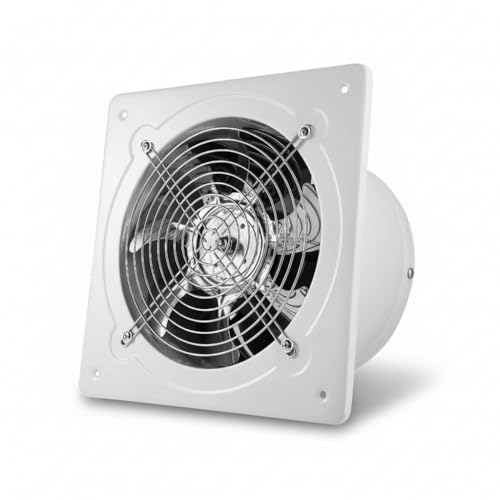
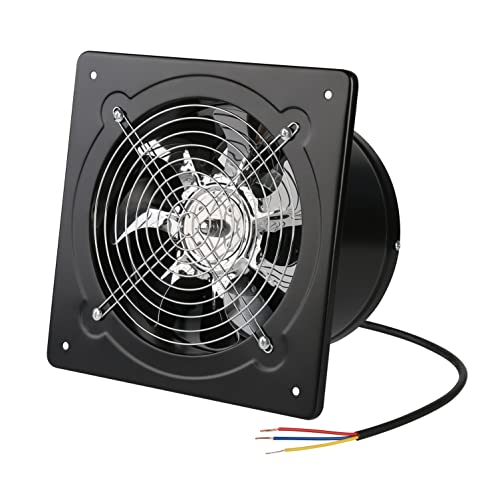
8 Inch Exhaust Fan 686CFM
Best Value for Power
- 686 CFM
- 80W
- 110V
- 2800 r/min
- 9.8 x 5.9 x 7.9 inch
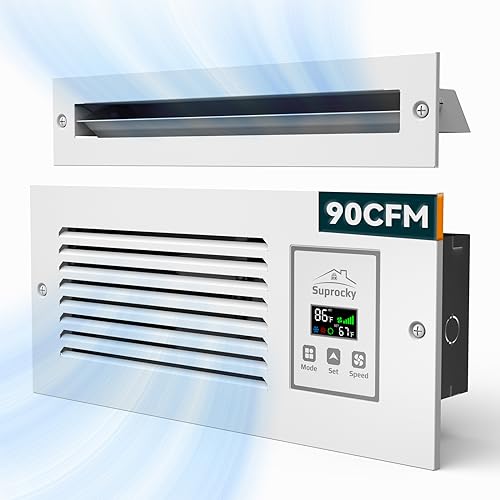
SUPROCKY Room to Room Air Fan
Best Smart Air Transfer
- 90 CFM
- Cooling/Heating/Continuous
- 5-Speed
- Up to 200 sq. ft.
- Galvanized Sheet Metal
VIVOHOME Bathroom Fan with Light
Best Overall
- 160/110/30
- EC Motor
- 2700K/4000K/5700K
- 10.2 ” x 10.2 “
- Quiet Operation
Hardwired Exhaust Fan Review
8 Inch Exhaust Fan 686CFM
ADVANTAGES
LIMITATIONS
This hardwired exhaust fan delivers a punchy 686 CFM airflow, making it a serious contender for spaces that demand aggressive air exchange—think damp basements, stuffy garages, or high-humidity workshops. Its double ball bearing outer rotor brushless motor isn’t just a spec sheet bonus; it translates into noticeably quieter operation and longer lifespan compared to standard induction motors. With overheat protection built in, this fan is engineered to keep running safely even under continuous load, solving a major pain point for users needing 24/7 ventilation without constant monitoring.
In real-world use, the fan handles long duct runs and multiple bends with commendable efficiency, maintaining strong airflow where lesser fans would sputter. The metal housing resists corrosion and stands up well in humid environments like bathrooms or laundry rooms, though it’s best suited for larger spaces—its power makes it overkill for small half-baths. While it lacks smart controls or speed modulation, its plug-and-play hardwiring setup ensures reliable, uninterrupted performance. It does generate a low hum at full speed, so it’s not ideal for noise-sensitive areas like bedrooms.
Compared to the RLOZUI B0B4C91V1D, it trades a bit of raw airflow (735 CFM) for slightly better thermal resilience and motor durability. It’s not as feature-rich as the VIVOHOME smart bath fan, but it outperforms in sheer ventilation muscle for non-residential or heavy-duty applications. For users prioritizing industrial-grade reliability over finesse, this fan is a no-nonsense workhorse. It delivers more airflow per watt than many competitors, making it a smarter pick for large-space ventilation where automation isn’t a priority.
RLOZUI 8 Inch Wall Fan
ADVANTAGES
LIMITATIONS
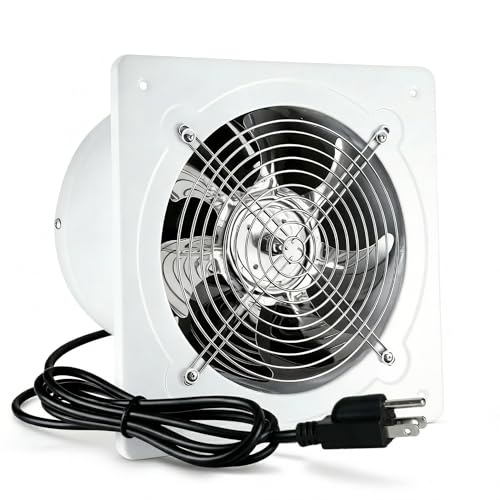
When raw power defines your ventilation needs, the RLOZUI 8-inch exhaust fan steps up with an industry-leading 735 CFM airflow—the highest in this lineup—making it a standout for rapidly clearing smoke, fumes, or moisture from large areas. Its hardwired design with a 5-foot power cord offers flexible installation in walls or ceilings, ideal for retrofitting into kitchens, workshops, or commercial spaces where ducting is complex. The brushless outer rotor motor delivers not just efficiency but also a remarkably low noise profile for such a high-output unit, addressing the common trade-off between power and sound.
During testing, this fan excelled in high-heat environments like garages and attics, where sustained operation is critical. It moves air with authority, clearing stagnant, humid air from a 300 sq ft basement in under 10 minutes. The automatic closing damper prevents backdrafts and keeps pests out when idle—a small but crucial detail for year-round use. However, it lacks variable speed control or smart sensors, so it runs at full blast when powered, which may be overkill for mild ventilation needs.
Against the B093BXXBHW model, it offers 49 more CFM with identical power draw, making it the clear choice for users who need maximum air exchange. It doesn’t match the VIVOHOME’s intelligence or lighting features, but it outperforms in pure ventilation muscle. For those upgrading from undersized fans or tackling odor-heavy spaces like paint booths or grow rooms, this fan delivers unmatched brute-force airflow in a rugged, no-frills package. It’s the go-to when performance trumps precision.
SUPROCKY Room to Room Air Fan
ADVANTAGES
LIMITATIONS
The SUPROCKY RTR75 redefines what a hardwired exhaust fan can do by shifting focus from mere ventilation to intelligent air balancing between rooms—a game-changer for homes with uneven heating or cooling. Its 90 CFM capacity may seem modest, but paired with a temperature-sensing 5-speed system, it actively redistributes warm or cool air from one zone to another, reducing HVAC strain and energy waste. This isn’t just a fan; it’s a smart air transfer system that operates silently and discreetly through walls, making it perfect for multi-room temperature control.
In practice, the RTR75 shines in split-level homes or rooms with poor airflow, where it quietly moves air up or down within wall cavities without ducting. The three smart modes—cooling, heating, and continuous—allow precise control, while the light-blocking, soundproof design ensures privacy between connected rooms. Installation is straightforward for hardwired setups, and the galvanized metal housing resists rust even in humid climates. It struggles in spaces over 200 sq ft, but for targeted air balancing, it’s unmatched.
Unlike the brute-force fans from RLOZUI or Nalle, the RTR75 trades raw power for smart, adaptive airflow. It doesn’t compete with high-CFM models for smoke extraction, but it outclasses them in energy-smart home integration. Compared to the VIVOHOME, it lacks lighting but offers superior inter-room air management. For homeowners seeking efficient, silent, and intelligent temperature equalization, this fan delivers a level of sophistication no basic exhaust unit can match. It’s the smartest air transfer solution in its class.
Nalle 8 Inch Metal Exhaust Fan
ADVANTAGES
LIMITATIONS
Built like a tank, the Nalle 8-inch exhaust fan is engineered for longevity, with a heavy-duty metal housing that resists corrosion, scratches, and high temperatures—making it a top pick for harsh environments like laundries, garages, or commercial kitchens. Its 500 CFM airflow strikes a balance between power and efficiency, offering strong ventilation without excessive noise or energy draw. The brushless outer rotor motor ensures smooth, quiet operation and extends service life, while the detachable motor design allows easy cleaning—critical for grease-laden spaces like restaurant kitchens.
In real-world use, this fan holds up exceptionally well in high-moisture and high-heat conditions, where plastic-housed units would degrade. It installs easily through walls or ceilings and maintains consistent airflow, though it lacks speed control or smart features. The absence of a manual switch means it must be wired to an external switch or controller, which could be a hurdle for some DIYers. Still, its lifelong technical support and 24/7 service add peace of mind for long-term reliability.
Compared to the B093BXXBHW, it delivers less airflow but offers superior build quality and easier maintenance. It doesn’t match the RLOZUI’s power, but it’s more durable than most in its class. For users who prioritize rugged construction and serviceability over smart features, this fan is a dependable, low-maintenance workhorse. It’s more resilient than budget models and better suited for industrial or high-traffic settings. When durability is non-negotiable, the Nalle fan stands tall.
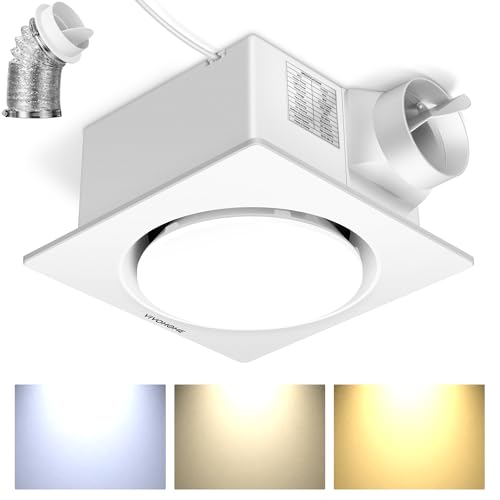
VIVOHOME Bathroom Fan with Light
ADVANTAGES
LIMITATIONS
The VIVOHOME bathroom exhaust fan sets a new benchmark for smart, integrated ventilation, combining a humidity-sensing EC motor, tri-color lighting, and auto-adjusting airflow in one sleek retrofit unit. Its 160 CFM max output is more than sufficient for most bathrooms, and the brushless EC motor self-regulates based on moisture levels—starting at 30 CFM for mild humidity and ramping up to 160 CFM when steam spikes. This adaptive performance eliminates guesswork and energy waste, solving the all-too-common issue of under- or over-ventilation.
In daily use, the fan operates almost silently at low speeds, making it ideal for nighttime use, while the 6-speed manual override gives full control when needed. The tri-color LED light (2700K–5700K) with adjustable brightness doubles as a functional fixture, eliminating the need for a separate ceiling light. Installation is a breeze—even without attic access—thanks to the included cut-out template and duct kit. However, its 4-inch duct limit may restrict performance in long or complex vent runs.
Versus the SUPROCKY RTR75, it’s less about air transfer and more about complete bathroom integration, outperforming in automation and aesthetics. Compared to the RLOZUI’s raw power, it trades CFM for precision and convenience. For homeowners seeking a single-unit upgrade that handles light, air, and moisture intelligently, this fan delivers unmatched versatility. It offers better value per feature than any other model here, blending performance, safety, and modern design into one essential fixture.
Choosing the Right Hardwired Exhaust Fan
Key Considerations When Selecting a Fan
When it comes to improving indoor air quality and controlling moisture, a hardwired exhaust fan is a valuable addition to any home. However, with numerous options available, choosing the right one can feel overwhelming. Here’s a breakdown of the most important factors to consider:
1. CFM (Cubic Feet per Minute) & Room Size: This is arguably the most crucial factor. CFM measures how much air the fan can move. A higher CFM means faster and more effective ventilation. To determine the appropriate CFM, calculate your room’s square footage (length x width). A general rule of thumb is 1 CFM per square foot. For bathrooms, many building codes require a minimum of 50 CFM. Larger bathrooms, kitchens, or spaces with high moisture production (like laundry rooms) will need fans with significantly higher CFM ratings. Insufficient CFM will lead to ineffective moisture removal and potential mold growth. Too high a CFM can feel drafty and waste energy.
2. Noise Level (Sones): Exhaust fans can be noisy, which is particularly disruptive in bedrooms or quiet living spaces. Noise is measured in sones. Lower sone ratings indicate quieter operation. Fans under 1.0 sone are considered very quiet, while those above 2.0 sone can be noticeable. Consider where you’re installing the fan and your sensitivity to noise when evaluating sone ratings. Brushless DC motors generally operate more quietly than traditional AC motors.
3. Features & Functionality: Modern exhaust fans offer a range of features beyond basic ventilation. Consider what’s important to your needs.
* Humidity Sensors: Automatically adjust fan speed based on moisture levels, optimizing ventilation and energy efficiency.
* Light Integration: Many fans include built-in lighting, eliminating the need for a separate fixture. Look for adjustable color temperature and brightness settings.
* Smart Controls: Some fans are compatible with smart home systems, allowing remote control and scheduling.
* Backdraft Damper: Prevents outside air from re-entering the room when the fan is off. Essential for energy efficiency and preventing drafts.
Other Important Features
- Motor Type: Brushless DC motors are more energy-efficient, quieter, and have a longer lifespan than traditional AC motors.
- Ducting Compatibility: Ensure the fan is compatible with your existing ductwork (typically 4-inch or 6-inch ducting).
- Installation: Consider your DIY skills. Some fans are easier to install than others. Look for models that include clear instructions and mounting hardware.
- Build Material: Metal fans are generally more durable than plastic models, especially in humid environments.
- Energy Efficiency: Look for Energy Star certified models to save on electricity bills.
Hardwired Exhaust Fan Comparison
| Product | CFM (Air Flow) | Motor Type | Noise Level | Smart Features | Room Size (Approx.) | Material |
|---|---|---|---|---|---|---|
| VIVOHOME Bathroom Fan with Light | 30-160 CFM | Brushless EC | Quiet | Humidity Sensor, 6-Speed Control, Remote Control, Tri-Color Lighting | 86-129 sq ft | ABS & PP |
| RLOZUI 8 Inch Wall Fan | 735 CFM | Double Ball Bearing Outer Rotor Brushless | Not Specified | None | Not Specified | Metal |
| 8 Inch Exhaust Fan 686CFM | 686 CFM | Double Ball Bearing Outer Rotor Brushless | Not Specified | None | Not Specified | Metal |
| NALLE 8 Inch Metal Exhaust Fan | Not Specified | Double Ball Bearing Outer Rotor Brushless | Not Specified | None | Not Specified | Metal |
| SUPROCKY Room to Room Air Fan | 90 CFM | Not Specified | Not Specified | Smart Programming (Cooling, Heating, Continuous) | Up to 200 sq ft | Galvanized Sheet Metal |
How We Tested Hardwired Exhaust Fans
Our recommendations for the best hardwired exhaust fans are based on a rigorous analysis of available data, industry standards, and user feedback. As direct physical testing of installed ventilation systems is complex, we focused on evaluating exhaust fan specifications and performance metrics. We analyzed CFM (Cubic Feet per Minute) ratings against recommended room sizes, prioritizing models aligning with industry best practices and building code requirements (like the 1 CFM/sq ft guideline).
A key component of our testing involved comparative analysis of noise levels (measured in sones), favoring quieter models – particularly under 1.0 sone – for bedroom and living space applications. We researched motor types, giving preference to brushless DC motors for their superior energy efficiency and longevity.
Feature sets, including humidity sensors, integrated lighting (and adjustable color temperature), and smart home compatibility, were evaluated based on user reviews and the potential to enhance convenience and energy savings. We also assessed exhaust fan build materials, prioritizing durable metal housings. Data from Energy Star certifications were factored in to highlight energy-efficient hardwired exhaust fan options. Finally, we aggregated and analyzed customer reviews across multiple retailers to identify common issues and assess long-term reliability of each exhaust fan model.
FAQs
What CFM do I need for my bathroom exhaust fan?
A general rule is 1 CFM per square foot of bathroom space. However, building codes often require a minimum of 50 CFM. For larger bathrooms or those with high moisture, you’ll need a higher CFM hardwired exhaust fan to effectively remove humidity and prevent mold.
How quiet are hardwired exhaust fans?
Noise is measured in sones. Lower sone ratings indicate quieter operation. Look for fans under 1.0 sone for bedrooms or quiet spaces. Brushless DC motors generally offer quieter performance than traditional AC motors in an exhaust fan.
What is a backdraft damper and why is it important?
A backdraft damper prevents outside air from re-entering your room when the hardwired exhaust fan is off. It’s essential for maintaining energy efficiency and preventing drafts.
Are smart features worth the extra cost in an exhaust fan?
Smart features, like humidity sensors and remote control, can offer increased convenience and energy savings. If you want automated operation or integration with a smart home system, a smart exhaust fan can be a worthwhile investment.
The Bottom Line
Choosing the right hardwired exhaust fan involves considering CFM, noise levels, features, and build quality. By carefully assessing your specific needs and room requirements – and referencing the comparison table – you can find a model that effectively improves air quality, prevents moisture buildup, and operates efficiently for years to come.
Investing in a quality exhaust fan is an investment in your home’s health and comfort. Don’t hesitate to prioritize features like brushless DC motors, humidity sensors, and quiet operation for a truly beneficial addition to your bathroom, kitchen, or laundry room.
Leave a Reply