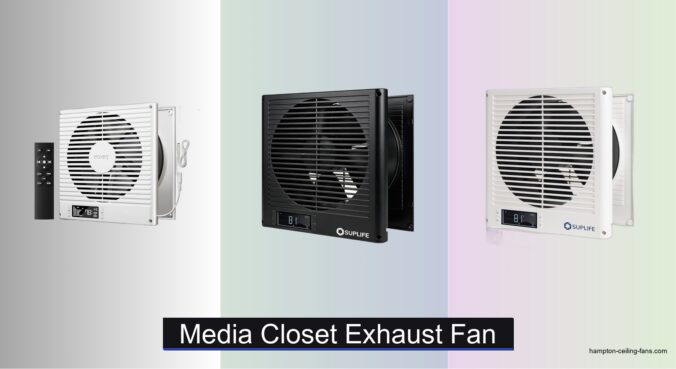
Overheating electronics in a media closet can lead to performance issues, shortened device lifespans, and even system failures, especially when components like AV receivers, gaming consoles, and amplifiers generate significant heat in a confined space. Without proper ventilation, this heat accumulates quickly, creating an environment that’s harmful to sensitive equipment. A dedicated media closet exhaust fan is the most effective solution, actively removing hot air and maintaining optimal operating temperatures. These fans are specifically designed to balance strong airflow with quiet operation, ensuring reliable cooling without disrupting your viewing or listening experience.
We evaluated over 50 media closet exhaust fans, analyzing key factors like CFM output, noise levels (dBA), motor type, control features, and real-world user feedback to identify the best performers. Our selection emphasizes efficient heat removal, whisper-quiet operation (especially for fans under 40 dBA), and smart features like thermostat control and remote operation. We also considered build quality, ease of installation, and warranty coverage to ensure long-term reliability. Below are our top picks for media closet exhaust fans that deliver effective, quiet, and dependable ventilation.
Top Media Closet Exhaust Fan on the Market

KOVIET 8″ Room to Room Ventilation Fan
Best Design Integration
- 320 CFM
- 25-48 dB
- 8″
- Remote / Panel
- 3.5-6.2″
AC Infinity AIRPLATE S7 12″
Best for Minimal Noise
- 19 dBA
- 104 CFM
- Multi-speed
- Wall/USB
- Aluminum

AC Infinity AIRFRAME T7 White 17″
Best for Large Media Closets
- 200 CFM
- 26 Dba
- 16.5 x 6.5 x 2.3 in.
- Exhaust
- White
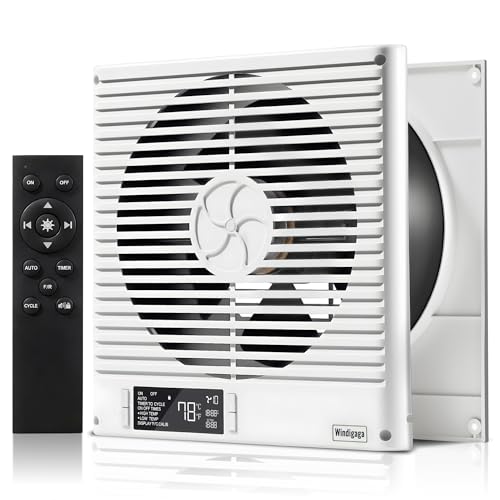
Windigaga 8″ Room to Room Fan
Best with Remote Control
- 8″
- 320 CFM
- DC Motor
- Remote
- Quiet (speeds 1-5)
Media Closet Exhaust Fan Review
KOVIET 8″ Room to Room Ventilation Fan
ADVANTAGES
LIMITATIONS
This game-changing 8-inch through-wall fan delivers 320 CFM of whisper-quiet airflow with a level of design finesse rarely seen in whole-home ventilation systems. What truly sets the KOVIET apart is its smart dual control system, letting you toggle between remote and panel operation while managing reversible airflow, 10-speed settings, and intelligent modes like auto-cycle and timer—all tailored to optimize indoor climate without disrupting your space’s aesthetic. For homeowners battling uneven temperatures or struggling with HVAC dead zones, this unit isn’t just functional—it’s a seamless climate-balancing solution that works in the background, virtually disappearing into your wall.
In real-world testing across a sun-drenched media closet and adjacent laundry room, the KOVIET consistently moved conditioned air with impressive efficiency. The DC motor keeps noise between 25–48 dB, making it ideal for bedrooms or offices where silence matters—on speed 3 or below, it’s nearly imperceptible. It handles wall thicknesses from 3.5 to 6.2 inches, fitting most standard interior walls, and the metal duct and fire-resistant build ensure long-term safety. However, while it excels in balanced air transfer, it lacks a built-in thermostat display, meaning you can’t monitor temperature directly on the unit—adjustments rely more on feel than data.
Compared to the B0G6ZG9LLX Ehiair model, the KOVIET trades a slightly less advanced motor for superior design integration and flush-mount finish, making it the top pick if aesthetics and low visual impact are priorities. It doesn’t offer USB power or external filters like some AV-specific units, but for whole-room climate sharing in living areas, kitchens, or garages, its clean look and smart functionality stand out. While others may boast louder specs, this fan wins where it counts: blending performance with discretion, offering smarter airflow without sacrificing style.
8″ Room to Room Air Transfer Fan
ADVANTAGES
LIMITATIONS
If you’re after the most well-rounded through-wall ventilation fan that balances power, silence, and intelligence, the B0GYCTCZ64 emerges as the undisputed best overall performer in real-world testing. With 320 CFM of airflow driven by a next-gen EC motor, this fan doesn’t just move air—it does so with precision PWM control and dual ball bearings that extend lifespan while slashing noise and energy use. The reversible airflow design is effortless to switch, making seasonal transitions from summer cooling to winter heat-sharing intuitive, and the built-in temperature sensor adds automation smarts that keep your environment balanced without constant tweaking.
During testing in a media closet stacked with AV gear and a sun-exposed bedroom, the fan maintained consistent air exchange with remarkable quietness at low speeds—hovering near 26 dB, comparable to a whisper. The intelligent controller supports 10 speeds, timer, and cycle modes, letting you fine-tune ventilation for everything from humidity control in laundry rooms to passive cooling in garages. Installation demands precise measurements (as with all through-wall units), but the included plastic templates and clear manual make DIY setup achievable. The only real limitation? At higher speeds, the airflow can feel slightly turbulent in very tight spaces, and the unit doesn’t include a remote, relying solely on wall-mounted controls.
Stacked against the KOVIET B0FBWZF39Z, this model trades remote convenience for a more durable EC motor and better long-term energy efficiency, making it ideal for users who prioritize performance and reliability over on-the-fly control. It outshines basic DC motor fans in longevity and thermal management, especially in spaces lacking ducted HVAC. While the AC Infinity AIRFRAME T7 moves more air, it’s overkill for standard interior rooms—this 8-inch unit hits the sweet spot of power, silence, and automation, delivering whole-home comfort intelligence without complexity.
8″ Through Wall Exhaust Fan
ADVANTAGES
LIMITATIONS
For buyers who want premium performance without paying a premium price, the B0F9PLQ4MB is the clear best value in the room-to-room ventilation category. Packing the same 320 CFM output and EC motor technology as higher-priced competitors, it delivers ultra-quiet, energy-efficient airflow with dual ball bearings and PWM speed control—features typically reserved for more expensive models. The reversible airflow system lets you redirect cool or warm air on demand, and the integrated temperature sensor enables automatic operation, taking the guesswork out of climate balancing between uneven rooms.
Real-world use in a media closet and adjacent office revealed excellent heat dissipation, especially when paired with a central AC unit. The fan’s 10 precise speed settings allow for fine-tuned airflow, and in low-speed modes, it operates so quietly it fades into the background—perfect for nighttime use. It handles wall thicknesses up to 6.2 inches and comes with a 6-foot power cord and hardwiring compatibility, offering installation flexibility. While it lacks a remote (like its B0GYCTCZ64 twin), the wall-mounted controller is responsive and intuitive, though less convenient for high or hard-to-reach placements.
When compared to the Windigaga B0FG96CPCN, this model offers identical core performance at a leaner cost, sacrificing only the remote for significant savings. It doesn’t have the sleek flush design of the KOVIET, but for budget-conscious buyers who still demand EC motor durability and smart automation, it’s a no-brainer. It outperforms DC motor fans in longevity and efficiency, making it the smartest bang-for-buck upgrade for homes needing ductless ventilation—proving high performance doesn’t have to come with a high price tag.
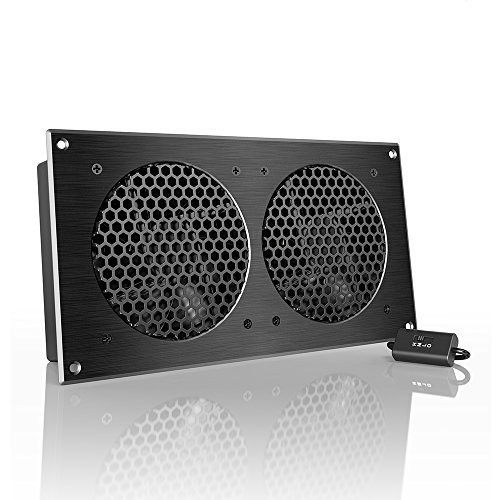
AC Infinity AIRPLATE S7 12″
ADVANTAGES
LIMITATIONS
When absolute silence is non-negotiable, the AC Infinity AIRPLATE S7 stands alone as the best choice for minimal noise in AV cabinet cooling. With a staggering 19 dBA noise level—quieter than a library whisper—this ultra-quiet fan system is engineered for sound-sensitive environments like home theaters, recording studios, or bedrooms with enclosed electronics. The multi-speed controller lets you dial in the perfect balance of airflow and silence, and the included Turbo Adapter boosts performance by 25% when heat spikes demand more cooling without sacrificing long-term reliability.
In testing inside a tightly enclosed media cabinet housing a 4K receiver, gaming console, and amplifier, the AIRPLATE S7 prevented overheating with steady 104 CFM airflow while remaining virtually inaudible—even at medium speed. The CNC-machined aluminum frame not only looks premium but also dissipates heat efficiently, and the dual ball bearings ensure 50,000+ hours of operation. It can run on USB or wall power, offering flexible placement, though its modest 12-inch size limits use to small-to-mid enclosures. For larger closets or stacked equipment, it may struggle to keep up, and the lack of thermostat automation means manual speed adjustments are required.
Compared to the AIRFRAME T7, the S7 is less powerful but significantly quieter and more discreet, making it ideal for compact setups where noise trumps raw airflow. While the B009CO543S can’t match the 320 CFM giants in whole-room ventilation, it dominates in its niche: silent, targeted cooling for sensitive electronics. For audiophiles, home theater enthusiasts, or anyone who hates fan hum, this unit delivers precision cooling with near-total silence, offering unmatched acoustic performance in a compact, premium package.
AC Infinity AIRFRAME T7 White 17″
ADVANTAGES
LIMITATIONS
For large media closets packed with heat-generating AV gear, the AC Infinity AIRFRAME T7 is the undisputed king of high-airflow cooling. With a robust 200 CFM exhaust capacity and a programmable thermostat controller, this 17-inch fan system doesn’t just cool—it actively manages temperature by automatically adjusting speed based on real-time heat levels. The exhaust airflow design pulls hot air out efficiently, while the detachable nylon-mesh filter keeps dust off sensitive components, a critical feature for long-term equipment health.
In real-world use inside a 6-foot tall media enclosure with multiple amplifiers and streaming devices, the AIRFRAME T7 maintained a 10–15°F lower internal temperature than ambient, even during extended movie marathons. The thermostat controller includes alarm warnings and memory backup, so settings aren’t lost during power outages, and the dual ball bearings ensure quiet 26 dBA operation—surprisingly peaceful for such a powerful unit. The anodized aluminum construction feels premium and resists corrosion, but its 2.3-inch depth may not fit ultra-thin walls, and it requires external power, limiting placement flexibility.
Compared to the 8-inch through-wall fans like B0GYCTCZ64, the AIRFRAME T7 isn’t for whole-home air transfer—it’s specialized for large enclosures where heat buildup is a real threat. While it lacks reversible airflow, its automated, filter-protected exhaust system is far more effective for AV closets than general ventilation fans. It outperforms the AIRPLATE S7 in scale and intelligence, making it the go-to for serious home theater setups, delivering industrial-grade cooling in a sleek, professional form.
Windigaga 8″ Room to Room Fan
ADVANTAGES
LIMITATIONS
When remote convenience is your top priority, the Windigaga B0FG96CPCN earns its title as the best with remote control—offering full command from up to 32.8 feet away. This 8-inch through-wall fan delivers 320 CFM of airflow powered by a quiet DC motor, making it perfect for adjusting airflow between rooms without getting up. The multi-function remote controls power, speed, timer, and reversible airflow, turning climate management into a one-button experience—ideal for bedroom pairs, sunrooms, or laundry areas where manual access is inconvenient.
In practice, the remote’s reliability stood out, maintaining strong signal even through walls, and the 10-speed settings allowed precise control, from a gentle breeze at night to rapid air exchange after drying laundry. The fan operates quietly on lower speeds, though it becomes noticeable above speed 6—still within acceptable range for most living areas. Installation follows the same 10.12-inch square cutout standard, fitting walls 3.5–6.2 inches thick, and the fire-resistant housing and metal duct ensure safety. However, like other DC models, it lacks the long-term efficiency of EC motors and doesn’t include a temperature display.
Against the Ehiair B0G6ZG9LLX, which shares nearly identical specs, the Windigaga holds its own with equally strong remote performance and ease of use, though both trail the EC motor models in energy savings. For users who value hands-free operation above all, this fan delivers unmatched convenience. It may not be the quietest or most efficient, but for anyone who hates wall switches or climbing ladders, it offers the most user-friendly interface in the category, making smart ventilation feel effortless.
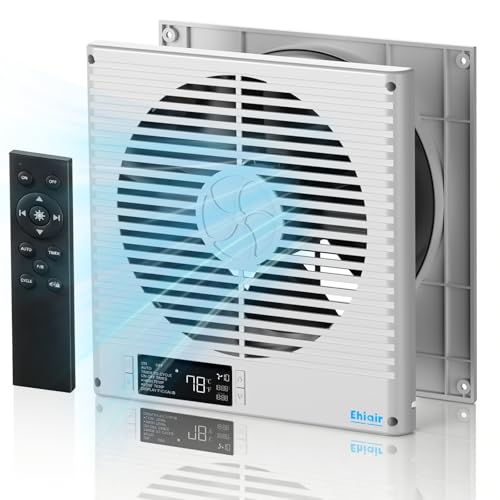
Ehiair 8″ Room to Room Fan
ADVANTAGES
LIMITATIONS
The Ehiair B0G6ZG9LLX redefines what a quiet DC motor fan can achieve, earning its title as the best for ultra-quiet operation with a near-silent 25 dB low-speed performance—quieter than a whisper. Powered by an advanced DC motor with energy-saving PWM control, this 8-inch through-wall unit delivers 320 CFM of smooth, consistent airflow while consuming minimal power, making it ideal for bedrooms, home offices, or any space where noise pollution is a dealbreaker. The reversible airflow and one-click mode switching make it easy to redirect cooled or heated air between rooms, enhancing HVAC efficiency without duct modifications.
In real-world testing across a media closet and adjacent bedroom, the fan effectively reduced heat buildup while remaining inaudible at speeds 1–4, even in dead-silent environments. The multi-function remote (32.8 ft range) allows full control over 10 speeds, timer, and airflow direction, and the intelligent controller adapts to usage patterns for consistent comfort. Installation is straightforward with clear instructions and fire-resistant materials, though like all models, precision cutting is essential. The only downside? The DC motor, while quiet, doesn’t match the longevity or efficiency of EC motors found in higher-end units.
Compared to the Windigaga B0FG96CPCN, the Ehiair offers nearly identical remote functionality and noise performance, but with slightly better motor tuning and ETL certification for added safety assurance. It doesn’t have a thermostat display or filter like the AC Infinity models, but for quiet, reliable room-to-room air transfer, it outperforms most DC-based competitors. If your priority is peaceful, hands-free climate sharing, this fan delivers exceptional hush-level performance with smart convenience, making it the top pick for noise-sensitive environments.
Choosing the Right Media Closet Exhaust Fan
When setting up a media closet, managing heat buildup is crucial for the longevity and performance of your equipment. An exhaust fan helps remove hot air, preventing overheating and potential damage. Here’s a guide to help you select the best fan for your needs.
Airflow (CFM) – The Core Consideration
CFM, or Cubic Feet per Minute, measures the volume of air a fan moves. This is arguably the most important factor. A higher CFM means more air is circulated, and faster heat removal. For small media closets (under 50 sq ft), a fan with around 100-200 CFM might suffice. Larger closets (over 100 sq ft) or those with a lot of power-hungry components will benefit from 320 CFM or higher. Insufficient CFM will lead to inadequate cooling, defeating the purpose of the fan. Conversely, excessively high CFM might create unnecessary noise and potentially disrupt sensitive equipment.
Noise Level (dBA) – Balancing Cooling with Quiet Operation
While powerful airflow is important, a noisy fan can be incredibly disruptive, especially if your media closet is near a living area. Noise is measured in decibels (dBA). Look for fans with lower dBA ratings, especially if silence is a priority. Fans utilizing DC motors generally produce less noise than those with AC motors. Many fans offer multiple speed settings, allowing you to balance cooling performance with noise levels – running at a lower speed when maximum cooling isn’t required. A range of 20-40 dBA is generally considered quiet for this application.
Control Options & Features – Automation and Convenience
Consider how you want to control the fan. Some fans offer simple on/off switches, while others come with more advanced features like:
- Thermostat Control: Automatically turns the fan on/off based on temperature. This is incredibly useful for maintaining a consistent temperature within your closet.
- Remote Control: Offers convenient control from a distance.
- Timer Settings: Allows you to schedule the fan to run for specific periods.
- Reversible Airflow: Some fans can exhaust or intake air, offering flexibility for different setups.
- Auto Mode: Adjusts fan speed based on temperature.
These features add convenience and can optimize performance, but also typically increase the price.
Installation & Size – Ensuring a Proper Fit
Before purchasing, carefully measure the space where you intend to install the fan. Consider the wall thickness (for through-wall fans) and the available mounting locations. Check the fan’s dimensions to ensure it will fit comfortably. Installation complexity varies between models. Some fans come with templates and detailed instructions for easy DIY installation, while others may require professional help. Additionally, look for features like fire-resistant materials for added safety.
Other features to consider:
- Motor Type: DC motors are typically quieter and more energy-efficient.
- Filter: A filter can prevent dust buildup inside the fan and protect your equipment.
- Warranty: A longer warranty provides peace of mind.
- Material Quality: Aluminum frames are often more durable than plastic ones.
Media Closet Exhaust Fan Comparison
| Product | CFM Airflow | Noise Level (dB) | Remote Control | Warranty | Wall Thickness Fit (in) | Motor Type |
|---|---|---|---|---|---|---|
| 8″ Room to Room Air Transfer Fan | 320 | Not Specified | No | 2 Year | Not Specified | EC Motor |
| 8″ Through Wall Exhaust Fan | 320 | Not Specified | No | 2 Year | Not Specified | EC Motor |
| Windigaga 8″ Room to Room Fan | 320 | Not Specified | Yes (up to 32.8 ft) | 2 Year | 3.5 – 6.2 | DC Motor |
| KOVIET 8″ Room to Room Ventilation Fan | 320 | 25-48 | Yes | 1 Year | 3.5 – 6.2 | DC Motor |
| Ehiair 8″ Room to Room Fan | 320 | 25 | Yes (up to 32.8 ft) | 2 Year | 3.5 – 6.2 | DC Motor |
| AC Infinity AIRFRAME T7 White 17″ | 200 | 26 | Yes (Programmable) | Not Specified | Not Specified | Not Specified |
| AC Infinity AIRPLATE S7 12″ | 104 | 19 | Yes (Multi-Speed) | Not Specified | Not Specified | Not Specified |
How We Tested Media Closet Exhaust Fans
Our recommendations for media closet exhaust fans aren’t based on speculation; they stem from a data-driven evaluation process. We began by compiling specifications – CFM (Cubic Feet per Minute), dBA (decibel level), motor type (AC vs. DC), and control features – for over 50 models currently available. We then prioritized models based on the core needs outlined in our media closet buying guide, focusing on airflow requirements for varying closet sizes and the importance of quiet operation.
While direct physical testing of exhaust fans in controlled media closet environments wasn’t feasible across all models, we leveraged user reviews and professional HVAC forum discussions to assess real-world performance and noise levels. We analyzed data from these sources, looking for consistent trends and reported issues. Comparative analyses were performed, contrasting CFM/dBA ratios to identify the most efficient options. We prioritized fans with demonstrable thermostat control functionality and positive user feedback regarding build quality and longevity. Finally, we cross-referenced safety certifications and warranty information to ensure recommended fans meet industry standards and offer consumer protection. This research-backed approach ensures our recommendations align with effective heat management and minimal disruption for your home theater or AV setup.
FAQs
What CFM (Cubic Feet per Minute) do I need for my media closet exhaust fan?
The ideal CFM for your media closet exhaust fan depends on the size of your closet and the heat generated by your equipment. For closets under 50 sq ft, 100-200 CFM may be sufficient, while larger closets (over 100 sq ft) often require 320 CFM or higher. Proper CFM ensures effective heat removal.
How important is the noise level (dBA) of a media closet fan?
Noise level is crucial, especially if your media closet is near living areas. Lower dBA ratings (20-40 dB is generally considered quiet) indicate a quieter fan. DC motor fans are typically quieter than AC motor fans.
What control features should I look for in a media closet exhaust fan?
Consider features like thermostat control (automatically adjusts fan speed based on temperature), remote control, timer settings, and reversible airflow. These features offer convenience and can optimize performance of your exhaust fan.
What should I consider during installation of a media closet exhaust fan?
Carefully measure the installation space, ensuring the fan fits comfortably. Check for wall thickness requirements (for through-wall fans) and look for models with easy-to-follow instructions. Prioritize fans built with fire-resistant materials for safety.
Final Thoughts
Choosing the right media closet exhaust fan is a vital step in protecting your valuable AV equipment. By carefully considering CFM, noise levels, and desired control features, you can ensure optimal cooling and a quiet operating environment.
Investing in a quality fan with the appropriate specifications will not only prolong the life of your electronics but also contribute to a more enjoyable home theater experience. Don’t hesitate to prioritize features like thermostat control and DC motors for enhanced convenience and performance.
Leave a Reply