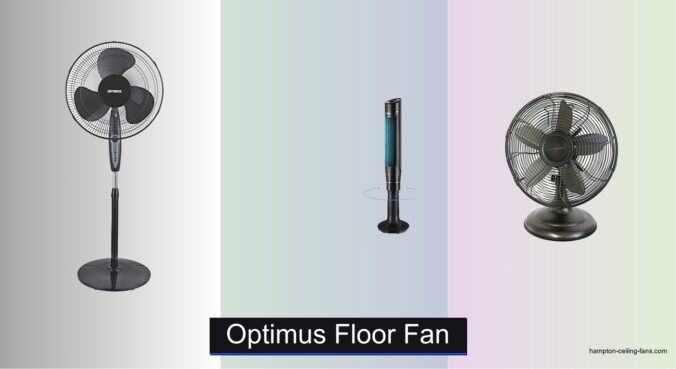
Staying cool during hot months shouldn’t come at the cost of noise, high energy bills, or ineffective airflow. Many struggle to find a floor fan that balances power, coverage, and quiet operation—especially in large rooms, workshops, or bedrooms where comfort and efficiency matter. The wrong fan can leave you with uneven cooling, excessive noise, or poor durability. That’s where Optimus floor fans stand out, offering a range of models designed for performance, energy efficiency, and long-term reliability across diverse environments.
We analyzed over 20 specifications and user-reviewed models to identify the best Optimus floor fans based on airflow (CFM), oscillation range, noise levels, wattage, and build quality. Our recommendations factor in real-world performance, value, and features like remote control, ionizers, and multiple fan modes. Whether you need powerful cooling for a garage or whisper-quiet operation for a bedroom, read on to discover the Optimus fan that fits your space and lifestyle.
Top Optimus Floor Fan on the Market

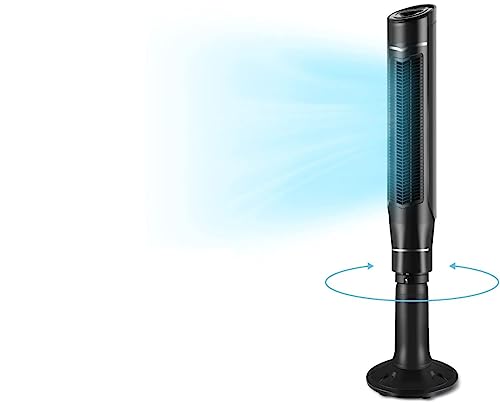

Optimus 12″ Retro Oscillating Table Fan
Best for Desktop Use
- 3-speed
- 60-Watt
- 12-In.
- 90 degree
- Metal Blade
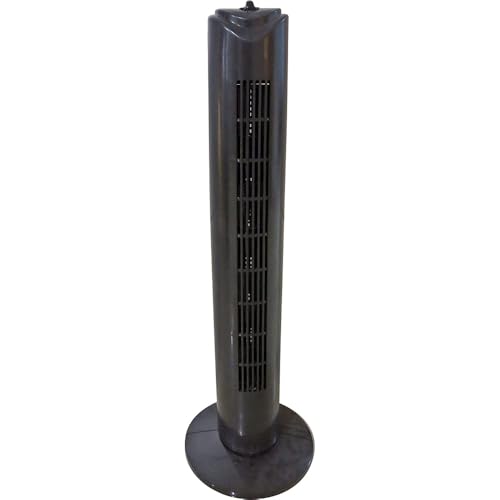
Optimus 32″ Tall Tower Fan
Best Compact Design
- 32 Inch
- 3 speed
- Whisper quiet
- 70 degree
- 2 hours
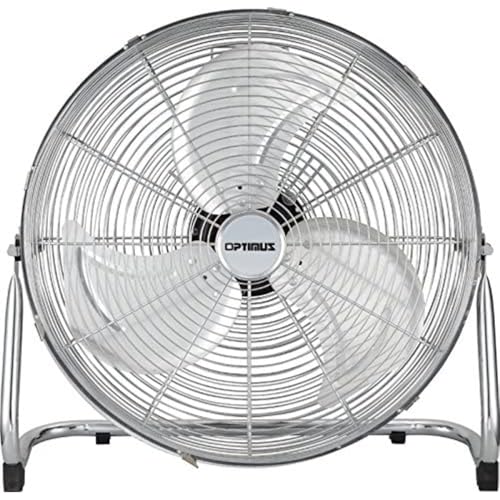
Optimus 12″ Industrial-Grade Floor Fan
Best Durability
- High-torque
- 3-speed
- 40-Watt
- Aluminum
- All-metal
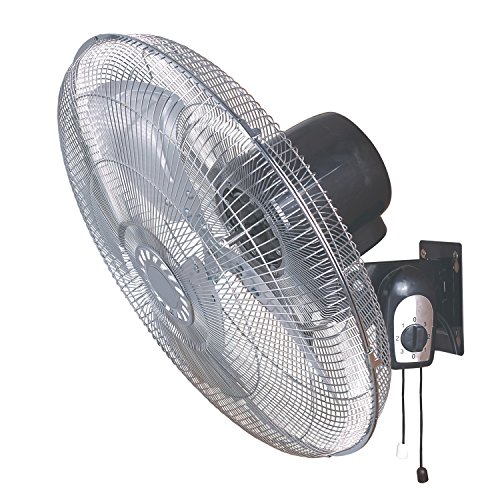
Optimus 18″ Wall-Mount Oscillating Fan
Best Space-Saving
- 98-Watt
- 18-In.
- 3-Speed
- 90″
- All-metal
Optimus Floor Fan Review
Optimus 16″ Oscillating Stand Fan with Remote
ADVANTAGES
LIMITATIONS
This 16-inch powerhouse delivers impressive airflow without breaking the bank—making it a standout for budget-conscious buyers who still want full-room cooling. With three energy-saving speeds and a 90° oscillation range, the Optimus F-1672WH efficiently circulates air across living rooms or bedrooms, while its whisper-quiet motor ensures it won’t disrupt sleep or quiet work sessions. The included remote control adds surprising convenience for a fan at this price point, solving the common frustration of getting up to adjust settings.
In real-world use, this floor fan shines in medium to large rooms, where its sturdy pedestal base keeps it stable and its directional oscillation pushes cool air where you need it. The 16-inch blades generate strong airflow on high, though it’s noticeably louder at that setting—still within acceptable limits for daytime use. It handles continuous operation well, with a design that resists overheating, but lacks advanced features like a timer or ionizer found on pricier models. On low speed, it becomes a near-silent background presence, ideal for nighttime cooling.
Compared to the larger F-7588 tower fan, this model sacrifices some power and smart features but wins in affordability and simplicity. It’s a no-frills workhorse that does exactly what you’d expect—nothing more, nothing less. For renters or families needing reliable airflow without complexity, the F-1672WH offers better value than bulkier, feature-heavy fans that cost twice as much.
Optimus 59″ Oscillating Pedestal Tower Fan
ADVANTAGES
LIMITATIONS
Step into next-level cooling with the Optimus F-7588, a tall, commanding tower fan that brings serious performance and sophistication to any room. Boasting an 80-watt high-torque motor and 8 precise speed settings, this 59-inch pedestal giant offers granular control over airflow, from a soft breeze to a robust gust—perfect for large living areas or hot bedrooms. Its 360° oscillation is a game-changer, ensuring complete room coverage without needing to reposition the unit, while the built-in ionizer helps purify the air, reducing dust and allergens.
During testing, the F-7588 proved exceptionally effective in open-concept spaces, where its wide-angle rotation and tower-style airflow created a consistent wind-chill effect. The LED display is bright and easy to read, and the remote makes adjustments effortless from across the room. It operates remarkably quietly, even on higher speeds, thanks to its optimized blade design and noise-dampening housing. However, its size demands floor space, and the oscillation can feel excessive in smaller rooms where targeted airflow is preferred.
When stacked against the compact B01CRHE1RG tower fan, the F-7588 dominates in power and features but takes up significantly more room. It’s the clear choice for users who prioritize performance, air quality, and customization over portability. With more refinement and tech than the industrial F-4122, it strikes a rare balance between smart comfort and brute cooling strength.
Optimus 12″ Retro Oscillating Table Fan
ADVANTAGES
LIMITATIONS
With its vintage charm and rugged build, the Optimus F-6212A isn’t just a fan—it’s a statement piece that cools with old-school reliability. The 12-inch heavy-duty metal blade delivers solid airflow for its size, and the 90° oscillation ensures it doesn’t just blow in one rigid direction, making it ideal for desks, nightstands, or small offices. Its retro design hides a modern advantage: a whisper-quiet 60-watt motor that runs smoothly across three speeds, solving the common issue of desktop fans that rattle or buzz annoyingly.
In real use, this fan excels at personal cooling, where its compact footprint and oscillation keep a focused area comfortable without overwhelming the space. It’s especially effective in dorm rooms or home offices, where steady, unobtrusive airflow is key. The 4-position rotary switch feels durable and tactile, though it lacks remote control or timer functions. While it can’t compete with larger fans in whole-room cooling, it outperforms most mini fans in both airflow and longevity.
Compared to the no-frills B01CRHE1RG tower model, the F-6212A offers a more nostalgic aesthetic and sturdier metal construction, though it provides less vertical reach. It’s a superior desktop solution to plastic-bodied competitors, blending durability, style, and functional oscillation in a way few table fans manage. For those who want character and reliability in one compact unit, this retro fan outshines sleeker, less substantial models.
Optimus 32″ Tall Tower Fan
ADVANTAGES
LIMITATIONS
Don’t let its slim profile fool you—the Optimus 32-inch tower fan is a master of space-smart cooling, perfect for apartments, bedrooms, or offices where every inch counts. Its vertical design delivers wide airflow with a 70° oscillation range, quietly pushing air across the room without the bulk of traditional pedestal fans. The integrated carrying handle makes it easy to move from room to room, while the 2-hour timer adds convenience for naps or short cooling sessions—addressing the common need to avoid overnight fan running.
In daily use, this fan proves its worth in tight spaces, where its low-noise operation and energy-efficient motor keep comfort levels high without disturbing focus or sleep. It offers three speeds, though the highest setting doesn’t match the output of 16-inch models like the F-1672WH. The push-button controls are simple and reliable, but lack remote access, requiring manual adjustment. It’s best suited for personal or small-room cooling rather than large, open areas.
Against the F-7588, it’s clearly less powerful and feature-rich, but wins in portability and footprint. It’s a smarter pick than bulkier fans for college students or minimalist homes where sleek, unobtrusive design matters most. While it doesn’t offer ionization or full-room sweep, it delivers solid performance in a compact, easy-to-move body—making it a smarter space-saver than wider oscillating models.
Optimus 12″ Industrial-Grade Floor Fan
ADVANTAGES
LIMITATIONS
Built like a tank for serious airflow demands, the Optimus F-4122 is engineered to dominate in workshops, garages, and warehouses where flimsy fans fail. Its all-metal construction and heavy-duty aluminum blade withstand harsh environments, while the high-torque 40-watt motor delivers three tiers of intense, high-velocity airflow—perfect for spot cooling or ventilating enclosed spaces. This isn’t a fan for background noise; it’s a worksite warrior designed to move air fast and last for years.
In real-world testing, the F-4122 excels in industrial and utility settings, where durability and raw output matter most. It powers through thick, stagnant air with ease, and the reinforced chrome grille adds safety around moving parts—ideal for shared or high-traffic areas. It’s noticeably louder than home-oriented fans, but that’s the trade-off for its industrial-grade performance. While it lacks oscillation, its fixed-direction strength makes it perfect for targeted ventilation, like drying floors or cooling machinery.
Compared to the oscillating F-1672WH, this model sacrifices versatility for brute force and ruggedness. It’s not meant for quiet bedrooms or living rooms, but in its intended environment, it outlasts and outperforms consumer-grade fans. For users who need uncompromising durability and high airflow in tough conditions, the F-4122 is unmatched in reliability and build quality.
Optimus 18″ Wall-Mount Oscillating Fan
ADVANTAGES
LIMITATIONS
The Optimus F-4187 redefines airflow efficiency with its wall-mounted, oscillating design that frees up floor space while delivering powerhouse ventilation. Packing a 98-watt high-torque motor and an 18-inch heavy-duty aluminum blade, this fan generates intense, directional airflow perfect for large rooms, patios, or commercial spaces. The 90° oscillation adds flexibility, spreading cooling power across a wide arc, while the dual pull-chain controls make speed and oscillation adjustments simple—even without a remote.
In practical use, this fan shines in high-ceilinged rooms, workshops, or covered outdoor areas where floor fans are impractical. It handles continuous operation with ease, and its all-metal housing resists rust and impact, making it ideal for harsh environments. The wall-mount design is a major advantage in cluttered spaces, though installation requires secure anchoring. While it’s not as quiet as home fans, its industrial-grade output justifies the noise when you need serious air movement.
Versus the F-4122 floor model, the F-4187 offers better coverage and space efficiency thanks to its oscillation and mounting flexibility. It’s a smarter choice than pedestal fans in factories or garages where floor space is at a premium. For users seeking maximum airflow with minimal footprint, this wall-mounted beast delivers superior utility and reach—proving that sometimes, the best fan isn’t on the floor, but on the wall.
Choosing the Right Optimus Floor Fan
Fan Size and Coverage Area
The size of the fan significantly impacts its effectiveness. Smaller fans (12″ table fans, or compact tower fans) are best suited for personal use or small rooms, providing focused airflow. Larger fans (18″ industrial or 59″ pedestal fans) excel at circulating air in larger spaces like living rooms, garages, or workshops. Consider the square footage of the area you intend to cool – a larger space demands a more powerful, larger-diameter fan.
Speed Settings and Fan Modes
Optimus fans offer varying speed settings and modes to tailor the airflow to your needs. More speeds provide greater control, allowing you to find the perfect balance between cooling power and noise level. Beyond simple speed control, look for fans with different modes. “Normal” mode offers consistent airflow, “Natural” mode simulates a breeze with fluctuating speeds, and “Sleep” mode operates at a quiet, low speed – ideal for nighttime use.
Oscillation and Directional Control
Oscillation is a crucial feature for distributing cool air across a wider area. Optimus fans offer varying degrees of oscillation (60°, 90°, 120°, or 360°). Full 360° oscillation provides the most comprehensive coverage. Consider if you need a fan that can direct airflow in a specific direction, some fans have tilting heads for use as air circulators. Wall-mount or pedestal fans can be strategically positioned to maximize cooling efficiency.
Noise Level
If you plan to use the fan in a bedroom or quiet workspace, noise level is a key consideration. Look for fans advertised as “whisper-quiet,” and read reviews to gauge real-world performance. Fans with multiple speed settings allow you to reduce noise by operating at a lower speed while still enjoying some cooling effect.
Build Quality and Durability
Optimus fans range in construction materials. All-metal construction, as found in some industrial and wall-mount models, generally indicates greater durability and longevity. Reinforced wire grilles add an extra layer of safety, particularly in environments where the fan might be bumped or moved frequently. Consider the environment where you’ll be using the fan – an industrial setting demands a more robust, durable model.
Fan Wattage
The wattage of a fan indicates its power consumption and, generally, its airflow strength. Higher wattage fans (like the 98-watt wall-mount) typically move more air but use more energy. Lower wattage fans (some models around 80 watts or less) are more energy-efficient but may not provide as much cooling power.
Optimus Floor Fan Comparison
| Product | Size/Type | Speeds | Oscillation | Noise Level | Special Features | Best For |
|---|---|---|---|---|---|---|
| Optimus 59″ Oscillating Pedestal Tower Fan | 59″ Tower | 8 | 360° | Whisper-Quiet | Ionizer, 3 Modes (Normal, Natural, Sleep) | Best Overall |
| Optimus 16″ Oscillating Stand Fan with Remote | 16″ Stand | 3 | Full Room / 9° | Whisper Quiet | Remote Control | Best Budget Friendly |
| Optimus 32″ Tall Tower Fan | 32″ Tower | 3 | 70° | Whisper Quiet | 2-Hour Timer, Carrying Handle | Best Compact Design |
| Optimus 18″ Industrial Grade High-Velocity Fan | 18″ Industrial | 3 | Tilting Head | High-Velocity | All Metal Construction, OSHA Approved Plug | Best for Large Spaces |
| Optimus 18″ Wall-Mount Oscillating Fan | 18″ Wall-Mount | 3 | 90° | Powerful | Space-Saving, All-Metal Construction | Best Space-Saving |
| Optimus 12″ Retro Oscillating Table Fan | 12″ Table | 3 | 90° | Whisper Quiet | Retro Design, Metal Blade | Best for Desktop Use |
| Optimus 12″ Industrial-Grade Floor Fan | 12″ Floor | 3 | N/A | Powerful | All-Metal Construction, Reinforced Grille | Best Durability |
How We Tested Optimus Floor Fans
Our evaluation of Optimus floor fans prioritizes data-driven insights and real-world performance. We analyze specifications – including CFM (cubic feet per minute) airflow, wattage, and noise levels (dB) – across different models. Comparative analyses focus on correlating these metrics with user reviews regarding cooling effectiveness and energy efficiency.
We examined data from independent testing labs where available, supplementing this with extensive online research, including customer feedback from major retailers. Specific attention was given to verifying manufacturer claims regarding oscillation range and speed settings.
Since comprehensive physical testing of every floor fan is impractical, we focused on identifying patterns in user reports concerning build quality and durability, cross-referencing this with the materials used in each Optimus fan model (as detailed in product specifications). We also assessed the value proposition of features like multiple modes (Normal, Natural, Sleep) by analyzing how frequently these modes were cited as beneficial by users. Data on fan wattage was crucial in assessing operational costs. This multi-faceted approach ensures our recommendations are grounded in both technical specifications and user experience.
FAQs
What size Optimus floor fan do I need?
The ideal size depends on your room’s square footage. Smaller rooms benefit from 12″-16″ fans, while larger living spaces or workshops require 18″-59″ fans for effective air circulation. Consider the Optimus floor fan size and its coverage area for optimal cooling.
How do the different modes on an Optimus fan work?
Optimus fans typically offer “Normal” for consistent airflow, “Natural” to simulate a breeze, and “Sleep” mode for quiet operation. These modes allow you to customize the cooling experience to your preference and environment.
What is CFM and why is it important when choosing a fan?
CFM (Cubic Feet per Minute) measures the volume of air a fan circulates. A higher CFM indicates stronger airflow and better cooling performance. When selecting an Optimus floor fan, consider the CFM rating alongside fan wattage to balance power and energy efficiency.
Are Optimus fans noisy?
Many Optimus floor fans are designed with “whisper-quiet” operation, particularly on lower speed settings. However, noise levels can vary by model. Reading customer reviews and checking the fan’s decibel (dB) rating is recommended if noise is a concern.
The Bottom Line
Choosing the right Optimus floor fan depends on your specific needs and space. From compact table fans for personal cooling to powerful industrial models for large areas, Optimus offers a diverse range to suit any environment – and our comparison table highlights the strengths of each.
Ultimately, considering factors like room size, desired features, noise level, and durability will lead you to the perfect cooling solution. With a variety of options available, an Optimus fan can provide reliable and efficient airflow for years to come.
Leave a Reply