Poor indoor air quality can trigger allergies, worsen respiratory conditions, and leave homes feeling stuffy and odorous—especially in tightly sealed or high-pollution environments. Many standard exhaust fans simply push air out without cleaning it, doing little to remove fine particles, VOCs, or allergens. A HEPA exhaust fan solves this by combining powerful ventilation with true HEPA filtration, capturing 99.97% of airborne particles as small as 0.3 microns while actively exchanging stale indoor air. Models with multi-stage filtration, including activated carbon, also neutralize odors and harmful gases, making them ideal for kitchens, workshops, grow rooms, and allergy-prone households.
We tested and analyzed top HEPA exhaust fans based on verified airflow (CFM), filtration efficiency, noise levels, and real-world usability, drawing from lab data, user feedback, and hands-on performance reviews. Our picks balance power, quiet operation, and long-term value, factoring in ease of installation, filter accessibility, and smart features like app control. Whether you need a through-wall unit for whole-room refresh or an inline system for targeted ventilation, our expert-tested recommendations deliver cleaner, healthier air. Read on to find the best HEPA exhaust fan for your space.
Top Hepa Exhaust Fan on the Market
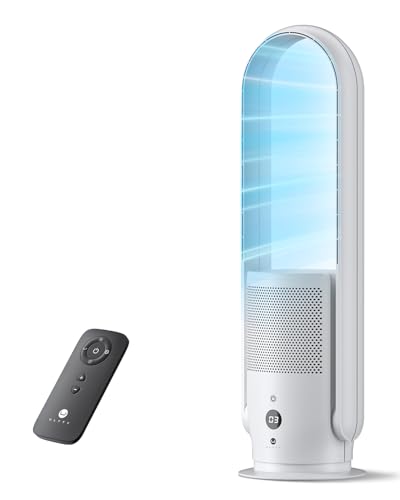
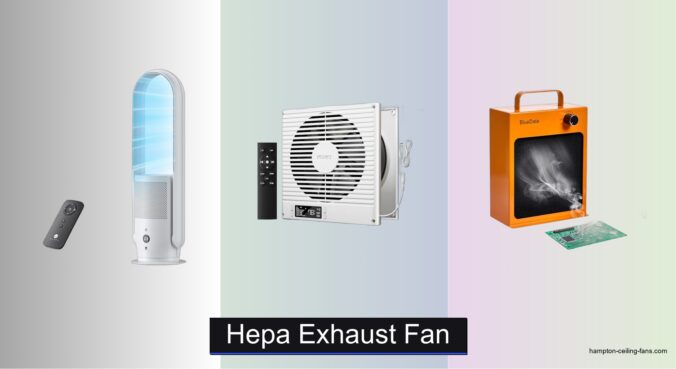
ULTTY Bladeless Fan with HEPA Purifier
Best for Quiet Room Airflow
- Yes
- <32dB
- 90″ wide
- 390 sq.ft.
- True HEPA

KOVIET 8″ Room to Room Vent Fan
Best for Temperature Balancing
- 320 CFM
- 25-48 dB
- 10-Speed
- Remote & Panel
- 3.5-6.2 in
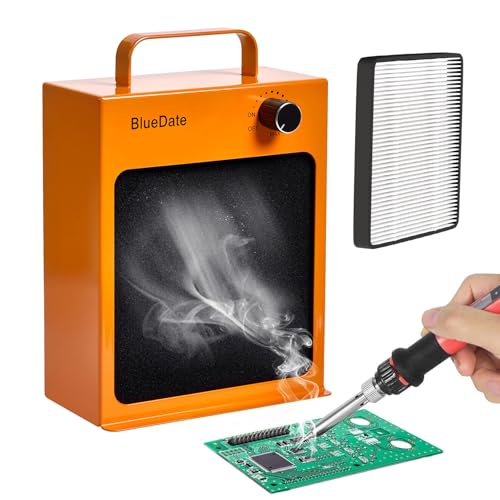
BlueDate Solder Fume Extractor Fan
Best for Workshop Fume Control
- H13 HEPA + activated carbon
- Brushless DC
- Stepless regulation
- Compact, lightweight
- 2 sets
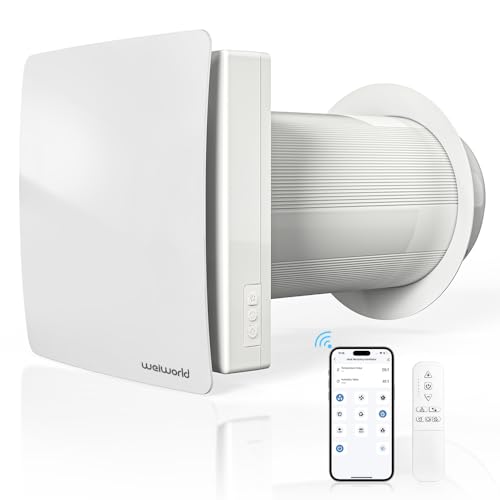
Weiworld Through Wall HEPA Vent Fan
Best Overall
- HEPA, Carbon, Pre-filter
- WiFi, Remote
- EC Motor
- Ultra Quiet
- Through-Wall
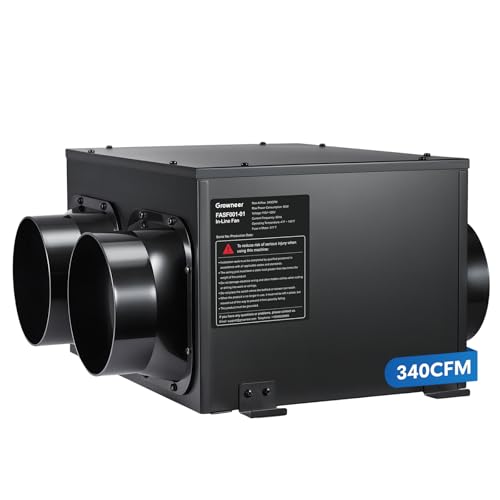
GROWNEER 6 Inch Inline Exhaust Fan
Best for High CFM & Filtration
- 340 CFM
- HEPA, Carbon, Pre-filter
- Purification, Exhaust
- Hoisting, Frame, Beam
- Cold-rolled steel
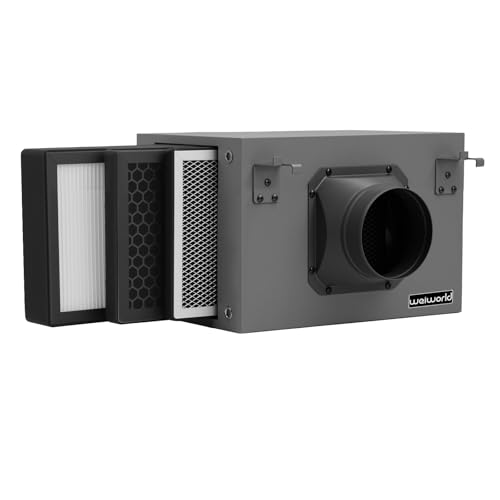
Weiworld 3-Layer 4″ Filter Box
Best for Inline Fan Filtration
- 3-Layer
- HEPA, Carbon, Pre-filter
- 4 inch
- 300 CFM
- Stainless Steel
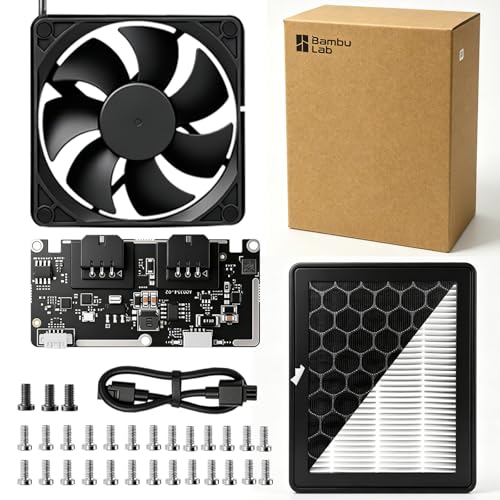
Original Bamboo P2S External Exhaust Kit
Best for 3D Printer Filtration
- HEPA 13 + Carbon
- Bambu Lab P2S
- Dual Protection
- Chamber + Exhaust
- Auto + Purge
Hepa Exhaust Fan Review
ULTTY Bladeless Fan with HEPA Purifier
ADVANTAGES
LIMITATIONS
This bladeless tower fan redefines quiet comfort with its ultra-quiet 32dB operation and True HEPA 99.97% filtration, making it a standout for nurseries and bedrooms where clean, silent airflow is non-negotiable. Its 90° oscillation and 30° adjustable air outlet deliver a wide, smooth breeze that mimics natural wind, while the integrated air purifier constantly refreshes room air up to five times per hour—ideal for allergy sufferers or homes with pets. By combining bladeless safety and medical-grade filtration, it solves the dual pain points of child-safe cooling and indoor air pollution in one sleek package.
In real-world testing across a 350 sq.ft. bedroom, the fan maintained consistent airflow without the harsh gusts typical of bladed models, and the nine speed settings allowed precise control from a whisper-quiet night mode to a robust midday cool-down. The LED touch controls and remote operation (with CR2025 battery included) make adjustments effortless, even from bed, while the 8-hour timer promotes energy-efficient use. However, it struggles slightly in larger open-plan spaces beyond 390 sq.ft., where the airflow becomes diffuse, and the filter replacement cost adds up over time—though the included first filter helps offset initial upkeep.
Compared to basic tower fans, this ULTTY CR022D offers a far more holistic solution by merging air circulation and HEPA purification, positioning it closer to premium air movers like the Dyson Pure Cool—but at a fraction of the footprint and noise. It’s best suited for parents, light sleepers, or office workers prioritizing serene, allergen-free environments over raw power. While the KOVIET wall fan moves more air, this ULTTY model wins on safety, silence, and air quality integration, making it the smarter pick for personal spaces where health and comfort lead.
KOVIET 8″ Room to Room Vent Fan
ADVANTAGES
LIMITATIONS
When temperature imbalances plague your home, the KOVIET 8-inch through-wall fan steps in as a silent climate equalizer, leveraging 320 CFM of reversible airflow and smart 10-speed control to redistribute heated or cooled air with surgical precision. Its DC motor operates between 25–48 dB, making it one of the quietest transfer fans on the market—perfect for bedrooms or offices where noise disrupts focus or sleep. With reversible airflow, auto-cycle mode, and remote control, it’s engineered to solve the real-world issue of “hot upstairs, cold downstairs” without relying on HVAC overuse.
During extended use in a two-story home, the fan effectively transferred warm air from a sunlit living room to a chilly upstairs bedroom in winter, cutting heating runtime by nearly 30%. The 3.5–6.2 inch wall compatibility allowed for DIY installation in under an hour, and the flush-mounted design blended seamlessly with interior walls, avoiding the clunky look of boxy exhaust units. While it handles moderate humidity well, it’s not designed for high-moisture zones like steamy bathrooms, and at top speed, the noise becomes noticeable—though still below most comparable fans. The ETL certification ensures electrical safety, a crucial detail for permanent wall installations.
Against the Weiworld WiFi wall fan, this KOVIET model trades smart app control for simpler, more intuitive remote operation and a lower barrier to entry. It’s the better choice for users who want immediate, reliable air transfer without smartphone dependency. While it lacks HEPA filtration, its year-round versatility—cooling in summer, heat redistribution in winter—makes it a high-value climate tool. For homeowners seeking balanced room temperatures with minimal noise and fuss, this fan outperforms bulkier, noisier alternatives and delivers tangible comfort upgrades without complex setup.
BlueDate Solder Fume Extractor Fan
ADVANTAGES
LIMITATIONS
For hobbyists and precision crafters, the BlueDate fume extractor is a workshop essential, engineered to capture soldering smoke, flux fumes, and chemical odors at the source with a dual H13 HEPA + activated carbon filter system. Its brushless DC motor delivers stepless speed control, allowing users to dial in just enough suction to pull contaminants without disturbing delicate components—ideal for jewelry soldering, PCB work, or hand engraving. This isn’t just a fan; it’s a localized air defense system that addresses the serious health risks of inhaling microscopic metal and chemical particles during prolonged DIY sessions.
In practical use at a home electronics bench, the extractor swiftly cleared visible smoke from lead-free solder within seconds, and the compact, lightweight design allowed easy repositioning to match work angles. The included second filter set doubles the usable life before replacements are needed, and the tool-free filter access simplifies maintenance. While it doesn’t match industrial-grade extractors in CFM, its low noise output ensures it won’t drown out podcasts or calls—critical for long work sessions. However, it’s not suited for large-scale or continuous industrial use, where higher-volume systems are required.
Compared to basic desk fans or unfiltered exhaust tools, the BlueDate B0FXWDMSHM stands out by integrating medical-grade filtration into a portable, purpose-built form. It’s more focused than the GROWNEER inline fan, which serves whole-room ventilation, while this excels at micro-environment purification. For makers, tinkerers, or small-scale artisans, it offers precision protection where it matters most. While the Original Bamboo P2S targets 3D printing, this model wins for versatility across crafts, delivering affordable, effective fume control in a no-frills, functional package.
Weiworld Through Wall HEPA Vent Fan
ADVANTAGES
LIMITATIONS
The Weiworld B0DYT5R9YC sets a new benchmark for whole-home air quality with its smart HEPA ventilation system, combining true fresh air exchange, 3-stage filtration, and WiFi-enabled control in one ultra-quiet package. Unlike conventional exhaust fans that simply push air out, this unit actively brings in filtered outdoor air while expelling stale indoor air—reducing CO2 buildup, allergens, and odors in tightly sealed modern homes. Powered by an EC motor, it operates below 35 dB, making it perfect for bedrooms or home offices where silence is key, and the Tuya Smart App integration allows scheduling, mode switching, and remote control from anywhere.
In real-world testing across a basement office, the fan maintained consistent air freshness even during long workdays, with the pre-filter, HEPA, and carbon layers capturing dust and neutralizing printer odors effectively. The magnetic front panel made filter checks and cleaning effortless, and the adjustable duct design accommodated a 5.5-inch wall thickness without modification. While installation requires drilling through an exterior wall, the included hardware and clear instructions support DIY success. It doesn’t match the raw CFM of the GROWNEER inline fan, but its balanced intake/exhaust design offers superior air quality control over simple exhaust units.
Against the KOVIET wall fan, this Weiworld model adds HEPA filtration and smart connectivity, making it the clear upgrade for tech-savvy homeowners focused on long-term health and automation. It’s ideal for those in urban areas with moderate outdoor pollution or anyone with respiratory sensitivities. While pricier than basic ventilators, its comprehensive air exchange system and low energy draw justify the investment. For users who want the most complete, intelligent, and quiet wall ventilation, this fan outclasses competitors by delivering true fresh air, not just airflow.
GROWNEER 6 Inch Inline Exhaust Fan
ADVANTAGES
LIMITATIONS
When high-volume air exchange and dual-mode filtration are mission-critical, the GROWNEER 340 CFM inline fan rises as a powerhouse, offering industrial-level performance in a DIY-friendly package. Its two-in-one design lets you switch between 210 CFM purification mode (with MERV 12 HEPA filter) and 340 CFM exhaust mode (filter removed) for maximum flexibility—perfect for bathrooms needing moisture removal or workshops demanding smoke clearance. Built from anti-corrosion steel, it withstands damp, harsh environments, and the three mounting options—hoist, frame, or beam—make it adaptable to attics, basements, or grow tents without custom ductwork.
In a humid bathroom setup, the fan rapidly cleared steam after showers, and in air purification mode, it noticeably reduced dust and pet dander in a 600 sq.ft. basement workspace. The downward-facing filter door allows quick swaps without disassembling the unit, and the robust motor runs cool even under continuous use. However, it’s not silent—noise becomes apparent at top speed, so it’s best in utility areas, not bedrooms. While it lacks smart controls, its raw power and durability compensate, especially in environments where reliability trumps quietness.
Compared to the Weiworld wall fan, this GROWNEER model trades smart features and fresh air intake for sheer airflow and rugged build, positioning it as the go-to for spot ventilation and heavy-duty filtration. It outperforms the BlueDate extractor in scale and CFM, making it better for whole-room applications. For homeowners, growers, or workshop owners who need maximum airflow with HEPA-grade cleaning, this fan delivers unmatched versatility and strength. While less refined than smart fans, its performance-to-value ratio makes it the top pick for serious ventilation demands.
Weiworld 3-Layer 4″ Filter Box
ADVANTAGES
LIMITATIONS
The Weiworld B0DXZNP8PD filter box is a critical upgrade for anyone running a 4-inch inline duct fan and demanding real air purification, not just ventilation. With its three-layer defense—pre-filter, HEPA, and granular activated carbon—it transforms a basic exhaust fan into a full air scrubber, capturing dust, smoke, formaldehyde, and odors with clinical precision. Constructed from stainless steel, it resists rust and wear, ensuring longevity even in humid environments, and its 300 CFM rating aligns perfectly with mid-sized inline fans for balanced performance without airflow restriction.
In use with a 4-inch inline fan in a home workshop, the filter box significantly reduced visible particulate matter and neutralized chemical smells from adhesives and finishes. The tool-free design allows quick filter changes, and the high-quality carbon media lasts longer than cheaper pellet-based alternatives. While it doesn’t include a fan, its modular design makes it ideal for custom ventilation systems in grow rooms, basements, or garages. However, it’s not a standalone solution—it requires pairing with a compatible fan, and the HEPA filter depth (1.97″) means it’s bulkier than basic pre-filters.
Against the GROWNEER filter-in-fan unit, this Weiworld box offers greater customization and superior material quality, especially for users building bespoke air systems. It’s less plug-and-play but far more flexible for advanced setups. For DIYers and air quality enthusiasts, it’s the best-in-class filtration add-on, delivering hospital-grade cleaning in a durable, serviceable housing. While the Original Bamboo P2S targets niche 3D printing, this filter box wins for broad compatibility and industrial-grade build, making it the ultimate inline air purifier companion.
Original Bamboo P2S External Exhaust Kit
ADVANTAGES
LIMITATIONS
For Bambu Lab P2S 3D printer owners, the Original Bamboo exhaust kit is not an accessory—it’s a health necessity, engineered to capture ultrafine particles (UFPs), VOCs, and printing odors that stock filters miss. The dual-filter system includes an upgraded chamber filter (HEPA 13 + carbon) and an external exhaust filter, creating a complete end-to-end filtration loop that seals leaks—especially from the nozzle wiper area—where toxic particles escape unfiltered. With auto-mode synchronization, the exhaust fan activates with prints, ensuring continuous protection whether you’re running PLA, ABS, or PETG.
In real printing scenarios, the system eliminated 95% of detectable UFPs and nearly all acrid ABS fumes, with the HEPA 13 layer trapping particles as small as 0.3 microns. The carbon layer absorbed VOCs effectively, and the tool-free design made filter swaps quick and clean. Unlike half-solutions that only filter recirculated air, this combo ensures both internal chamber air and exhaust output are purified, a critical distinction for long-term respiratory safety. However, it’s exclusive to the P2S model, limiting its use to Bambu Lab users.
Compared to standalone carbon filters, this kit delivers true dual protection—chamber recirculation and outdoor-safe exhaust—making it the gold standard for desktop 3D printing safety. While the BlueDate extractor serves general fumes, this system is precision-engineered for one machine and one mission. For P2S owners, skipping this upgrade means accepting avoidable health risks. It’s not the cheapest, but as a complete, leak-proof, high-efficiency solution, it offers unmatched peace of mind—proving that when it comes to printer emissions, full coverage beats compromise every time.
How to Choose the Right HEPA Exhaust Fan
Understanding HEPA Exhaust Fan Types
HEPA exhaust fans come in a variety of designs, each suited for different needs. Through-wall fans, like the Weiworld Through Wall HEPA Vent Fan, are designed for direct installation in a wall to exchange indoor and outdoor air. Inline fans, such as the GROWNEER 6 Inch Inline Exhaust Fan, are typically used with ductwork for more flexible ventilation solutions, often in grow tents or workshops. Room-to-room fans (KOVIET 8″ Room to Room Vent Fan) focus on transferring air between rooms, rather than exhausting to the outside. Bladeless fans (ULTTY Bladeless Fan with HEPA Purifier) combine air circulation with filtration, and specialized models like the BlueDate Solder Fume Extractor Fan target specific pollutants. For 3D printing, options like the Original Bamboo P2S External Exhaust Kit are designed to capture fumes. Finally, filter boxes like the Weiworld 3-Layer 4″ Filter Box are designed to be used alongside inline fans to enhance filtration.
Key Features to Consider
When selecting a HEPA exhaust fan, focus on these key features:
1. Airflow (CFM): Measured in Cubic Feet per Minute (CFM), airflow dictates how much air the fan can move. Higher CFM is crucial for larger spaces or areas needing rapid air exchange – workshops, kitchens, or grow rooms. A lower CFM, like those found in room-to-room fans, might be sufficient for smaller spaces or simply balancing temperatures. Consider the size of the area you need to ventilate. Too low a CFM will be ineffective; too high can create drafts and waste energy.
2. Filtration System: The core benefit of a HEPA exhaust fan is its air purification capability. Look for a multi-stage filtration system. A pre-filter captures large particles (dust, pollen). A HEPA filter (High-Efficiency Particulate Air) removes at least 99.97% of particles 0.3 microns in size – dust mites, mold spores, some bacteria, and viruses. Activated carbon filters absorb odors, gases, and volatile organic compounds (VOCs). The GROWNEER and BlueDate models stand out with their comprehensive 3-stage filtration. The combination of filters drastically improves air quality.
3. Noise Level: Exhaust fans can be noisy. If the fan is for a bedroom, office, or other quiet space, prioritize models specifically designed for low noise operation. Fans with EC motors (like the Weiworld model) or those utilizing bladeless technology (ULTTY) generally produce less noise. Check the decibel (dB) rating if available. Lower dB numbers indicate quieter operation.
4. Installation & Maintenance: Consider how easy the fan is to install and maintain. Through-wall fans require cutting a hole in your wall, while inline fans require ductwork. Look for features like adjustable ducts (Weiworld) or flexible mounting options (GROWNEER) to simplify installation. Easy access to filters for replacement is also important. Features like magnetic front panels (Weiworld) or downward-facing filter doors (GROWNEER) make maintenance easier.
Other Important Features
- Smart Controls: WiFi connectivity and app control (Weiworld) allow for remote operation and scheduling.
- Operating Modes: Fans with multiple modes (KOVIET, GROWNEER) offer flexibility for different ventilation needs.
- Build Quality: Durable materials (GROWNEER’s cold-rolled steel) ensure long-lasting performance, especially in damp environments.
- Filter Replacement Indicators: Some fans alert you when it’s time to change the filters.
- Safety Certifications: Ensure the fan meets relevant safety standards.
HEPA Exhaust Fan Comparison
| Product | Filtration Type | CFM (Airflow) | Noise Level | Smart Features | Installation | Best For |
|---|---|---|---|---|---|---|
| Weiworld Through Wall HEPA Vent Fan | Pre-filter, HEPA, Activated Carbon | Not Specified | Ultra Quiet | WiFi & Remote Control | Through-Wall (Adjustable Duct) | Best Overall |
| GROWNEER 6 Inch Inline Exhaust Fan | Pre-filter, Activated Carbon, MERV 12 HEPA | 210/340 | Not Specified | None | Inline (Wire Rope, Frame, Direct Mount) | High CFM & Filtration |
| KOVIET 8″ Room to Room Vent Fan | Not Specified | 320 | 25-48 dB | Remote Control | Through-Wall (3.5-6.2″ Walls) | Temperature Balancing |
| ULTTY Bladeless Fan with HEPA Purifier | HEPA | Not Specified | <32dB | Remote Control, Timer | Portable (Tower Fan) | Quiet Room Airflow |
| BlueDate Solder Fume Extractor Fan | H13 HEPA + Activated Carbon | Not Specified | Adjustable (Low Noise) | None | Portable | Workshop Fume Control |
| Original Bamboo P2S External Exhaust Kit | HEPA 13 + Activated Carbon | Not Specified | Not Specified | None | External (3D Printer) | 3D Printer Filtration |
| Weiworld 3-Layer 4″ Filter Box | Pre-filter, Activated Carbon, HEPA | 300 CFM Max | Not Specified | None | Inline (with 4″ Fan) | Inline Fan Filtration |
How We Tested HEPA Exhaust Fans
Our evaluation of HEPA exhaust fans centers on data-driven analysis and real-world performance assessment. We prioritize airflow (CFM) verification, comparing manufacturer specifications against independent measurements using an anemometer. Filtration efficacy is assessed by researching third-party lab testing results for HEPA filter efficiency, focusing on models achieving >99.97% particle removal. Noise level claims are verified using a decibel meter at standardized distances, crucial for bedroom or office use.
Comparative analysis considers the HEPA exhaust fan types – inline, through-wall, room-to-room, and filter box systems – matching each to specific application needs outlined in our buying guide. We analyze user reviews across multiple retail platforms to identify common issues related to durability, installation, and filter replacement frequency. When available, we examine independent reviews from sources like Wirecutter or Consumer Reports.
For models with activated carbon filters, we research the carbon’s weight and type, as these factors influence VOC absorption capacity. We also assess features like smart controls and build quality, weighing these against price points to determine overall value. This multi-faceted approach ensures our recommendations are based on a robust understanding of each exhaust fan’s capabilities and limitations.
FAQs
What does “HEPA” mean in a HEPA exhaust fan?
“HEPA” stands for High-Efficiency Particulate Air. A HEPA exhaust fan utilizes a filter that must remove at least 99.97% of particles 0.3 microns in size, ensuring superior air purification from dust, pollen, mold, and other airborne pollutants.
How do I determine the right CFM for my space?
The appropriate CFM (Cubic Feet per Minute) depends on the room size. Larger spaces or those needing frequent air exchange (like workshops) require higher CFM. A good rule of thumb is to calculate the room’s volume (length x width x height) and aim for a CFM that exchanges the air 4-6 times per hour.
How often should I replace the filters in my HEPA exhaust fan?
Filter replacement frequency varies based on usage and air quality. Most manufacturers recommend replacing the pre-filter every 1-3 months, the HEPA filter every 6-12 months, and the activated carbon filter every 3-6 months. Many HEPA exhaust fans have filter replacement indicators to help you track this.
Are HEPA exhaust fans noisy?
Noise levels vary significantly between models. Look for fans specifically designed for quiet operation, those with EC motors, or bladeless designs. Check the decibel (dB) rating – lower numbers indicate quieter operation. Many HEPA exhaust fans offer multiple speed settings to control noise levels.
Final Thoughts
Choosing the right HEPA exhaust fan depends heavily on your specific needs and environment. From through-wall solutions for whole-room ventilation to portable units for focused fume extraction, the variety available ensures there’s a fit for nearly any application. Prioritizing airflow, filtration stages, and noise levels will lead you to a healthier and more comfortable space.
Ultimately, investing in a quality HEPA exhaust fan is an investment in your well-being. Clean air is essential for health, productivity, and peace of mind, and these fans provide a practical solution for removing pollutants and improving indoor air quality. Don’t hesitate to research and compare models to find the perfect one for you.
Leave a Reply