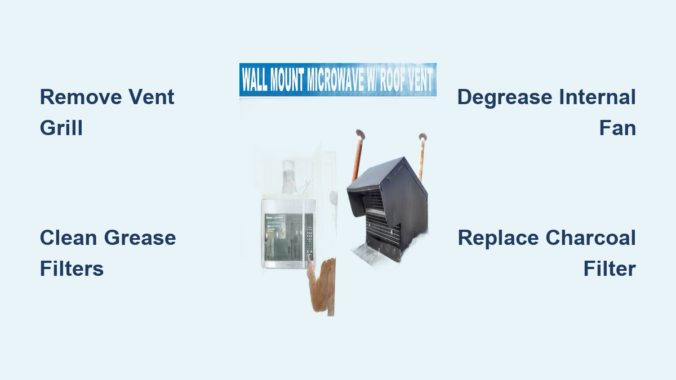
If your kitchen still smells like last night’s fried chicken even after wiping down the counters, your microwave exhaust fan is likely overdue for a deep clean. Most homeowners don’t realize their over-the-range microwave has hidden grease filters, internal fans, and vent systems that trap cooking residue, odors, and can even become fire hazards over time. Ignoring this critical maintenance task leads to reduced airflow, lingering smoke smells, and inefficient ventilation.
This guide reveals exactly how to clean every part of your microwave exhaust system, from removable grills and mesh filters to internal fan blades and odor-trapping components. You’ll learn where hidden filters are located, which cleaners actually cut through baked-on grease, how to safely access internal parts, and why Febreze, not vinegar, is the secret weapon for stubborn odors.
Remove Exterior Vent Grill Safely
Before cleaning any internal component, you must first remove the exterior vent grill. This panel blocks access to filters and the fan housing, and it’s often overlooked because screws are hidden out of sight.
Locate Hidden Screws on Top or Bottom
For top-mounted grills, look along the upper edge of the microwave. Most models secure the grill with two to four Phillips-head screws facing upward, often invisible unless you’re standing on a step stool. On some units, opening the microwave door slightly allows the grill to slide off more easily once unscrewed.
For bottom-mounted vents common in over-the-range microwaves, locate screws along the front, sides, or back edges of the lower panel. These panels usually hinge downward after screws are removed, giving you direct access to grease filters and the fan chamber above.
Use gloves and eye protection when working with this area. Decades of grease can flake off during removal, and metal edges may be sharp. Never force the grill if it doesn’t come free after removing visible screws. Check for additional fasteners underneath or behind the unit first.
Lift or Slide Grill Off Carefully
Once screws are removed, top grills typically slide backward or lift straight off. Bottom panels often pivot down like a door, revealing filters beneath. Set the grill aside on a towel to avoid scratching surfaces.
Inspect the area behind the grill. You’ll likely see a metal mesh filter or access point to the internal fan where heavy grease buildup occurs, especially if you fry, sear, or grill frequently.
Clean Grease Filters Thoroughly

Grease filters trap airborne oil from stovetop cooking. Over time, they clog, reduce airflow, and create fire risks. Most microwaves have two to three of these metal mesh filters, one behind the top grill and one or two beneath the unit.
Dishwasher Cleaning Method
The most effective way to clean grease filters is placing them in the dishwasher. Remove each filter carefully and load them on the bottom rack. Use regular detergent and run a normal or heavy-duty cycle. Grease melts away, leaving filters shiny and residue-free.
Clean every one to three months depending on cooking frequency. High-heat cooking like stir-frying and bacon demands more frequent cleaning.
Manual Soak and Scrub
If you don’t have a dishwasher or prefer manual cleaning, fill a sink with hot water and dish soap. Dawn works best for cutting through grease. Submerge filters for 15 to 30 minutes, then scrub with an old toothbrush focusing on mesh openings. Rinse thoroughly with hot water and dry completely before reinstalling.
Avoid steel wool or abrasive pads. They damage anti-stick coatings on some filters.
Vinegar Soak for Odor Removal
For filters with lingering smells, mix equal parts white vinegar and water. Soak filters for 30 minutes, then follow with scrubbing and rinsing. Vinegar helps break down stubborn grease and neutralizes odors, but it does not replace degreasing. Always clean grease first, then deodorize.
Never use oven cleaner or caustic chemicals. These can corrode metal filters and cause permanent damage.
Access Internal Fan Components
Surface cleaning won’t fix deep odors or poor suction. To truly clean the exhaust system, you need access to the internal fan, motor housing, and ductwork.
Uninstall Microwave for Full Access
For complete cleaning, unplug the microwave or cut power at the breaker. Remove mounting screws from the cabinet above. Carefully lower the unit and disconnect wiring if hardwired, then lay it on a padded surface.
Now remove side, top, and back panels using a screwdriver. The outer shell pulls straight back or lifts off, exposing the internal blower fan and exhaust path. This step is optional but recommended for units with persistent odors or visible internal grime.
Open Vent Panel Without Removal
If uninstalling isn’t feasible, remove screws from the top or bottom vent panel. Gently pull or hinge the panel open and use a flashlight to inspect the fan blades and surrounding housing.
You should now see the fan motor and ducting. Wipe accessible areas with a damp cloth and apply degreaser as needed. Look for black, sticky residue or oil fuzz clinging to blades. This reduces airflow and spreads odors.
Degrease Fan and Duct Surfaces
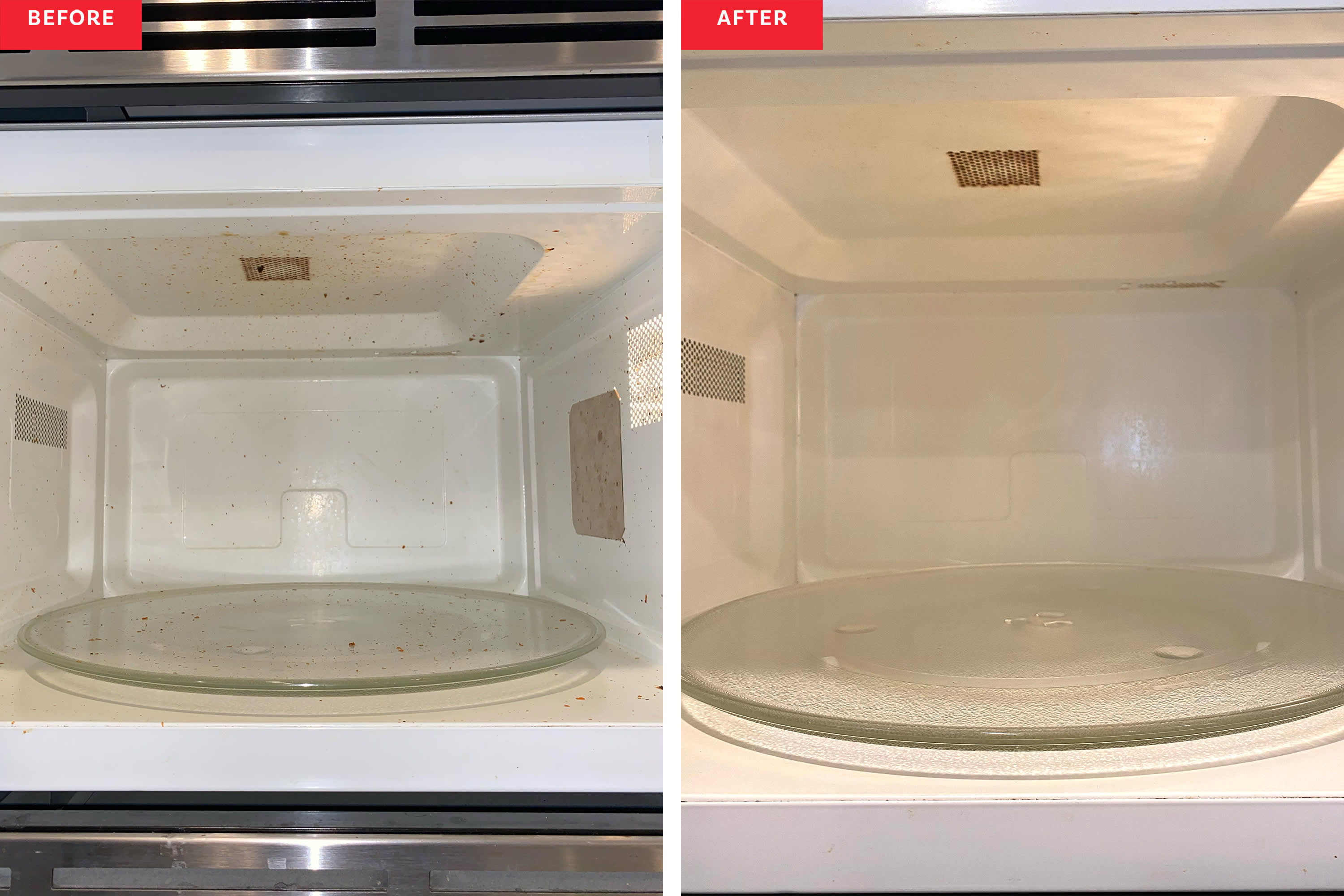
Once internal components are exposed, remove built-up grease that standard wiping can’t reach.
Spray With Effective Degreasers
Use proven cleaners like Dawn Powerwash Spray, which needs no rinsing and clings to vertical surfaces. Lysol Antibacterial Kitchen Cleaner cuts grease and disinfects simultaneously. Krud Kutter is professional-grade degreaser for heavy buildup, and Awesome Orange Cleaner offers a budget-friendly option from dollar stores.
Spray directly onto fan blades, housing, and nearby duct surfaces. Let sit for three to five minutes to break down grease. Avoid oversaturating electrical connections or motor windings.
Scrub Tight Spaces With Tools
Use cotton swabs for corners and crevices. Use a soft-bristle brush for fan blades and microfiber cloth for wiping large surfaces. Focus on areas where grease accumulates, including blade edges, housing seams, and filter mounts.
Wipe with dish soap first if grease is thick, then follow with a disinfecting spray. Never spray liquid directly into the motor. Dampen cloths and wipe carefully instead.
Eliminate Stubborn Cooking Odors
Grease removal doesn’t guarantee odor elimination. Smoke, fish, or burnt food smells embed in filters and plastic housings, even after deep cleaning.
Use Febreze on Internal Surfaces
Contrary to popular belief, vinegar alone won’t eliminate deep odors. The most effective solution is Febreze Fabric Refresher, used by contractors and verified by users.
After grease is removed, spray Febreze directly onto fan housing, duct lining, and inner shell. Alternatively, spray Febreze onto a paper towel and wipe surfaces, which is safer near electronics. Allow to air dry completely before reassembly.
Run Vinegar Steam Cycle
For residual cavity odors, mix one cup water with half a cup white vinegar in a microwave-safe bowl. Microwave on high for three to five minutes until boiling. Let sit five to ten minutes with door closed, then wipe interior with a clean cloth.
This loosens grime and freshens the cooking chamber, but it won’t clean the exhaust duct. Only physical access does that.
Boil Vinegar Under Microwave
To draw steam into the exhaust system, place a pot with one cup water and one cup vinegar on the stove. Position directly under the microwave vent and turn exhaust fan to high. Simmer for 15 to 20 minutes.
This pulls deodorizing steam through the duct, helping loosen residue and neutralize smells. May require repeated sessions for severe odors from fire damage or long-term neglect.
Replace Charcoal Filters Regularly
Unlike grease filters, charcoal odor filters are not cleanable. They absorb cooking smells in recirculating microwave models that don’t vent externally.
Identify Your Filter Type
Check your microwave manual or look inside to identify filter types. Metal mesh filters are grease filters and are cleanable. Black carbon pad or foam indicates a charcoal filter that must be replaced.
If your microwave vents internally instead of outside, it uses charcoal filters.
Install New Filter Every 6-12 Months
Replace charcoal filters every six months with frequent cooking or every 12 months with light use. Failure to replace leads to reduced odor control, musty stale air, and poor air quality.
Purchase OEM or compatible replacement filters online or from appliance stores. No cleaning method restores charcoal filters. Replacement is the only solution.
Reassemble and Test System
After cleaning and drying all components, reassembly ensures everything functions safely and efficiently.
Dry Parts Completely Before Reinstalling
Moisture left on filters or in the housing can cause electrical issues, promote mold growth, and trigger error codes. Let filters and internal areas air dry overnight if needed.
Snap Grill Back Into Place
Reattach the exterior grill by aligning tabs or slots. Slide or press into position and secure with screws. Ensure the panel fits flush and doesn’t rattle when the fan runs.
Restore Power and Run Fan Test
Plug in the microwave or restore circuit power. Turn on the exhaust fan at high speed and listen for smooth operation with no grinding or vibration. Check airflow strength beneath the unit.
If the fan is weak or noisy, double-check for loose panels, obstructed blades, or improper filter placement.
Maintain Clean Performance Long-Term
Regular upkeep prevents grime buildup and extends your microwave’s lifespan.
Follow Recommended Cleaning Schedule
Wipe interior cavity weekly. Clean grease filters every one to three months. Clean exterior grill every six months. Inspect internal fan annually. Replace charcoal filter every six to twelve months.
Set calendar reminders to stay consistent with maintenance.
Prevent Future Buildup
Use your range hood while frying, grilling, or searing. Clean spills immediately inside the microwave. Run the fan during and after cooking for at least five minutes. Avoid aerosol sprays near vents because they leave residue.
Built-up grease is a potential fire hazard. Regular cleaning significantly reduces this risk.
Key Takeaways for Cleaning Your Microwave Exhaust Fan
Cleaning your microwave exhaust fan isn’t just about freshness. It’s about safety, efficiency, and performance. With hidden filters, internal fans, and odor traps, a full clean goes far beyond wiping the outside.
The most important steps are removing the exterior vent grill to access hidden filters, cleaning grease filters monthly using your dishwasher or hot soapy water soak, and accessing internal fan components for deep degreasing when odors persist. Don’t forget to replace charcoal filters every six to twelve months since they cannot be cleaned.
For stubborn odors, Febreze beats vinegar every time. Spray it directly on internal surfaces after grease removal for best results. Start today by unplugging your microwave, removing the grill, and discovering what’s been hiding above your stove.
Frequently Asked Questions About Cleaning Microwave Exhaust Fan
How often should I clean my microwave exhaust fan filters?
Clean grease filters every one to three months depending on your cooking frequency. If you fry or sear often, clean monthly. Light cooking allows for quarterly cleaning. Replace charcoal filters every six to twelve months regardless of cleaning.
Can I put microwave grease filters in the dishwasher?
Yes, the dishwasher method is highly effective for cleaning metal mesh grease filters. Remove filters carefully, place on the bottom rack, and run a normal cycle with standard detergent. Filters come out shiny and grease-free.
Why does my microwave still smell after cleaning?
Vinegar alone doesn’t eliminate deep odors embedded in filters and plastic housings. Use Febreze Fabric Refresher directly on fan housing and duct surfaces after removing grease. Persistent odors may require accessing internal components or repeated treatments.
Do all microwaves have exhaust fans?
All over-the-range microwaves have exhaust fans. Built-in and under-cabinet models may vary. Check your manual to confirm your model includesventing capabilities and where filters are located.
Can I clean the internal fan without uninstalling the microwave?
Yes, you can access the internal fan by removing the top or bottom vent panel without full uninstallation. Remove screws from the vent panel, gently pull or hinge it open, and use a flashlight to inspect and wipe accessible areas.
Is built-up grease in microwave vents dangerous?
Yes, built-up grease is a potential fire hazard. Regular cleaning of filters and exhaust components significantly reduces this risk. Clean filters monthly and inspect internal components annually to maintain safe operation.
Leave a Reply