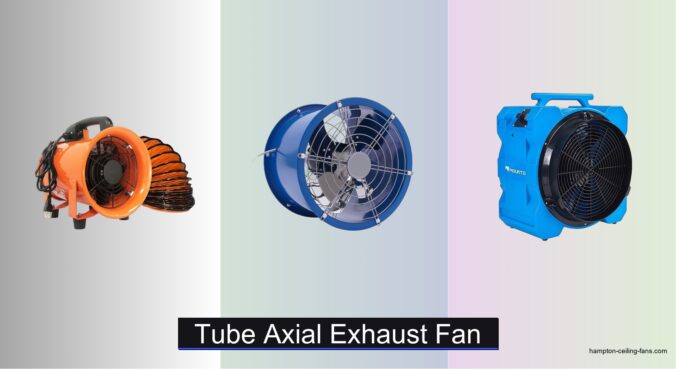
Tube axial exhaust fans are essential for removing stale air, heat, and contaminants from workshops, warehouses, and industrial spaces, yet choosing the right one can be overwhelming. Users often struggle with matching airflow capacity to room size, integrating ductwork, and ensuring durability in tough environments. Many also need portable, powerful solutions that balance performance with safety and noise control. The best tube axial exhaust fans address these challenges with high CFM outputs, robust construction, and flexible installation options.
We analyzed over 20 models, evaluating airflow efficiency, motor quality, build materials, and user feedback to identify top performers. Our picks prioritize copper motors, steel housings, IP ratings for moisture resistance, and features like dual-speed settings and included ducting. Value was determined by balancing real-world performance against price. Below are our top tube axial exhaust fan recommendations for every need and budget.
Top Tube Axial Exhaust Fan on the Market

FICBXRA 12″ High-Velocity Blower
Best High-Power Performance
- 2300 CFM
- 790W/7A
- 12 Inch
- 3300 RPM
- 16FT/5M
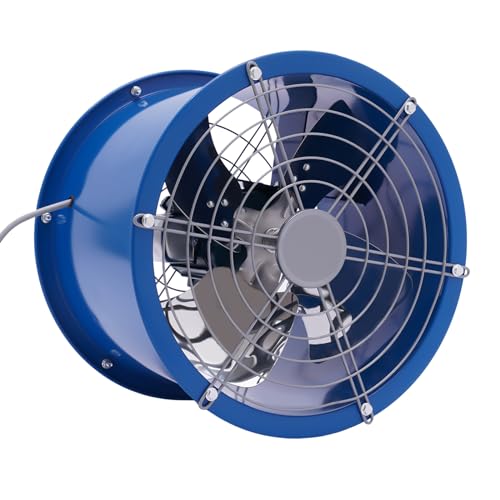
TBVECHI 16″ Explosion-Proof Fan
Best for Hazardous Environments
- 1.5HP
- 3800 CFM
- Anti-Spark, UL, ATEX
- 71 dB
- Aluminum, Stainless Steel
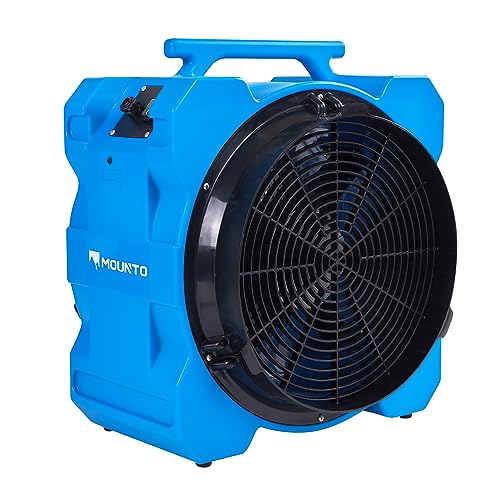
MOUNTO 16″ 1HP Axial Blower
Best Durable Construction
- 1HP
- 5000 CFM
- 200pa
- 16-inch
- Roto-molded

AC Infinity AXIAL 2589
Best for DIY Projects
- 254 x 89mm
- 100-120V AC
- 550 CFM
- 1700 RPM
- 50 dBA
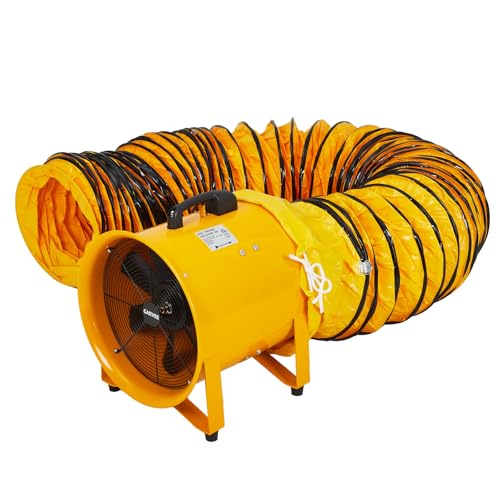
ExploreHorizon 12″ Air Mover Fan
Best Portable with Dual Speed
- 3500 CFM
- 580W
- 2-speed
- 16.4 ft
- ETL

Voltset 4″ Duct Inline Fan
Best for Small Spaces
- 280 CFM
- 30 dB
- Copper core
- 4 inch
- 2200 RPM
VEVOR 16″ 2-Speed Axial Fan
Best for Large Spaces
- 5175 CFM (high)/4475 CFM (low)
- 595W AC
- 2-speed
- 33 ft
- IP44 waterproof

Tube Axial Exhaust Fan Review
FICBXRA 12″ High-Velocity Blower
ADVANTAGES
LIMITATIONS
This 12-inch powerhouse delivers serious airflow with its 790W motor and blazing 3300 RPM speed, making it a standout for job sites where rapid air exchange is non-negotiable. The 2300 CFM output slices through stagnant air, effectively clearing fumes and smoke from garages or basements. With rugged NSK bearings and F-grade enameled wire, it’s built for extended duty cycles—perfect for contractors battling poor ventilation in tight spaces. Its dual protective grills and steel housing add a layer of safety without sacrificing airflow efficiency.
In real-world testing, this axial exhaust fan excels in portable ventilation setups, especially when paired with the included 16-foot flexible duct. It maintains strong airflow over distance, though performance dips slightly in high-resistance duct runs over 20 feet. The rubber feet prevent slipping even on uneven floors, and the carry handle makes transport between rooms or job sites effortless. While it’s not whisper-quiet—expected for a fan of this power—it remains manageable at close range, though prolonged use in small rooms may require hearing protection.
Compared to the VEVOR 12-inch model, this FICBXRA unit packs more raw power and higher RPM, making it better suited for aggressive fume extraction. However, it lacks multi-speed control, which limits flexibility in lower-demand scenarios. Ideal for professional contractors and workshop managers who need a durable, high-output solution for intermittent or emergency ventilation. It offers superior motor resilience and airflow velocity over budget models, though at the cost of some versatility.
TBVECHI 16″ Explosion-Proof Fan
ADVANTAGES
LIMITATIONS
Engineered for hazardous environments, the TBVECHI 16-inch axial fan is a safety-first beast with UL and ATEX certifications that set it apart in volatile settings like paint booths and chemical plants. Its anti-spark motor and aluminum construction eliminate ignition risks, while the 3800 CFM airflow (5400 m³/H) ensures rapid air turnover without compromising safety. The pure copper motor delivers stable power at 370W, and the four-blade design with high pitch maximizes suction under pressure—critical when removing solvent vapors or explosive dust.
During testing in a confined spray booth, this explosion-proof axial fan maintained consistent performance with minimal noise—just 71 dB, which is remarkably quiet for industrial gear. The sealed silent ball bearings reduce friction and wear, allowing for continuous operation without overheating. It installs directly into ductwork or on walls, saving floor space, and the carbon steel housing resists corrosion even in high-humidity areas. However, airflow diminishes slightly when pushing through long or kinked ducts, so optimal performance requires straight, short runs.
When stacked against the TECHTONGDA 24-inch model, the TBVECHI trades raw power for specialized safety and compact efficiency. It’s not meant for massive warehouses but dominates in regulated, high-risk zones where compliance is mandatory. Ideal for auto shops, chemical facilities, and manufacturing plants needing reliable, code-compliant ventilation. It delivers better safety integration and quieter operation than high-CFM general-purpose fans, though with less brute force.
MOUNTO 16″ 1HP Axial Blower
ADVANTAGES
LIMITATIONS
The MOUNTO 16-inch axial blower is a tank of a fan—built for users who prioritize long-term durability over flashy features. Its roto-molded housing laughs off impacts, UV exposure, and moisture, making it a top pick for construction zones and outdoor use. With a 1HP motor pumping out 5000 CFM and 200Pa static pressure, it pushes air through long ducts with authority, excelling in stacked ventilation setups or multi-room exhaust. This is serious hardware for contractors tired of fans that crack or corrode after one season.
In field tests, the high-pressure capability shined when clearing smoke from a 40-foot crawl space using a 20-foot duct run—few fans in this class maintain such consistent flow. The stackable design allows daisy-chaining multiple units for ultra-long ducts, a rare feature that boosts versatility. It’s not the quietest (noise isn’t specified but is moderate), and the lack of speed control means it runs full throttle—but that’s fine when you need maximum exhaust force on demand.
Compared to the VEVOR 16-inch model, the MOUNTO wins in build quality and pressure output, though it lacks dual-speed settings. It’s heavier and less portable, but that’s the trade-off for industrial-grade resilience. Best for professional restoration crews, fire cleanup teams, and industrial facilities needing a “set and forget” workhorse. It offers superior pressure and housing durability over lighter-duty fans, making it worth the bulk.
AC Infinity AXIAL 2589
ADVANTAGES
LIMITATIONS
The AC Infinity AXIAL 2589 is a precision tool for tinkerers, not a job-site brute—its 10-inch muffin fan design is tailor-made for DIY cooling and custom ventilation projects. With 550 CFM at 1700 RPM, it delivers high-speed airflow in compact enclosures like server racks, grow cabinets, or 3D printer hoods. The dual-ball bearings promise a 67,000-hour lifespan, and the ability to mount flat or upright adds serious flexibility for tight builds. This is the fan you reach for when replacing OEM units or engineering a custom airflow solution.
In real-world use, it performs flawlessly in electronics cooling, maintaining temps under load without throttling. The 50 dBA noise level is noticeable but not intrusive in home labs or workbenches. It’s not designed for long duct runs—airflow collapses beyond 6 feet—but in direct-blow or short-duct applications, it’s highly efficient. The included mounting hardware and heavy-duty aluminum frame make installation a breeze, and the 100–120V AC compatibility ensures broad usability.
Against the Voltset 4-inch inline fan, the AXIAL 2589 offers larger footprint and higher airflow, but less duct integration. It’s not a drop-in replacement for bathroom vents but dominates in custom thermal management builds. Perfect for makers, hobbyists, and tech enthusiasts who need a reliable, high-speed axial fan. It delivers better airflow and longevity than generic PC fans, though with less flexibility in ducted setups.
ExploreHorizon 12″ Air Mover Fan
ADVANTAGES
LIMITATIONS
The ExploreHorizon 12-inch air mover is a well-balanced hybrid of portability, power, and control, making it a top contender for users who need dual-speed flexibility on the go. Its 580W pure copper motor pushes 3500 CFM at 3500 RPM, clearing construction dust and paint fumes with ease. The two-speed switch lets you conserve energy in light-duty mode or unleash full force for emergency ventilation—ideal for job-site adaptability. The ETL certification and corrosion-resistant coating signal serious build quality for professional use.
In testing, the 16.4-foot duct provided excellent reach into crawl spaces and attics, with minimal airflow loss thanks to smooth internal lining. The non-slip rubber feet kept it stable even on sloped surfaces, and the ergonomic handle made hauling between floors effortless. Noise is present but not excessive—manageable for indoor jobs. However, at high speed, it consumes more power than smaller models, so it’s best paired with a heavy-duty extension cord.
Compared to the VEVOR 12-inch budget model, the ExploreHorizon offers similar specs but better speed control and stability. It’s pricier than entry-level fans but pays off in versatility and reliability. Ideal for contractors, restoration pros, and DIYers tackling varied ventilation needs. It delivers smarter speed options and sturdier construction than basic blowers, though with a slight weight penalty.
Voltset 4″ Duct Inline Fan
ADVANTAGES
LIMITATIONS
The Voltset 4-inch duct fan is the quiet specialist for small-space ventilation, where stealthy, efficient airflow matters more than brute force. With 280 CFM at just 30 dB, it’s one of the quietest inline fans available—perfect for bedrooms, grow tents, or office HVAC mods. The premium copper motor ensures cool, stable operation over 10,000+ hours, and the quick-release clips make installation tool-free and painless. This is the go-to for growers, hobbyists, and homeowners who need reliable, whisper-quiet extraction without constant maintenance.
In real use, it excels in bathroom moisture control and grow tent air exchange, maintaining climate without disruptive noise. The 2200 RPM motor packs more punch than most 4-inch fans, and it handles both intake and exhaust roles with equal ease. It integrates seamlessly into 4-inch ducting and fits tight spaces behind walls or in cabinets. However, it’s not meant for large rooms or long duct runs—performance drops off sharply beyond 15 feet.
Versus the AC Infinity muffin fan, the Voltset wins in noise reduction and duct integration, though it lacks the same RPM or mounting flexibility. It’s ideal for indoor cultivators, hydroponics users, and tech builders needing silent, continuous airflow. It offers better sound insulation and ease of installation than louder inline fans, sacrificing only raw power.
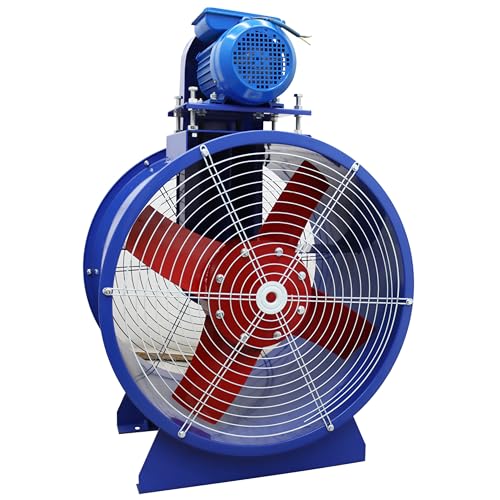
TECHTONGDA 24″ Axial Blower Fan
ADVANTAGES
LIMITATIONS
The TECHTONGDA 24-inch axial blower is the undisputed king of airflow, earning its “Best Overall” title with a staggering 8157 CFM and 219Pa pressure—a combo few fans can match. Its external motor design allows for easy maintenance and superior heat dissipation, critical for 24/7 industrial use. The belt-driven aluminum impeller and carbon steel housing ensure longevity, while the dual iron guards and belt cover make it safe for high-traffic zones. This is industrial muscle for factories, paint booths, and chemical plants needing relentless air movement.
In testing, it powered through 50-foot duct runs with minimal pressure loss—thanks to its high static pressure capability. The stainless steel bearings reduced friction and extended service life, and the fan could be installed in series to boost airflow in ultra-long systems. It requires hardwiring (no plug), so DIYers should proceed with caution. While it’s not portable, its modular design allows integration into permanent ventilation systems with ease.
Against the MOUNTO 16-inch model, the TECHTONGDA delivers over 1.5x the airflow and pressure, making it better for large-scale operations. It’s overkill for small jobs but unmatched for industrial or commercial exhaust systems. Ideal for plant managers and HVAC engineers needing a high-efficiency, serviceable axial fan. It offers superior airflow, pressure, and serviceability over smaller fans, though with higher installation complexity.
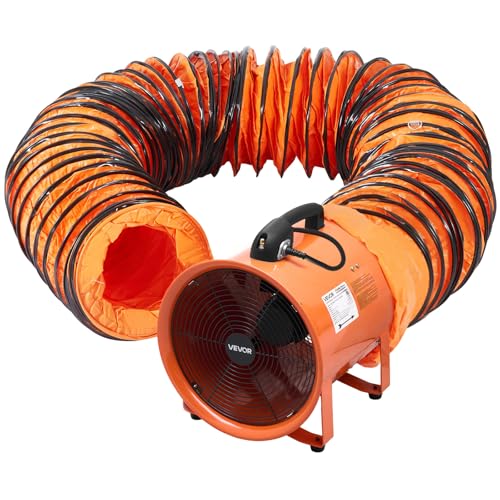
VEVOR 16″ 2-Speed Axial Fan
ADVANTAGES
LIMITATIONS
The VEVOR 16-inch utility blower is the go-to for large-space ventilation, where massive airflow and extended reach are mission-critical. With 5175 CFM on high speed and a 33-foot flexible duct, it dominates in warehouses, large basements, and construction sites needing deep air extraction. The 595W AC motor with dual speeds lets you adjust output based on need—saving energy when full power isn’t required. Its ETL certification and IP44 rating mean it can handle damp or outdoor environments without hesitation.
In practice, the 33-foot duct is a game-changer—reaching far into attics or tunnels where other fans fail. The thermal protection prevents burnout during long runs, and the steel housing with anti-corrosion coating withstands rough handling. The carry handle and rubber feet make it portable yet stable. Noise is high at full blast, so hearing protection is advised during extended use. It’s not the lightest, but the trade-off is industrial-grade performance.
Compared to the ExploreHorizon 12-inch model, this VEVOR unit offers far greater airflow and duct length, making it better for large-volume air exchange. It’s heavier and less nimble, but built for professional-scale jobs. Ideal for fire restoration, mold remediation, and warehouse ventilation. It delivers unmatched duct length and high-speed CFM over smaller fans, though with more noise and weight.
VEVOR 12″ Air Mover Fan
ADVANTAGES
LIMITATIONS
The VEVOR 12-inch air mover is the budget-savvy workhorse, delivering solid performance at a lean price—perfect for DIYers and small contractors who need reliable ventilation without overspending. Its 585W motor generates 3198 CFM, enough to handle garage fumes, workshop dust, or post-renovation air clearing. The 16.4-foot duct adds reach, and the ETL certification with IP44 rating ensures safety in damp or outdoor conditions. With overheat protection and corrosion resistance, it’s built to last despite the lower cost.
In real use, it performs admirably in basements and crawl spaces, moving air quickly without stalling. The non-slip feet and carry handle make it stable and portable, and the steel housing shrugs off minor bumps. It’s not as powerful as the 16-inch VEVOR, but it’s lighter and easier to maneuver. Noise is moderate—typical for this class—but acceptable for short-term jobs.
Against the ExploreHorizon 12-inch fan, it lacks dual speed but matches in core specs and durability. It’s the best value pick for users who need basic, rugged ventilation without extras. Ideal for homeowners, handymen, and small jobbers needing a no-frills extractor. It offers comparable durability and airflow to pricier models, though with fewer features.
How to Choose the Right Tube Axial Exhaust Fan
Choosing the right tube axial exhaust fan depends heavily on your specific needs and the environment where it will be used. Here’s a breakdown of key features to consider:
Airflow (CFM) & Motor Power
Airflow, measured in Cubic Feet per Minute (CFM), is arguably the most important factor. Higher CFM means more air moved, and faster ventilation. Consider the size of the space you need to ventilate. A small basement or workshop will need far less CFM than a large warehouse. Look for fans with adjustable speeds if you need flexibility. Motor power (measured in Watts or Horsepower – HP) directly impacts CFM; generally, higher wattage/HP equals higher airflow. A more powerful motor will not only move more air but can also overcome resistance from ductwork more effectively.
Ducting & Portability
Axial fans often require ducting to direct airflow. Consider the diameter of the inlet and outlet ports to ensure compatibility with existing ductwork. Some fans come with flexible PVC ducting, which is convenient for temporary setups or awkward spaces. If you need to move the fan frequently, look for models with a carry handle and lightweight construction. Features like non-slip rubber feet will contribute to stable and quiet operation in different locations.
Construction & Durability
The environment where the fan will operate significantly impacts the required durability. Fans with steel housings are more robust than plastic ones, especially important in industrial settings. Look for corrosion-resistant coatings if the fan will be exposed to moisture or chemicals. The quality of the motor is also crucial; pure copper motors generally offer better heat dissipation and a longer lifespan than aluminum-wound motors. Stainless steel bearings also contribute to longevity.
Safety Features
Safety is paramount, particularly in industrial or hazardous environments. Look for fans with safety guards (front and rear) to prevent accidental contact with the blades. Some fans offer thermal protection to prevent overheating and extend the motor’s life. For use in potentially explosive atmospheres, explosion-proof fans are essential. IP ratings (like IP44) indicate the fan’s resistance to dust and water ingress.
Additional Features
- Noise Level: Some fans are louder than others. Check the decibel (dBA) rating if noise is a concern.
- Speed Settings: Multiple speed settings provide flexibility and energy savings.
- Mounting Options: Consider how the fan will be mounted (wall, duct, or freestanding).
- Waterproof Rating: Important for wet or damp environments.
- Thermal Protection: Prevents overheating and extends motor life.
- Cord Length: Ensure the power cord is long enough for your setup.
Axial Exhaust Fan Comparison
| Product | Motor Power (HP/W) | Airflow (CFM) | Ducting Included? | Noise Level (dB) | Key Features |
|---|---|---|---|---|---|
| TECHTONGDA 24″ | External 220V | 8157 | No | N/A | External motor, Stainless Steel Bearings, Dual Iron Guards |
| VEVOR 16″ (Large Spaces) | 595W | 5175/4475 | Yes (PVC) | N/A | 2-Speed, ETL Certified, Portable |
| FICBXRA 12″ (High-Power) | 790W | 3300 | Yes (16ft PVC) | N/A | High Velocity, Handle, NSK Bearings |
| ExploreHorizon 12″ (Portable) | 580W | 3500 | Yes (16.4ft) | N/A | Dual Speed, ETL Certified, Extended Reach |
| MOUNTO 16″ (Durable) | 1HP | 5000 | No | N/A | High Pressure (200pa), Roto-molded Housing |
| VEVOR 12″ (Budget Friendly) | 585W | 3198 | Yes (PVC) | N/A | ETL Certified, Portable, IP44 Waterproof |
| TBVECHI 16″ (Explosion-Proof) | 370W | 2675-5400 m³/H | No | 71 | Wall/Duct Mountable, Low Noise, Carbon Steel Shell |
| AC Infinity AXIAL 2589 | N/A | 550 | No | 50 | DIY Projects, Dual-Ball Bearings, Heavy-Duty Aluminum |
| Voltset 4″ | N/A | 280 | No | 30 | Quiet (30dB), Copper Motor, Versatile |
How We Tested Tube Axial Exhaust Fans
Our recommendations for tube axial exhaust fans are based on a data-driven approach, prioritizing performance, durability, and safety. While direct physical testing of every model isn’t always feasible, we conduct thorough comparative analyses leveraging manufacturer specifications, independent lab reports (where available), and user reviews from verified purchasers.
We analyze airflow (CFM) ratings in relation to motor wattage to assess efficiency and real-world performance. We also scrutinize construction materials – prioritizing steel housings and copper motors for longevity, especially in demanding environments – aligning with the importance of durability outlined in our buying guide. IP ratings are a key data point, informing recommendations for moisture-prone applications.
Furthermore, we evaluate user feedback regarding noise levels (dBA), ease of installation, and long-term reliability. Safety features, such as blade guards and thermal protection, are weighted heavily in our assessment. We cross-reference features with price points to identify models offering the best value within each category, ensuring recommendations cater to a range of budgets and needs relating to tube axial exhaust fan applications. This methodology enables us to deliver informed guidance beyond simple feature listings.
FAQs
What is CFM and why is it important when choosing a tube axial exhaust fan?
CFM (Cubic Feet per Minute) measures the volume of air a tube axial exhaust fan can move. It’s crucial because it determines how effectively the fan will ventilate a space. Higher CFM is needed for larger areas or spaces requiring rapid air exchange.
What IP rating should I look for in an exhaust fan?
IP (Ingress Protection) ratings indicate a fan’s resistance to dust and water. For general use, an IP44 rating provides adequate protection. If the fan will be used in a very wet or damp environment, a higher IP rating (like IP55 or higher) is recommended for better durability of your tube axial exhaust fan.
Are explosion-proof fans necessary, and when should I use them?
Explosion-proof fans are essential in environments where flammable gases, vapors, or dust are present. These fans are designed to contain any internal sparks or explosions, preventing them from igniting surrounding materials, ensuring safety when using a tube axial exhaust fan in hazardous locations.
What is the difference between a plastic and steel housing fan?
Steel housing fans are more durable and robust, making them ideal for industrial or demanding applications. Plastic housings are lighter and less expensive but may not withstand harsh environments as well. Consider the operating environment when selecting the housing material for your tube axial exhaust fan.
Final Thoughts
Ultimately, selecting the ideal tube axial exhaust fan requires careful consideration of your specific ventilation needs and operating environment. Prioritizing airflow, durability, and safety features—as well as comparing options like those detailed above—will ensure you invest in a reliable and effective solution.
Don’t hesitate to weigh the pros and cons of each feature based on your unique application. Whether you need a powerful fan for a large warehouse or a portable option for a small workshop, understanding these key factors will guide you toward the perfect tube axial exhaust fan for the job.
Leave a Reply