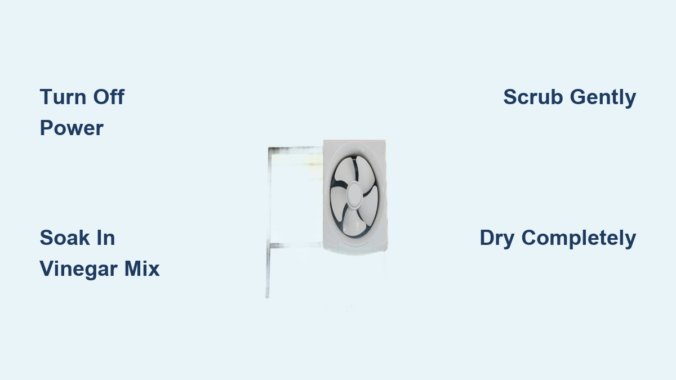
Grease buildup on kitchen exhaust fans creates serious safety hazards and performance issues. When grease accumulates on fan blades and filters, it restricts airflow, forces the motor to work harder, and becomes a significant fire risk. Learning how to clean oily exhaust fan components properly restores suction power and keeps your kitchen safe. This guide covers the complete cleaning process using household items like vinegar and baking soda, plus troubleshooting tips for stubborn residue.
Power Off and Cool Down Before Cleaning
Safety must be your first priority when tackling an oily exhaust fan. Accidental startup during cleaning can cause injury, and hot components can burn your skin.
Turn Off the Power Supply
Switch off the exhaust fan at the wall. If your model is hardwired, turn off the circuit breaker to eliminate electrical risk completely. Never rely solely on the control buttons. Physically disconnecting power is the only safe way to proceed with cleaning.
Wait for Complete Cooling
If you have recently cooked, let the fan sit for at least 30 minutes before handling. Metal parts near the motor and filters retain heat and can cause burns even when the unit feels idle to the touch.
Remove the Grease Filter Safely
The filter is the most grease-prone component and usually the easiest to access. Removing it correctly prevents damage and ensures a thorough clean.
Locate and Unlock the Filter
Most under-cabinet or island hoods have removable grease filters held by clips, screws, or a slide-in mechanism. Check your user manual for specifics, but generally pull down gently on side clips, unscrew retaining screws if present, or slide the filter out horizontally.
Handle With Care
Aluminum or stainless steel mesh filters bend easily. Hold them by the edges to avoid warping the mesh, which can reduce filtering efficiency and airflow.
Note: Charcoal filters found in recirculating hoods are not washable. Replace them every 6 to 12 months. Only metal grease filters should be cleaned using this method.
Soak in Degreasing Solution

Soaking loosens baked-on grease so it rinses away easily. The right solution makes all the difference, especially for sticky, aged residue.
Prepare the Soaking Mix
Fill a sink or large basin with hot water and add a few drops of dish soap, 1 cup of white vinegar, and 2 tablespoons of baking soda. The vinegar cuts through grease while the baking soda lifts grime and neutralizes odors. Together they create a foaming reaction that penetrates deep into mesh pores.
Soak Time Based on Grease Level
Light grease from weekly use needs about 15 minutes. Moderate buildup from daily cooking requires 20 to 30 minutes. Heavy grease from frequent frying may need 45 to 60 minutes. Place a plate over the filter to keep it fully submerged during soaking.
Scrub Without Damaging the Mesh
After soaking, some grease may still cling to the filter. Gentle scrubbing removes it without harming the surface.
Use the Right Tools
Use a soft-bristle brush such as an old toothbrush and a non-abrasive sponge. Scrub both sides of the filter, focusing on corners and dense mesh areas where grease hides. Avoid steel wool or scouring pads, which can damage the mesh.
Tackle Stubborn Sticky Residue
Mix a paste of equal parts baking soda and vinegar, apply directly to greasy spots, and let sit 10 minutes before scrubbing. This breaks down residual stickiness that dish soap alone cannot remove.
Warning: Never use oven cleaner or bleach. These can corrode metal and void your warranty.
Rinse and Dry Completely
Rinsing removes all cleaning residue. Drying prevents mold and ensures optimal performance when you reinstall the filter.
Rinse Under Warm Water
Hold the filter under running warm water, gently shaking it to flush out loosened grease. Inspect both sides. No oily film should remain.
Air Dry Before Reinstalling
Place the filter upright on a clean towel in a well-ventilated area. Allow 1 to 2 hours for complete drying. Never reinstall a damp filter. It can trap moisture, encourage mold growth, and reduce suction power.
Quick Check: Touch the filter. If it feels cool or damp, wait longer before reinstalling.
Clean Fan Blades and Interior Housing

Grease does not stay only on the filter. It coats the blades and internal surfaces too. Cleaning these areas boosts airflow and prevents motor strain.
Wipe Accessible Blades
Dampen a microfiber cloth with warm, soapy water. Wipe each blade carefully, avoiding excessive moisture near the motor. For tight spots, wrap a cloth around a wooden spoon or use a soft brush.
Tackle Greasy Housing
Use the baking soda and vinegar paste on greasy patches inside the hood. Let it sit 5 minutes, then wipe clean with a damp cloth. Dry immediately with a second cloth.
Caution: Do not disassemble the motor housing unless your manual specifically instructs you to do so. Water exposure can damage electrical parts permanently.
Wipe Down Exterior Surfaces
A clean exterior completes the job and prevents cross-contamination to other kitchen areas.
Match the Finish
For stainless steel, wipe with the grain using a vinegar-dampened cloth, then dry to prevent streaks. For painted or plastic surfaces, use mild soap and water only. Harsh cleaners can cause clouding or peeling.
Clean the Control Panel
Dampen a cloth and wipe buttons and switches. Avoid spraying liquids directly onto the panel to prevent short circuits.
Vacuum the Vent and Duct
If your exhaust fan vents outside, the duct collects dust and grease over time. A clogged vent reduces efficiency and increases fire risk.
Use Brush Attachment
With a vacuum cleaner, go over the interior vent opening and accessible duct section. Remove loose debris, lint, and dust buildup that restricts airflow.
For Long or Hidden Ducts
Consider professional duct cleaning annually, especially in high-use kitchens. DIY tools like flexible duct brushes can help, but full access often requires expert equipment.
Reassemble and Test Operation
Proper reassembly ensures safety and performance. A misaligned filter can rattle or restrict airflow significantly.
Reinstall the Filter Correctly
Slide or clip the dry filter back into place. Ensure it is seated evenly and secured with screws or clips. Misalignment causes noise and poor grease capture.
Restore Power and Run Test
Turn the circuit breaker back on or plug in the unit. Run the fan on high speed and listen for unusual noises such as grinding or rattling. Check airflow strength above the stove and confirm no vibration or wobbling.
Choose the Right Cleaning Frequency
How often you clean depends on your cooking habits. Sticking to a schedule prevents extreme buildup from forming.
Recommended Cleaning Intervals
Light use from occasional meals calls for cleaning every 3 months. Moderate use from daily cooking requires cleaning every 6 to 8 weeks. Heavy use from frequent frying or grilling means cleaning every 4 weeks. Set calendar reminders to stay consistent.
Boost Results With Pro-Grade Methods
When household solutions fall short, step up your approach with stronger options.
Use Commercial Degreasers
Products like Zep Heavy-Duty Citrus Degreaser or Goo Gone Kitchen Degreaser dissolve carbonized grease quickly. Apply as directed, wear gloves, and ensure good ventilation.
Test First: Apply to a small area to check for surface damage before using on the entire filter.
Try Dishwasher Cleaning If Safe
Some metal filters are dishwasher-safe. Place on the top rack and run a hot wash cycle without heat dry to prevent warping. Always verify compatibility in your manual first.
Fix Common Post-Cleaning Issues
Even after a thorough clean, problems can arise. Here is how to troubleshoot them.
Filter Still Feels Tacky
Dish soap emulsifies grease but does not always break it down completely. Soak again in 1 part vinegar to 4 parts hot water for 30 minutes. Or apply commercial degreaser, let sit, then rinse.
Reduced Suction After Cleaning
Possible causes include the filter not being fully dry, filter installed backward, or a clogged duct. Check each of these and address accordingly.
Persistent Bad Smells
Old grease trapped in ductwork can emit rancid odors. Try running the fan with a bowl of vinegar nearby. Replace charcoal filters or schedule professional deep cleaning if odors persist.
Prevent Grease Buildup With Daily Habits
Prevention reduces cleaning time and keeps your kitchen safer overall.
Run Fan During and After Cooking
Turn on the exhaust fan 5 minutes before you start cooking and leave it running for 10 to 15 minutes after. This captures rising oil particles before they settle and harden.
Wipe Spills Immediately
After frying, quickly wipe the hood exterior and visible interior with a soapy cloth to prevent hardening and sticking.
Use Splatter Screens
A mesh splatter guard on your pan reduces airborne oil by up to 70 percent, cutting grease accumulation at the source.
When to Call a Professional
Some tasks go beyond DIY capability. Know when to bring in experts.
Annual Deep Cleaning
Professionals use steam cleaners, industrial vacuums, and rotary brushes to clean internal ductwork, motor housing, and hard-to-reach fan mechanisms. This is recommended for homes with frequent high-heat cooking.
Built-In or Commercial Hoods
High-end or island-mounted systems often require disassembly and specialized care. Manufacturer warranties may require professional servicing to remain valid.
Protect Warranty and Appliance Life
Your exhaust fan is an investment. Proper care keeps it covered and lasting longer.
Follow Manufacturer Guidelines
Using harsh chemicals or incorrect methods may void your warranty. Always refer to the user manual for approved cleaning agents and procedures.
Inspect for Damage
During cleaning, check for warped or bent filters, corroded mesh, and loose screws or rattling parts. Replace damaged components promptly to avoid further issues.
Frequently Asked Questions About Cleaning Oily Exhaust Fans
How often should I clean my kitchen exhaust fan filter?
Cleaning frequency depends on your cooking habits. Light use calls for every 3 months, moderate use requires every 6 to 8 weeks, and heavy use from frequent frying needs cleaning every 4 weeks.
Can I put my exhaust fan filter in the dishwasher?
Some metal grease filters are dishwasher-safe. Check your user manual to confirm. Place the filter on the top rack and run a hot cycle without heat dry to prevent warping.
Why does my exhaust fan still smell after cleaning?
Old grease trapped in ductwork can emit rancid odors. Try running the fan with a bowl of vinegar nearby. If smells persist, replace charcoal filters or schedule professional duct cleaning.
What is the best homemade solution for greasy exhaust fans?
A mixture of hot water, dish soap, white vinegar, and baking soda works well. The vinegar cuts through grease while baking soda lifts grime. For stubborn residue, apply a paste of equal parts baking soda and vinegar directly to greasy spots.
Can I use oven cleaner on my exhaust fan filter?
No. Oven cleaner and bleach can corrode metal components and void your warranty. Stick to mild dish soap, vinegar, and baking soda, or use a commercial kitchen degreaser specifically designed for range hoods.
Why is my exhaust fan suction weak after cleaning?
Weak suction after cleaning usually means the filter is not fully dry, was installed backward, or the duct is clogged. Check the filter placement and ensure it is completely dry before reinstalling.
Key Takeaways for Cleaning Your Oily Exhaust Fan
Cleaning an oily exhaust fan is essential for safety, efficiency, and appliance longevity. Using the vinegar and baking soda method for sticky buildup, soaking filters for at least 20 minutes, and drying them fully before reinstallation will maintain strong airflow and reduce fire risk. Clean every 4 to 12 weeks based on your cooking frequency, and consider professional duct cleaning annually for optimal performance. With these steps, your kitchen stays fresh, your air stays clean, and your exhaust fan runs like new for years.
Leave a Reply