
Installing a roof exhaust fan is one of the most effective ways to improve attic ventilation, reduce indoor temperatures, and prevent moisture damage. Whether you’re upgrading your home’s energy efficiency with a solar-powered attic fan or installing a commercial upblast exhaust system, proper installation ensures long-term performance and leak-free operation. This guide walks you through every critical step, from site selection and cutting the roof opening to waterproofing, wiring, and final testing.
Choose the Right Roof Exhaust Fan

Selecting the correct roof exhaust fan depends on your specific application. For residential attics, you have two primary options: powered electric fans or solar-powered models. Solar fans like the Remington 20-watt require no wiring, operate at zero electricity cost, and are perfect for DIYers. Electric models such as the Jet Fan 727 offer continuous operation with thermostat control but must be hardwired by a licensed electrician.
For commercial kitchens, upblast exhaust fans are required to remove smoke, heat, and grease-laden vapors. These units mount on prefabricated curbs, comply with NFPA 96, and often include hinged access for cleaning and fire suppression integration. Match your fan type to your application before purchasing.
Power and Placement Considerations
Solar fans only run during daylight, so ensure your roof has full sun exposure, ideally on a south-facing slope in the Northern Hemisphere. Electric models need a dedicated circuit, GFCI protection, and compliance with NEC outdoor wiring codes. Always verify voltage and amperage match the motor nameplate before installation.
Find the Optimal Installation Location
Installing the fan in the right spot directly impacts performance. Install the unit within 2 feet below the ridge line to maximize hot air extraction, since heat rises and accumulates near the peak. Avoid installing over living areas unless noise insulation is added.
Ensure the unit fits between two rafters, typically spaced 16 inches on center. Cutting into rafters compromises structural integrity. Use the ridge vent as a guide since no rafter runs directly underneath, simplifying framing clearance. Drive a screw from inside the attic through the sheathing to mark the exact center point for perfect alignment when cutting.
Maintain Required Clearances
Keep the discharge outlet at least 40 inches above the roof surface for commercial units per NFPA 96. Maintain 10 feet clearance from air intakes to prevent contaminated air recirculation. Provide adequate space for maintenance access, especially for commercial fans requiring regular grease trap cleaning.
Gather Essential Tools and Materials
Before starting, collect all required tools and materials. Essential tools include a drill with paddle bit for starter holes, a jigsaw or reciprocating saw for cutting decking, a pry bar to lift shingles, a tape measure and level, a chalk line, a caulking gun, and a ladder with stabilizer. You also need fall protection harness for roofs steeper than 4:12.
Required materials include the roof exhaust fan unit, manufacturer-provided flashing, silicone-based roofing sealant, stainless steel screws or roofing nails, Romex wiring for electric models, wire nuts, a grounding screw, and an electrical box. A thermostat is needed if not built into the unit. Confirm all hardware and flashing are included before starting.
Mark and Cut the Roof Opening
Use the manufacturer’s template to mark the opening. For Jet Fan 727, draw a 16-inch diameter circle; for Remington solar fans, use a 14.5-inch diameter. Trace with a white Sharpie or crayon for visibility on dark shingles. Double-check that the circle fits entirely between rafters with at least 1 inch clearance on all sides.
To cut the opening safely, drill a starter hole near the edge using a paddle bit. Insert the jigsaw blade and cut along the line, cutting through shingles first, then roof decking. Acceptable shapes are a perfect circle or square with rounded corners if the unit design allows. Hold the saw at a 45-degree angle initially to avoid cutting too deep into rafters. Work in dry, calm weather to prevent water intrusion.
Install Base and Flashing Correctly
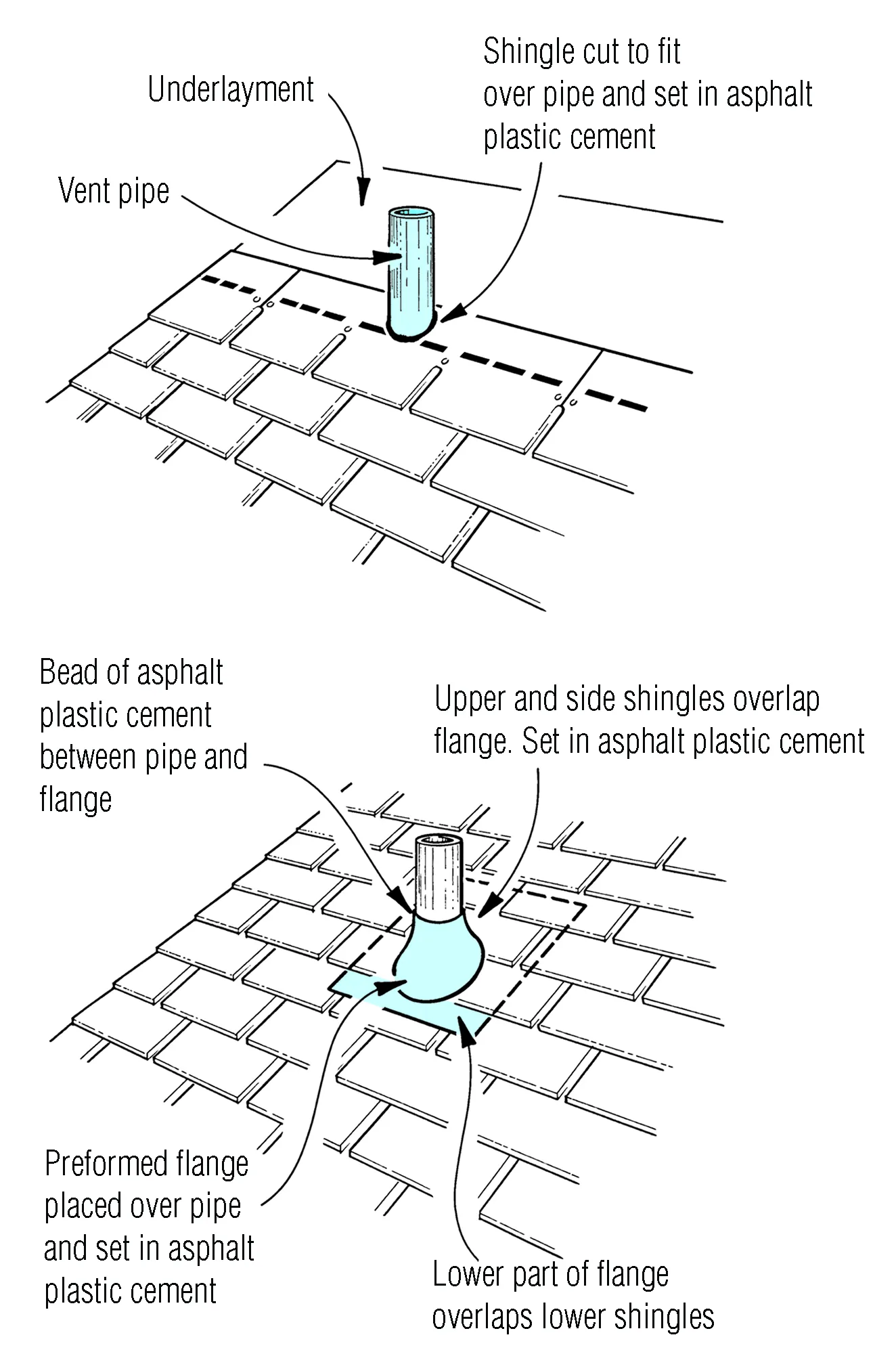
Slide the fan base into the opening, guiding any integrated electrical box through the hole. Center the unit and align it with the roof slope. For commercial curb-mounted fans, install a prefabricated curb at least 14 inches high, securing it with anchor bolts and sealing flanges with silicone. Fasten the fan to the curb with at least eight stainless steel fasteners.
Flashing is your primary defense against leaks. At the top, slide flashing under upper shingles so water flows over it. At the bottom, place flashing over lower shingles, never under, to allow proper drainage. Use wide flashing to cover the full base and provide ample overlap. Fasten the base every 4 inches along the bottom edge, positioning nail heads just inside the vertical edge to avoid water paths.
Wire Electric Models Safely
Before starting electrical work, turn off the breaker and lock out/tag out the disconnect. Use a multimeter to confirm no voltage is present. Remove the electrical box cover using a flat-blade screwdriver. Pull Romex wiring through the base opening and secure the connector at the box base.
Connect the ground wire to the grounding screw, the black hot wire to the black terminal using a wire nut, and the white neutral wire to the white terminal. Tug wires to ensure connections are tight, then tuck them neatly without blocking the cover or thermostat. Insert the built-in thermostat into its slot; it activates the fan at 90 to 110 degrees Fahrenheit depending on adjustment. Use Type TW wire if replacing original wiring, and ensure the power supply matches motor nameplate specs on a dedicated circuit.
Optimize Airflow and Ductwork
Minimize bends, transitions, and flexible ducts as they increase static pressure and reduce CFM by up to 50 percent. Use rigid metal ducts with smooth, gradual turns and ensure the fan outlet and duct are aligned and sealed tightly. For commercial kitchen exhaust, NFPA 96 bans dampers in grease-laden systems unless explicitly permitted by local code.
Seal and Secure the Installation
Apply a continuous bead of silicone around all fastener heads and base edges. Silicone remains flexible, resists UV, and bonds better than plastic cement. Reapply annually during inspections if cracking or shrinkage occurs. Tighten screws until snug, not forced, as over-tightening warps the housing or damages the roof deck. Use shims under commercial curbs to level the unit before fastening.
Test and Inspect Before Use
Before startup, confirm all fasteners are tight, reinstall the motor dome after checking for debris, ensure the blower wheel spins freely, and verify no tools or materials are left inside. Restore power and for solar fans, expose the panel to sunlight; the fan should start automatically. For thermostatic models, wait for attic temperature to rise or use a heat gun; the fan should engage at the set point. Listen for smooth operation with no vibration, rattling, or grinding.
Conduct a water flow inspection by observing how water runs over the flashing during rain or with a hose. Water must flow downhill without pooling, with no gaps or lifted shingles, and drainage channels must be clear of obstructions.
Maintain for Long-Term Performance
Schedule routine maintenance to extend your fan’s lifespan. Clean the exterior screen every 6 to 12 months to remove leaves, dust, and nests. Inspect sealant and fasteners annually, reapplying silicone as needed. Check for corrosion, shifting, or storm damage. For commercial fans, clean blades, housing, and grease traps monthly, and verify fire suppression system integration.
High-quality units last 15 to 20 years, with motors lasting over 10 years with seasonal use. Solar panels remain functional after 25 years though efficiency declines gradually. Most brands offer 5 to 10 year warranties.
Avoid Common Installation Mistakes
Several mistakes can compromise your installation. Placing flashing under shingles at the bottom blocks drainage and causes leaks; only slide flashing under shingles at the top. Trimming top shingles creates entry points for rain and pests; only trim side shingles for drainage. Skipping sealant or using plastic cement leads to cracks and leaks; use silicone and apply generous, continuous beads on all fasteners and joints.
Installing too low on the roof reduces hot air extraction; install within 2 feet of the ridge for maximum efficiency. Ignoring wind direction increases rain entry; angle the flashing away from dominant winds such as southwest in many regions.
Frequently Asked Questions About Installing Roof Exhaust Fans
Can I install a roof exhaust fan myself?
Yes, solar-powered attic fans can be installed as DIY projects since they require no wiring. Electric models require hardwiring by a licensed electrician, but you can handle the structural preparation, cutting, flashing, and mounting yourself.
How do I know if my roof exhaust fan is working properly?
Test by restoring power and observing operation. For solar fans, expose the panel to direct sunlight; the fan should start automatically. For thermostatic models, the fan should engage when attic temperature reaches the set point, typically 90 to 110 degrees Fahrenheit. Listen for smooth operation without vibration or unusual noises.
Where should a roof exhaust fan be placed?
Install the fan within 2 feet below the ridge line on the roof, positioned between rafters spaced 16 inches on center. This location maximizes hot air extraction since heat rises and accumulates near the peak.
How often should I maintain my roof exhaust fan?
Clean the exterior screen every 6 to 12 months to remove debris, dust, and nests. Inspect sealant and fasteners annually and reapply silicone as needed. For commercial kitchen fans, clean blades and grease traps monthly.
What happens if I don’t balance intake and exhaust ventilation?
Without balanced ventilation, negative pressure can develop and pull conditioned air from living spaces into the attic. Maintain a 50/50 ratio between intake vents (such as soffit vents) and exhaust vents for optimal airflow and energy efficiency.
Key Takeaways for Installing Your Roof Exhaust Fan
A properly installed roof exhaust fan delivers continuous ventilation, lower energy bills, and long-term protection against mold, rot, and roof damage. The most critical success factors are installing high on the roof within 2 feet of the ridge, properly flashing under the top shingles and over the bottom shingles, and applying silicone sealant generously around all fasteners and edges.
Whether you’re a homeowner reducing cooling costs with a solar attic fan or a technician installing a commercial kitchen exhaust system, following these steps ensures a professional-grade result. Choose quality materials, maintain proper ventilation balance, and perform annual inspections to maximize performance and extend the lifespan of your roof exhaust fan.
Leave a Reply