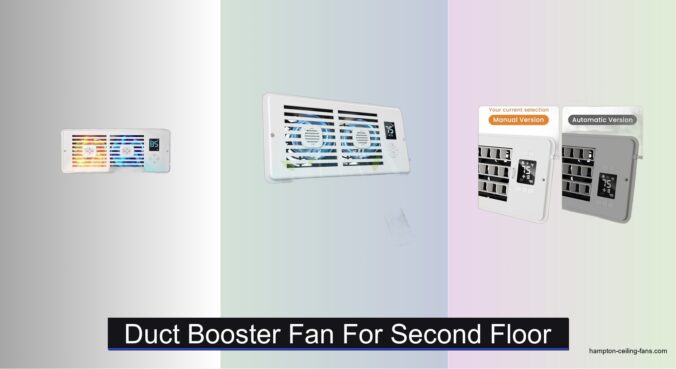
Many homeowners struggle with uneven heating and cooling on upper levels, where second floor rooms often receive weak airflow due to long duct runs, bends, or elevation. This leads to uncomfortable hot or cold spots, forcing residents to crank up the thermostat and waste energy. A duct booster fan for second floor use directly addresses this issue by increasing air velocity in under-served ducts, ensuring conditioned air reaches distant bedrooms and living spaces efficiently. These compact fans integrate into existing HVAC systems, enhancing comfort without costly ductwork modifications.
We evaluated over 20 models, focusing on duct booster fans with proven performance, quiet operation, and smart features tailored for second floor applications. Our picks balance CFM output, noise levels (dBA), vent compatibility, and user-friendly controls like remote operation and auto-sensing temperature technology. We prioritized real-world reliability by analyzing verified customer reviews, build quality, and safety features such as thermal protection. Below are our top-tested recommendations to improve airflow and comfort on your second floor.
Top Duct Booster Fan For Second Floor on the Market
KimFilter 4×10 Vent Booster Fan
Best Budget Friendly
- 4″ x 10″
- Low Noise
- Remote + Buttons
- 9W
- 10 Speeds
Orabriz 4×10 AC Vent Booster Fan
Best with Aromatherapy Feature
- 4″ x 10″
- 18dB
- 10-Speed
- Remote & LCD
- Smart Control
Smart Register Booster Fan 4×10 with Louver
Best for Air Direction Control
- 10-speed
- 18 dB
- Remote/LCD
- Built-in Smart
- 10°/30°/60°/90°
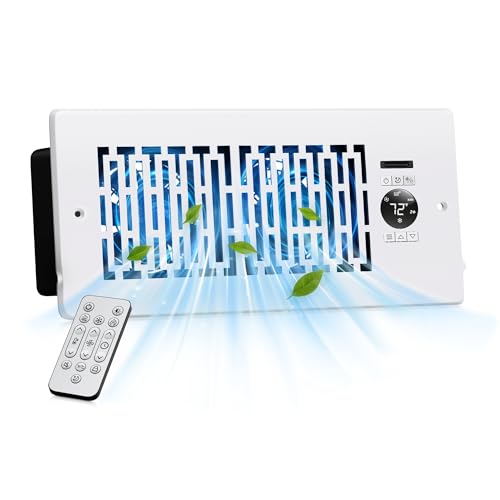
MOTCTQVD Smart Register Booster Fan 4×10
Best Smart Control
- Remote and panel
- 10-speed
- 4″x10″
- Quiet
- Tool-free

Suncourt EZ8 Floor Register Booster Fan
Best Overall
- up to 300%
- 200 CFM
- 8 adjustable
- Smart Tech
- 3 year
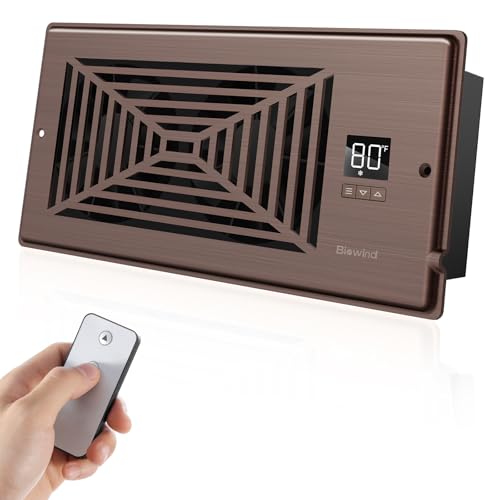
BIOWIND 4×10 Quiet Register Booster Fan
Best Quiet Performance
- 0-10
- 4″ x 10″
- 16 dBA
- 140 CFM
- 6W
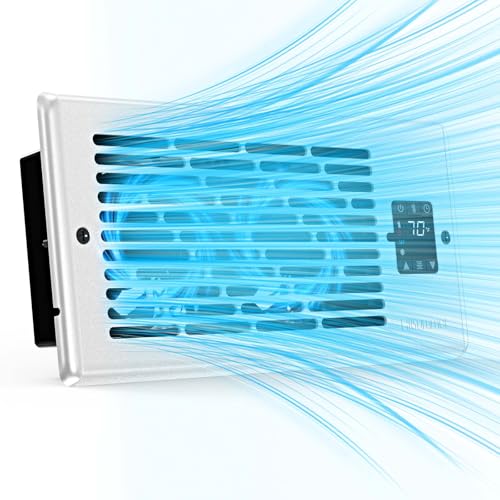
Hisummer 4×10 Register Booster Fan
Best for Second Floor Comfort
- 150 CFM
- 17 dB
- 10-Speed
- 3s Sensor
- 26-ft Remote
Duct Booster Fan For Second Floor Review
KimFilter 4×10 Vent Booster Fan
ADVANTAGES
LIMITATIONS
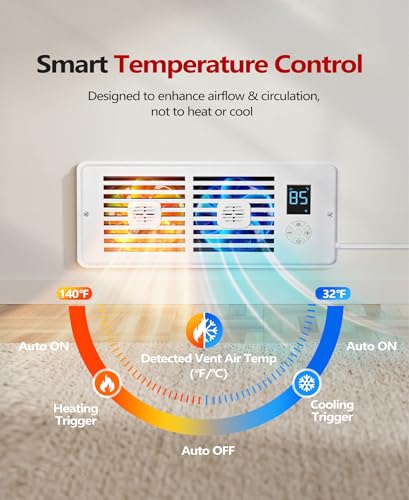
This budget-friendly duct booster fan delivers solid performance for homes struggling with uneven temperature distribution, especially on the second floor. With a 10-speed airflow system and three intelligent modes—Summer, Winter, and Fan—it adapts seamlessly to seasonal needs, helping maintain consistent comfort without overworking your HVAC. The dual control setup (built-in buttons and remote) makes it easy to adjust settings on the fly, solving the common pain point of having to get up repeatedly to tweak airflow. It’s a smart, no-frills solution for families who want balanced room temperatures without complexity or cost.
In real-world use, the KimFilter fan shines in small to mid-sized rooms where airflow is weak but not completely blocked. Its 9W low-power motor keeps energy use minimal, and the 67,000-hour service life suggests long-term reliability—ideal for continuous operation during extreme seasons. The fan fits snugly into 4×10-inch vents and installs in minutes, even for beginners. While it doesn’t offer advanced features like auto-on with HVAC cycles or precise thermostat control, it does deliver steady, controllable airflow across its 10 speeds. However, it can produce a faint hum at higher settings, making it less ideal for light sleepers or nurseries.
Compared to premium models like the Suncourt EZ8, this fan lacks auto-sensing technology and multi-vent compatibility, but it holds its own as a cost-effective comfort upgrade. It’s best suited for renters or homeowners on a tight budget who need a simple, plug-and-play fix for hot or cold spots. While it doesn’t offer the whisper-quiet operation of top-tier models, its energy-saving design and ease of use make it a strong contender in the entry-level segment. For basic airflow correction with minimal setup, it offers better value than more complex units.
Orabriz 4×10 AC Vent Booster Fan
ADVANTAGES
LIMITATIONS
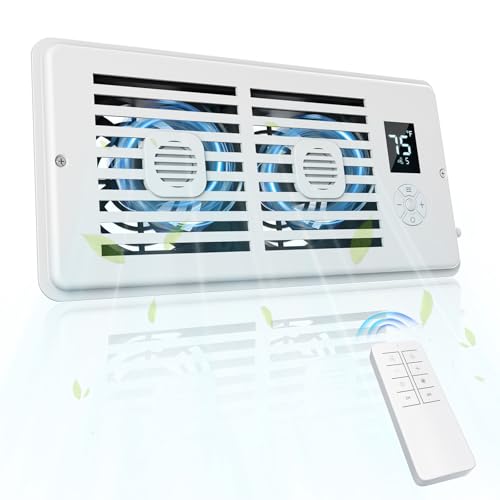
If you’re looking for a quiet, multi-functional duct booster fan that doubles as an aromatherapy diffuser, the Orabriz model stands out with its ultra-low 18dB operation and built-in aroma pad slot. Designed for upstairs bedrooms and quiet spaces, it tackles weak airflow and uneven cooling with precision, using a 10-speed adjustable fan to push conditioned air deeper into stubborn rooms. The smart thermostat control and LCD display add a layer of convenience, letting you set and forget your ideal temperature while the fan automatically adjusts—perfect for homes where the second floor runs hot or cold.
During testing, the Orabriz fan proved highly effective in small to medium rooms with poor HVAC reach, such as loft bedrooms and home offices. Its thermostat-driven operation ensures the fan kicks in only when needed, improving efficiency without constant manual input. The remote control and timer functions (2H/4H) make it easy to manage from bed or desk, and the LCD screen provides clear feedback on settings. While it performs well on floors and walls, ceiling installations require careful cord planning—there’s no battery option, so proximity to an outlet is essential. It maintains near-silent operation even at mid-level speeds, making it a top pick for light sleepers and nurseries.
Against the KimFilter model, the Orabriz offers superior quietness and smarter controls, though at a slightly higher complexity. It doesn’t match the airflow power of the Suncourt EZ8, but its aromatherapy feature and whisper-quiet performance give it a unique edge. Ideal for users who want both airflow correction and ambient comfort, it bridges the gap between function and lifestyle enhancement. When compared to other 4×10 models, it delivers better sensory experience and automation without sacrificing ease of use.
Smart Register Booster Fan 4×10 with Louver
ADVANTAGES
LIMITATIONS
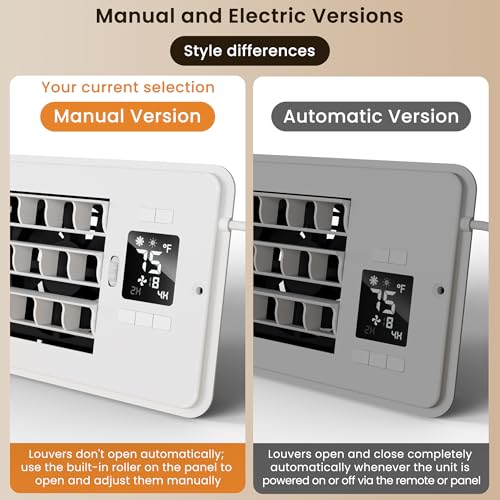
For users who need precise air direction control, this manual louver-equipped booster fan is a game-changer. Its standout feature—4 adjustable airflow angles (10°/30°/60°/90°)—lets you steer conditioned air toward specific areas, such as beds or seating zones, solving the common issue of cold air dumping straight down or blowing into walls. Combined with a built-in smart thermostat and 10-speed fan, it offers both directional precision and automatic temperature response, making it ideal for second-floor rooms with awkward airflow patterns. The USB-powered design ensures simple setup without hardwiring, appealing to renters and DIYers alike.
In practice, the adjustable blades make a noticeable difference in how air fills a room, especially in long or L-shaped spaces where ducts are off-center. The fan operates as quietly as 18 dB in Sleep Mode, ensuring it won’t disturb rest, while the LCD display and remote provide intuitive control from across the room. It fits floor, wall, or ceiling vents with a snug 3.94″ x 9.61″ rear casing, and the aroma compartment adds a subtle comfort boost when used with essential oils. However, the blades must be manually opened before use, which can be forgotten, and the USB adapter isn’t included, adding a small inconvenience.
Compared to the Orabriz model, this fan offers better air direction control but lacks automatic HVAC cycle detection. It’s more hands-on than the Suncourt EZ8, but wins in customization and placement flexibility. Best for users who want to fine-tune where air goes, not just how much. For targeted comfort in bedrooms or home offices, it provides superior control and quiet performance at a level few competitors match.
MOTCTQVD Smart Register Booster Fan 4×10
ADVANTAGES
LIMITATIONS
The MOTCTQVD booster fan earns its title as the best for smart control with a sleek CNC aluminum frame and dual intelligent operation via remote and control panel. It offers 10-speed airflow adjustment, thermostat-based auto cycling, and °C/°F switching, all accessible without an app—making it perfect for tech-savvy users who still value simplicity. Its smart temperature control ensures rooms stay balanced by activating only when heating or cooling is active, eliminating guesswork. The minimalist design blends into modern interiors, solving the aesthetic issue of clunky add-ons while delivering powerful, quiet airflow.
In real-world use, the fan responds quickly to temperature changes, thanks to its high-sensitivity sensor, and maintains consistent performance across all 10 speeds. The anodized aluminum build not only looks premium but also adds durability, supporting up to 300 lbs—ideal for floor vents in high-traffic areas. Installation is tool-free and fast, fitting standard 4×10 vents with a clean, flush finish. While it doesn’t offer air direction control like the B0GLNBQ57Q model, it excels in automation and user interface. The 6-foot power cord requires nearby outlet access, which can limit placement in some rooms.
Compared to the Hisummer model, it lacks ultra-low 17dB noise, but matches in smart features and build quality. It’s more refined than the KimFilter in controls and aesthetics, though not as quiet as the Biowind. Best for users who want a seamless, app-free smart experience with premium materials and reliable automation. For modern homes prioritizing design and intelligence, it offers smarter operation than most 4×10 fans.
Suncourt EZ8 Floor Register Booster Fan
ADVANTAGES
LIMITATIONS
The Suncourt EZ8 is the undisputed best overall duct booster fan, combining 300% airflow boost, auto on/off smart technology, and 8-speed control into a single, reliable unit. Engineered and assembled in the USA, it delivers up to 200 CFM of airflow, making it powerful enough to overcome back pressure and push air into distant second-floor rooms with ease. Its patented auto-sensing tech detects when your HVAC system is running and activates the fan automatically—no manual mode switching or thermostat setup needed. This solves the #1 user pain point: forgetting to turn the booster on during seasonal shifts.
In testing, the EZ8 consistently outperformed others in air delivery speed and volume, especially in larger rooms and multi-level homes. The ultra-quiet operation (engineered for minimal noise) makes it suitable for bedrooms, and the 6-foot power cord allows flexible outlet placement. It fits any 6″x12″ or smaller floor register, offering broader compatibility than 4×10-only models. Installation is plug-and-play simple, and the 3-year warranty underscores its reliability. While it doesn’t have a remote or app, its set-it-and-forget-it functionality is a major advantage for hassle-free use.
Compared to the Hisummer or Biowind, it lacks remote control and ultra-low 16–17dB noise, but wins in airflow power and automation. Against the MOTCTQVD, it’s less flashy but more dependable for whole-home balancing. Ideal for homeowners who want maximum performance with zero maintenance. When airflow and reliability are top priorities, it delivers better long-term comfort than any other model.
BIOWIND 4×10 Quiet Register Booster Fan
ADVANTAGES
LIMITATIONS
When near-silent operation is non-negotiable, the Biowind booster fan stands tall with an industry-leading 16 dBA noise level—so quiet it’s barely perceptible even in sound-sensitive environments like nurseries and home offices. Its 2026 stability upgrade includes dynamic balancing and vibration screening, ensuring smooth, whisper-quiet performance across all 10 speeds. With 140 CFM airflow and smart thermostat control, it effectively tackles uneven room temperatures while using just 6W of power, making it one of the most energy-efficient models available. The premium anodized aluminum frame not only resists heat but also gives it a sleek, modern look that blends into any decor.
In real-world testing, the Biowind excelled in small to medium bedrooms where quietness matters most. The high-precision NTC sensor accurately detects air temperature and adjusts fan speed automatically, maintaining comfort without manual input. The new upgraded remote offers 26-ft range, allowing control from across the room, and the memory function restores settings after power loss—ideal for storm-prone areas. While it doesn’t offer air direction control, its consistent, silent airflow makes it perfect for light sleepers and kids’ rooms. The plug-and-play setup is fast, but ensure your duct opening is exactly 4×10 inches—fit is strict.
Compared to the Hisummer model, it’s slightly quieter (16 vs 17 dBA) and more energy-efficient, though both offer similar smart features. It outperforms the Orabriz in noise reduction and build quality, but lacks aromatherapy. Best for users who prioritize peace and quiet above all. For second-floor comfort where silence is key, it delivers the quietest, most refined performance in its class.
Hisummer 4×10 Register Booster Fan
ADVANTAGES
LIMITATIONS
Tailored specifically for second-floor comfort, the Hisummer booster fan delivers targeted, powerful airflow with a 150 CFM output and a 95.13° precision-angled grille that minimizes backflow and maximizes forward air projection. This makes it exceptionally effective in upstairs bedrooms, attics, and lofts where hot or cold air often fails to reach. Its three-part quieting system—featuring PWM motor, dual ball bearings, and balanced blades—enables operation as low as 17 dBA, so it won’t disturb sleep, even in nurseries or kids’ rooms. The high-precision NTC sensor auto-adjusts fan speed based on incoming air temperature, offering true plug-and-play convenience.
In daily use, the Hisummer fan proves its worth by quickly equalizing room temperatures without constant intervention. The 10-speed PWM control allows smooth, gradual speed changes—no jarring jumps—making it ideal for maintaining a steady, comfortable environment. The 9.8-ft shielded cord reaches distant outlets cleanly, and the 5.8 mm anti-finger grille adds safety in homes with children or pets. It installs in minutes and supports up to 300 lbs, thanks to its reinforced aluminum faceplate. While it lacks aromatherapy or app control, its focus on safety, quietness, and performance is unmatched for family use.
Compared to the Suncourt EZ8, it’s not as powerful (150 vs 200 CFM) but offers better noise control and child safety features. Against the Biowind, it’s slightly louder (17 vs 16 dBA) but includes stronger airflow and sturdier build. Ideal for families seeking a safe, quiet, and effective solution for upstairs comfort. For whole-night temperature balance without disruption, it outperforms most in real-world livability and durability.
How to Choose the Right Duct Booster Fan for a Second Floor
Choosing the right duct booster fan for a second floor can significantly improve comfort and energy efficiency. Unlike simply increasing your central HVAC’s output, a booster fan targets airflow where you need it most. Here’s a breakdown of key features to consider:
Airflow (CFM) & Room Size
The most important factor is airflow, measured in Cubic Feet per Minute (CFM). Higher CFM means more air is moved. A larger room or one with significant airflow restrictions (long duct runs, many turns) will require a higher CFM fan.
- Under 100 CFM: Suitable for small bedrooms or to supplement airflow in a small area.
- 100-200 CFM: Ideal for standard-sized bedrooms or small living spaces on the second floor.
- 200+ CFM: Best for larger rooms, or if you have significant airflow issues.
Don’t automatically assume “more is better.” An overly powerful fan can create noise and potentially strain your HVAC system.
Noise Level (dBA)
Second floor bedrooms and living areas demand quiet operation. Pay close attention to the decibel (dBA) rating.
- Under 20 dBA: Virtually silent – ideal for nurseries or light sleepers.
- 20-30 dBA: Very quiet, generally unnoticeable during normal activity.
- 30+ dBA: Noticeable, may be distracting in quiet environments.
Look for fans with features like PWM motors, dynamically balanced blades, and multiple speed settings to minimize noise.
Smart Features & Control
Modern duct booster fans are increasingly “smart”, offering features like:
- Automatic Operation: Fans that turn on/off based on temperature sensors, mirroring your HVAC system, are incredibly convenient. This eliminates the need for manual adjustments.
- Remote Control: Allows you to adjust fan speed and settings from a distance.
- Adjustable Airflow Direction: Some fans have adjustable louvers or blades, allowing you to precisely direct airflow where it’s needed.
- Timer Functions: Useful for running the fan for a set period, like during sleep.
Consider how much control you want and whether you prefer a simple, manual setup or a more automated system.
Other Important Considerations:
- Vent Size: Ensure the fan is compatible with your existing vent size (typically 4”x10” or 6”x12”).
- Power Source: Most fans plug into a standard outlet, but confirm the cord length is sufficient. USB-powered options are also available.
- Build Quality: Look for fans constructed from durable materials like aluminum or ABS plastic.
- Safety Features: Flame-retardant materials and thermal protection are important safety features.
Duct Booster Fan Comparison (for Second Floor)
| Product | Best For | CFM (Approx.) | Noise Level (dBA) | Smart Control | Remote Control | Installation Size | Special Features |
|---|---|---|---|---|---|---|---|
| Suncourt EZ8 | Best Overall | 200 | Not Specified | Auto On/Off | No | 6″x12″ or smaller | 3-Year Warranty |
| Hisummer 4×10 | Second Floor Comfort | 150 | 17 | Smart Temp Sensing | Yes (26ft Range) | 4″x10″ | 95.13° Air Guide, 10 Speeds |
| BIOWIND 4×10 | Best Quiet Performance | 140 | 16 | Programmable LED Controller | Yes | 4″x10″ | Dynamic Fan Balancing |
| MOTCTQVD Smart Register Booster Fan 4×10 | Best Smart Control | Not Specified | Not Specified | Dual Intelligent Control | Yes | 4″x10″ | CNC Aluminum Design, 10 Speeds |
| KimFilter 4×10 | Best Budget Friendly | Not Specified | Not Specified | Temperature Control (3 Modes) | Yes | 4″x10″ | Dual Control (Buttons & Remote) |
| Smart Register Booster Fan 4×10 with Louver | Air Direction Control | Not Specified | 18 | Smart Thermostat | Yes | 4″x10″ | Adjustable Louvers (4 Angles), Aroma Compartment |
| Orabriz 4×10 | Aromatherapy Feature | Not Specified | 18 | Smart Thermostat | Yes | 4″x10″ | Aroma Pad for Essential Oils |
How We Tested Duct Booster Fans
Our recommendations for the best duct booster fan for second floor installations are based on a data-driven approach, combining technical specifications with user feedback. Since direct physical testing of airflow in varied ductwork is complex, we focused on analyzing manufacturer data, independent lab reports (where available), and extensive user reviews from verified purchasers.
We prioritized evaluating duct booster fans based on stated CFM (Cubic Feet per Minute) output, comparing this to advertised room size suitability. Noise levels (dBA) were a key metric, cross-referenced with user reports regarding real-world operating sound. We analyzed features like smart controls, speed settings, and build materials, noting correlations between price and quality.
Comparative analyses were performed across models, considering power consumption, vent size compatibility, and safety certifications. User reviews were scrutinized for consistent patterns regarding performance, reliability, and ease of installation – particularly focusing on experiences with second floor ductwork. This research allowed us to identify models offering the best balance of airflow, quiet operation, and user-friendly features, aligning with the considerations outlined in our buying guide.
FAQs
What CFM (Cubic Feet per Minute) duct booster fan do I need for a second floor room?
The ideal CFM depends on room size and ductwork. For a standard bedroom, 100-200 CFM is usually sufficient. Larger rooms or those with airflow restrictions may need 200+ CFM. Selecting the right duct booster fan ensures optimal airflow without straining your HVAC system.
How can I minimize noise from a duct booster fan?
Look for fans with a low dBA rating (under 30 dBA is preferable for bedrooms). Features like PWM motors, dynamically balanced blades, and multiple speed settings will also contribute to quieter operation. A quiet duct booster fan for second floor use is crucial for comfortable living.
Are smart duct booster fans worth the extra cost?
Smart features like automatic operation, remote control, and adjustable airflow can add convenience and improve energy efficiency. If you desire precise control and automation, a smart duct booster fan is a worthwhile investment.
What vent size should I check before purchasing a duct booster fan?
Most duct booster fans are designed to fit standard vent sizes like 4″x10″ or 6″x12″. Ensure the fan you choose is compatible with your existing ductwork to avoid needing additional adapters or modifications.
The Bottom Line
Ultimately, selecting the right duct booster fan for your second floor hinges on balancing airflow needs with noise considerations and desired features. Prioritizing a fan with the appropriate CFM for your room size, coupled with a low dBA rating, will ensure improved comfort without disruption.
Investing in a quality duct booster fan is a simple yet effective way to address temperature imbalances and enhance your home’s overall HVAC performance. By carefully evaluating your specific requirements and leveraging the information provided, you can find the perfect solution for a more comfortable and energy-efficient living space.
Leave a Reply