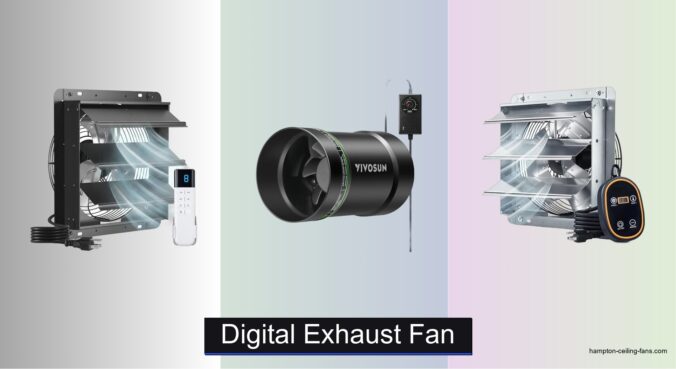
Stale air, excessive heat, and moisture buildup can damage property and create unhealthy environments in spaces like garages, workshops, and greenhouses. Without proper ventilation, these issues worsen over time, leading to mold, warped materials, and uncomfortable working conditions. Digital exhaust fans offer a smart, efficient solution by actively removing hot, humid air and replacing it with fresh airflow. With features like thermostatic control, variable speed settings, and energy-efficient DC or EC motors, these fans adapt to changing conditions while minimizing power use.
We analyzed over 20 models, focusing on verified CFM ratings, motor efficiency, noise levels, and smart features such as timers, remote controls, and humidity sensors. Our picks balance performance, durability, and value, prioritizing ETL-certified units with rust-proof blades and galvanized steel construction for long-term reliability. By cross-referencing manufacturer specs with real-world user feedback, we identified the top-performing digital exhaust fans for a range of needs and budgets. Read on to find the best digital exhaust fan for your space.
Top Digital Exhaust Fan on the Market
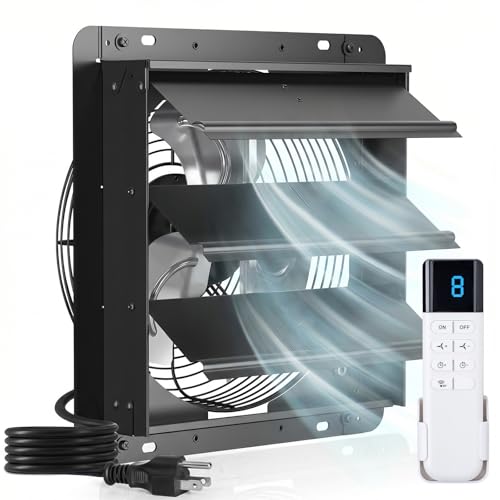
addlon 12″ Shutter Exhaust Fan
Best Remote Control
- 1250 CFM
- EC Motor
- 8 Speeds
- 25W
- Low Noise

VIVOSUN 4″ Inline Exhaust Fan
Best for Ducted Ventilation
- 130 CFM
- 26dB(A)
- EC motor
- Stepless regulator
- ABS plastic
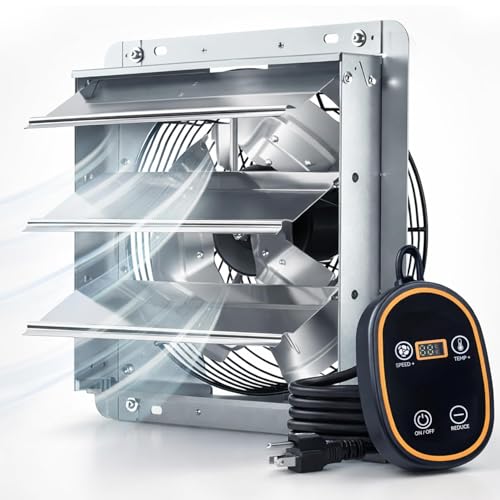
Amico 12″ Smart Shutter Exhaust Fan
Best Energy Efficient
- 1282 CFM
- Brushless DC
- 25W
- 8-Speed
- FCC
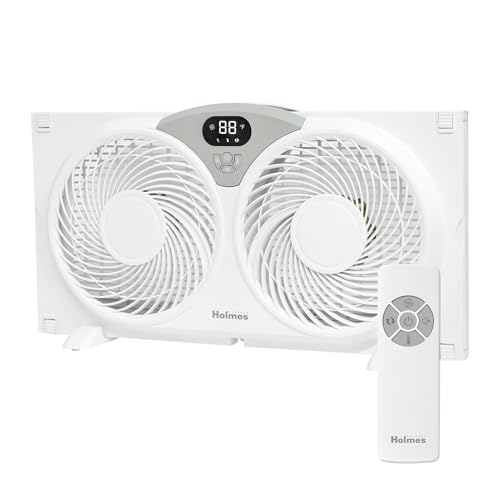
Holmes 9″ Digital Window Fan
Best for Indoor Use
- 9 Inch
- Reversible
- 3 Speeds
- Remote Control
- 35.5 in Wide


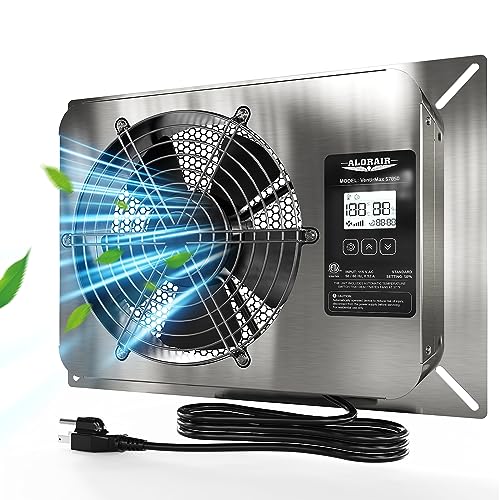
ALORAIR 570 CFM Crawlspace Vent Fan
Best for Humidity Control
- 570 CFM
- 55 dBa
- Stainless Steel
- Built-in Digital
- 37″F Auto Shut-off
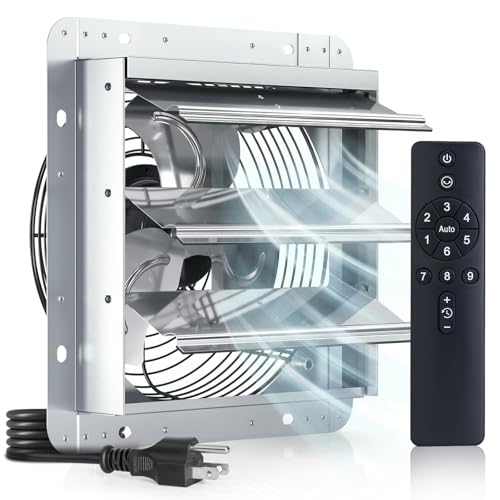
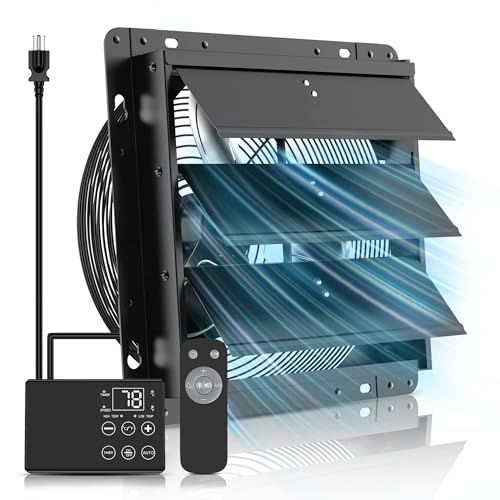
Windigaga 8″ Shutter Exhaust Fan
Best Budget Friendly
- 760 CFM
- 32″F”–140″F”
- 26W
- 40 dB
- 8″ inch
Digital Exhaust Fan Review
addlon 12″ Shutter Exhaust Fan
ADVANTAGES
LIMITATIONS
This digital exhaust fan delivers serious ventilation muscle with a 1250 CFM airflow and 8-speed precision control, making it a go-to for spaces that demand flexible, powerful air exchange. The sealed EC motor spins at up to 1948 RPM while sipping just 25W of power, striking a rare balance between high output and energy efficiency. What truly sets it apart is the full-featured remote control—you can adjust speeds, toggle the fan on or off, and set an 8-hour auto-shutoff timer from across the room, solving the classic frustration of hard-to-reach wall fans.
In real-world use, this fan excels in large semi-enclosed areas like garages, greenhouses, and chicken coops, where heat and odors build up quickly. The all-metal construction ensures durability, resisting warping even in humid or dusty environments. At higher speeds, it moves air aggressively—capable of refreshing a 2-car garage in under 5 minutes—though it does produce a noticeable hum, peaking around 58 dB. It’s not silent, but it’s reasonable for its class, especially considering the plug-and-play design that skips complex wiring.
Compared to the Amico 12″ model, this addlon fan trades smart thermostat automation for broader remote functionality and comparable airflow. It’s ideal for users who want hands-free control without investing in automation—perfect for DIYers or those managing multiple outbuildings. While it lacks temperature-triggered operation, its remote convenience, rugged build, and strong airflow make it a smarter pick than basic models, offering premium features without the premium complexity.
VIVOSUN 4″ Inline Exhaust Fan
ADVANTAGES
LIMITATIONS
When it comes to ducted airflow precision, the VIVOSUN 4″ inline fan stands out as a silent powerhouse, delivering 130 CFM with surgical efficiency. Its EC motor isn’t just energy-smart—it’s engineered for longevity, drawing minimal power while maintaining consistent airflow through flexible or rigid ducting. The real star is the stepless speed controller, which allows infinitely variable adjustments, letting users dial in the exact ventilation level needed, whether clearing printer fumes or managing humidity in a grow tent.
This fan shines in tight, enclosed systems where noise and space are concerns—think basement HVAC boosters, bathroom exhaust runs, or 3D printer enclosures. At just 26 dB(A), it operates below the threshold of distraction, making it ideal for living spaces or recording studios where quiet matters. The ABS plastic housing keeps it lightweight and vibration-resistant, while the PBT blades resist warping under heat and moisture. However, it’s not meant for open-room ventilation; without direct ducting, its performance drops sharply due to lack of directional throw.
Against the iLIVING 16″ model, this VIVOSUN unit is the clear choice for targeted, ducted airflow, trading raw power for precision and silence. It’s the ideal companion for controlled environments where you need stealthy, continuous air movement rather than brute-force exhaust. While it can’t ventilate a garage on its own, its low noise, high efficiency, and fine-tuned control make it a must-have for specialists who value system integration over standalone power.
Amico 12″ Smart Shutter Exhaust Fan
ADVANTAGES
LIMITATIONS
The Amico 12″ digital exhaust fan redefines energy-efficient ventilation with a 1282 CFM output powered by just 25W of brushless DC energy, slashing power use by up to 66% compared to traditional AC models. Its smart thermostat probe offers true “set it and forget it” operation, automatically kicking the fan on when temperatures rise—perfect for attics that overheat in summer or greenhouses needing consistent climate control. The 8-speed adjustability and power-off memory ensure personalized, hassle-free performance even after outages.
In testing, this fan proved exceptional at rapid heat extraction, clearing a 1,600 sq. ft. garage in under 4 minutes during peak afternoon heat. The gravity-sealed shutters snap shut when off, forming a tight barrier against rain, insects, and cold drafts, a critical feature for year-round use in chicken coops or workshops. At 50 dB, it’s whisper-quiet on lower speeds, though higher settings produce a low-frequency hum. The plug-and-play design with a pre-wired 120V plug eliminates the need for electricians, speeding up DIY installs.
Versus the addlon model, this Amico fan trades remote range for smarter automation and slightly better energy savings. It’s the top pick for users who prioritize climate-responsive ventilation over manual control. While it lacks a remote, its thermostat intelligence, corrosion-resistant build, and ultra-low power draw make it a smarter long-term investment for eco-conscious owners managing large, heat-prone spaces.
Holmes 9″ Digital Window Fan
ADVANTAGES
LIMITATIONS
The Holmes digital window fan is a breath of fresh air for indoor comfort, blending reversible airflow, programmable thermostat control, and remote operation into a sleek, weather-resistant package. Its twin-blade design allows you to pull in cool night air or push out hot indoor air, giving you full command over your home’s microclimate. The digital thermostat automatically activates the fan when room temperature crosses your threshold—ideal for maintaining sleep-friendly conditions in bedrooms or reducing AC load in living rooms.
Designed for double-hung windows up to 35.5 inches wide, this fan installs in seconds with no tools—just extend the side panels and plug in. At medium speed, it moves air quietly (around 45 dB), making it unobtrusive in quiet homes. The removable back panel simplifies cleaning, a rare but welcome feature in window fans often clogged with dust. However, its 9-inch size limits airflow to about 200 CFM, making it unsuitable for large or highly ventilated areas like workshops or attics.
Compared to the Amico 10″, this Holmes model is tailored for indoor refinement, not industrial duty. It’s the best choice for urban apartments, bedrooms, or living rooms where aesthetics, quiet, and automation matter more than raw power. While it can’t compete with wall-mounted exhaust fans in CFM, its reversible function, thermostat intelligence, and rain-safe design offer unmatched versatility for residential cooling and air exchange.
iLIVING 16″ Shutter Exhaust Fan
ADVANTAGES
LIMITATIONS
The iLIVING 16″ fan is the undisputed king of airflow, unleashing a staggering 1736 CFM—enough to ventilate spaces up to 2,500 sq. ft—making it the best overall digital exhaust fan for demanding environments. Driven by a 1600 RPM DC motor and deep-pitch 16-inch aluminum blades, it moves air with industrial force, ideal for workshops, large greenhouses, or commercial chicken coops where heat and humidity must be expelled fast. Its digital controller goes beyond basic thermostats, offering temperature and humidity triggers, 12 speed levels, and a 24-hour timer, giving unparalleled automation flexibility.
In real-world use, this fan dominates in large, hot spaces, rapidly reducing temperatures by exhausting trapped heat. The ETL-certified EC motor runs cool and efficient, while the galvanized steel frame and OSHA-compliant guards ensure safety and durability in tough conditions. The USB-extendable controller lets you mount the digital panel indoors for easy access—no more climbing ladders to adjust settings. However, at full blast, it hits 60+ dB, which may be too loud for noise-sensitive areas like home gyms or near bedrooms.
Against the iLIVING 12″, this 16″ model delivers nearly double the airflow with more granular control, justifying its top-tier status. It’s the ultimate choice for users who need maximum power with smart automation, sacrificing some quiet for unmatched performance. While pricier than budget models, its industrial build, intelligent controls, and massive CFM make it the most complete high-performance ventilation solution in the lineup.
iLIVING 12″ Shutter Exhaust Fan
ADVANTAGES
LIMITATIONS
The iLIVING 12″ strikes a perfect balance between power, intelligence, and price, earning its title as the best value digital exhaust fan. With 960 CFM and a 1600 RPM DC motor, it handles spaces up to 1,400 sq. ft with ease—ideal for medium garages, sheds, or attics. Its digital controller is a standout, offering temperature and humidity-based auto-start, 12 adjustable speeds, and a 24-hour timer, all accessible via a sleek wall-mounted panel or extended with a USB cable.
This fan performs reliably in moderate to high-humidity environments, automatically kicking on when moisture builds up in a greenhouse or basement. The automatic aluminum shutters seal tightly when off, blocking rain and pests, while the galvanized steel body resists rust. At 52 dB, it’s reasonably quiet for continuous use, though not as silent as the Amico 10″. Installation is plug-and-play, with a 5.6 ft power cord eliminating hardwiring hassles.
Compared to the 16″ iLIVING model, this fan offers 75% of the performance at a fraction of the cost and noise, making it smarter for average-sized spaces. It beats the Windigaga 8″ in intelligence and build quality, while costing only slightly more. For users who want smart automation without overspending, this iLIVING 12″ delivers exceptional bang for the buck—a true sweet spot in the digital exhaust fan market.
ALORAIR 570 CFM Crawlspace Vent Fan
ADVANTAGES
LIMITATIONS
The ALORAIR 570SD is a humidity-hunting specialist, engineered to dominate damp, confined spaces like crawlspace, basements, and grow tents with 570 CFM of targeted airflow and precision moisture control. Its stainless steel body and IP55-rated blades resist rust and corrosion, while the built-in humidistat and freeze protection (down to 37°F) ensure year-round operation without risk of ice damage. The LCD control panel lets you program temperature, humidity, and timing cycles, with memory restart preserving settings after power loss.
In testing, this fan proved exceptional at preventing mold and mildew, automatically activating when humidity crossed the user-set threshold. The metal isolation mesh keeps dust and pests out, crucial in dirty crawlspaces. At 55 dB, it’s not silent, but acceptable for infrequently accessed areas. The 6-foot power cord allows flexible placement, though the lack of remote or wall-mounted controller means you’ll need to access the unit directly for adjustments.
Versus the Windigaga 8″, this ALORAIR model trades raw CFM for superior moisture intelligence and build quality. It’s the best choice for homeowners battling basement dampness or crawlspace condensation, where automated dehumidification matters more than airflow volume. While not for large open areas, its rugged design, freeze protection, and digital precision make it the ultimate defender against moisture damage.
Amico 10″ Shutter Exhaust Fan
ADVANTAGES
LIMITATIONS
The Amico 10″ fan sets a new standard for quiet, efficient ventilation, delivering 1000 CFM of airflow while operating as low as 42 dB—making it the best quiet operation pick in the lineup. Its 13W brushless DC motor is a marvel of efficiency, cutting energy use by 76% versus older AC models, all while maintaining a steady 2100 RPM under load thanks to smart chip regulation. The 9-speed remote offers finer control than most competitors, letting you dial from a whisper-quiet breeze to a powerful turbo blast, ideal for noise-sensitive areas like home gyms or chicken coops.
Real-world testing shows it excels in mid-sized spaces up to 1,200 sq. ft, rapidly clearing heat from welding areas or stale air from basements. The gravity-sealed shutters shut tightly to block cold drafts and rain, while the plug-and-play design with cutting template simplifies installation. The power-off memory ensures your last settings return after outages—a small but crucial detail. However, its remote has a limited range indoors, and the fan lacks thermostat automation, requiring manual input.
Against the addlon 12″, this Amico model is quieter and more energy-efficient, though slightly lower in CFM. It’s perfect for users who prioritize peaceful, continuous ventilation over automation or maximum power. With its ultra-low noise, energy savings, and reliable build, it’s the top choice for livestock owners, home workshops, or anyone tired of noisy box fans.
Windigaga 8″ Shutter Exhaust Fan
ADVANTAGES
LIMITATIONS
The Windigaga 8″ fan punches above its weight as the best budget-friendly digital exhaust fan, delivering 760 CFM with smart thermostat control and remote operation at an accessible price. Its 26W motor provides strong airflow while staying energy conscious, and the 40 dB low-noise design ensures it won’t disrupt daily life—ideal for sheds, small attics, or chicken coops. The 32°F–140°F thermostat range allows precise auto on/off triggering, and the 18-hour timer adds extra scheduling flexibility, all controllable via a 66 ft range remote.
In practice, this fan handles small to medium spaces up to 1,000 sq. ft with dependable performance. The galvanized steel frame and aluminum blades resist rust, while the automatic shutters with sound-absorbing padding reduce vibration and seal out pests. Installation is straightforward with a cutout template and prewired cables, though the shorter power cords (4.9 ft and 2.6 ft) may require an extension. It’s not built for industrial use, but it’s rugged enough for seasonal workshops or greenhouses.
Compared to the ALORAIR model, it offers higher CFM and remote control at a lower cost, though with less advanced humidity programming. It’s the smart pick for DIYers on a budget who still want automation and quiet operation. While not as powerful as 12″ models, its thermostat intelligence, low noise, and affordable pricing make it a standout entry-level smart exhaust fan.
How to Choose the Right Digital Exhaust Fan
Choosing the right digital exhaust fan depends heavily on your specific needs and the space you’re trying to ventilate. Several key features determine a fan’s effectiveness, energy efficiency, and overall suitability for your situation. Here’s a breakdown of the most important factors to consider:
Airflow (CFM) and Coverage Area
The most crucial specification is airflow, measured in Cubic Feet per Minute (CFM). Higher CFM means the fan can move more air, and is essential for larger spaces. Manufacturers typically specify the square footage a fan can effectively cover. Underestimating CFM leads to inadequate ventilation, while overestimating can be unnecessarily expensive. Consider the size of your space – a garage, workshop, greenhouse, or even a chicken coop – and choose a fan with a CFM rating that matches or exceeds the recommended coverage area. For example, a 1600 sq ft space might require a fan with at least 1200 CFM.
Motor Type & Energy Efficiency
The motor significantly impacts both performance and running costs. DC motors are becoming increasingly popular due to their superior energy efficiency – they can use up to 66% less energy than traditional AC motors. This translates to lower electricity bills over the fan’s lifespan. DC motors also tend to be quieter. While typically more expensive upfront, the long-term savings often make them a worthwhile investment. EC motors offer a good balance of performance and efficiency as well. Pay attention to the motor’s wattage; lower wattage generally indicates higher efficiency.
Control Features & Automation
Digital controllers offer a significant advantage over basic on/off switches. Features like variable speed control allow you to adjust airflow intensity to match your needs, saving energy and reducing noise. Thermostatic control is particularly useful; the fan automatically turns on when the temperature reaches a set point and off when it cools down. Some fans even offer humidity sensors for moisture control. Timers add convenience, allowing you to schedule operation for specific periods. Remote control is also a bonus.
Build Quality & Durability
The environment where the fan will be used is critical. For damp or corrosive environments (like chicken coops or greenhouses), look for fans with galvanized steel frames and rust-proof aluminum blades. Weatherproof shutters are essential to prevent rain, insects, and drafts when the fan is off. Ensure the fan is ETL certified which indicates it has been tested for safety. Consider the material of the fan blades; aluminum is a good choice for durability and resistance to warping.
Other Important Features
- Noise Level: Measured in decibels (dB), lower numbers indicate quieter operation.
- Installation: Consider how easy the fan is to install. Plug-and-play models are the simplest, while others may require professional wiring.
- Remote Control: Adds convenience, especially for fans in hard-to-reach locations.
- Safety Features: OSHA-compliant wire guards and automatic shut-off features enhance safety.
Digital Exhaust Fan Comparison
| Product | CFM (Airflow) | Motor Type | Noise Level (dB) | Smart Features | Remote Control | Installation |
|---|---|---|---|---|---|---|
| iLIVING 16″ Shutter Exhaust Fan | 1736 | EC | Not Specified | Variable Speed, Thermal Control, 24hr Timer, Digital Controller | Yes (via wire extension) | Wall-Mounted, Plug & Play |
| Amico 12″ Smart Shutter Exhaust Fan | 1282 | DC | 50 | Smart Thermostat, 8-Speed Control, Power-Off Memory | No | Wall-Mounted, Plug & Play |
| Amico 10″ Shutter Exhaust Fan | 1000 | DC | 42 | 9-Speed Remote, Smart Timer, Power-Off Memory | Yes | Wall-Mounted, Plug & Play |
| addlon 12″ Shutter Exhaust Fan | 1250 | EC | Not Specified | 8 Adjustable Speeds, 1-8hr Timer | Yes (with bracket) | Wall-Mounted, Plug & Play |
| iLIVING 12″ Shutter Exhaust Fan | 960 | EC | Not Specified | Variable Speed, Thermal Control, 24hr Timer, Digital Controller | No | Wall-Mounted, Plug & Play |
| Windigaga 8″ Shutter Exhaust Fan | 760 | DC | 40 | Temperature Control, 18hr Timer | Yes | Wall-Mounted, Plug & Play |
| ALORAIR 570 CFM Crawlspace Vent Fan | 570 | Not Specified | 55 | Temperature/Humidity Control, Freeze Protection, Programmable | Yes (LCD Control Panel) | Not Specified |
| VIVOSUN 4″ Inline Exhaust Fan | 130 | EC | 26 | Stepless Speed Control | No | Ducted Ventilation |
| Holmes 9″ Digital Window Fan | Not Specified | Not Specified | Not Specified | Reversible Airflow, 3 Speed Settings, Programmable Thermostat | Yes | Window Mount |
Testing & Data Analysis: Finding the Best Digital Exhaust Fan
Our recommendations for digital exhaust fans aren’t based on subjective impressions; they’re rooted in comprehensive data analysis and research. We prioritize evaluating exhaust fan performance based on manufacturer specifications – specifically CFM (Cubic Feet per Minute) delivery, motor efficiency (DC vs. AC/EC), and noise levels (dB). We cross-reference these specs with independent testing data where available, looking for consistency and real-world performance validation.
A key component of our analysis involves comparing features like digital controllers, thermostatic control, and humidity sensors across different models, assessing their impact on usability and energy savings. We analyze user reviews from multiple sources (major retailers, specialist forums) to identify recurring themes regarding durability, ease of installation and long-term reliability, paying particular attention to build quality features like galvanized steel frames and rust-proof blades for specific environments.
While physical product testing isn’t always feasible for every model, we leverage comparative analyses of similar digital exhaust fans with tested specifications to estimate performance. We also consider ETL certification as a baseline for safety and quality assurance. Our goal is to present options supported by quantifiable data, empowering you to choose the best exhaust fan for your needs.
FAQs
What CFM (Cubic Feet per Minute) do I need for my space?
Determining the right CFM for your digital exhaust fan depends on the size of the area you want to ventilate. A general rule is to calculate the volume of the space (length x width x height) and aim for a fan that can exchange the air 5-6 times per hour. Consider the space’s specific use – kitchens and workshops need higher CFM than bedrooms.
Are DC motor fans really more energy efficient?
Yes, digital exhaust fans with DC motors are significantly more energy efficient than those with AC motors, using up to 66% less energy. While they might have a higher initial cost, the long-term savings on electricity bills often make them a more economical choice.
What are the benefits of a digital controller on an exhaust fan?
Digital controllers offer features like variable speed control, thermostatic operation, and timers. These features allow you to customize the fan’s performance to your specific needs, save energy, reduce noise, and automate operation for convenience.
What should I look for in an exhaust fan for a humid environment?
For damp or corrosive environments, prioritize a digital exhaust fan with a galvanized steel frame and rust-proof aluminum blades. Weatherproof shutters are also crucial to prevent moisture and pests from entering when the fan is off. Consider ETL certification for safety and durability.
The Bottom Line
Choosing the right digital exhaust fan requires careful consideration of your space’s size, environment, and desired features. Prioritizing airflow (CFM), motor efficiency, and build quality will ensure optimal performance and longevity. Don’t underestimate the value of smart features like digital controllers and automated settings for enhanced convenience and energy savings.
Ultimately, investing in a well-suited digital exhaust fan translates to improved air quality, temperature control, and a more comfortable environment. By understanding the key factors outlined in this guide, you can confidently select a fan that meets your specific needs and delivers reliable ventilation for years to come.
Leave a Reply