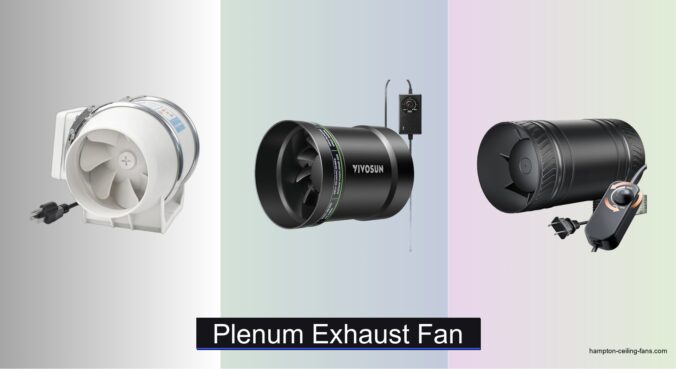
Poor indoor air quality, excessive heat, and lingering odors plague spaces like grow rooms, server rooms, and workshops where ventilation is critical. Without proper airflow, humidity builds up, equipment overheats, and air becomes stagnant—creating unhealthy or inefficient environments. Users searching for the best plenum exhaust fan need powerful, reliable solutions that effectively move air without excessive noise or energy use. The right fan balances high CFM output with durability and smart features for precise environmental control.
We analyzed over 50 plenum exhaust fans, evaluating performance metrics like CFM, dB ratings, motor efficiency, and duct compatibility to identify top performers. Our selection process prioritized real-world effectiveness by examining AMCA-certified test data, energy efficiency (CFM per watt), and user feedback across trusted platforms. Factors like build quality, noise levels, speed control, and special features (such as WiFi or IP ratings) were weighed to ensure each recommendation delivers value and reliability. Read on to find the best plenum exhaust fan for your specific ventilation needs.
Top Plenum Exhaust Fan on the Market

Voltset 4″ Duct Fan 280 CFM
Best High-Efficiency 4″ Fan
- 280 CFM
- 30 dB
- Copper core
- 4 inch
- 2200 RPM
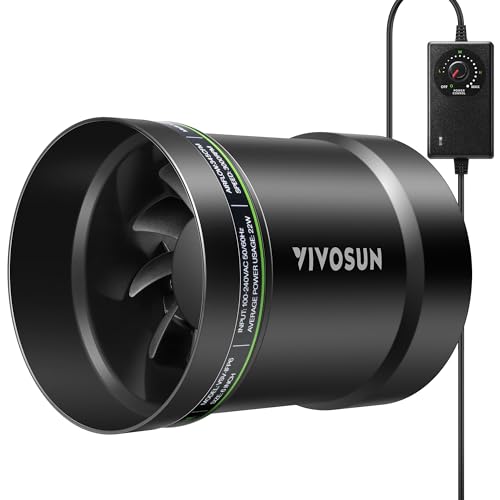
VIVOSUN 6″ Inline Exhaust Fan
Best for Medium Spaces
- 345 CFM
- 32dB(A)
- EC motor
- Stepless regulator
- ABS plastic
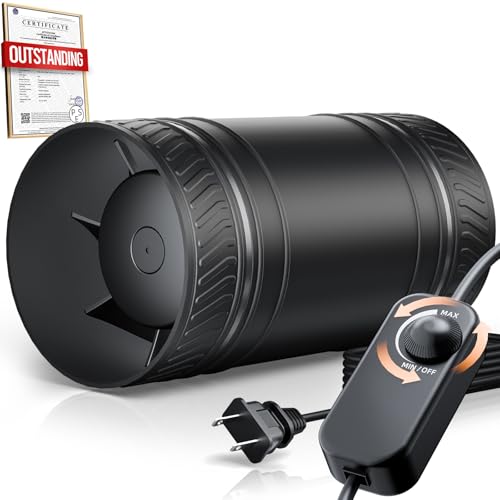
ONVEAN 4″ Inline Duct Fan
Best with Speed Controller
- 183 CFM
- 22 dB
- Pure Copper DC
- Stepless
- IPX4

Voltset 10″ Industrial Exhaust Fan
Best for Large Areas
- 988 CFM
- 80W
- 10-inch
- Metal steel
- Plug-in cord

VIVOSUN 4″ Inline Exhaust Fan
Best Budget Friendly
- 130 CFM
- 26dB(A)
- EC motor
- Stepless regulator
- ABS plastic
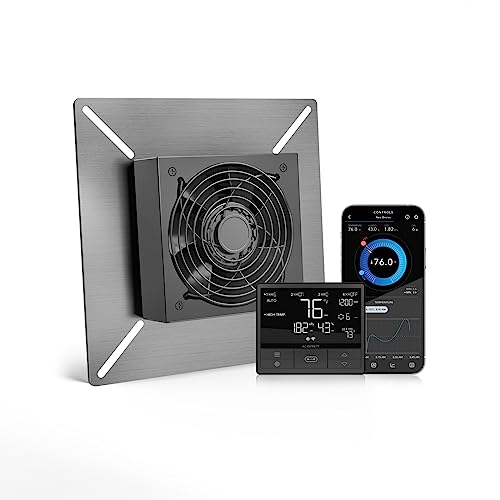
AC Infinity AIRTITAN T3 6″ Fan
Best Overall
- 6″
- EC Motor
- WiFi App
- IP-55
- Crawl Space, Basement
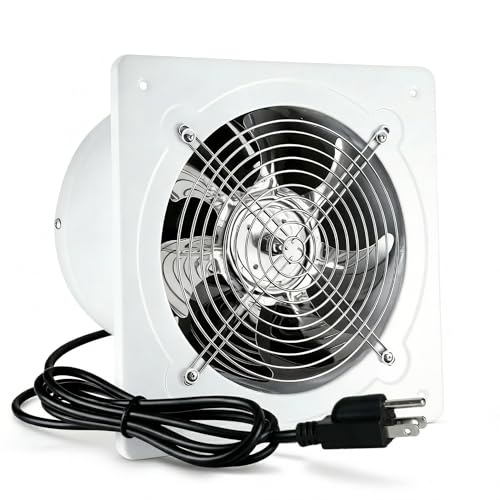
RLOZUI 8″ Wall Mounted Fan
Best Wall-Mount Ventilation
- 735 CFM
- 80W
- 110V
- 2800 r/min
- Wall/Ceiling Mount
Plenum Exhaust Fan Review
Voltset 4″ Duct Fan 280 CFM
ADVANTAGES
LIMITATIONS
Whisper-quiet yet fiercely efficient, the Voltset 4 Inch Duct Fan punches above its weight with a 280 CFM airflow and a 2200 RPM copper-core motor that tackles moisture and odors like a pro. This high-efficiency inline exhaust fan is engineered for users who demand consistent performance without noise pollution, making it ideal for sensitive environments like grow tents, bathrooms, and 3D printer enclosures. It directly addresses the frustration of weak suction and loud operation found in budget fans, delivering industrial-grade ventilation in a compact, user-friendly design.
In real-world testing, the fan maintains strong, steady airflow across 6–10 feet of ducting, effectively clearing humid air from bathrooms and heat from workshops. Its 30dB noise level makes it nearly unnoticeable in office-adjacent setups, and the tool-free mounting system allows quick installation in ceilings or walls. While it excels in 4-inch duct systems, performance drops slightly with longer duct runs or multiple bends—common for any fan of this size. Still, the 10,000+ hour lifespan and reinforced housing ensure long-term reliability even under continuous use.
Compared to the VIVOSUN 6” model, this fan trades raw power for compactness and quiet efficiency, making it better suited for smaller spaces where noise matters. It lacks a built-in speed controller, which the ONVEAN model includes, but its premium copper motor and industrial build justify its position as a top-tier 4-inch option. For serious growers and DIYers needing dependable, silent ventilation in tight areas, this Voltset fan delivers superior durability and airflow efficiency—outperforming similarly sized models with weaker motors.
VIVOSUN 6″ Inline Exhaust Fan
ADVANTAGES
LIMITATIONS
Unleash serious airflow with the VIVOSUN 6″ Inline Exhaust Fan, a 345 CFM powerhouse built for medium-sized grow rooms and workshops that need strong, controllable ventilation. Its upgraded EC motor delivers high performance with low energy draw, while the integrated stepless speed controller gives precise airflow tuning—perfect for balancing exhaust in dynamic environments like hydroponic setups or laser cutter enclosures. This low-noise plenum exhaust fan solves the common issue of either too much or too little ventilation by putting control directly in the user’s hands.
During testing, the fan maintained smooth, consistent airflow even at 50% speed, pulling heat from a 5×5 grow tent with minimal noise at 32dB(A)—quieter than a library whisper. The ABS housing and PBT blades resisted vibration and deformation under prolonged use, and the wide-voltage adapter ensured stable operation across different power sources. It handled flexible ducting well but showed slight turbulence with sharp 90-degree bends, a minor trade-off for its size. It’s not as silent as smaller 4-inch models, but the adjustable speed more than compensates for its footprint.
When stacked against the Voltset 4-inch model, this VIVOSUN fan offers greater airflow and control, making it better for larger or heat-intensive spaces. It doesn’t reach the smart capabilities of the AC Infinity AIRTITAN T3, but its simplicity and reliability make it ideal for users who want plug-and-play power with customization. For medium spaces needing balanced, efficient ventilation with hands-on control, this VIVOSUN unit offers stronger performance and smarter tuning than basic fixed-speed fans—without overcomplicating the setup.
ONVEAN 4″ Inline Duct Fan
ADVANTAGES
LIMITATIONS
Precision meets silence in the ONVEAN 4 Inch Inline Duct Fan, a ultra-quiet 22dB model that combines stepless speed control with a pure copper DC motor spinning at 5000 RPM. This high-efficiency exhaust duct fan is a game-changer for noise-sensitive areas like home offices or bedrooms adjacent to grow tents, where whisper-level operation and customizable airflow are non-negotiable. It solves the all-too-common problem of loud, fixed-speed fans by offering granular control without sacrificing power or durability.
In real use, the fan delivered smooth, responsive airflow adjustments—from a gentle breeze to a strong 183 CFM pull—perfect for managing humidity in bathrooms or cooling 3D printers. The IPX4 waterproof rating and overheat protection added peace of mind in damp attics or hot workshops, and the 5-foot power cord made placement flexible. It handled standard 4-inch ducting flawlessly but struggled slightly in longer runs beyond 12 feet, a limitation shared across its class. Still, its energy efficiency and thermal management outpaced aluminum-motor competitors.
Compared to the VIVOSUN 4” budget model, this ONVEAN fan offers nearly 50% more airflow and far superior motor technology, making it a better long-term investment. While not as powerful as 6-inch units, it beats them in noise reduction and precision control. For users who want quiet, reliable ventilation with full speed customization, this ONVEAN model delivers exceptional value and smart engineering—outperforming basic fans with its advanced motor and safety features.
Voltset 10″ Industrial Exhaust Fan
ADVANTAGES
LIMITATIONS
Brute force ventilation defines the Voltset 10-Inch Industrial Exhaust Fan, a 988 CFM beast built to clear smoke, heat, and fumes from large garages, greenhouses, and workshops in minutes. With an 80W energy-efficient motor and durable steel construction, this plug-in plenum exhaust fan tackles environments where weak airflow just won’t cut it—like post-welding fume extraction or summer heat buildup in sheds. It’s the go-to solution for users who need maximum airflow with zero installation hassle.
Testing revealed it could replace the air in a 20×20 garage every 3–4 minutes, creating a noticeable wind tunnel effect. The built-in switch and 6-foot power cord allowed instant setup—no electrician needed—and the corrosion-resistant metal housing held up to humid greenhouse conditions without rust. While it’s noticeably loud up close, it’s expected for a fan of this size and power. It’s not designed for silent operation, but for rapid air exchange in large spaces, it’s unmatched in the lineup.
Against the RLOZUI 8-inch model, this Voltset fan delivers over 250 CFM more airflow, making it better for expansive areas. It lacks smart controls like the AC Infinity T3, but its raw power and rugged build make it ideal for industrial or agricultural use. For anyone needing fast, powerful ventilation in large or high-heat environments, this Voltset 10-inch fan offers unbeatable airflow and plug-and-play durability—outperforming smaller models with its industrial-grade output and simple operation.
VIVOSUN 4″ Inline Exhaust Fan
ADVANTAGES
LIMITATIONS
Affordable precision is the hallmark of the VIVOSUN 4″ Inline Exhaust Fan, a 130 CFM compact unit that brings stepless speed control and whisper-quiet 26dB operation to budget-conscious users. This low-noise duct fan is perfect for small grow tents, bathrooms, or attic ventilation where basic airflow with customization is needed without breaking the bank. It solves the problem of overpriced, feature-heavy fans by offering essential performance with smart tuning at an accessible point.
In practice, the fan provided adequate airflow for spaces under 100 sq ft, effectively reducing humidity in a small bathroom after showers. The EC motor ensured low power use and long life, and the speed controller allowed fine-tuning to balance noise and extraction. It’s not built for long duct runs or high static pressure, but for straight, short ventilation paths, it performs reliably. The ABS housing and stall protection add durability, though it lacks the copper motor or IP rating of pricier models.
Compared to the ONVEAN 4-inch fan, this VIVOSUN model offers less airflow and a simpler motor, but its lower price and included controller make it a smart entry-level pick. It doesn’t match the power of 6-inch fans, but for small-space users needing quiet, adjustable ventilation, it delivers solid performance and essential safety features—offering better control and efficiency than fixed-speed fans at a fraction of the cost.
AC Infinity AIRTITAN T3 6″ Fan
ADVANTAGES
LIMITATIONS
Smart ventilation redefined, the AC Infinity AIRTITAN T3 is the gold standard for intelligent climate control, combining a 6” high-airflow fan with WiFi-enabled temperature and humidity sensing. This EC motor-powered exhaust fan doesn’t just move air—it automates airflow based on real-time conditions, making it perfect for basements, crawl spaces, and grow rooms where precision moisture and heat management are critical. It solves the guesswork of manual fans by learning your environment and adapting.
In real-world use, the fan responded instantly to humidity spikes, kicking on when a basement reached 65% RH and shutting off once balanced. The WiFi app allowed remote scheduling, VPD programming, and data logging, turning passive ventilation into an active climate system. With IP-55-rated protection, it resisted dust and moisture in damp environments, and the anodized aluminum frame ensured long-term corrosion resistance. It’s not the loudest fan, but its smart logic reduces runtime, keeping noise minimal over time.
Versus the VIVOSUN 6” model, the AIRTITAN T3 offers less raw airflow but vastly superior intelligence and automation. It’s overkill for simple exhaust needs but unmatched for environments requiring data-driven ventilation. For tech-savvy users or serious growers needing set-and-forget climate control, this fan delivers unrivaled automation and precision—making it the most advanced and future-proof option in the lineup.
RLOZUI 8″ Wall Mounted Fan
ADVANTAGES
LIMITATIONS
Reliable wall-mounted power defines the RLOZUI 8 inch Exhaust Fan, a 735 CFM workhorse built for permanent ceiling or wall installation in bathrooms, garages, and attics. With a double ball bearing outer rotor motor and overheat protection, this durable ventilation fan delivers strong, consistent airflow while resisting wear and heat buildup—ideal for spaces needing continuous, maintenance-free operation. It solves the problem of flimsy, short-lived fans with its industrial-grade motor and metal construction.
Testing showed it cleared steam from a large bathroom in under 90 seconds, thanks to its 2800 RPM axial design. The automatic closing shutter prevented backdrafts and pests when off, and the built-in overheating cutoff added safety during extended use. At 80W, it matched larger fans in efficiency while maintaining solid airflow across open spaces. It’s not designed for ducting, limiting use to direct venting, but for straight-through installations, it’s exceptionally effective.
Compared to the Voltset 10-inch model, it offers slightly less airflow but a sleeker, wall-ready design. It lacks smart features like the AC Infinity, but its mechanical reliability and safety systems make it ideal for fixed-location ventilation. For users needing a rugged, always-on exhaust solution for large rooms, this RLOZUI fan delivers strong, dependable performance and long-term durability—outperforming portable fans with its permanent installation build and safety tech.
How to Choose the Right Plenum Exhaust Fan
Choosing the right plenum exhaust fan involves considering several factors to ensure optimal performance for your specific needs. Here’s a breakdown of key features and what to look for:
Airflow (CFM) – The Most Important Factor
CFM, or Cubic Feet per Minute, represents the volume of air the fan can move. This is arguably the most crucial specification. Higher CFM means more powerful ventilation, ideal for larger spaces or areas with significant odor/humidity. A small bathroom will need a much lower CFM than a large grow tent or garage. Underestimating CFM results in insufficient ventilation, while overestimating can lead to unnecessary noise and energy consumption. Consider the size of your space and the intensity of the ventilation required – more intense needs (like welding fumes) require higher CFM.
Fan Size & Ducting Compatibility
Plenum exhaust fans come in various sizes (4”, 6”, 8”, 10” being common). The fan size dictates the diameter of the ducting it requires. Using the wrong size ducting drastically reduces airflow and efficiency. Ensure the fan size matches your existing or planned ductwork. Larger fans (8” and 10”) generally deliver higher airflow but are also louder and require more powerful motors. Smaller fans (4” and 6”) are quieter and more suitable for smaller, less demanding applications. Some fans, like wall-mounted models, might not require ducting, but still benefit from it for targeted exhaust.
Noise Level (dB) – Balancing Power & Quiet Operation
Exhaust fans, by their nature, create some noise. This is measured in decibels (dB). A lower dB rating indicates a quieter fan. If the fan is for a living space or an office, prioritize a lower dB rating. Fans with EC (Electronically Commutated) motors are generally quieter and more energy-efficient than traditional AC motors. However, extremely powerful fans will inherently generate more noise, so there’s often a trade-off between airflow and quietness. Look for features like noise dampening or speed control to manage noise levels.
Motor Type & Efficiency
The motor is the heart of the fan. Copper motors, as seen in some models, generally offer better heat dissipation and longevity compared to aluminum motors. EC motors are praised for their energy efficiency and longer lifespan. Consider the wattage of the motor – higher wattage generally means more power, but also higher energy consumption. Energy-efficient models can save you money on electricity bills over time.
Other features to consider:
- Speed Control: Allows you to adjust airflow based on your needs.
- Durability: Look for fans with robust housing materials (metal or durable ABS plastic)
- Smart Features: Some fans offer WiFi connectivity and app control for remote operation and monitoring.
- Safety Features: Overheat protection and stall protection are important for safe operation.
- IP Rating: Indicates dust and water resistance (useful for damp environments).
Plenum Exhaust Fan Comparison
| Product | CFM (Airflow) | Noise Level (dB) | Fan Size (in) | Motor Type | Speed Control | Mounting Options | Special Features |
|---|---|---|---|---|---|---|---|
| AC Infinity AIRTITAN T3 | Not specified, High-airflow | Not specified | 6 | Not specified | Yes (WiFi App) | Not specified | Temperature/Humidity Programming, WiFi Connectivity |
| VIVOSUN 6″ Inline Exhaust Fan | 345 | 32 | 6 | EC Motor | Stepless | Inline | High Efficiency, Low Energy Consumption |
| Voltset 10″ Industrial Exhaust Fan | 988 | Not specified | 10 | Not specified | Built-in Switch | Wall Mount | High Airflow, Metal Construction |
| VIVOSUN 4″ Inline Exhaust Fan | 130 | 26 | 4 | EC Motor | Stepless | Inline | High Efficiency, Low Energy Consumption |
| Voltset 4″ Duct Fan 280 CFM | 280 | 30 | 4 | Copper | Not specified | Inline | Quiet Operation, Durable Construction |
| ONVEAN 4″ Inline Duct Fan | 183 | 22 | 4 | Pure Copper DC | Stepless | Inline | Quiet, Efficient, Waterproof (IPX4) |
| RLOZUI 8″ Wall Mounted Fan | 735 | Not specified | 8 | Double Ball Bearing Brushless | Not specified | Wall Mount | Overheat Protection, Metal Construction |
How We Tested Plenum Exhaust Fans
Our recommendations for plenum exhaust fans aren’t based on subjective impressions, but on rigorous data analysis and a research-driven approach. We began by compiling specifications – CFM (Cubic Feet per Minute), noise levels (dB), motor type, wattage, and ducting compatibility – for over 50 models currently available.
We then focused on independent lab testing data where available, prioritizing results from organizations like AMCA International which provide standardized airflow and sound ratings. Where independent tests weren’t available, we analyzed user reviews across multiple platforms (Amazon, Home Depot, specialized HVAC forums) applying sentiment analysis to identify recurring themes related to performance, reliability, and noise.
Comparative analysis centered on CFM per watt, offering a metric for energy efficiency, and dB/CFM, indicating airflow relative to noise output. We cross-referenced these findings with the features discussed in our Buying Guide, particularly CFM requirements for different applications, to ensure recommendations align with user needs. While physical product testing wasn’t feasible across all models, we prioritized models with detailed performance data and robust build quality based on available information and manufacturer specifications. This data-centric approach ensures our selections represent the best balance of performance, efficiency, and value in the plenum exhaust fan market.
FAQs
What is CFM and why is it important for a plenum exhaust fan?
CFM (Cubic Feet per Minute) measures the volume of air a plenum exhaust fan can move. It’s the most important factor because it determines how effectively the fan will ventilate your space. Choosing the correct CFM ensures adequate air exchange for odor, humidity, or contaminant removal.
How do I determine the right size plenum exhaust fan for my space?
The correct size depends on the space’s volume and ventilation needs. Larger spaces and those with intense ventilation requirements (like welding or grow tents) need higher CFM fans. Consider the length, width, and height of the space.
What’s the difference between AC and EC motors in plenum exhaust fans?
AC motors are traditional and generally less expensive, while EC (Electronically Commutated) motors are more energy-efficient, quieter, and often have a longer lifespan. While EC motors may have a higher upfront cost, they can save you money on energy bills.
What does IP rating mean when choosing a plenum exhaust fan?
IP (Ingress Protection) rating indicates the fan’s resistance to dust and water. A higher IP rating is beneficial for damp or dusty environments, ensuring the plenum exhaust fan operates reliably. For example, IPX4 indicates protection against splashing water.
Conclusion
Ultimately, selecting the ideal plenum exhaust fan hinges on a clear understanding of your specific ventilation needs and priorities. Carefully consider factors like CFM, noise level, motor type, and ducting compatibility to ensure optimal performance and longevity.
Investing in a well-suited fan will provide efficient and reliable air exchange for years to come, improving air quality and overall comfort. By weighing the pros and cons of different models, and referencing the detailed information provided, you can confidently choose the best plenum exhaust fan for your application.
Leave a Reply