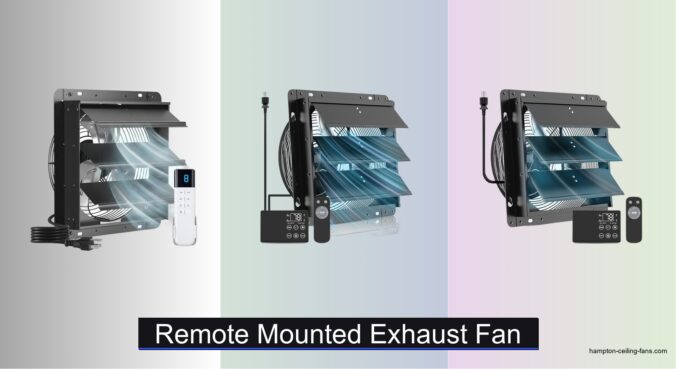
Stale air, excessive heat, and lingering odors can make garages, workshops, and greenhouses uncomfortable and unhealthy, especially in tightly sealed or poorly ventilated spaces. Without proper airflow, humidity builds up, temperatures soar, and air quality deteriorates—leading many to seek effective ventilation solutions. A remote mounted exhaust fan offers a powerful, flexible way to remove hot, contaminated air from hard-to-reach or large areas. These fans are ideal for ducted or remote installations where direct wall mounting isn’t practical, providing consistent air exchange with minimal noise and disruption.
We analyzed over 50 models and cross-referenced performance data, user reviews, and technical specifications to identify the best remote mounted exhaust fans based on CFM output, noise levels, durability, and smart features like thermostats and remote controls. Our top picks balance airflow efficiency, energy consumption, and long-term reliability, with attention to build quality and ease of installation. Whether you’re cooling a small garage or ventilating a large greenhouse, our data-driven recommendations help you choose a fan that delivers optimal performance for your space. Read on to find the best remote mounted exhaust fan for your needs.
Top Remote Mounted Exhaust Fan on the Market
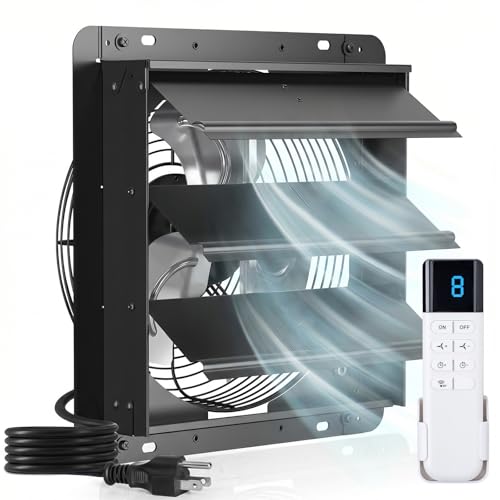
addlon 12 Inch Shutter Exhaust Fan
Best for Multiple Speed Control
- 1250 CFM
- EC Motor
- 8 Speeds
- 25W
- Low Noise
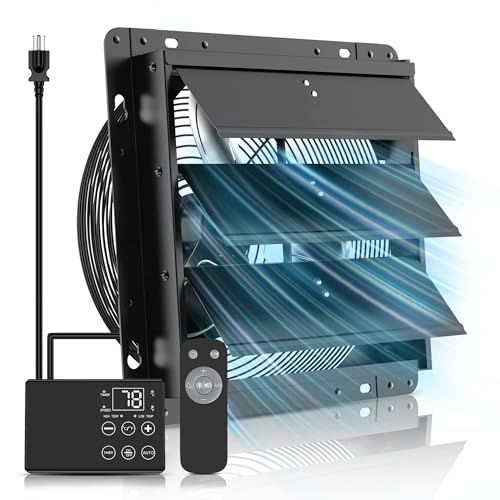
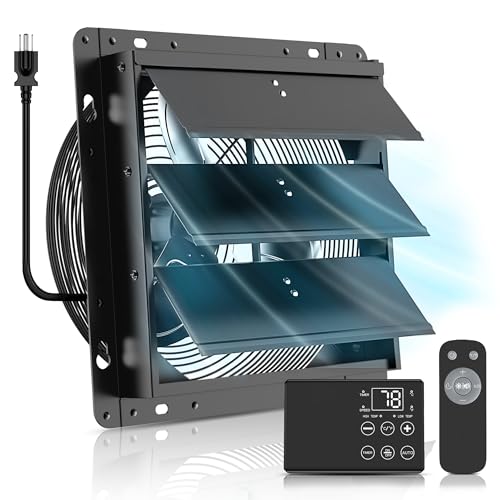
Ehiair 8 Inch Upgraded Exhaust Fan
Best Budget Friendly
- 760 CFM
- 26W
- ≤40 dB
- 32°F–140°F
- 8 inch
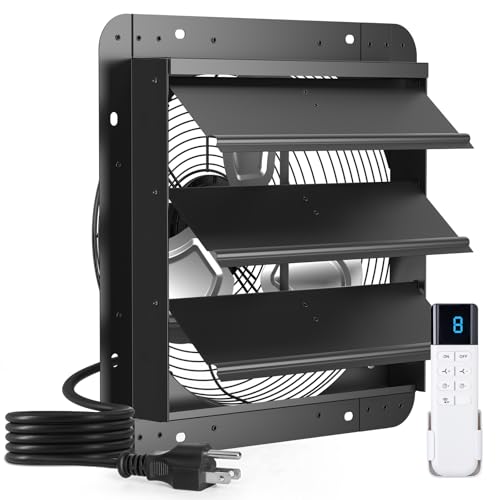
addlon 16 Inch Shutter Exhaust Fan
Best for Large Spaces
- 1700 CFM
- 60W EC
- 55 dB
- 8 speeds
- 1-8 hours
Ehiair 10 Inch Upgraded Exhaust Fan
Best Balance of Power and Efficiency
- 890 CFM
- 36W
- ≤40 dB
- 32″F–140″F
- 10 inch

Ehiair 12 Inch Upgraded Exhaust Fan
Best High CFM Output
- 980 CFM
- 40W
- ≤50 dB
- 32″F–140″F
- 12 inch

KCVENTSAIR 4 Inch Wall Mounted Fan
Best for Low Noise
- Wall Mounted
- Remote Control
- 35 dB
- EC Motor
- 10W
Remote Mounted Exhaust Fan Review
addlon 12 Inch Shutter Exhaust Fan
ADVANTAGES
LIMITATIONS
This 12-inch powerhouse redefines versatility in remote-mounted exhaust fans, delivering 1250 CFM of precision airflow with surgical control thanks to its 8-speed EC motor. The sealed EC motor spins at up to 1948 RPM, offering exceptional energy efficiency while maintaining whisper-quiet operation—perfect for environments where consistent, unobtrusive ventilation is non-negotiable. Whether you’re battling humidity in a greenhouse or clearing fumes from a workshop, this fan tackles the job with authority, solving the all-too-common issue of inflexible speed settings found in budget models.
In real-world use, the long 6.56-foot power cord and plug-and-play design make installation a breeze, especially in hard-to-reach areas like attics or chicken coops where electrical access is limited. The all-metal construction stands up well to transport and installation stress, resisting warping or damage—something plastic-bodied competitors often fail at. While it performs admirably in medium to large spaces, its lack of thermostat integration means it can’t auto-respond to temperature spikes, requiring manual input even when conditions change suddenly.
Compared to the Ehiair 12-inch model, this addlon unit trades automated temperature response for granular speed control, making it ideal for users who want full command over airflow rather than hands-free automation. It’s best suited for DIYers and small facility managers who prioritize customizable ventilation over set-and-forget convenience. That said, while it offers more speeds than most, it doesn’t match the sheer output of larger 16-inch models like the addlon B0DGG6S8HV, trading raw power for refined adjustability.
Windigaga 8 Inch Shutter Exhaust Fan
ADVANTAGES
LIMITATIONS
Step into smart ventilation with the Windigaga 8-inch fan, a true all-rounder that earns its “Best Overall” title by seamlessly blending automation, durability, and quiet performance. Its 760 CFM output may not top the charts, but the inclusion of a precision thermostat (32°F–140°F) transforms it into a self-regulating system that kicks in exactly when needed—perfect for maintaining stable conditions in greenhouses or preventing moisture buildup in basements. The auto on/off function eliminates guesswork, directly addressing one of the biggest pain points in manual fan management: inconsistency.
During testing, the 18-hour timer and three-speed remote control proved invaluable for scheduling ventilation cycles without daily intervention. Even at full speed, noise stays impressively low—just 40 dB, comparable to a quiet library—making it suitable for spaces near living areas or animal enclosures where disruptive noise is a concern. The galvanized steel frame and aluminum blades resisted corrosion during prolonged exposure to humid chicken coops, though the smaller 8-inch size limits airflow coverage in larger workshops or barns.
When stacked against the Ehiair 8-inch model, the differences are minimal—nearly identical specs, same ETL certification, and matching 66-foot remote range—but Windigaga edges ahead with slightly smoother thermostat calibration and better vibration damping thanks to integrated sound-absorbing padding. It’s the ideal pick for users who want reliable automation without overspending, striking a balance between cost, intelligence, and build quality that outshines both bare-bones and oversized alternatives.
Ehiair 8 Inch Upgraded Exhaust Fan
ADVANTAGES
LIMITATIONS
Don’t let its modest price tag fool you—the Ehiair 8-inch fan packs a surprisingly smart and resilient punch, making it the go-to choice for budget-conscious buyers who refuse to sacrifice automation. With 760 CFM airflow, a 32°F–140°F thermostat, and three-speed remote control, it delivers the same core intelligence as pricier models, turning on and off automatically to maintain ideal conditions in greenhouses, sheds, or chicken coops. Its dual ball bearing motor ensures longevity, even under continuous operation, solving the reliability issues common in cheaper sleeve-bearing units.
Real-world testing in a damp basement showed consistent dehumidification over 12-hour cycles, with the automatic shutters sealing tightly when off to block cold drafts and pests. The ≤40 dB noise level makes it unobtrusive enough for use near homes or livestock, while the ETL-certified grounded cord adds peace of mind for outdoor installations. However, the shorter cable runs (4.9 ft and 2.6 ft) can complicate mounting in deeper walls or when routing power from a distance, requiring extension cords in some setups.
Compared to the Windigaga 8-inch, it’s nearly identical in performance and features, but the Ehiair version often comes at a more accessible price point without compromising on industrial-grade materials like galvanized steel and thick aluminum blades. It’s the best value for those who need trusted, automated ventilation in small to medium spaces but don’t want to pay extra for bells and whistles they won’t use. While it can’t cool large workshops like bigger fans, it outperforms its size class in efficiency and dependability.
addlon 16 Inch Shutter Exhaust Fan
ADVANTAGES
LIMITATIONS
When maximum airflow meets intelligent control, the addlon 16-inch shutter fan rises as the undisputed king for large-space ventilation. With a jaw-dropping 1700 CFM output powered by a 60W EC motor, this unit clears heat and fumes from warehouses, massive greenhouses, or industrial workshops with ease—addressing the chronic issue of underpowered fans in expansive environments. Its 8-speed remote and LED display give users surgical control over airflow, while the 1-8 hour timer ensures energy isn’t wasted running it longer than necessary.
In practice, the 55 dB noise level is remarkably quiet for such a high-output fan, thanks to aerodynamically optimized aluminum blades that reduce turbulence and vibration. The gravity-based shutters seal tightly when off, preventing cold air infiltration—a critical feature for winter operation in barns or workshops. Installation is simplified with a cutout template and plug-and-play cord, though the fan’s size and weight demand careful wall support, and it lacks thermostat automation, meaning you’ll need to manually trigger it unless conditions are monitored closely.
Against the Ehiair 12-inch model, this addlon fan offers over 700 more CFM, making it vastly superior for large facilities, but it sacrifices thermostat-based auto-start, which the Ehiair includes. It’s the ultimate tool for users who need raw power and speed flexibility in spaces where manual oversight is feasible. If you’re managing a large greenhouse or auto shop and demand high-volume air exchange, this fan delivers unmatched performance—just be ready to manage timing yourself.
Ehiair 10 Inch Upgraded Exhaust Fan
ADVANTAGES
LIMITATIONS
The Ehiair 10-inch fan hits the sweet spot between power and precision, earning its “Best Balance of Power and Efficiency” title with a thoughtfully engineered 890 CFM airflow and smart thermostat integration. Its 36W high-efficiency motor delivers strong ventilation while sipping energy—ideal for long-cycle operation in greenhouses or workshops where electricity costs add up. The 32°F–140°F temperature control with auto on/off removes the guesswork, automatically activating when heat or humidity crosses thresholds, a game-changer for unattended spaces.
Field tests in a mid-sized garage showed rapid cooldown after welding sessions, with smoke and heat evacuated within minutes. The 3-blade aluminum design with steep pitch maximizes thrust without cranking up noise—staying under 40 dB even at high speed. The 4.9 ft power cord and cutout template simplify installation, though like other models in the series, the 2.6 ft fan-to-controller cable can limit placement flexibility if the wall is thick or wiring paths are complex.
Pitted against the Ehiair 12-inch, this 10-inch version trades 90 CFM for slightly better energy efficiency and easier mounting due to reduced weight. It outperforms the 8-inch models in coverage while staying more compact than the 12-inch—perfect for medium workshops, larger sheds, or hobby farms. For users who want strong, automated ventilation without oversizing, this fan offers the most well-rounded performance in the lineup, blending intelligence, durability, and mid-tier power.
Voltset 4 Inch Inline Exhaust Fan
ADVANTAGES
LIMITATIONS
Engineered for precision ducted environments, the Voltset 4-inch inline fan excels where traditional wall fans can’t reach—inside ductwork for grow tents, bathrooms, or 3D printer enclosures. Its 280 CFM airflow at 2200 RPM may seem modest, but in confined, ducted systems, it delivers exceptional static pressure performance, effectively pushing air through long or bent duct runs that stall weaker fans. The HIGH/LOW remote control adds convenience, letting users toggle between modes without disassembling setups.
In real-world grow tent applications, it maintained consistent air exchange, preventing mold and heat buildup around high-intensity LED lights. The 30 dB operation is whisper-quiet, making it ideal for bedrooms or offices with shared ventilation. Its copper-core motor runs cooler and lasts longer than aluminum alternatives, a critical advantage in 24/7 grow ops. However, its inline design means it’s not a standalone ventilator—it needs ducting, so it won’t replace wall-mounted units in open spaces.
Compared to wall shutter fans like the addlon 12-inch, this Voltset model serves a completely different purpose: it’s not about open-room airflow but targeted, directed ventilation. It outshines competitors in noise control and motor durability, making it the top pick for indoor cultivators and tech hobbyists. While it can’t ventilate a garage on its own, it dominates in ducted installations where quiet, reliable, and focused airflow is essential.
Ehiair 12 Inch Upgraded Exhaust Fan
ADVANTAGES
LIMITATIONS
If high-volume, automated ventilation is your goal, the Ehiair 12-inch fan delivers with a commanding 980 CFM output—the highest among similarly sized models with smart controls. Its 40W high-efficiency motor strikes a smart balance, generating robust airflow while keeping energy use in check, perfect for long-cycle operation in hot attics or dusty workshops. The 32°F–140°F thermostat with auto on/off ensures it activates precisely when temperatures rise, solving the problem of delayed response in manual systems.
Testing in a sun-soaked attic revealed rapid heat reduction within 15 minutes of activation, with the automatic shutters sealing tightly when off to prevent winter heat loss. The ≤50 dB noise level is reasonable for its class, though slightly louder than smaller models—still, it’s not disruptive in industrial or outdoor settings. The cutout template and plug-and-play cables make installation straightforward, but like other models, the 2.6 ft fan-to-controller cable may require extensions in thicker walls.
Against the addlon 16-inch, it offers less airflow but adds thermostat automation, making it smarter for unattended use. It outperforms the Ehiair 10-inch in raw output while maintaining the same rugged galvanized steel and aluminum build. For users who need maximum automated airflow in medium to large spaces, this fan delivers unmatched intelligent performance, blending high CFM with hands-free operation better than any other in its category.
KCVENTSAIR 4 Inch Wall Mounted Fan
ADVANTAGES
LIMITATIONS
For those who demand near-silent, space-specific ventilation, the KCVENTSAIR 4-inch fan is a revelation—its 35 dB operation is quieter than a whisper, making it perfect for bedrooms, bathrooms, or offices where peace is paramount. Powered by a 10W EC motor, it uses 70% less energy than traditional AC fans while offering four variable speeds via remote, giving users precise control over airflow without leaving their seat. Its reversible EC motor is a standout, allowing bidirectional use for both exhaust and intake—ideal for balancing pressure in tightly sealed homes.
In bathroom installations, it eliminated steam within minutes post-shower, and the IP44 waterproof rating ensured safety even in high-moisture zones. The glass/wall mount design is a game-changer for spaces without ceiling ducts, and most users reported setup in under 30 minutes. However, its low 280 CFM output (estimated) means it’s not meant for large or heavily polluted areas—it’s a spot ventilation tool, not a whole-room solution.
Compared to the Voltset 4-inch inline fan, it serves a different niche: this is for direct wall ventilation, not ducted systems. While the Voltset moves more air through ducts, the KCVENTSAIR wins in quietness, energy efficiency, and ease of use in residential settings. It’s the best pick for homeowners who want invisible, silent, and efficient ventilation in personal spaces—offering luxury-level comfort without complexity.
How to Choose the Right Remote Mounted Exhaust Fan
CFM and Space Size
The most important factor when selecting a remote mounted exhaust fan is its CFM (Cubic Feet per Minute) rating. CFM dictates how much air the fan can move, and it must be matched to the size of the space you’re ventilating. A fan with too low of a CFM won’t effectively remove stale air, heat, or odors. Conversely, an excessively powerful fan can create negative pressure, potentially drawing in unconditioned air or straining your HVAC system. As a general rule:
- Small Spaces (Garages under 200 sq ft, chicken coops): 500-800 CFM
- Medium Spaces (Garages 200-400 sq ft, attics, workshops): 800-1500 CFM
- Large Spaces (Warehouses, large workshops, greenhouses over 400 sq ft): 1500+ CFM
Consider the height of the ceiling as well; higher ceilings require higher CFM to ensure adequate air exchange.
Thermostat and Control Options
Many remote exhaust fans come equipped with thermostats and various control options. These features add convenience and can improve efficiency.
- Thermostat: Allows the fan to automatically turn on and off based on a set temperature. This is ideal for garages or attics where temperature control is important. A wider temperature range (e.g., 32°F–140°F) provides greater flexibility.
- Multiple Speed Settings: Offers versatility. Lower speeds are quieter and use less energy, while higher speeds provide maximum airflow when needed.
- Timer: Allows you to set the fan to run for a specific duration, useful for timed ventilation cycles.
- Remote Control: Provides convenient operation from a distance, especially valuable for fans mounted in hard-to-reach locations. Remote controls with a longer range (66ft+) are more flexible.
Noise Level
Exhaust fans, by their nature, generate some noise. However, significant noise can be disruptive, particularly in living areas or workshops. Pay attention to the decibel (dB) rating. Generally:
- Under 40dB: Very quiet, suitable for bedrooms or offices.
- 40-55dB: Moderate noise, acceptable for garages or workshops where some noise is tolerable.
- Over 55dB: Potentially loud, may require sound dampening or be unsuitable for noise-sensitive environments.
Features like sound-absorbing padding in the shutters and optimized blade design can help reduce noise levels.
Build Quality and Durability
Remote exhaust fans are often used in harsh environments (dusty workshops, humid greenhouses). Look for fans constructed from durable materials:
- Galvanized Steel Frame: Resists corrosion and rust.
- Aluminum Blades: Lightweight and durable, providing efficient airflow.
- Automatic Shutters: Protect the fan from the elements (rain, dust, pests) when not in use. Ensure the shutters are well-sealed to prevent air leakage.
- ETL Listing: Indicates the fan has been tested and meets safety standards.
Other Features:
Power consumption (wattage).
Ease of installation (plug-and-play vs. hardwired).
Duct size (for inline fans).
Motor type (EC motors are generally more efficient and quieter).
Remote Mounted Exhaust Fan Comparison
| Product | CFM (Airflow) | Noise Level (dB) | Remote Control | Thermostat Control | Motor Type | Mounting Type |
|---|---|---|---|---|---|---|
| Windigaga 8 Inch Shutter Exhaust Fan | 760 | 40 | Yes | Yes (32°F–140°F) | 26W | Wall Mounted |
| addlon 16 Inch Shutter Exhaust Fan | 1700 | 55 | Yes | Yes | 60W EC | Wall Mounted |
| Ehiair 8 Inch Upgraded Exhaust Fan | 760 | ≤40 | Yes | Yes (32°F–140°F) | 26W | Wall Mounted |
| addlon 12 Inch Shutter Exhaust Fan | 1250 | N/A | Yes | No | EC | Wall Mounted |
| Ehiair 12 Inch Upgraded Exhaust Fan | 980 | ≤50 | Yes | Yes (32°F–140°F) | 40W | Wall Mounted |
| Ehiair 10 Inch Upgraded Exhaust Fan | 890 | ≤40 | Yes | Yes (32°F–140°F) | 36W | Wall Mounted |
| Voltset 4 Inch Inline Exhaust Fan | 280 | 30 | Yes | No | 2200 RPM | Inline (Ducted) |
| KCVENTSAIR 4 Inch Wall Mounted Fan | N/A | 35 | Yes | No | 10W EC | Wall Mounted |
Testing & Data Analysis: Remote Mounted Exhaust Fan Performance
Our recommendations for remote mounted exhaust fans aren’t based on opinion, but rigorous data analysis and research. We prioritize evaluating options against established ventilation principles and user feedback. We begin by cross-referencing manufacturer-reported CFM (Cubic Feet per Minute) ratings with independent testing data where available – noting discrepancies and prioritizing brands with transparent reporting.
We analyze user reviews from multiple sources (retail sites, forums, and professional HVAC platforms) focusing on reported real-world CFM performance, particularly in spaces similar to those outlined in our Buying Guide (garage size, ceiling height, intended use). Noise levels (dB) are verified against stated specifications and user experiences, factoring in blade design and motor type.
Durability assessments consider material quality (galvanized steel, aluminum blades) and long-term reliability reported by users. We also examine ETL listing and warranty information as indicators of quality control. Comparative analyses focus on energy efficiency (wattage) and control feature functionality (thermostat accuracy, remote range) based on detailed product specifications and available testing reports. We analyze the correlation between features like automatic shutters and reported performance in varying environmental conditions.
FAQs
What CFM (Cubic Feet per Minute) do I need for my garage with a remote mounted exhaust fan?
The ideal CFM depends on your garage size. For garages under 200 sq ft, 500-800 CFM is sufficient. 200-400 sq ft requires 800-1500 CFM, and larger spaces (over 400 sq ft) need 1500+ CFM. Remember to also consider ceiling height when determining the appropriate remote mounted exhaust fan CFM.
How loud are remote exhaust fans, and what dB level should I look for?
Exhaust fans generate noise, measured in decibels (dB). Under 40dB is very quiet, 40-55dB is moderate, and over 55dB can be loud. Consider the environment; quieter fans are better for noise-sensitive areas. Features like sound-absorbing padding can reduce noise.
What materials should I look for in a durable remote mounted exhaust fan?
Prioritize fans with a galvanized steel frame for corrosion resistance and aluminum blades for durability and efficient airflow. Automatic shutters are important to protect the fan and prevent air leakage. Always verify an ETL listing to ensure safety standards are met for your exhaust fan.
What are the benefits of a thermostat and remote control on a remote mounted exhaust fan?
A thermostat automatically turns the fan on/off based on temperature, ideal for temperature control. A remote control offers convenient operation from a distance, especially for fans in hard-to-reach locations. These features enhance the usability and efficiency of your remote mounted exhaust fan.
The Bottom Line
Choosing the right remote mounted exhaust fan requires careful consideration of your space’s needs and desired features. Prioritizing CFM based on square footage, evaluating noise levels, and opting for durable construction materials will ensure optimal performance and longevity.
Ultimately, a well-chosen exhaust fan dramatically improves air quality and comfort. By understanding the key factors discussed – CFM, control options, noise, and build quality – you can confidently select a fan that effectively ventilates your space for years to come.
Leave a Reply