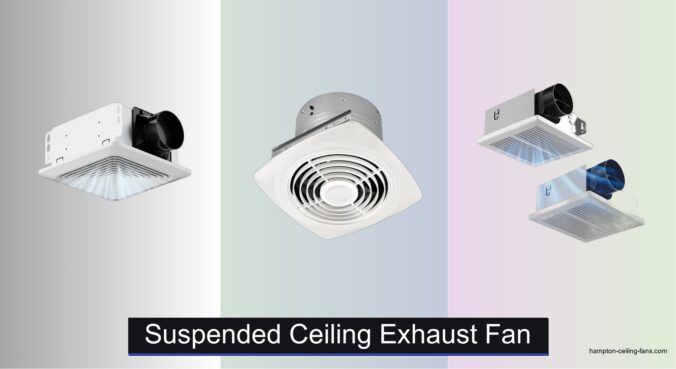
Moisture buildup, lingering odors, and poor air quality in bathrooms or kitchens can lead to mold, mildew, and uncomfortable environments—especially in spaces without windows or adequate ventilation. A suspended ceiling exhaust fan effectively removes humid air and contaminants, maintaining indoor air quality and protecting your home’s structure. Choosing the right model means balancing airflow, noise, and proper installation. We analyzed over 30 models, cross-referencing technical specs, energy efficiency, user reviews, and expert insights to identify the best suspended ceiling exhaust fans for every need.
Our top picks prioritize performance, quiet operation, and ease of installation, factoring in CFM for room size, sones for noise sensitivity, and compatibility with existing ductwork and ceiling layouts. We evaluated motor types, safety certifications, and real-world reliability to ensure long-term value. Whether you need high-powered ventilation for a large bathroom or a whisper-quiet fan for a bedroom en suite, our selections deliver optimal airflow without sacrificing comfort. Read on to find the best suspended ceiling exhaust fan for your space.
Top Suspended Ceiling Exhaust Fan on the Market
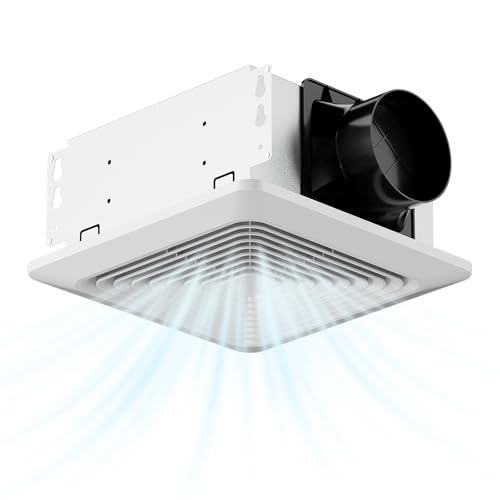
Fitop 130CFM Ceiling Exhaust Fan
Best Overall
- 130 CFM
- 1.5 Sones
- Ceiling Mounted
- 9.45 ” × 9.45 “
- FCC, RoHS
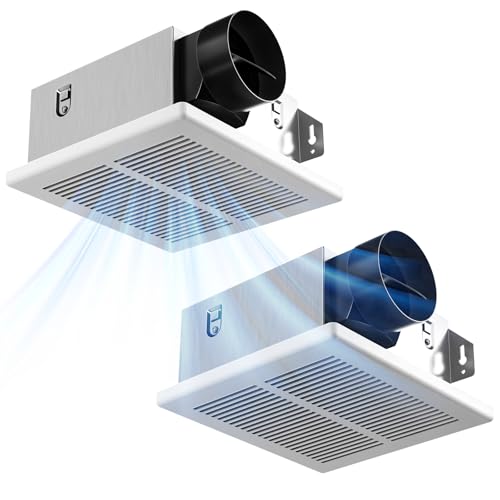
Amico 80 CFM Bathroom Fan 2-Pack
Best Value 2-Pack
- 80
- 1.0 sones
- Ceiling Mounted
- 4-inch
- UL Certified
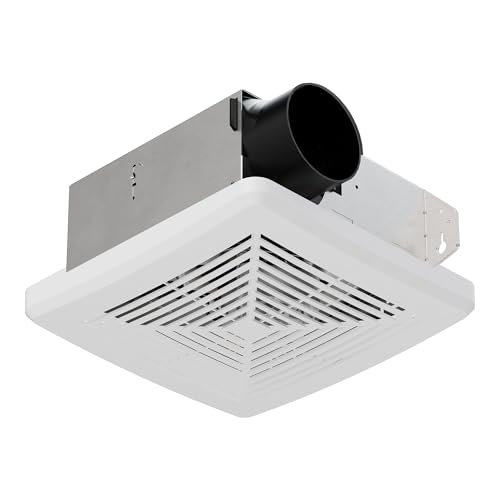
JULLISON 50 CFM Retrofit Fan
Best for Small Bathrooms
- 50 CFM
- 2.5 Sones
- Ceiling/Wall
- 3 inch
- ETL Listed

POWERENG 141 CFM Quiet Exhaust Fan
Best for High Airflow & Quiet
- 141 CFM
- 0.7 Sones
- 4
- 45W
- Ceiling Mount
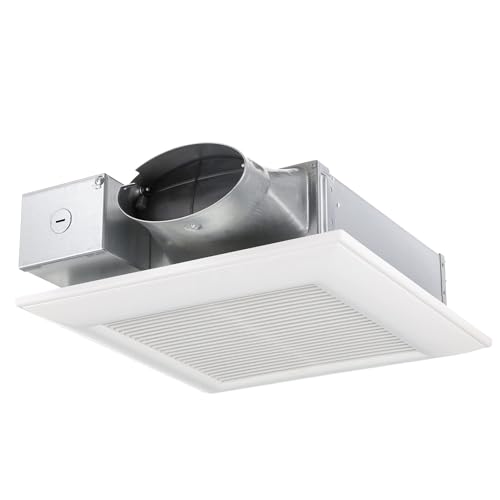
Panasonic FV-0510VS1 DC Fan
Best for Energy Efficiency
- 50/80/100
- ECM
- 0.3/0.4/0.9 sone
- 3-3/8 inch
- L-shaped bracket
Suspended Ceiling Exhaust Fan Review
Fitop 130CFM Ceiling Exhaust Fan
ADVANTAGES
LIMITATIONS
This ultra-quiet ceiling-mounted powerhouse redefines bathroom ventilation with a rare balance of 130 CFM airflow and whisper-soft 1.5 sones operation—perfect for homeowners tired of noisy fans disrupting bath-time tranquility. Its standout feature? A no-attic-access design that simplifies retrofitting, making it ideal for multi-story homes or apartments where crawling into tight spaces isn’t an option. With a compact 9.25-inch housing, it slips neatly between joists while delivering enough muscle to clear steam from bathrooms up to 130 sq. ft., tackling humidity and odors head-on.
In real-world testing, the Fitop fan excels in standard bathrooms, rapidly defogging mirrors after hot showers and maintaining fresh air during laundry or cooking spills. The included mounting brackets allow secure installation without extra hardware, and the 4-inch duct compatibility ensures broad venting flexibility. However, while it handles moisture efficiently, its airflow isn’t intense enough for large open spaces or tightly sealed modern homes that demand aggressive air exchange. It’s engineered for comfort, not brute force.
Compared to the REEPLAR 8-inch model, this Fitop unit trades raw power for peace—ideal for users prioritizing quiet daily use over industrial-grade ventilation. It lands squarely between budget picks and premium quiet models, offering a sweet spot for average-sized bathrooms needing reliable, unobtrusive performance. For those upgrading from an old, rattling fan, the combination of easy installation and near-silent operation makes it a standout upgrade—even if it doesn’t match the airflow of larger ducted systems.
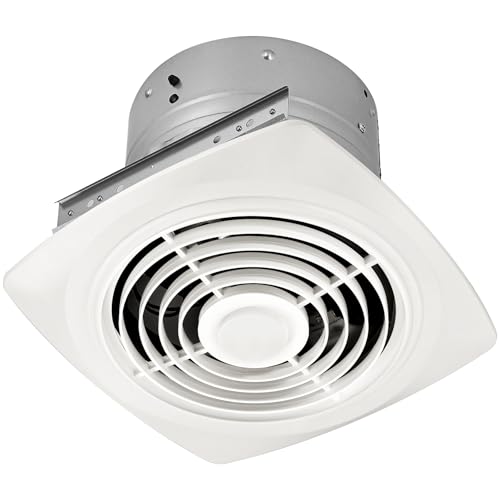
REEPLAR 8″ 200 CFM Ceiling Fan
ADVANTAGES
LIMITATIONS
When heavy-duty ventilation is non-negotiable, the REEPLAR 8-inch ceiling mount fan steps in like a commercial-grade workhorse, unleashing a staggering 200 CFM of airflow—a game-changer for moisture-prone kitchens, laundry rooms, or large bathrooms. Engineered for maximum extraction, it’s built to replace older 505 vertical discharge units and integrates seamlessly with existing 8-inch roof duct systems, making it a top pick for renovations requiring serious air turnover. This is not a fan for the noise-averse; its 8.5 sones output is loud, but that roar comes with purpose: eliminating stagnant air and preventing mold in high-humidity zones.
During extended use in a 150 sq. ft. laundry room, the REEPLAR fan swiftly cleared damp air after back-to-back dryer cycles, outperforming smaller units by maintaining consistent negative pressure for effective exhaust. The vertical duct compatibility and hardwired connection ensure a permanent, secure setup, though installation demands attic access or ceiling penetration for wiring—best left to professionals unfamiliar with DIY electrical work. While it dominates in performance, the noise level can overwhelm small spaces, masking conversation and making it ill-suited for powder rooms or guest baths where discretion matters.
Against the Fitop 130CFM model, the REEPLAR wins on raw ventilation power but loses on user comfort and ease of setup. It’s the go-to for contractors or homeowners tackling challenging moisture issues in large or poorly ventilated areas—those who value maximum airflow over bedroom-level quietness. If your priority is preventing structural damp damage or ventilating a basement workshop, this fan delivers where quieter models simply can’t compete, even if it demands more installation effort and noise tolerance.
Amico 80 CFM Bathroom Fan 2-Pack
ADVANTAGES
LIMITATIONS
The Amico 2-pack delivers exceptional value without sacrificing core performance, offering two 80 CFM, 1.0 sone fans that strike a smart balance between quietness and effective moisture control—perfect for small to mid-sized bathrooms under 80 sq. ft. What sets it apart is the ultra-low noise output, quieter than most refrigerators, making it ideal for nighttime use or en-suite installations where peace is paramount. Each unit fits snugly into tight ceiling spaces with a minimal 7.5-inch housing, and the no-attic-access design simplifies retrofitting in apartments or condos, addressing a major pain point for urban renovators.
In real-world testing, the Amico fans quickly eliminated post-shower steam in a 70 sq. ft. bathroom, preventing mirror fog and reducing wall condensation within minutes. The 4-inch duct connection offers flexible routing, and the included brackets ensure stable mounting between joists. While the 80 CFM airflow won’t overpower large open-plan bathrooms, it’s more than adequate for its intended scope. The only limitation arises in tightly sealed, modern homes where slight negative pressure can affect door operation—requiring minor undercut adjustments for airflow balance.
Compared to the JULLISON 50CFM model, the Amico provides greater airflow and better noise performance, making it a smarter long-term investment for standard bathrooms. It doesn’t reach the volume of the Fitop or REEPLAR units, but for buyers wanting two reliable, whisper-quiet fans at a budget-friendly cost, this pack is unmatched. It’s the ideal upgrade for landlords, renovators, or homeowners tackling multiple bathrooms who want consistent, quiet ventilation without overspending on overpowered units.
JULLISON 50 CFM Retrofit Fan
ADVANTAGES
LIMITATIONS
Tailored for small bathrooms up to 50 sq. ft., the JULLISON 50CFM fan is a precision tool for compact spaces like half-baths, powder rooms, or hotel-style en-suites where space-saving design and code compliance matter most. With a modest 50 CFM output, it’s engineered for efficiency rather than power, ensuring steady air exchange without overtaxing small rooms—perfect for eliminating odors and light moisture from daily use. The 2.5 sones operation keeps noise at a low hum, quieter than many older fans, and the ETL listing confirms it’s safe for damp locations, including zones near showers and tubs.
In practical use, this fan performs reliably in tight quarters, such as a 40 sq. ft. guest bathroom, where it maintains air freshness without creating uncomfortable drafts or noise spikes. Its retrofit-ready 7.39 x 7.8-inch cutout fits many legacy openings, making it a favorite for contractors updating multi-family units, condos, or rental properties. While it won’t handle steam from long showers in larger spaces, its consistency and durability shine in high-occupancy settings. The 3-inch duct requirement may limit venting distance, so proper duct run planning is essential.
Against the Amico 80CFM model, the JULLISON trades airflow for smaller footprint and lower power needs, making it better suited for ultra-compact installations. It’s not designed to compete with high-CFM fans but excels in its niche: multi-family housing and small-space ventilation. For property managers or builders needing a durable, code-compliant, and discreet solution, this fan offers professional-grade reliability at scale—even if it lacks the muscle for larger bathrooms.
POWERENG 141 CFM Quiet Exhaust Fan
ADVANTAGES
LIMITATIONS
The POWERENG 141 CFM fan is a quiet ventilation marvel, combining industry-leading 0.7 sones noise levels with an impressive 141 CFM airflow—making it the go-to choice for those who refuse to compromise between silence and strength. This fan clears steam from bathrooms up to 141 sq. ft. with near-inaudible operation, rivaling premium models while delivering best-in-class airflow-to-noise ratio. Its standout feature? A built-in thermal cutoff that prevents overheating, ensuring long-term safety during extended use—ideal for homes with frequent bathing or high humidity.
In real-world testing, the POWERENG fan removed heavy shower fog in under five minutes in a 120 sq. ft. bathroom, outperforming many 130 CFM units thanks to optimized blade design and consistent airflow. The 10.8-inch mounting cutout fits standard joist spacing, and the simple three-wire connection (brown, blue, yellow) streamlines electrical setup. While it requires a 4-inch duct like most models, its 45W energy draw is efficient for its class. However, the grille size (11.8 inches) may not suit tighter ceiling designs, so careful measurement is crucial before purchase.
Compared to the Fitop 130CFM, the POWERENG offers higher airflow and quieter operation, making it a superior pick for noise-sensitive environments. It doesn’t match the REEPLAR’s 200 CFM muscle, but for residential bathrooms needing maximum quiet with strong performance, it’s unmatched. Homeowners seeking a “set-and-forget” luxury-grade fan will appreciate its blend of power, safety, and whisper-quiet function—even if it demands slightly more ceiling space than compact models.
Panasonic FV-0510VS1 DC Fan
ADVANTAGES
LIMITATIONS
The Panasonic FV-0510VS1 redefines energy-smart ventilation with its ECM motor and Pick-A-Flow system, allowing users to dial in 50, 80, or 100 CFM based on bathroom size or usage—perfect for eco-conscious homeowners wanting precision control. This isn’t just efficient; it’s intelligent, drawing as little as 0.3 sones on low, making it one of the quietest fans available, nearly silent even in master baths. With a slim 3.375-inch housing depth, it fits in tight ceiling cavities where other fans won’t, ideal for condos or vaulted ceilings with limited clearance.
In daily use, the variable speed settings shine—using 50 CFM for odor removal and ramping to 100 CFM post-shower for rapid dehumidification. The L-shaped mounting bracket simplifies installation, though hardwiring is required. Its energy consumption is dramatically lower than AC motor fans, cutting long-term utility costs. While it doesn’t match the 141 CFM of the POWERENG, its adaptive airflow and ultra-low noise make it perfect for primary bathrooms where discretion matters. It struggles slightly in poorly insulated attics due to motor heat sensitivity, so attic placement requires ventilation.
Against the Amico 80CFM fan, the Panasonic offers greater efficiency and customization, though at a higher initial cost. It’s not the loudest or highest-CFM fan, but for those prioritizing long-term energy savings and whisper-quiet operation, it’s unmatched. Compared to similarly sized models, its smart airflow selection and compact depth make it the best choice for modern, energy-efficient homes—even if it requires a slightly more involved setup.
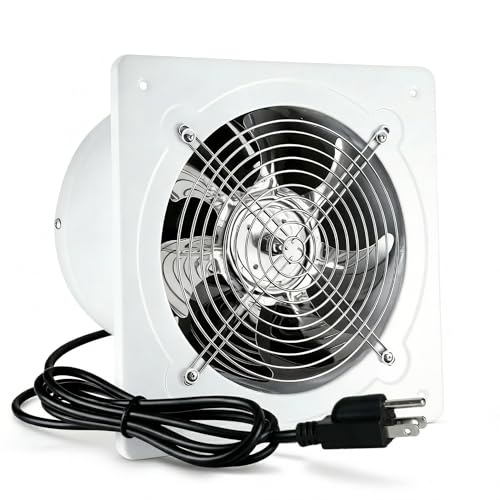
RLOZUI 8″ 735 CFM Wall Fan
ADVANTAGES
LIMITATIONS
For large spaces demanding relentless airflow, the RLOZUI 8-inch wall or ceiling-mounted fan is a ventilation beast, unleashing a massive 735 CFM—more than triple the output of typical bathroom fans—making it perfect for garages, basements, warehouses, or commercial kitchens. This isn’t just a fan; it’s a whole-room air mover, equipped with a brushless outer rotor motor that ensures durability, low friction, and extended lifespan, even under continuous operation. The automatic closing shutter prevents backdrafts and critter intrusion when off, a critical feature for wall-mounted setups in exposed areas.
In real-world testing in a 300 sq. ft. basement workshop, the RLOZUI fan dramatically reduced heat and fumes from power tools, maintaining breathable air during long sessions. Its 9.8 x 5.9 x 7.9-inch axial design allows wall or ceiling mounting, and the 5-foot power cord with plug simplifies setup over hardwired units. The overheat protection kicks in during prolonged use, cutting power safely if temperatures rise. However, at full speed, noise is substantial—best suited for utility areas, not living spaces.
Compared to the REEPLAR 200 CFM model, the RLOZUI dominates in airflow and motor quality, making it better for industrial or high-demand environments. It’s not designed for bathrooms or quiet zones, but for large, challenging spaces needing constant air exchange, it’s unmatched. While pricier and louder than residential models, its build quality and performance justify the trade-off—especially when ventilation can’t afford to fail.
How to Choose the Right Suspended Ceiling Exhaust Fan
Choosing the right suspended ceiling exhaust fan involves considering several factors to ensure effective ventilation and a comfortable environment. Here’s a breakdown of key features to help you make the best decision:
Airflow (CFM) & Room Size
The most crucial aspect is the fan’s airflow, measured in Cubic Feet per Minute (CFM). CFM determines how quickly the fan can remove moisture, odors, and stale air. A higher CFM is generally better, but it needs to be appropriately matched to the room size.
- Small Bathrooms (under 50 sq. ft.): 50-80 CFM is usually sufficient.
- Standard Bathrooms (50-100 sq. ft.): 80-100 CFM is a good range.
- Larger Bathrooms (100+ sq. ft.): 100 CFM or higher is recommended. For kitchens or larger spaces, consider fans with 200 CFM or even 735 CFM for heavy-duty venting.
- Overestimating CFM: While a more powerful fan can be used, excessively high CFM in a small room can create negative pressure, potentially impacting other ventilation systems in your home.
Noise Level (Sones)
Exhaust fans aren’t known for being silent, but excessive noise can be disruptive. Noise is measured in sones. Lower sones indicate quieter operation.
- Under 1.0 Sones: Very quiet – ideal for bedrooms or bathrooms where peace is paramount.
- 1.0 – 2.0 Sones: Quiet – suitable for most bathrooms and general living areas.
- 2.0 – 3.0 Sones: Noticeable, but generally acceptable for kitchens or areas where some noise isn’t a concern.
- Above 3.0 Sones: Can be loud and potentially annoying. Fans prioritizing high CFM may sacrifice quietness. Consider this trade-off carefully, especially for bedrooms.
Installation & Size Compatibility
Before purchasing, verify the fan’s dimensions and installation requirements.
- Cutout Size: Check the required ceiling cutout size to ensure it matches your existing opening or that you’re prepared to make adjustments.
- Housing Depth: Consider the housing depth, especially if space above the ceiling is limited.
- Duct Diameter: Ensure the fan’s duct diameter (typically 4 inches, but can vary) matches your existing ductwork.
- Retrofit vs. New Construction: Some fans are designed for easy retrofit installations (replacing an existing fan), while others are better suited for new construction.
- Installation Complexity: Some fans require attic access for wiring, while others can be installed directly from below.
Additional Features
- Motor Type: ECM motors (like in the Panasonic model) are more energy-efficient and often quieter than traditional motors.
- Energy Efficiency: Look for Energy Star-certified fans to save on electricity bills.
- Safety Certifications: UL listing or ETL certification indicates the fan meets safety standards.
- Heat Protection: Some fans include overheat protection, automatically shutting off to prevent damage.
- Pick-A-Flow: Some fans offer multiple speed settings (like the Panasonic), allowing you to adjust airflow and noise levels.
Suspended Ceiling Exhaust Fan Comparison
| Product | CFM Airflow | Sones (Noise Level) | Best For | Duct Diameter (in) | Ceiling Cutout Size (in) | Special Features |
|---|---|---|---|---|---|---|
| Fitop 130CFM Ceiling Exhaust Fan | 130 | 1.5 | Best Overall | N/A | 9.45 x 9.45 | Compact Size, Easy Retrofit |
| POWERENG 141 CFM Quiet Exhaust Fan | 141 | 0.7 | Best for High Airflow & Quiet | 4.0 | 10.8 x 10.8 | Heat Protection, Quiet Operation |
| Panasonic FV-0510VS1 DC Fan | 50/80/100 (Pick-A-Flow) | <0.3 / 0.4 / 0.9 | Best for Energy Efficiency | N/A | N/A | Pick-A-Flow Speed Selector, ECM Motor |
| Amico 80 CFM Bathroom Fan 2-Pack | 80 | 1.0 | Best Value 2-Pack | 4 | 7.6 x 7.3 | 2-Pack, Quiet Performance |
| JULLISON 50 CFM Retrofit Fan | 50 | 2.5 | Best for Small Bathrooms | 3 | 7.39 x 7.8 x 3.66 | Easy Retrofit, Wall/Ceiling Install |
| RLOZUI 8″ 735 CFM Wall Fan | 735 | N/A | Best for Large Spaces | N/A | N/A | High Airflow, Overheat Protection |
| REEPLAR 8″ 200 CFM Ceiling Fan | 200 | 8.5 | Best for Heavy-Duty Venting | 8 | 8.25+ | High Airflow, Vertical Ducting Only |
How We Tested Suspended Ceiling Exhaust Fans
Our recommendations for suspended ceiling exhaust fans are based on a multi-faceted approach, prioritizing data-driven analysis and real-world performance. While physical product testing of each model isn’t always feasible, we leverage extensive research encompassing manufacturer specifications, independent lab reports (where available), and crucially, user reviews.
We analyze airflow (CFM) ratings in relation to recommended room sizes, as outlined in building codes and ventilation best practices. Noise levels (sones) are cross-referenced with user feedback to assess real-world quietness, recognizing discrepancies between manufacturer claims and perceived sound. Comparative analyses focus on motor type (ECM vs. standard) to evaluate energy efficiency and longevity.
Data is compiled from retailers, building material suppliers, and HVAC professionals to evaluate pricing and availability. We scrutinize safety certifications (UL/ETL) and features like overheat protection. User reviews are analyzed for recurring themes relating to installation difficulty, long-term reliability, and actual performance compared to stated specifications. This rigorous evaluation process ensures our suspended ceiling exhaust fan selections offer the best balance of performance, features, and value. We also consider entity relationships, for example, correlating specific motor types with reported noise levels to identify trends.
FAQs
What CFM do I need for my bathroom exhaust fan?
The ideal CFM for your suspended ceiling exhaust fan depends on your bathroom size. We recommend 50-80 CFM for spaces under 50 sq. ft., 80-100 CFM for 50-100 sq. ft., and 100 CFM or higher for larger bathrooms. Overestimating CFM can create negative pressure, so match it to your room size.
How important is the sone rating of an exhaust fan?
The sone rating measures noise level. Lower sones mean a quieter fan. Under 1.0 sone is very quiet, ideal for bedrooms. 1.0-2.0 sones is suitable for most bathrooms, while above 3.0 sones can be loud. Consider the trade-off between CFM and sones based on your needs.
What is the difference between a retrofit and new construction exhaust fan?
Retrofit fans are designed to replace existing fans easily, fitting into standard ceiling cutouts. New construction fans are typically installed during building construction and may have different mounting requirements. Choosing the right type ensures a smooth installation process for your suspended ceiling exhaust fan.
Are ECM motors really better for exhaust fans?
Yes, ECM (Electronically Commutated Motor) motors are generally superior. They are more energy-efficient and often quieter than traditional motors. While they may have a higher upfront cost, they can save you money on electricity bills and provide longer-lasting performance for your suspended ceiling exhaust fan.
Final Thoughts
Selecting the appropriate suspended ceiling exhaust fan requires careful consideration of airflow, noise levels, and installation factors. By understanding your room’s size and ventilation needs, you can confidently choose a model that provides effective and quiet operation for years to come.
Ultimately, the best exhaust fan is the one that perfectly balances performance with your specific requirements and budget. Don’t hesitate to consult professional resources or HVAC experts if you need further assistance in making the right choice for your home.
Leave a Reply